
 Will Jones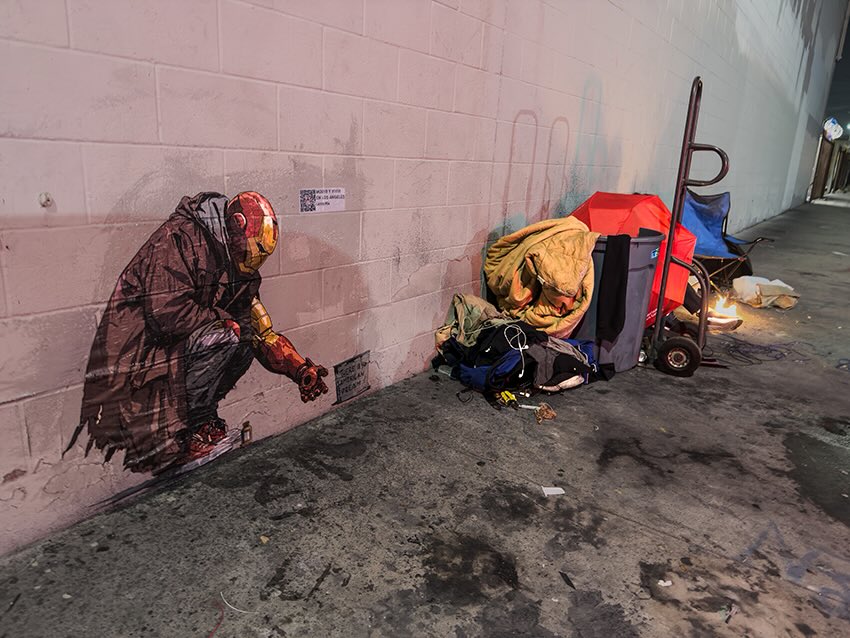
In Los Angeles, an anonymous Italian artist uses public space to turn urgency into conversation.
Public art can do something galleries can’t. It has a way of appearing suddenly and staying in the mind far longer than anyone expects. LAIKA 1954 works inside that aftereffect. The artist’s recent body of work in Los Angeles and Southern California brought those questions into a region where visibility and contradiction live side by side.
This visit carries extra significance for that reason. It marks LAIKA 1954’s second trip to the United States and the first real push in Los Angeles and Southern California, a region the artist chose with care because it always shows several realities at once. It’s shaped by migration, alive with political memory, and watched closely enough that anything placed in public space can travel far beyond the block where it appears.
Anonymity as Method
LAIKA 1954 began publicly working under that name in 2019, during a period of global fear, isolation, and instability. The work has grown from posters to a wider visual language that includes murals, installations, and performances.
The artist describes anonymity as essential, both for freedom of action and for keeping attention where it belongs. That includes the ideas, the images, and the people caught up inside them, giving the work a particular kind of force. The public sees an image first, and the debate begins there. The individual behind it recedes, and the work has room to stand on its own.
Los Angeles: It’s All About the Location
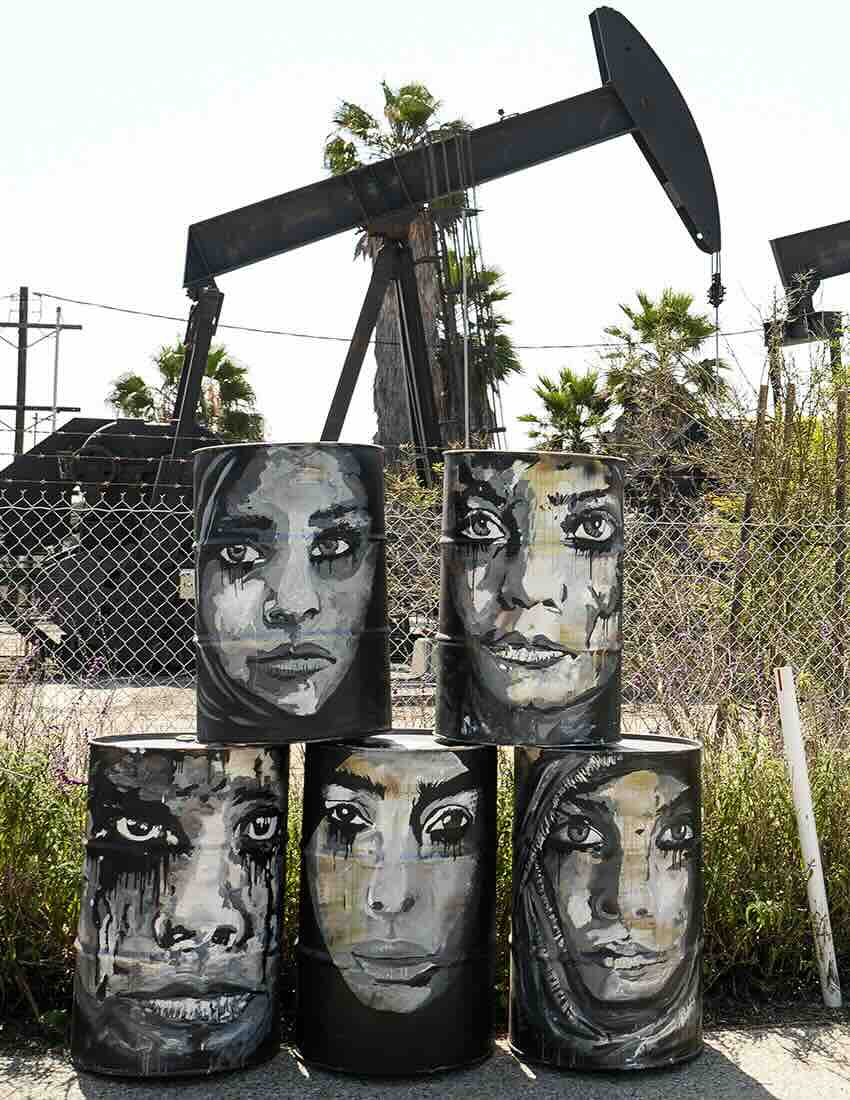
The Southern California chapter took on themes that feel painfully current in the United States and far beyond it: immigration, human rights, housing, poverty, and environmental concerns.
The issues can sound broad on paper, but in Los Angeles, they become concrete. Wealth and dispossession can sit a few sheets apart, and the language of aspiration lives beside the evidence of abandonment. Public space carries all of it at once.
That’s what makes Los Angeles street art so potent in the first place. A wall in this city already arrives with context. It comes with memory, conflict, visibility, and audience. LAIKA 1954’s public installations can use that condition well. The work just asks for recognition. A familiar symbol, a charged image, or a figure pulled from popular culture can open the door fast, then leave the harder reflection to settle in after the first jolt.
Art That Meets People Where They Are
LAIKA 1954 treats contemporary street art as a democratic medium, which is one of the clearest ways to understand how Southern California works. A traditional exhibition asks people to enter a defined space and agree to behave like viewers. Public art asks almost nothing at first. It appears in the path of someone who may have been thinking about errands, rent, traffic, or nothing at all. Then it insists.
The artist has spoken about wanting to create a kind of visual stumbling, like a sudden museum moment in the street. LAIKA 1954 wants to create a conversation that moves people toward awareness and collective action.
What Remains After the Wall is Gone
The strongest public act rarely ends with the physical object. It lingers in photos, social sharing, press coverage, and the mind of the person who happened upon it at the right moment. LAIKA 1954’s Southern California art seems built with that afterlife in mind. The installations may be temporary, but the argument inside them is designed to keep moving.
That may be the clearest way to understand this first major Los Angeles chapter from an anonymous contemporary artist who has never treated public space as decoration. Public art is a way for LAIKA 1954 to make structural injustice visible, bring social resistance into the open, and place human questions directly in front of the mainstream. Long after the paper lifts, the wall is painted over, or the installation disappears, the real work continues in the conversation left behind.