
 Jon Stojan
ModA, or Modern Anthropology, Studios is a Los Angeles-based, multi-functional creative organization that has supported projects across contemporary art and indie film since October 2023. Headed by its founder, George Fan, and run by a team of young anthropologists, ModA has built an eclectic, niche name for itself exploring interdisciplinary creative arts through applied anthropology.
On June 27, 2025, ModA opened “Love”, the studio’s third contemporary art exhibition on 227 E 24th Street in Lower East Side, Manhattan. After two initial group show pop-ups in 2024, “Love” marks the debut of ModA’s first permanent location.
Curated by Sia Fang, an Elle-published designer and Parsons School of Design alum, “Love” showcases the work of 9 artists separated into two categories: main-exhibiting and a unique subsection named Untapped, the Collection.
Main Exhibiting Artists
Ellen Carpenter – a performance and installation-based artist who offers strong commentary about emotive space in a woman’s body. Her work in the “Love” exhibition featured hand-drawn images of anger, nostalgic installations conveying symbolic representations of home and closeness, and an hour-and-a-half long performance piece where Carpenter carefully washed, conditioned, dried, and brushed an intricate chair composed entirely of long, blonde hair.
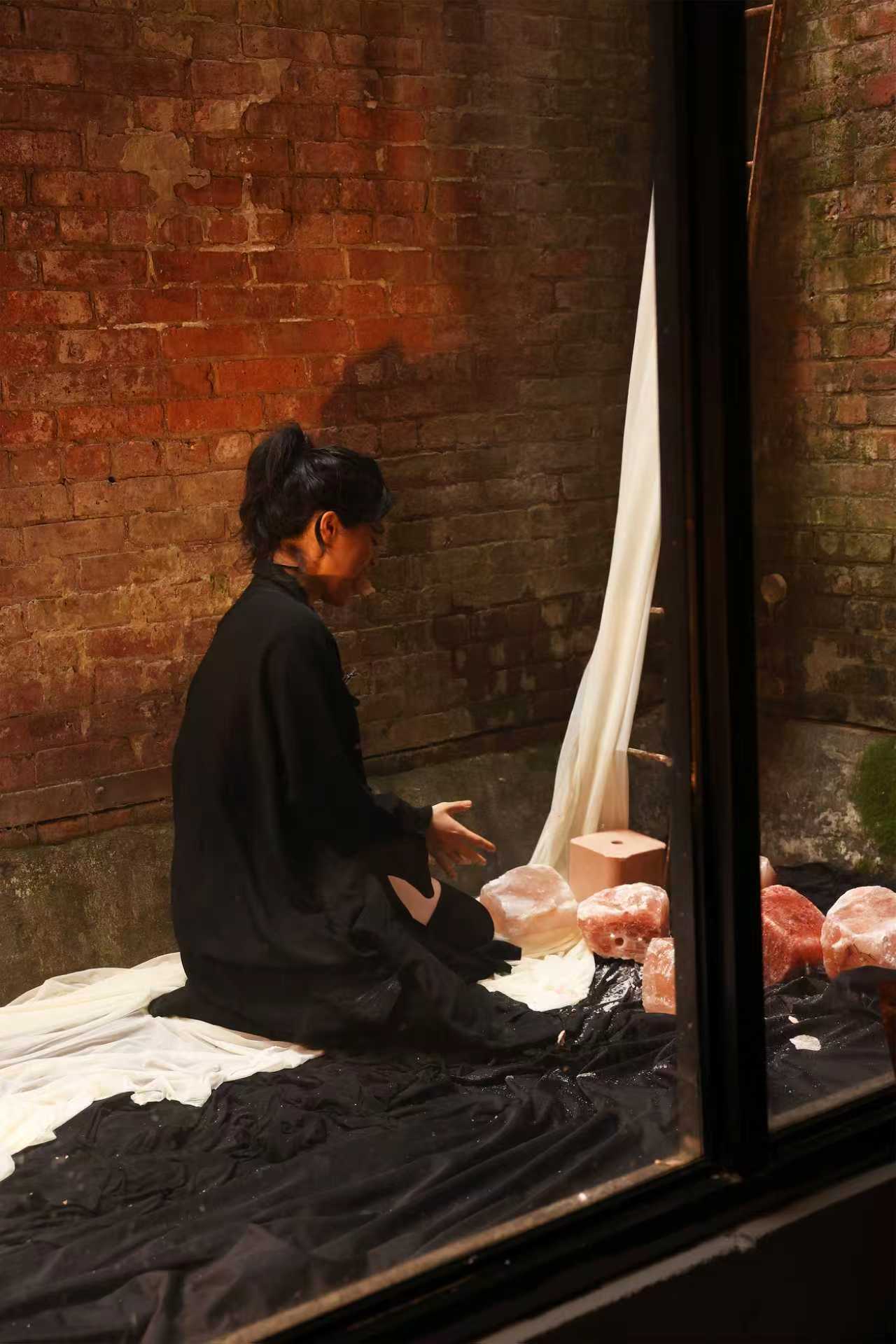
Magali, A Cult photographed by Guang Chen, Hengyi Yang, Jiajie Lyu, PAIR TO PAIR STUDIO
Magali, A Cult – a self-described interdisciplinary artist whose work focuses uniquely on using salt as a medium, thematically meant to resemble maternal love. As her “Love” exhibition biography described, “Salt [is] explored for… its symbolic and emotional resonance. Salt is paradoxical– purifying and abrasive, preserving and corrosive… [For Magali] These contradictions become metaphors for the complex emotional terrain of the maternal experience.”
Ching-Wei Wang (Way) – a Taiwanese artist currently based in New York, Wang displayed a perfect line of Chinese characters that repeated the words for “China” in different Chinese scripts across the main exhibiting hall’s white wall. Using language and photography, Wang’s work told a compelling story of Taiwanese erasure in a mainland-dominated history, and a resultant desire to find belonging in the face of political ambiguity.
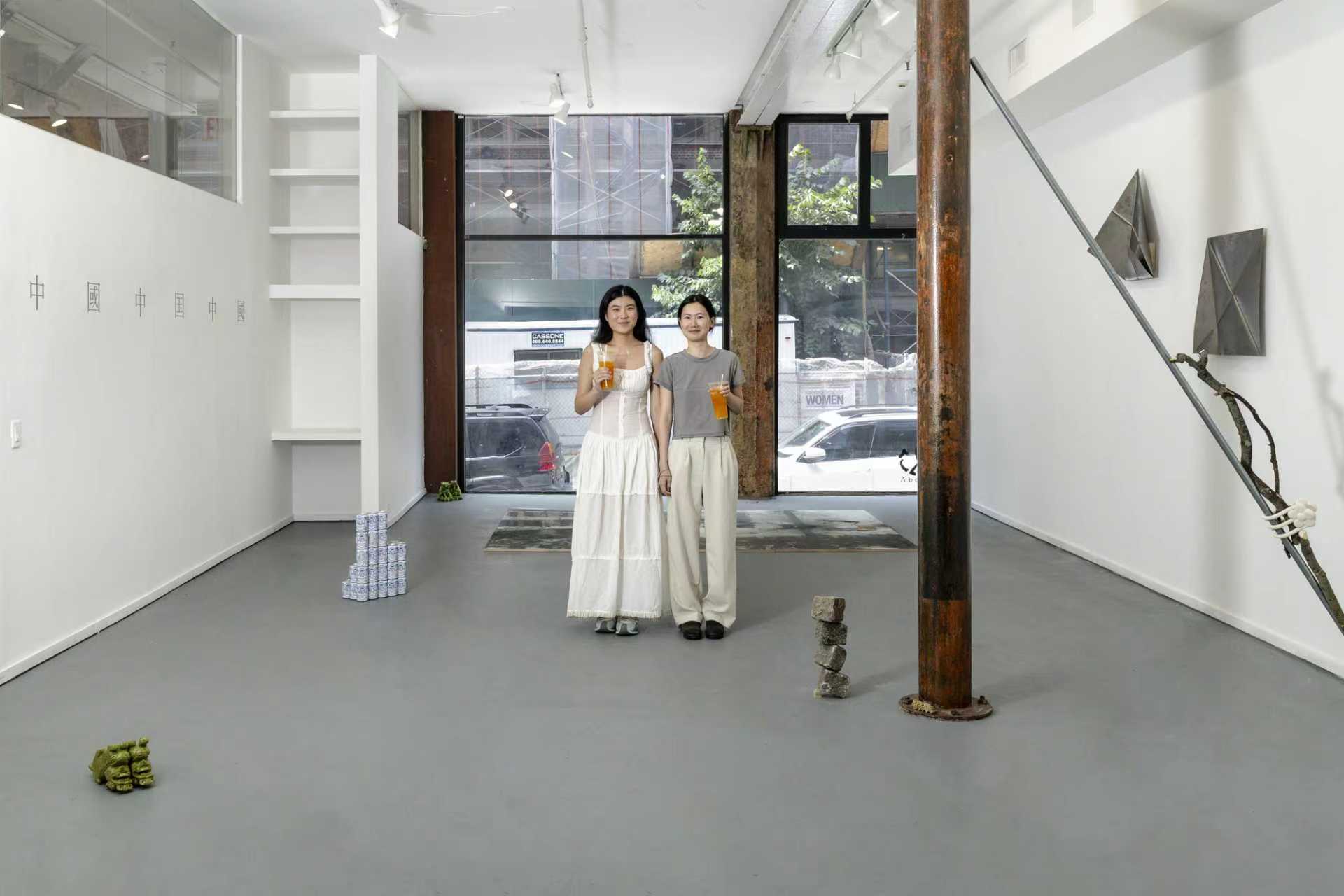
Left: Felisa Nguyen Right: Ching-Wei Wang (Way) photographed by Anh Nguyen
Felisa Nguyen – a Canadian artist of Vietnamese decent, Nguyen’s work in “Love” was exhibited both independently and in collaboration with Ching-Wei Wang. Her work told a non-unique narrative of cultural displacement within a decades-long determination of orientalism, overlapping thematically with Wang, one of her best friends. The two collaborated on a series– Dragons– alongside Nguyen’s own pieces of found nostalgia in interaction with culturally-specific objects.
Ibtisam Tasnim Zaman – an African artist of Native American and European descent, Zaman’s selection of paintings in “Love” spoke volumes of depth about her storytelling capabilities. With innumerable layers to dissect and titles like “If You See Something, Say Something,” and “From water we made everything alive”, Zaman’s work highlighted sociocultural nuances in a multi-cultural black woman’s lived experience in New York City and around the world– her desire to find herself and her identity.
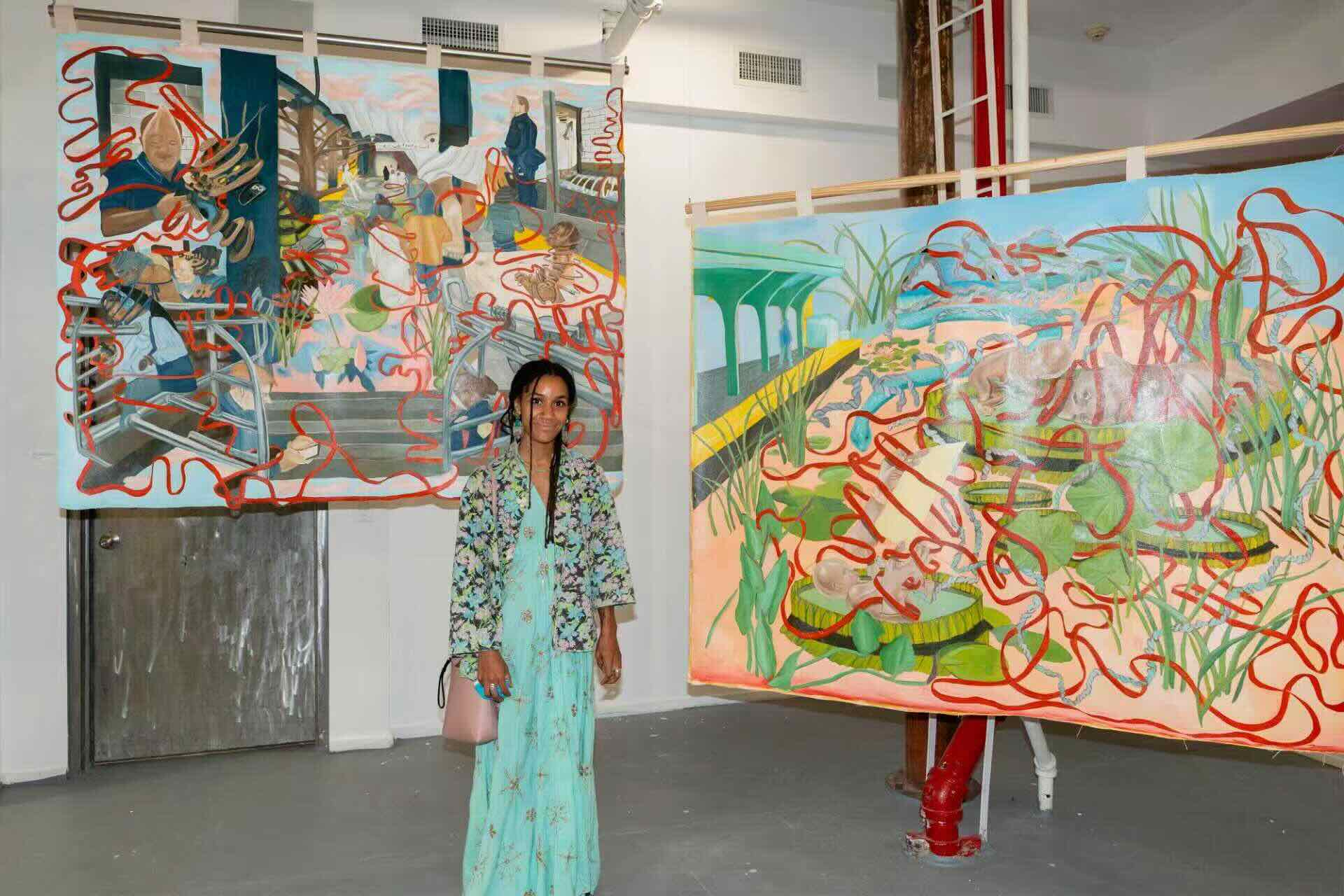
Ibtisam Tasnim Zaman photographed by Liann Newby
Edd Ravn – a British artist based in the US, Ravn’s use of naturally produced materials like seawater, ochre, and rust showcased a nuanced angle of humans’ relationship with the earth’s natural environment. His images seemed the results of natural interaction between the material elements he introduced onto charred bamboo—his canvas and a sustainable conduit for documenting organic relationships.
Untapped, the Collection
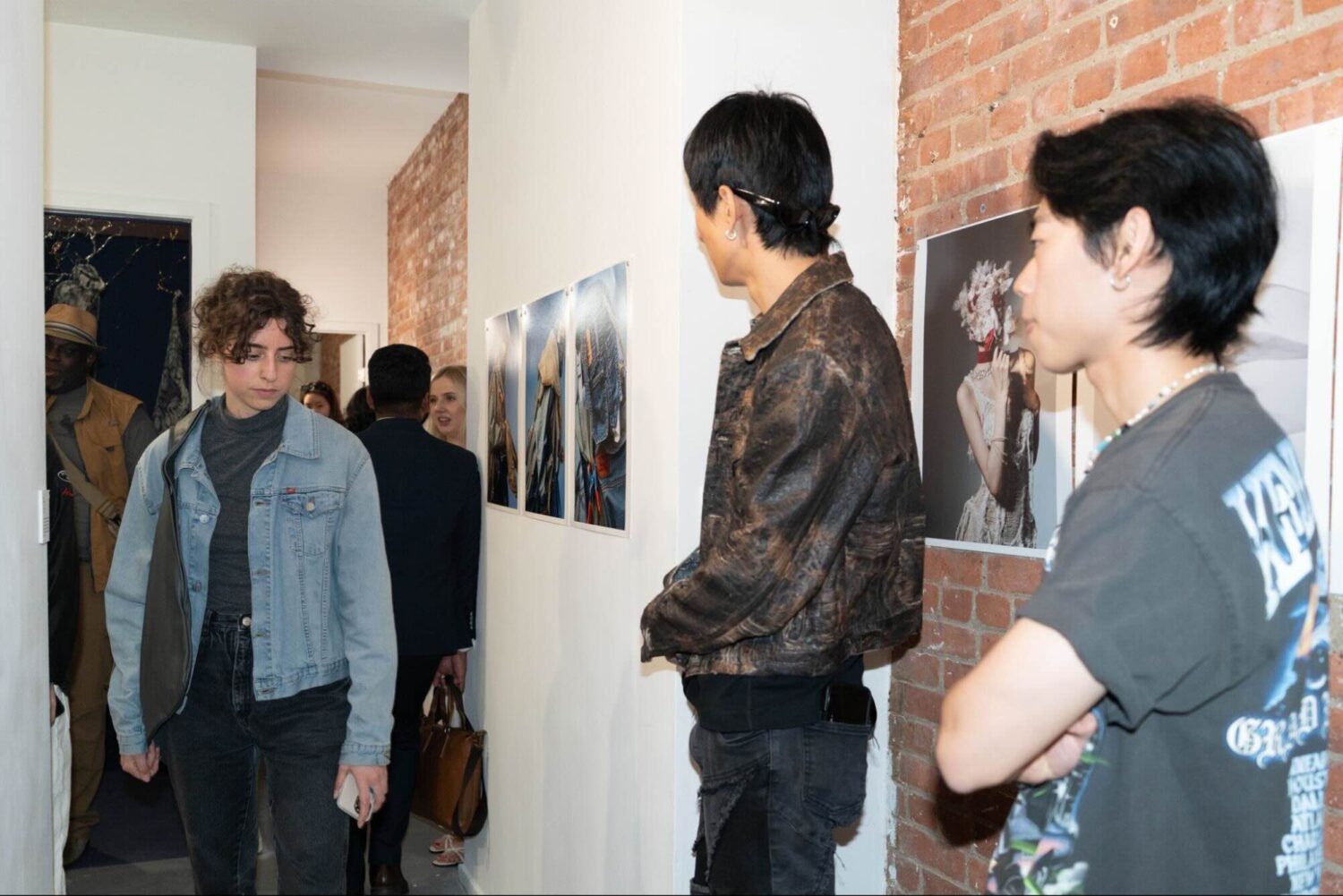
The Mask Series by Agen Xin and Chain by Hongshan photographed by Liann Newby
Hongshan – a presently enrolled student at Parsons School of Design, Hongshan provided her contribution to “Love” in a solitary installation simply titled “Chain”. Fairly new to yet presently commanding in the contemporary art world, Hongshan made a visual impact, stopping viewers in their tracks between exhibition halls to admire her work– a hauntingly beautiful drapery, patterned in calligraphy ink and wrapped in wire. In her own words, “At the core of my practice is cultural translation: bridging tradition and the present while questioning dominant narratives.”
Zackery Yao – a queer Chinese immigrant and new MFA graduate of NYU Tisch, Yao exhibited in “Love” with a single, interactive installation– an x-ray light box with a collection of collaged photographs on translucent projector slides. The photos were of Yao’s mother, and the title of the piece reads “(Love, Cancer)”, two words of similar pronunciation in the Chinese language. In this activation, Yao walked viewers through a journey of discovery, both his own and his mother’s in the discovery of and fight against her breast cancer diagnosis.
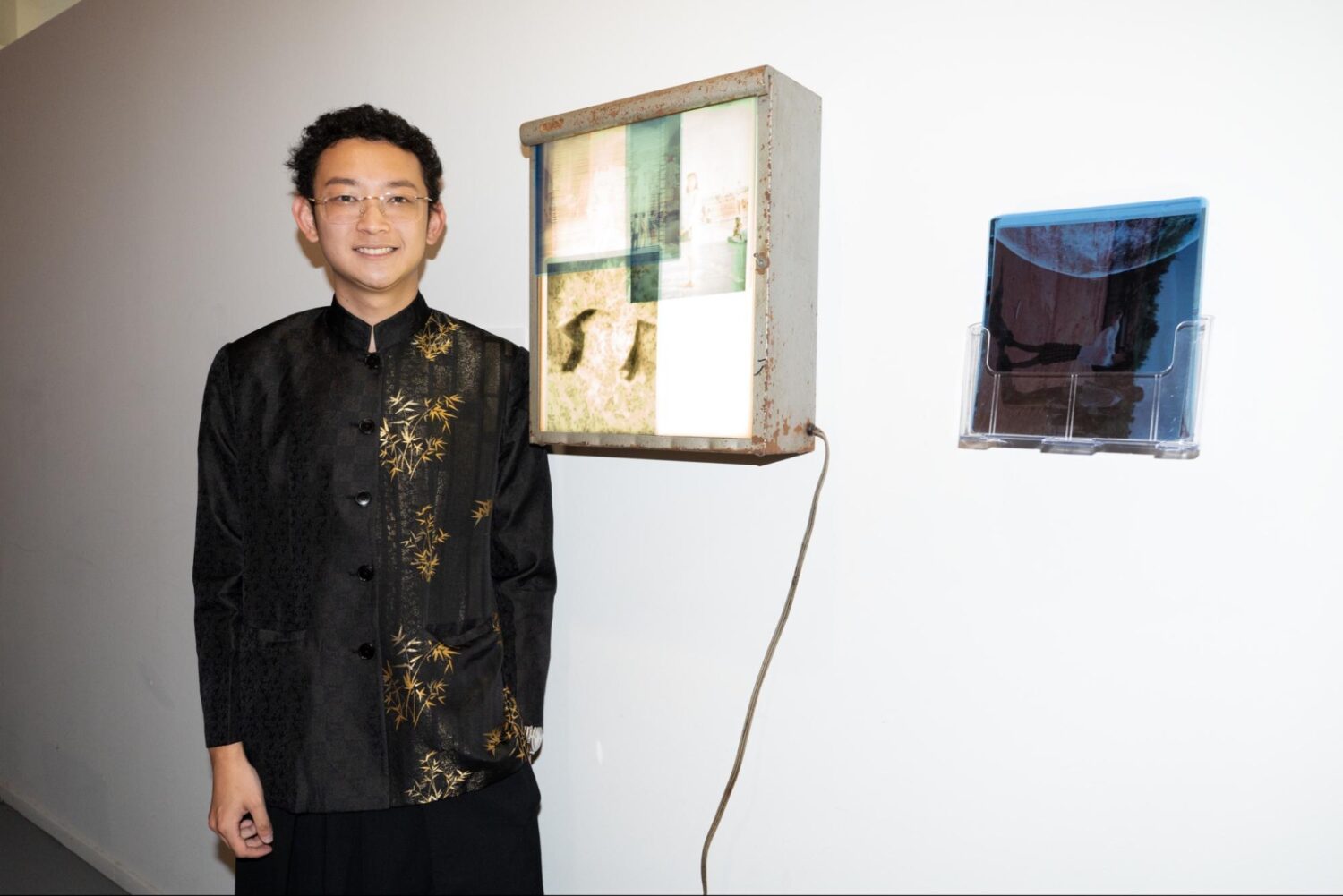
Zackery Yao photographed by Liann Newby
Agen Xin – a seasoned photographer and videographer, Xin demonstrated his artistic versatility with an exploration of self in a series of editorial portraits. Each series featured three images focusing on a textile-specific mask obscuring the faces of each model – denim representing simplicity and resilience, roses representing elegant mystery, metal and chains representing materiality and adaptability, and diamond gemstones representing beautiful restraint.
Credit:
Photographers: Liann Newby; Anh Nguyen; Guang Chen, Hengyi Yang, Jiajie Lyu, PAIR TO PAIR STUDIO