
 Lyssa-Noel Frater
For more than two decades, Joe Rey has worked at the crossroads of film, advertising, and digital innovation. Emerging from Camden, New Jersey, Rey built his reputation in the late 1990s and early 2000s as a production designer and director on award-winning music videos and commercials, while also collaborating with renowned filmmakers such as Martin Scorsese, Jonathan Demme, and Terry Gilliam.
His career trajectory, revolves around traditional entertainment and experimental new media platforms, reflects both a deep respect for established modes of storytelling and a grit to reimagine how audiences engage with popular culture.
Early Career in Film and Commercial Production
Rey started his journey after studying at the Philadelphia Art Institute, where he pursued formal training in design and visual storytelling. Entering the entertainment industry in the early 1990s, he worked in art departments and production design, including serving as Property Master for I Don’t Buy Kisses Anymore (1992) and later as On-Set Art Director for A World Away (2019). These early credits underscored his adaptability across formats and genres.
By the late 1990s, Rey had become increasingly noticeable in music video production, a period often described as the “golden age” of the medium. His role as Production Designer for The Offspring’s 1999 video The Kids Aren’t Alrightgave him visibility within the MTV music video landscape of the late 1990s. He later directed videos for international artists, including LeAnn Rimes: I Need You (2000) and K-Ci & JoJo: Fee Fie Foe Fum (2002), as well as co-directing Bryan Adams: Cloud Number Nine (1999).
These projects highlighted his ability to merge conceptual design with mass-audience entertainment, while also establishing his reputation within both American and international music industries.
Creative Direction and Advertising
Beyond music videos, Rey’s skills translated into commercial advertising, where his work contributed to campaigns that fused cinematic style with brand storytelling. His collaborations with top commercial production houses built long-term industry relationships that would later prove critical when he transitioned toward larger entrepreneurial projects. The lessons learned in these high-pressure, fast-paced environments deepened his understanding of how perception and influence are shaped through media design.
It was during this period that Rey began to consider the structural dynamics of media more critically. Reflecting on the centralized, top-down nature of the systems he worked within, he questioned whether audiences themselves could one day play a more active role in determining what content and messages mattered most.
The Conceptual Emergence of POPOLOGY®
In August 2001, only weeks before the events of September 11, Rey began sketching the first outlines of what would later become POPOLOGY®. Initially imagined as a cultural campaign for Global Inner Peace™, the project grew out of his conviction that popularity could serve as more than a fleeting measure of fame—it could be reframed as a “currency of consciousness.”
The 9/11 attacks, which Rey experienced firsthand as a New York City resident, transformed this idea into what he described as a sacred mission. He viewed the early notes not simply as a technical plan, but as a blueprint for rethinking the relationship between individuals, media, and meaning.
Personal Evolution and Philosophical Shifts
In the years following, Rey undertook an introspective journey marked by both experimentation and humility. He gave up possessions, traveled with a camera, and conducted interviews with strangers in an attempt to spread his vision. During this period, he struggled with what he later termed a “Messiah complex,” believing he had been uniquely chosen to deliver a message. Over time, however, this evolved into a more grounded philosophy that emphasized service, collaboration, and faith.
Rey later described this shift as moving from the belief that he was “The One” to an embrace of levity: “Yes, I’m the first POPOLOGIST®. And I’m the last POP Messiah®. But also—why so serious?” This transformation shaped the DNA of POPOLOGY® itself, embedding humility and collaboration into its foundations.
Founding of POPOLOGY Global Corp
After two decades of development, Rey formally launched POPOLOGY Global Corp in 2022. The company is built on a USPTO patent with 29 system and method claims, designed to protect its intellectual property in a competitive digital environment. To oversee this aspect, Rey partnered with Louis Heidelberger, Esq., a veteran intellectual property attorney known for his work with portfolios for Qualcomm and Steve Jobs’ NeXT.
The company’s flagship product is the POPsphere™, a decentralized metasearch engine that enables users to curate, broadcast, and monetize their own content. Its associated system, POPcast® PEERstreams™, allows individuals to integrate social and search platforms, create playlists across services, and earn directly from brand partnerships. Unlike traditional broadcasting networks such as NBC or Discovery, POPOLOGY® is designed as an automated, trustless, and permissionless platform rooted in blockchain and Web3 technologies.
Building a Global Team
POPOLOGY®’s organizational growth has mirrored its global ambitions. The leadership team includes Oscar Bjers, former Apple Nordics executive, serving as CEO; Dan Rush, co-founder and streaming media executive; Louis Heidelberger as IP strategist; Diana Rey as licensing lead; and Oliver Fuselier, COO and CMO, who gave Rey his first break as a designer. The company also collaborates with technologists from Pakistan, Spain, Sweden, and Ukraine, who collectively form what Rey calls the “Founding POPOLOGISTS®.”
This diverse roster reflects Rey’s belief that decentralized media must itself be built on decentralized talent pools, bringing together expertise across geographies and industries.
Roadmap and Reception
The developmental roadmap for POPOLOGY® is ambitious but clearly defined: Early testing, including the integration of more than 2,400 video
s across 12 APIs into the prototype, produced what Rey described as a “lightning in a bottle” moment.
The POPsphere™ is envisioned not simply as software, but as a larger ecosystem where influencers and users can choose their brand alignments, curate cross-platform video, and earn data and advertising rewards. Rey frames this as a form of “ethical capitalism,” in which people and brands advance together.
Broader Impact and Continuing Work
“Rey presents POPOLOGY® as both a response to and a critique of existing digital structures.” He argues that data monopolies and algorithmic bias have eroded individual sovereignty over voice and value. By contrast, his system seeks to create a decentralized framework where meaning is user-defined. “That’s what POPOLOGY helps reveal.”
Looking ahead, the company plans to work with 50 ambassadors from music, film, fashion, and sports during its first year of operation, with the goal of expanding to millions of users within five years.
About Joe Rey
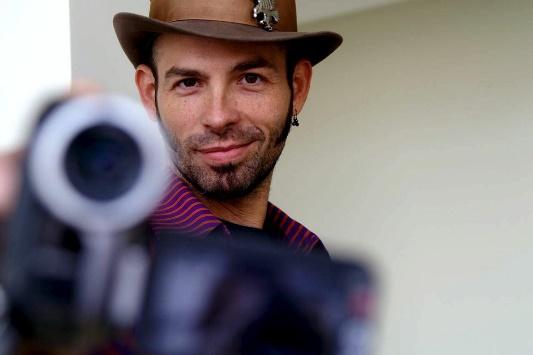
Joe Rey was born on October 12, 1968, in Camden, New Jersey. Of Spanish and Irish American heritage, he studied at the Philadelphia Art Institute before embarking on a career that spanned film, television, and music video production. Over the years, he has directed music videos, contributed to commercial campaigns, and later transitioned into digital entrepreneurship with the founding of POPOLOGY Global Corp. Rey continues to live and work in the United States, where his focus remains on advancing decentralized broadcasting and exploring how media can contribute to cultural sovereignty and ethical engagement.