
 Matt Emma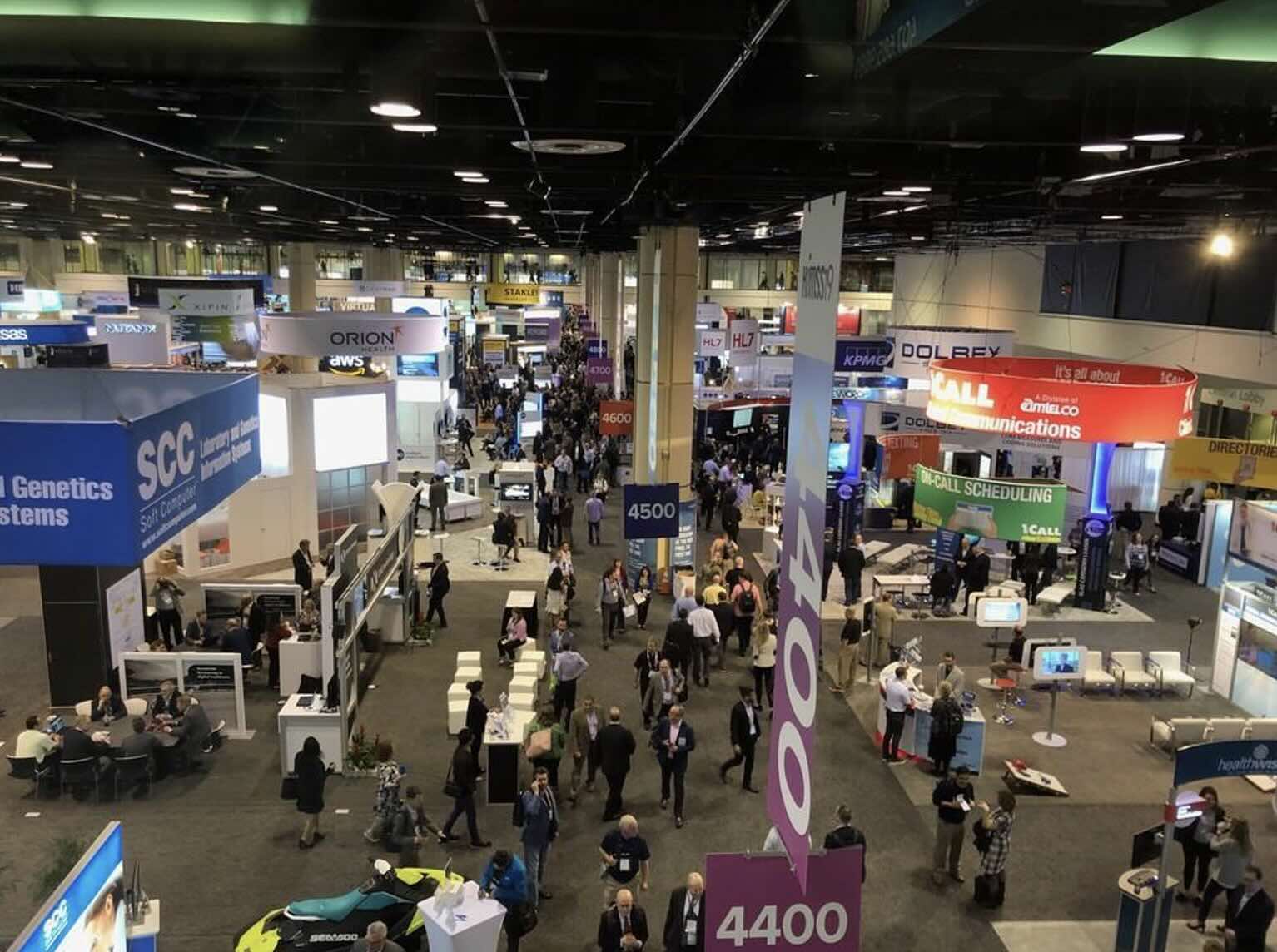
A packed view of the HIMSS19 exhibit hall, where thousands of healthcare leaders explored emerging technologies, data standards, and next-generation interoperability solutions.
HIMSS19 brought more than 45,000 healthcare innovators to Orlando, transforming the Orange County Convention Center into a dynamic look at the future of digital health. The Interoperability Showcase was once again the star attraction, giving attendees a rare chance to see real-time data exchange happen across clinical systems, vendor platforms, and care settings. From emergency response walk-throughs to chronic care coordination, the live demonstrations showed how powerful connected healthcare can be when information flows freely.
For many people, interoperability addresses a problem they have experienced firsthand. Medical records often do not follow the patient, providers are left without full history, and every new appointment can feel like retelling the same story. These frustrations stem from deeper issues such as outdated technology, mismatched data formats, isolated EHR systems, and the high cost of modernization. Against this backdrop, the demonstrations at Booth 9100 showed how new interoperability models, including the work presented by Sunish Vengathattil, are beginning to bridge these gaps by pairing modern data exchange standards with structured clinical intelligence.
Interoperability in Motion
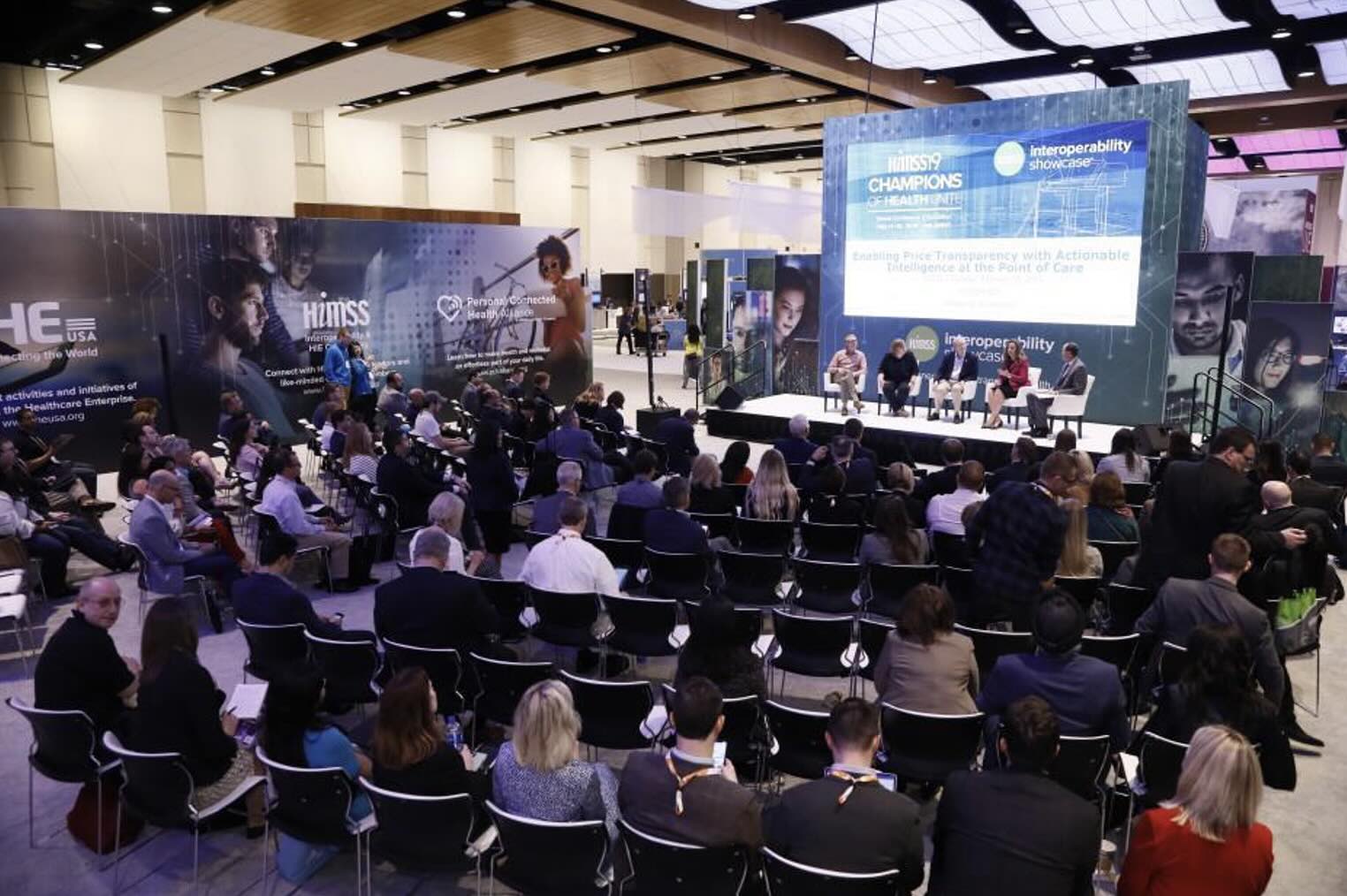
Attendees gather at the HIMSS19 Interoperability Showcase Theater in Orlando, where industry leaders discuss real-time data exchange and connected care innovations during a live panel session.
More than 20 coordinated use cases demonstrated how standards like FHIR, open APIs, and cloud-based frameworks are reshaping the way healthcare systems communicate. Attendees watched information move with speed and accuracy between platforms that have traditionally operated in isolation. What once required lengthy custom integrations now appeared seamless and instantaneous, offering a clear vision of connected care in practice.
Federal Leadership Pushes Interoperability Forward
The Department of Veterans Affairs (VA) and the Defense Health Agency (DHA) delivered some of the most eye-opening moments at HIMSS19. Their demonstrations made it easy to understand why interoperability matters, especially for service members and veterans who receive care across military hospitals, VA facilities, and civilian providers. Historically, each environment stored information differently, leaving clinicians with incomplete views of a patient’s medical history.
At the conference, the VA and DHA showed how that reality is shifting. Using FHIR-based exchange and modern integration tools, they demonstrated how medical records can follow a patient wherever they go. Lab results, imaging, medications, allergies, and service-related health details appeared instantly across systems, creating a complete and consistent record no matter where care is delivered. It was one of the clearest illustrations to date of large-scale interoperability working in real time.
What set these demonstrations apart was the coordinated effort behind them. The federal push blends updated standards, strong privacy protections, new infrastructure, and extensive collaboration with private-sector partners. By showing all of these elements working together, the VA and DHA offered a preview of what nationwide interoperability can look like when policy and technology move in the same direction. Their message was direct and compelling: openness and shared standards are the path to connected care.
A Noteworthy Collaboration at Booth 9100
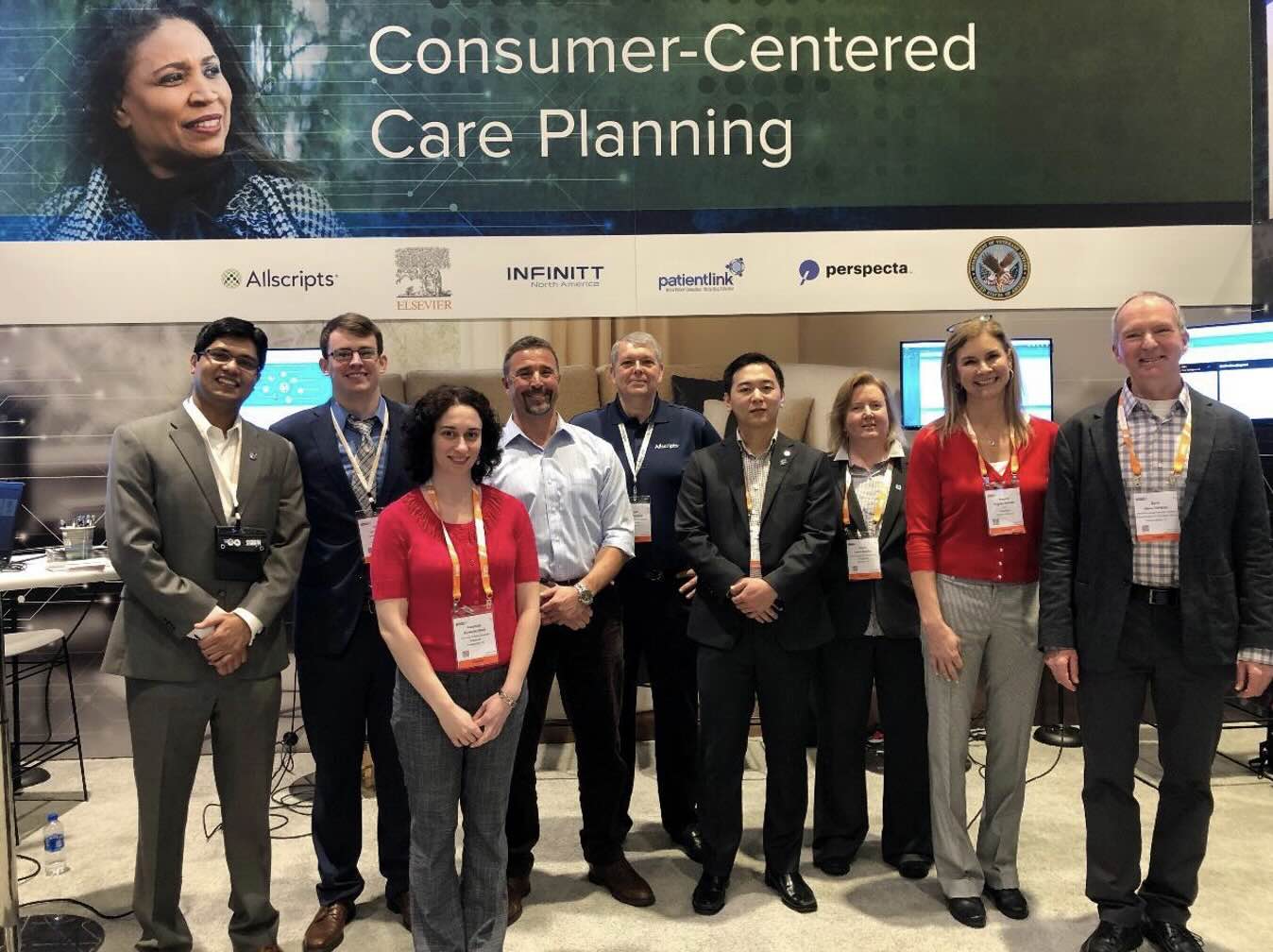
The multi-organization team behind the Consumer-Centered Care Planning demonstration at Booth 9100, featuring contributors from Elsevier, Perspecta, Allscripts, the Department of Veterans Affairs, and other partners
One of the most talked-about moments of HIMSS19 took place at the Nationwide Coordinated Care demonstration at Booth 9100. This collaboration brought together Allscripts, Get Real Health, Perspecta, Elsevier, and the Department of Veterans Affairs to show how providers using different EHR systems can coordinate care through shared standards and unified workflows. PRNewsWire
The Booth 9100 demonstration showed how interoperability can move beyond aspiration and into day-to-day clinical reality. By combining modern data standards with structured clinical guidance and the accelerating capabilities of AI and machine learning, the team led by Sunish Vengathattil illustrated how intelligent systems can anticipate care needs, reduce inconsistencies, and strengthen continuity across providers.
Sunish emphasized this emerging shift, stating:“Artificial Intelligence and Machine Learning give us the power to surface the right insight at the right moment. When you pair that with interoperable data, you create a care environment where gaps do not just shrink, they disappear.”
International delegates called Booth 9100 one of the strongest examples of ho
As HIMSS19 came to a close, the momentum around connected care felt stronger than ever. The Interoperability Showcase demonstrated both technological progress and a growing willingness across the healthcare industry to collaborate across systems, institutions, and vendor ecosystems.
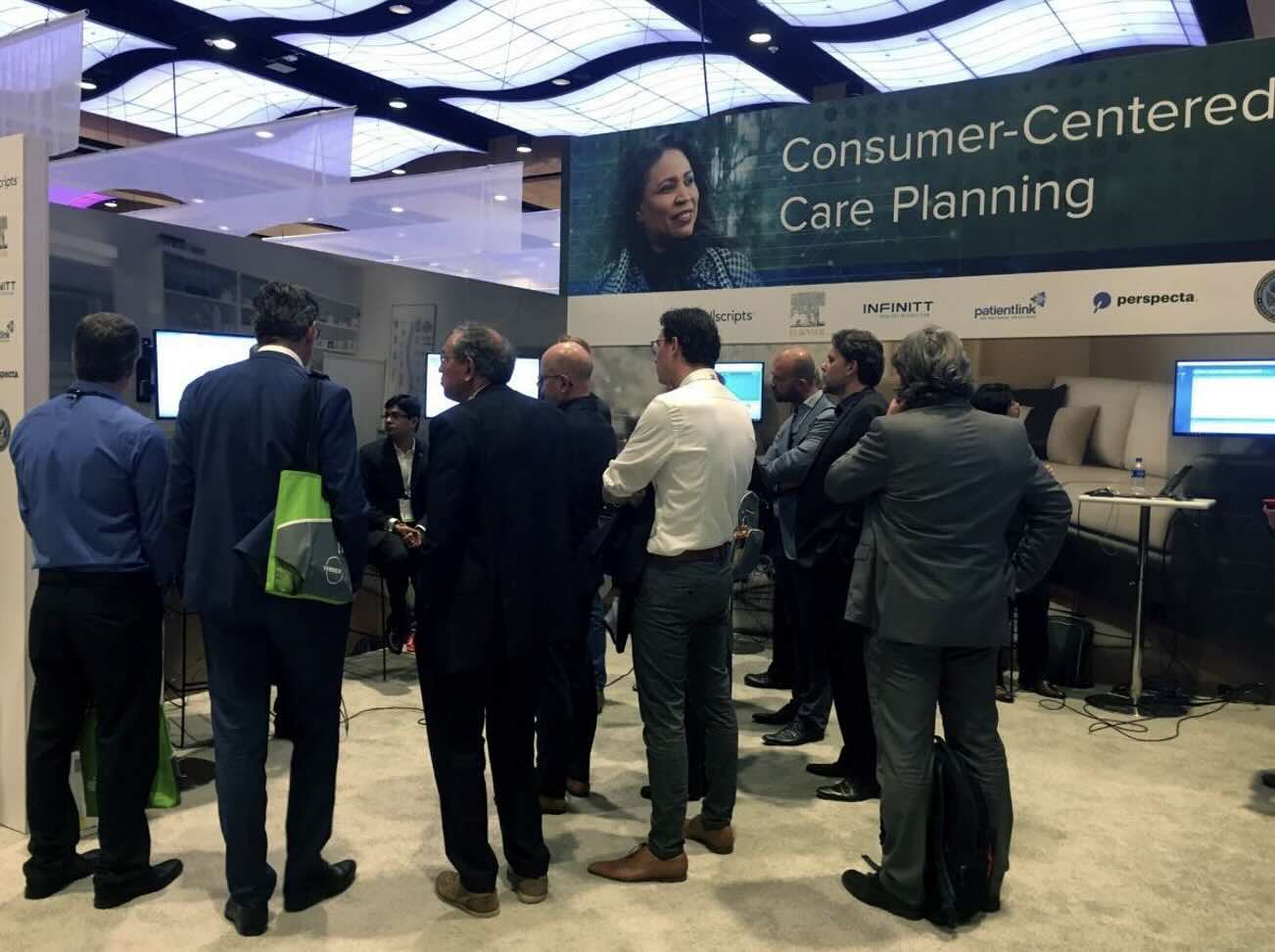
Sunish Vengathattil leads an on-site demonstration at Booth 9100, drawing international delegates eager to see how evidence-based clinical guidance integrates seamlessly into interoperable workflows.
With continued alignment around open standards, shared knowledge, and a unified vision, the future of healthcare is poised to run on information that is both reliable and intelligently connected. The work demonstrated at Booth 9100 offered a clear preview of how the industry can start breaking through long-standing barriers and move toward a care ecosystem that is truly coordinated, evidence-driven and patient-centered. As Sunish Vengathattil noted, “Interoperability is not just about exchanging data. It is about giving clinicians the insight they need at the moment they need it, so every patient benefits from informed and consistent care.”