
 Jon Stojan
In a technology culture often defined by speed, automation, and scale, product designer Yujia Ke is asking a different kind of question: not just what AI can do, but who it is really serving.
Her work spans healthcare, education, and creator technology, but the throughline is consistent. Again and again, Ke is drawn to the people who are often left at the edges of mainstream product design — children in treatment, students with learning differences, and users navigating systems that can easily feel overwhelming or impersonal.
That perspective has shaped a practice that feels both strategic and deeply human. With multiple internationally recognized design awards and a growing body of work in AI-driven product design, Ke has built a reputation for creating digital experiences that do more than function smoothly. They help advanced technology feel understandable, supportive, and accessible.
“Good design doesn’t just help people complete a task,” Ke says. “It helps them feel confident while doing it.”
For her, good design is never only about polish. It is about reducing fear, lowering barriers, and helping people move through systems with more clarity than they had before.
Designing for the Moments People Feel Most Vulnerable
Some of the most meaningful design decisions happen in moments users cannot easily describe. It is the pause before an action. The confusion caused by too much information. The relief of feeling guided instead of overwhelmed.
Ke has built much of her work around those invisible moments.
Rather than approaching product design as a purely visual discipline, she sees it as a structure for human experience — one that shapes how people understand, trust, and emotionally process what is happening around them. That way of thinking becomes especially powerful when the user is not simply looking for convenience, but navigating stress, uncertainty, or difference.
“I’m interested in the moment when technology stops feeling intimidating and starts feeling supportive,” she says.
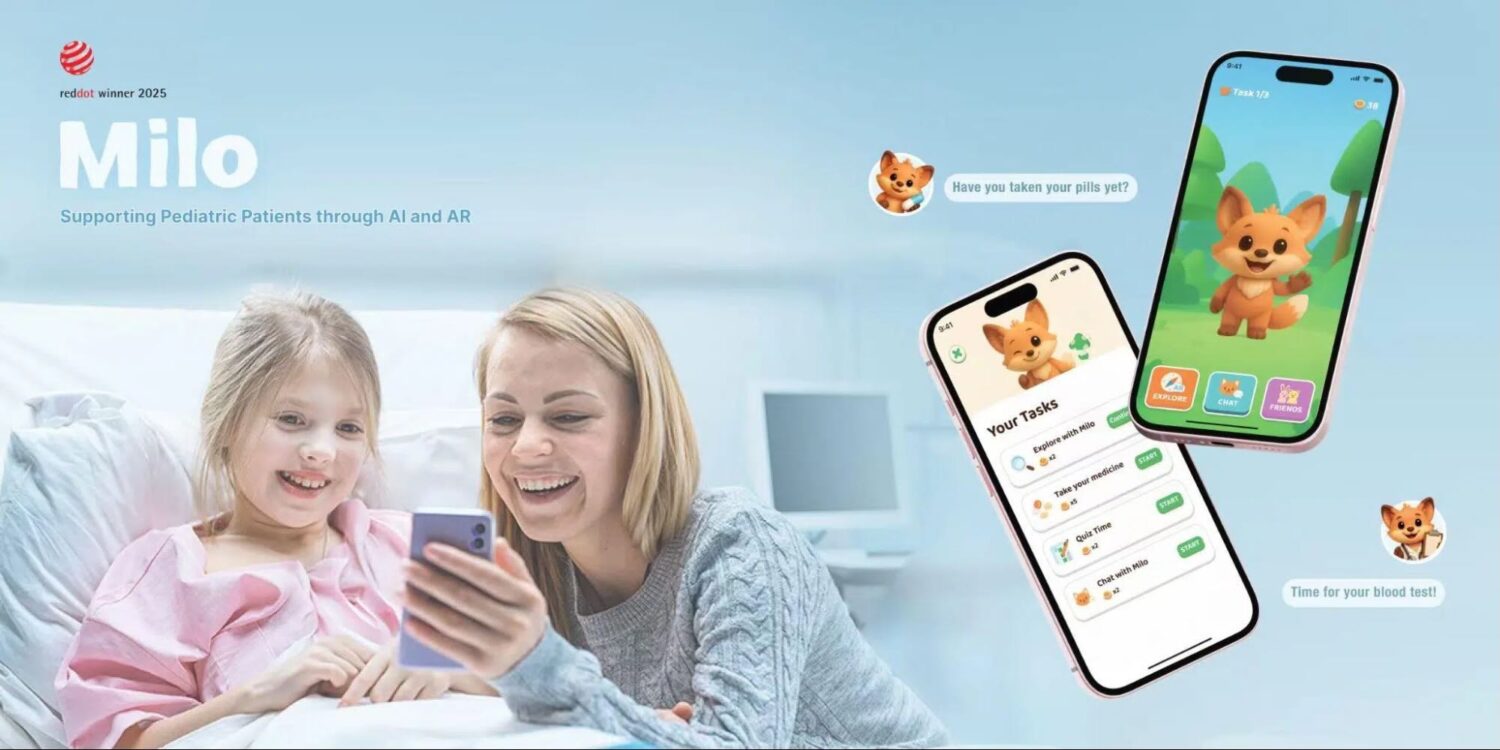
One of the clearest examples is Milo, a concept project Ke created together with Jingyi Wang. Designed as an AI companion for children undergoing cancer treatment and extended hospital stays, the project explores how digital interaction might offer not only assistance, but emotional reassurance. Rather than positioning AI as a novelty, Milo imagines it as a calm, responsive presence for young patients facing chemotherapy, isolation, and fear.
The project received a Red Dot Design Award in the Product Concept category, gaining international recognition not through visual excess, but through its sensitive and thoughtful response to a deeply human challenge.
“In healthcare, especially for children, design is not only about making something usable,” Ke says. “It’s about making people feel safe enough to engage with it.”
In Milo, technology is not presented as spectacle. It becomes companionship. And in a moment when so much AI is framed around productivity, that shift in emphasis feels especially resonant.
Making Learning Feel Less Like Struggle
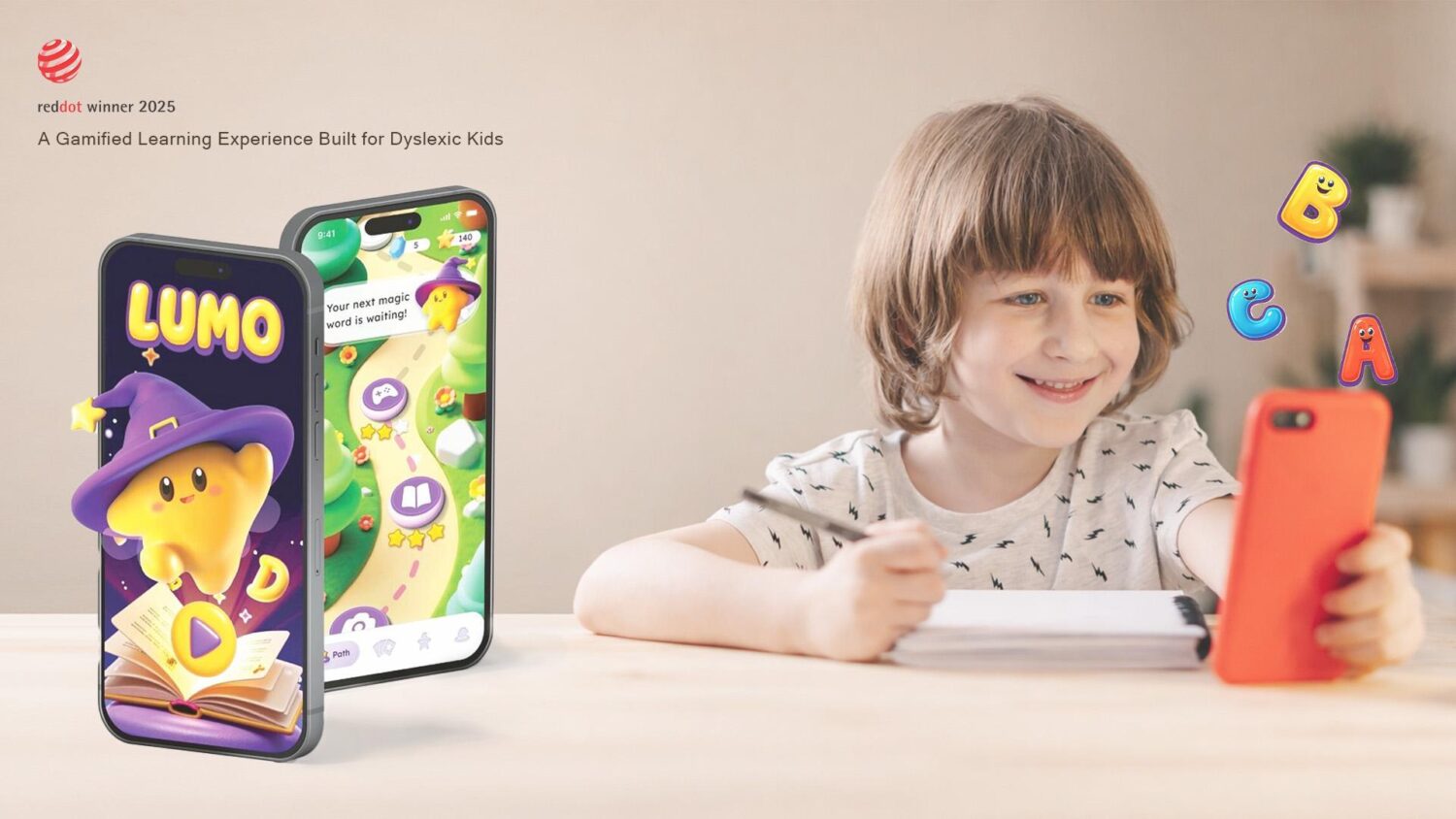
The same instinct carries into another of Ke’s recognized concept projects, Lumo, an AI learning app designed for children with dyslexia.
Educational technology often promises personalization, but tools designed for children with learning differences can still feel rigid, corrective, or emotionally distant. Lumo moves in another direction. Instead of centering difficulty, it emphasizes participation. Instead of reinforcing frustration, it creates an experience shaped by encouragement, adaptability, and play.
“I’m always thinking about the users who are usually not centered first,” Ke says. “A lot of products are technically accessible, but they still don’t feel emotionally accessible.”
That distinction matters in her work. Ke is not only interested in whether a product works. She is interested in whether it invites people in — especially those who are often flattened by one-size-fits-all systems.
Lumo reflects that philosophy. It does not frame dyslexia purely as a problem to correct. It imagines learning support as something more empowering, more engaging, and more humane.
Across both Milo and Lumo, a pattern begins to emerge. Ke’s work repeatedly creates space for people whose needs are often overlooked, misunderstood, or treated as secondary in mainstream product thinking.
Bringing AI into Everyday Creative Work
If Ke’s concept projects reveal her social values, her professional work shows how those values operate at scale.
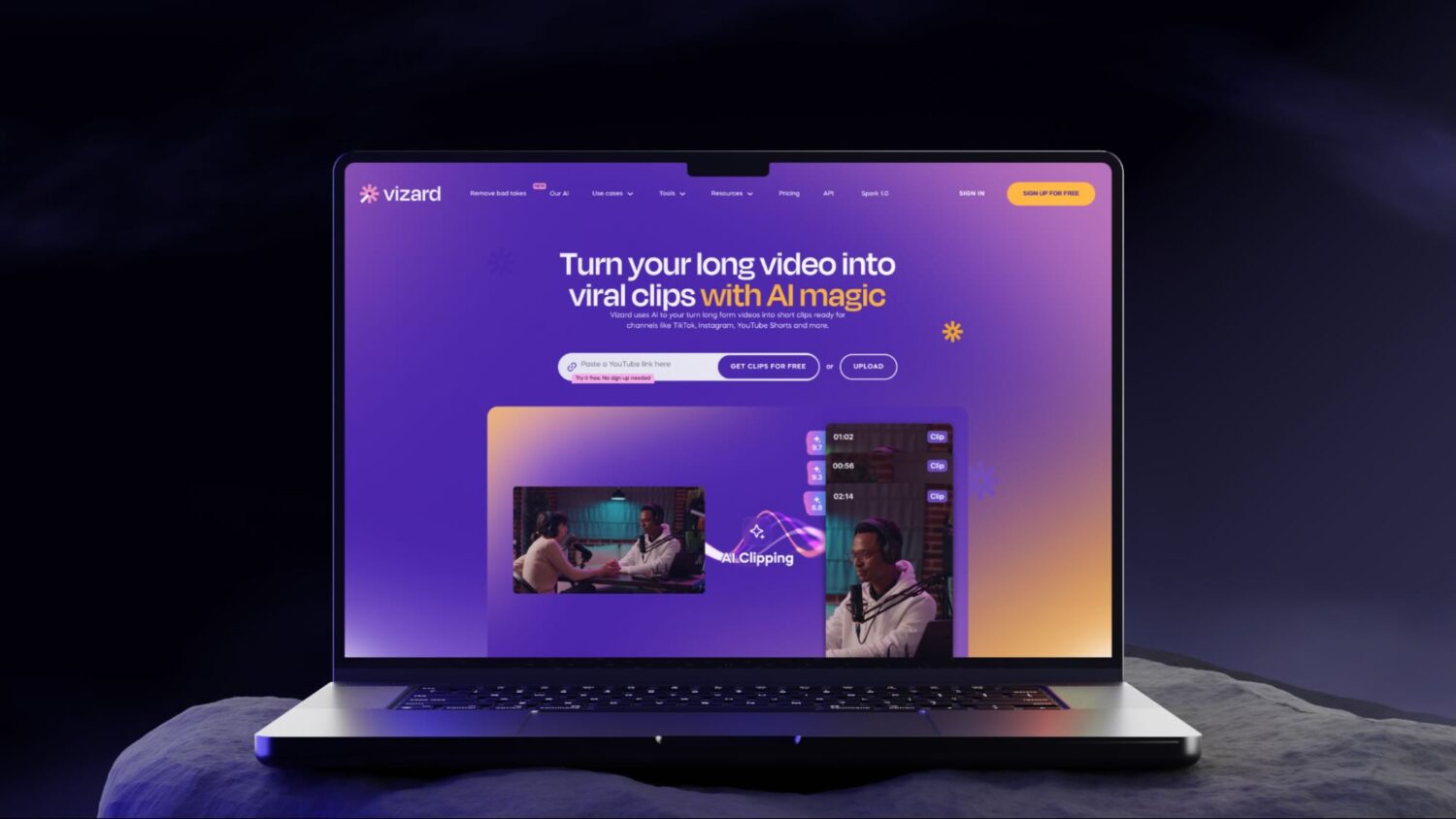
She currently works as a Product Designer at Vizard.ai, an AI-powered video platform built for the creator economy. The product helps users transform long-form content — including podcasts, webinars, interviews, and tutorials — into short, social-ready clips using AI. It identifies key moments, generates edits, adds captions, and prepares content for platforms like TikTok, Instagram Reels, and YouTube Shorts.
With more than one million users worldwide, the platform has become part of a broader shift in how creators, educators, agencies, and entrepreneurs produce media. But even in a high-growth AI environment, Ke’s attention remains grounded in the human side of the experience.
“AI can be powerful, but if people don’t understand it, they won’t trust it,” she says. “My job is often about making that intelligence feel legible.”
At Vizard, that means shaping workflows that feel intuitive rather than opaque. AI video products can easily become technical, abstract, or intimidating, especially for users who are not editors by training. Designing in that space is not only about making tools feel modern. It is about helping people understand what the system is doing, what happens next, and why they can rely on it.
That work has also received international recognition. Vizard.ai: Turns Long Videos into Viral Shorts with AI Agent was recognized in Product UX, underscoring the platform’s strength not only as an AI-powered tool, but as a product experience shaped with care.
“When I design for AI, I’m not only thinking about what the system can do,” Ke says. “I’m thinking about what the user needs to feel in order to trust it.”
Where Systems Thinking Meets Human Sensitivity
What makes Ke’s body of work notable is not simply the variety of industries she has worked across, but the consistency of the perspective behind them.
Whether she is designing for children in hospitals, students with dyslexia, or creators producing media at scale, she returns to the same core concerns: clarity, reassurance, usability, and emotional ease. Her projects may differ in context, but they are connected by a larger belief that design should not add noise to already difficult experiences.
That philosophy also reflects the hybrid nature of her practice. Ke works with the instincts of a visual designer, but also with the logic of someone thinking through systems: flows, behavior, adoption, user trust, and product structure.
“The best products don’t make people work harder to understand them,” she says. “They reduce friction, but they also reduce anxiety.”
This is especially relevant now, as AI tools move into more intimate parts of everyday life. The challenge is no longer only whether a system can perform a task. It is whether the experience around that system feels coherent, readable, and humane.
Ke’s work suggests that the future of AI design may depend less on spectacle and more on translation — the ability to shape advanced systems into experiences people can understand, navigate, and return to.
Recognition That Reflects More Than Style
Ke’s international recognition matters in part because of the institutions behind it, but also because of what those honors point to in her work.
Her award-winning projects are not driven by aesthetics alone. They stand out because they connect visual execution with larger questions of access, care, and usability. In Milo, that meant rethinking AI as emotional support for pediatric patients. In Lumo, it meant designing learning in a way that feels less alienating for children with dyslexia. In Vizard, it means making sophisticated AI video workflows accessible to a global creator audience.
“Function matters,” Ke says. “But what people remember is whether a product helped them feel capable.”
Together, these projects create the portrait of a designer whose work feels both imaginative and applied — rooted in strong product logic, but attentive to the emotional reality of the people inside the system.
At a moment when technology is becoming more influential and more invisible at the same time, designers like Ke are helping shape the terms on which people experience it.
Designing a More Human Future for AI
There is a tendency, especially in the AI world, to define the future through acceleration: faster tools, faster outputs, faster production.
Ke’s work points somewhere else.
It asks what happens when design slows down enough to notice the people who are anxious, excluded, overstimulated, or simply not being considered. It asks how AI might support people, not just impress them. And it suggests that some of the most meaningful innovation may come not from making technology feel more powerful, but from making it feel more understandable.
“The future of AI design isn’t only about intelligence,” Ke says. “It’s about interpretation — how we turn complexity into something people can actually live with.”
That is what ties together the arc of her work so far: a desire to use design as a bridge between intelligence and empathy, between innovation and care.
For Yujia Ke, the future of AI is not only about what technology can generate.
It is about what thoughtful design can make possible for the people using it.