
 Will Jones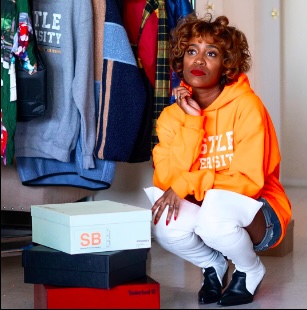
(Rashida Meggett, source: IAMSTYLES)
Luxury fashion is often associated with exclusivity and aesthetics, yet Rashida Meggett sees something deeper. Eighteen years into a career that has carried her from Mercedes-Benz Fashion Week glam rooms to Miss Universe wardrobe calls to arena tours with some of music’s most scrutinized performers, Meggett has come to view image as a powerful form of communication, one that can elevate confidence and embody the version of themselves they want the world to remember.
“A big part of what I’ve noticed with clients is that the better they look or the better they feel overall, their confidence grows,” Meggett says. “It plays such a big role in your overall feeling. Once you feel good, you stand out, and you prosper.” People move differently once they trust how they look, she explains, and that shift in movement changes what follows, how a pitch lands, how a negotiation unfolds, how an audience receives someone before that person has said a single word. “Imaging and Like go hand in hand,” she adds. “People move more like they are meant to be.”
That instinct did not arrive fully formed. Meggett traces her eye for clothing to childhood, watching the women around her treat dressing as a daily act of intention rather than routine. She entered the industry properly in 2006, working on MTV network commercials and assisting on Nikon ad campaigns before landing her first real apprenticeship with Stylewise in 2009, an entry point that put her inside music videos, award-show preparations, red carpet builds, and Mercedes-Benz Fashion Week within a matter of months.
“I learned fast because I had to,” she says, “Nobody hands you taste. You build it backstage, under pressure, watching what works and figuring out, quickly, what doesn’t.”
What sets a personal brand apart from simply dressing well, Meggett argues, is something closer to atmosphere than wardrobe. Plenty of people can assemble a beautiful outfit; access to quality clothing is no longer rare. “As the stylist, you’re creating a personal brand for somebody; it’s a whole feeling. There’s a mood behind it, there’s inspiration behind it. People recognize you based on who you’ve become through your image.”
That recognition, she believes, is the real product. Her credits bear this out: campaigns and editorials for Complex, GQ, and Harper’s Bazaar, wardrobe direction for Miss Universe, Miss USA, and Miss Teen USA, a tenure as Deputy Online Style Editor at YOOX/Net-A-Porter, and a client roster spanning Kanye West, Kodak Black, Birdman, and NBA YoungBoy.
Meggett is candid that some of her most important professional growth came from clients who initially resisted her instincts entirely. Early in her career styling Kodak Black, she recalls pieces he flatly rejected on sight, garments he wanted no part of, until he wore them and changed his mind in front of a camera. “He hated it at first, and then he saw the photos and couldn’t stop wearing variations of it for months,” she recalls.
She considers that pattern instructive rather than incidental: the client’s resistance was often the surest sign she had pushed past his comfort zone into something more interesting than what he would have chosen alone. “If a client agrees with everything immediately, I start to worry I’m not doing my job. Tension means we’re getting somewhere new,” Meggett adds.
That tension found its fullest, highest-stakes expression during NBA YoungBoy’s 2025 tour, eleven weeks, forty-two shows, performances stretched across the United States from Minnesota to Nashville to Phoenix. Meggett recalls the early friction plainly: YoungBoy wanted to stay grounded in the aesthetic his core audience already knew him by, while she was pushing toward something more theatrical, more stage-built, closer to a rock star’s silhouette than a rapper’s everyday wardrobe.
“There was a real back-and-forth,” she says. “He wanted to remain true to his aesthetic. I wanted him to look like he owned the stage the second the lights hit him. Those aren’t always the same thing, and I had to find where they met.” Her solution was to source vintage and thrifted pieces from inside each tour city itself, then rework them by hand into stage-ready looks, a strategy that let her introduce drama and scale without severing the authenticity YoungBoy was protective of. “Once he saw that the pieces still felt like him, just elevated, the resistance dropped,” she says. “He started trusting the process.”
The turning point, by her account, came roughly a third of the way through the run, when a reworked vintage leather trench coat sourced locally was photographed so well from the pit that fan footage of that specific look outperformed nearly everything else from the tour online within days. “That’s when I knew we’d cracked it,” she says. “Not because I thought it looked good, because the audience told us it looked good, immediately, at scale.”
From that point forward, she says, the collaboration shifted: YoungBoy began requesting input on city-sourced pieces before shows rather than reviewing looks only once they were finished. “Seeing how vintage played such a big role in connecting with audiences was one of my biggest takeaways from that experience. It confirmed something I already believed, that timelessness reads as authenticity, even on a stage built for spectacle,” she says.
Her broader styling philosophy distills to three working principles: wearability, versatility, and timelessness. She explains, “I believe in wearability, even when I’m styling the most luxurious designer pieces, I want clients to see that it’s wearable. I like mixing highs and lows; you can wear a floor-length designer ballgown and pair it with a T-shirt for a unique spin.”
Versatility follows close behind. “I’ll take one piece and style it seven different ways,” Meggett explains. “My clients are thrilled because they never think about all the potential alternatives.” Timelessness, though, is where she is most exacting. “Trends will always exist, but I believe in timelessness. I shop with the mindset of asking, can I wear this in five years? A person’s swag is usually hanging in their closet long before it’s ever in their mind.”
Meggett’s read on where fashion is heading is less sentimental than most. She believes quiet luxury, as a marketing label, has run its course, but will remain for some. She is watching Gen Z buy almost entirely on resale and archive platforms rather than current collections, a shift she considers permanent rather than cyclical, and one she says is already changing how she sources for younger clients. She is less convinced that AI will reshape styling at the level that matters most.
She says, “Software can suggest combinations, but it can’t read a room, and it can’t read a person’s nerves before they walk into one. That’s still human work, and I don’t think that changes.” Personal branding, in her view, has already escaped the gravity of designer labels entirely; recognition now travels through consistency of image across platforms, not through which house a person wears.
That consistency, she argues, is ultimately what separates a styled moment from an actual brand. “When we’re branding ourselves, it’s all about consistency. You want your audience not only to recognize you, but to relate to you,” she says.
Fashion, in her account, is never really the end product. “Fashion may start in the wardrobe, but its impact reaches far past it. The transformation happens when those clothes become an extension of your identity, and that’s when style turns into influence,” she explains.
Eighteen years and a list of artists, editorials, and titles later, Rashida Meggett’s body of work makes the case that her words only gesture toward: the stylists worth hiring are ultimately the ones who can make a person believe, the moment they walk into a room, that they were always going to be remembered in it.