
 Will Jones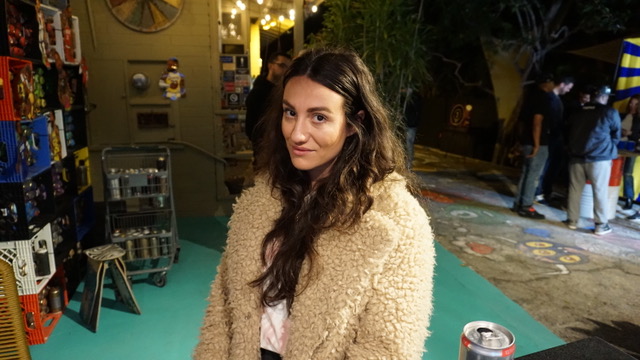
When audiences first entered the neon-lit aisles of Video Barn, director Bianca Poletti’s surreal coming-of-age horror short, they encountered something increasingly rare in contemporary filmmaking: a world that felt completely lived in.
Premiering at SXSW in 2025, Video Barn follows two friends working at a fading VHS rental store whose lives are upended after the discovery of a mysterious videotape. Blending nostalgia, horror, mystery, and dark comedy, the film asks audiences to believe in two distinct realities — the grounded world of a small-town video store and the unsettling alternate dimension hidden within a VHS tape.
Making that transition believable required far more than visual style. It required true world-building. That responsibility largely fell to production designer and art director Andrea Leigh, whose work became one of the film’s defining creative achievements. “Video Barn simply wouldn’t have been possible without Andrea’s talent and expertise,” director Bianca Poletti says. “She was responsible for every design detail you see in the film — from the posters and VHS box art to the store signage and branding throughout.”
For Leigh, the process began long before sets were built. Having collaborated with Poletti for years in the commercial world, the pair entered pre-production with an established creative shorthand. Rather than focusing solely on visual references, their earliest conversations centered on emotional tone and audience experience. “We spent a great deal of time discussing the feeling we wanted audiences to experience when entering the world of Video Barn,” Andrea explains. “We wanted something authentic, grounded and lived-in, while still maintaining a heightened visual identity.” This distinction became the foundation of the production design strategy. The filmmakers deliberately avoided creating a nostalgic fantasy version of the 1980s. Instead, they envisioned a place that felt real; a surviving relic from another era. Every design choice was guided by the idea that the environment itself should function as a character. “We wanted the spaces to communicate history, mood, and subtext before a character even spoke a line of dialogue,” says Leigh.
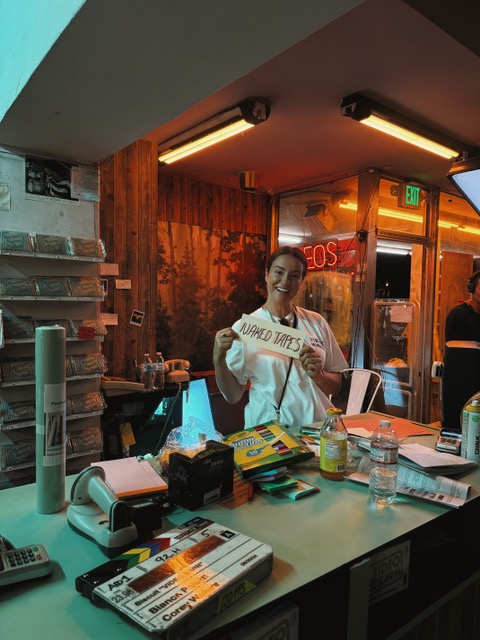
The result is the Video Barn itself: a fictional video rental store that feels remarkably authentic. Wood-paneled walls, hand-painted scenery, aging VHS displays, neon signage, and countless small details combine to create a location that feels less like a set and more like a forgotten community landmark. That authenticity proved especially important during the film’s opening sequence, where viewers are introduced to Hannah and Julie as they watch The Texas Chain Saw Massacre inside the store. The environment immediately communicates who these characters are. Their love of horror movies, their friendship, and their status as outsiders are embedded within the space itself. “This wasn’t just a video store,” Andrea professes. “It was their world.”
As the story progresses and Julie discovers the mysterious Lucida VHS tape, production design pivots to a different function. The challenge was creating an object capable of drawing both the character and the audience toward danger without appearing overtly threatening. Working alongside graphic designer Ryan Lawhon, Leigh designed the tape as a forgotten artifact rather than a conventional horror prop. “We wanted it to feel like something you might genuinely discover in the back corner of an old video store,” she says. “The nostalgia is what draws her toward it.” This philosophy reflects a larger principle visible throughout the film: horror emerges not from obvious threats but from corrupted familiarity.
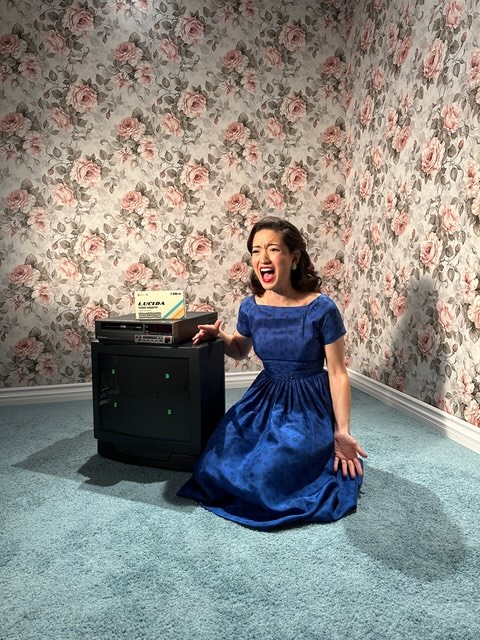
Perhaps nowhere is this more evident than in the film’s alternate reality. Once characters cross into the world hidden inside the VHS tape, audiences encounter an environment radically different from the weathered authenticity of the Video Barn. Floral wallpaper, pristine interiors, bright colors, and idealized mid-century imagery create an atmosphere which initially appears welcoming. The sense of unease comes from its perfection. “The world inside the tape was designed as a version of nostalgia frozen in time,” Andrea explains. “It feels beautiful at first, but that beauty eventually becomes unsettling.” The contrast between these two worlds became one of the production’s greatest creative challenges. The environments needed to feel entirely distinct while remaining emotionally connected. For Andrea, achieving this balance required an extraordinary level of detail.
One of the project’s most ambitious undertakings involved creating every piece of media visible inside the store. Rather than relying on existing movie artwork, Leigh and Lawhon designed an entire fictional catalog of films from scratch. Every VHS cover, movie poster, title treatment, and graphic element was created specifically for the production. “It was a massive undertaking,” Andrea says. “The details needed to immediately communicate nostalgia while also supporting the personality of the store and the characters.”
The work exemplifies a philosophy increasingly valued by filmmakers working in genre storytelling: production design as narrative construction rather than decoration. That commitment to storytelling through environment is one reason the film earned recognition beyond the horror community. Video Barn was shortlisted for Best Production Design at the Shark Kinsale Awards and later received Silver recognition at the 1.4 Awards of Brilliant Filmmaking. For Poletti, those honors reflect what made Leigh’s contribution so essential. “Andrea combines an incredible work ethic with genuine artistic vision,” Poletti says. “She’s always thinking several steps ahead, bringing thoughtful solutions and creative ideas long before they’re needed. “The director also credits Leigh’s collaborative approach as a major factor in the project’s success.
Production design, cinematography, costumes, and direction were developed in constant dialogue, allowing every department to contribute to a unified visual language. Working closely with cinematographer Corey Waters, Andrea Leigh helped establish an approach where color, texture, composition, and lighting all supported the same emotional goals. The result is a film in which the audience never feels the seams between departments. Viewers experience a complete world. For Leigh, that accomplishment represents the most rewarding aspect of the project. “Production design is about constructing belief,” she says. “When it works, audiences don’t notice the individual pieces. They simply feel the world as an emotional reality.”
In Video Barn, that reality becomes the foundation for everything else. The friendships feel genuine because the spaces feel inhabited. The horror feels effective because the nostalgia feels authentic. The surreal moments resonate because the audience has first been grounded in something believable. It’s a reminder that some of the most important storytelling in cinema happens long before actors step in front of the camera.