
 Matt Emma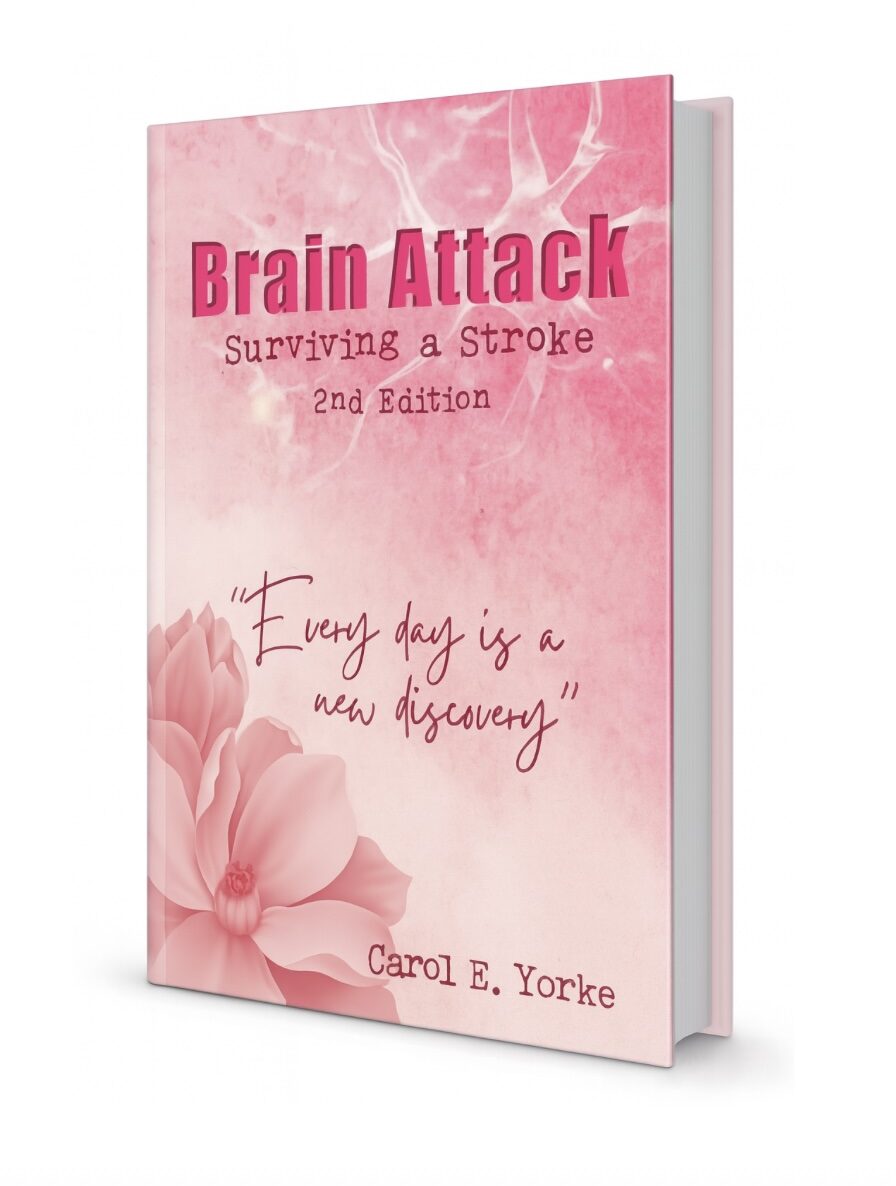
When Carol E. Yorke woke up one morning at the age of 62, unable to move the left side of her body, she had no idea that her life was about to be rewritten in ways she couldn’t yet imagine. The stroke that left her partially paralyzed also ended her 25-year career as a CPA, leaving her to navigate a future that looked nothing like the one she had planned.
Yet instead of allowing herself to be defined by loss, Yorke turned toward a path of resilience, creativity, and service, one that would make her a voice of encouragement for stroke survivors. What she could no longer pursue in numbers and ledgers, she found in words.
Her first book, Brain Attack: Surviving a Stroke, emerged from the simple but powerful idea of “writing what you know.” Yorke’s story is candid, practical, and deeply uplifting, filled with tools and lessons she herself leaned on during recovery. From mindfulness practices to positive affirmations like “I am strong, I am a survivor,” the book quickly became a source of catharsis for her, and a guidepost for readers searching for hope in the aftermath of a devastating diagnosis.
Brain Attack: Surviving a Stroke
“I wanted people to understand that life doesn’t end after a stroke,” she explains. “As long as you’re alive, there’s still more life to live. It can be joyful, even when you think it’s done.” That message has become her mantra, echoed in the way she speaks, writes, and lives.
Despite taking a lighthearted approach to her circumstances, Yorke never lets humor obscure the gravity of what she has overcome. Instead, she uses it to lead a life not burdened by the challenges she has encountered. That distinction, thriving versus merely surviving, runs through all of Yorke’s work.
The World Stroke Organization estimates that 94 million people worldwide are living with the effects of stroke, a number that underscores the need for voices like hers. Too often, survivors are isolated, overlooked, or made to feel as though their best days are behind them. Yorke’s writing and public presence push back against that narrative, reminding others that survival itself is proof of strength and a reason for pride.
Her authorial journey is just beginning. Alongside Brain Attack, Yorke is now preparing two additional projects. The first, A Stroke of Luck: Memoirs of a Thriving Stroke Survivor, is her autobiography, more than a decade in the making. It began as a plan to chronicle her medical ordeal, but it has now expanded into a sweeping life story that connects her childhood with her present role as motivator and mentor.
“My whole life was preparing me for this,” she reflects. “All the changes I had to adapt to as a child taught me how to face the changes after my stroke.”
The second project, The Official Stroke Joke Book, takes a different but equally important approach. As she infuses humor into the conversation, Yorke hopes to break down the walls of discomfort that so often surround discussions of illness and disability. “If you joke, you humanize it,” she says. “And that makes it easier for people to talk, to share, to feel less alone.”
Yorke’s positivity isn’t just an inherent personality trait. It is a deliberate practice, one she nurtures daily and shares freely with others. Through her writing, she aims to remind survivors of what they already know deep down: they are stronger than they think, and capable of living fully, even after life has changed. Her writing is driven by one single force: empathy.
“I care,” she says. “I see others struggling, and I know what works. If my story can help them, then that’s what I’m here to do.”
In Yorke’s words, survival is not the end of the story but the beginning of a new one. And with each book, each page, and each shared laugh, she proves that a life reshaped by stroke can still be rich with meaning, joy, and possibility.