
 Jon Stojan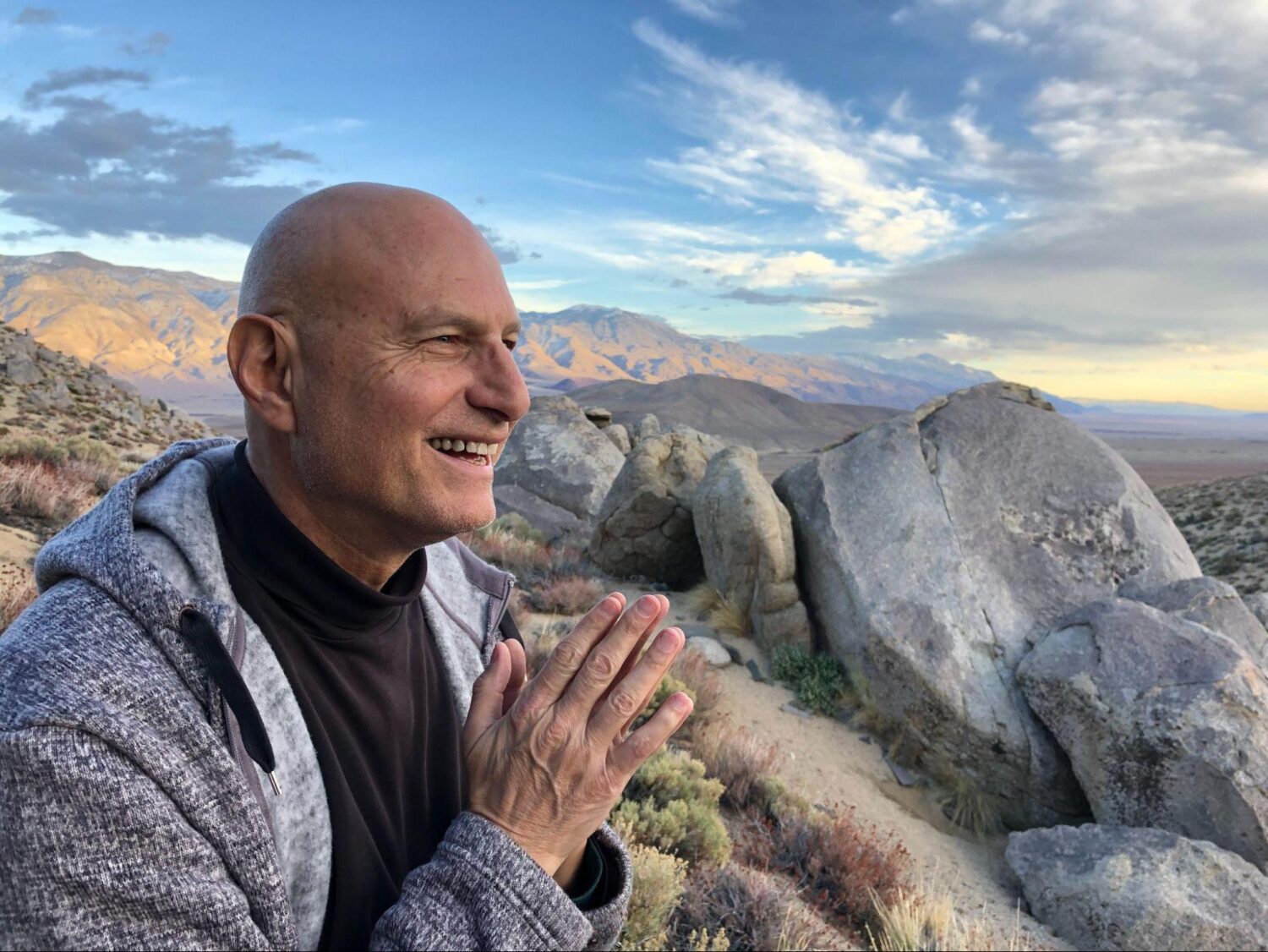
Image credit: Frederick Marx
The Thanksgiving and Christmas holiday season is a time for family and friends to gather, enjoying each other’s company over a bountiful feast. It’s a time for celebration and joy, not a time to be contemplating problems and worries. However, behind what can feel like a facade of happiness lies the fact that the world as we know it is coming to an end. It won’t be the Earth being obliterated by a giant asteroid impact, but rather the collapse of modern industrial civilization, bringing about the end of material Western society as we presently know it.
As the climate crisis continues to unfold, human society is at peril. Warming global temperatures result in more frequent and more potent natural disasters, such as hurricanes, typhoons, and wildfires. Climate change and other human-caused actions are behind desertification, floods, and the loss of biodiversity, making many areas predicted to become uninhabitable for humans in the future. As refugees flood into new places to live, this creates a great potential for conflict.
According to Frederick Marx, author, Oscar-nominated filmmaker, and founder of nonprofit studio Warrior Films, climate refugee conflicts, coupled with conflicts due to economic and political refugees, will further accelerate the world’s slide from democracy towards authoritarianism, resulting in the emergence of neo-feudalism, where politics, economy, and governance share characteristics of feudal societies, including massive social inequality ruled over by small and powerful elites. With autocratic parties achieving electoral victories in many countries, Marx says the decline of Western liberal democracy is in full swing. Furthermore, international conflicts, particularly in Eastern Europe, the Middle East, and Africa, only show signs of escalating, and, as country alliances continue to coalesce, North Korean soldiers now fighting in Ukraine, for example, there is a very real possibility that these regional conflicts will progress into a Third World War in the next few years.
“As people suffer from the increasing scarcity of resources, it becomes clear that we can no longer sustain the standard of living that we in Western society have enjoyed for so many years and those living in developing countries have aspired to reach,” Marx says. “Wes Jackson and Robert Jensen, in their book An Inconvenient Apocalypse, talk about downpowering – how we all need to consciously reduce consumption and create a system where contraction, not growth, is the goal. But, since we’re not doing it consciously, I believe we’re going to hit a wall very soon. Worse, many autocratic leaders pretend it’s not occurring, and will only exacerbate it by increasing carbon extraction, trying to artificially sustain a certain standard of living for certain select citizens while advancing environmental collapse.”
Marx believes that for humanity to survive the impending collapse, it must reframe idealized narratives and challenge the capitalist paradigm of progress while embracing sustainable cooperative living. He argues that modern industrial society was founded on the myth that growth can be infinite. But this is impossible due to limited space and resources on the planet. Currently, humanity uses 1.7 times more resources than the Earth can regenerate. Additionally, if the global population were to live like Americans, they would need 5.1 worth of Earth’s resources.
“Every year, countries measure their Gross Domestic Product (GDP) as a metric for economic progress,” Marx says. “But we must supplant that notion with something along the lines of what the Bhutanese people do and measure Gross National Happiness. Instead of prioritizing economic growth at the expense of people and the environment, we should pursue what keeps citizens happiest. However, we need to combine that with the notion of downpowering. We have to understand that endless consumption is the pathway to planetary suicide, as we’re already consuming more resources than the planet can provide – in essence, stealing from future generations.”
Another narrative that needs to be reframed, according to Marx, is the ‘me, me, me’ narrative, where it’s all about the individual’s self-interest. This self-centered philosophy is the cause of so much conflict, as people are only interested in seeing themselves, or those who resemble themselves, succeed. This results in the exclusion or ‘othering’ of many groups of people, leading to apathy or even outright malice against them. He urges people to begin thinking in an ‘us, us, us’ mentality, realizing that all people are interconnected and interdependent.
All this talk of collapse can be disheartening, and it’s tempting for people to withdraw and wallow in their despair. However, Marx says that people must resist this urge and instead draw out the Jungian archetype of the Warrior in themselves, which is part of Warrior Films’ mission and the reason for its name. The archetypal Warrior signifies protection, not aggression or domination. Instead, Warrior energy results in strict self-discipline, vigor, and a fierce commitment to protect family, friends, and community.
“We have to recognize that we have limited control over the greater systems that are collapsing around us,” Marx says. “As Warriors, we have to focus locally, including protecting and developing sustainable resources such as energy, food, and water. Part of that focus must include maintaining our own mental well-being in the face of all of these collapsing systems and structures. Through meditation, growth work, and shadow work, we can maintain balance and still find joy amidst great uncertainty.”
Meditation reminds people that change is inescapable and helps them let go of material desires, which are what fuel environmental destruction. Marx also highlights the importance of shadow work, referring to the Jungian concept of the shadow, or the negative parts of one’s personality that they suppress. By learning about their own shadow and accepting their own internal darkness, one can avoid projecting it onto others and othering them.
“Instead of focusing on differences, we should focus on commonalities, such as love for family and friends. This Thanksgiving, I am celebrating it with my girlfriend and her ex-husband, along with the two grown children they had together and her ex-husband’s new girlfriend. My girlfriend’s sister will also bring her current partner and ex-husband, along with his new girlfriend, and their respective families. In this unconventional gathering, I will raise a glass to recognize and appreciate that if we, as a community of celebrants, can accept each other and all of our differences while coming together in celebration, in gratitude for this wondrous life, in a sense, re-forming community in real-time, we can then serve as a model for the rest of the world.”