
 Nia Bowers
As AI-assisted workflows enter clinical operations, the award-winning product designer argues that healthcare innovation will only work if clinicians and patients can understand the systems placed in front of them

When Han Meng’s contributions to the LastMinute Healthcare Workforce Co-Pilot secured both a 2026 iF Design Award in UX Health and Wellness and a 2026 Red Dot Award for Brands & Communication Design, the achievement elevated a healthcare operations tool into the global spotlight. With the iF Design Award attracting over 10,000 international submissions and the Red Dot Award—a benchmark of excellence since 1955—utilizing a rigorous panel of 30 global experts, these dual honors validate the platform as a premier example of design strategy. This recognition underscores Meng’s argument that the sophisticated technology powering clinical workforce operations deserves the same level of design scrutiny and international prestige as patient-facing medical platforms.
For Meng, a senior product designer specializing in healthcare UX and FDA-regulated digital platforms, the award mattered because the project addressed a problem that healthcare cannot afford to treat as secondary: trust. AI can suggest, sort, predict, and accelerate, but healthcare technology has a more basic test to pass before any of that matters. The person using it has to understand what is happening.
“Healthcare technology cannot ask users to guess what is going on,” Meng says. “If the interface is confusing, people hesitate. If the system feels opaque, they may not trust the recommendation, even if the technology behind it is strong.”
That concern has become more urgent as AI enters clinical operations through multi-agent systems, workforce platforms, decision-support tools, and workflow automation. The healthcare industry is moving quickly toward systems that can coordinate tasks, surface recommendations, and reduce administrative load. Yet Meng sees a gap between what these systems can do and how clearly they explain themselves to the people expected to use them.
Her Co-Pilot project reflected Meng’s belief that AI-assisted healthcare tools need trust built into the interface itself. A technically strong platform can still fail if the user cannot understand why information appears, what action is being suggested, or how much room remains for human judgment. In workforce settings, that clarity matters because decisions often affect schedules, coverage, team capacity, and downstream patient experience.
“Operations may look separate from care, but it is connected,” Meng says. “If staffing tools are hard to use, if workflows are unclear, if people cannot make decisions quickly, that pressure moves through the system.”
Meng does not treat trust as a soft design value. She sees it as a product requirement. A user needs to know what the system is doing, where the recommendation comes from, and when their own expertise should override the tool. The interface has to make those relationships visible without burying people in explanation.
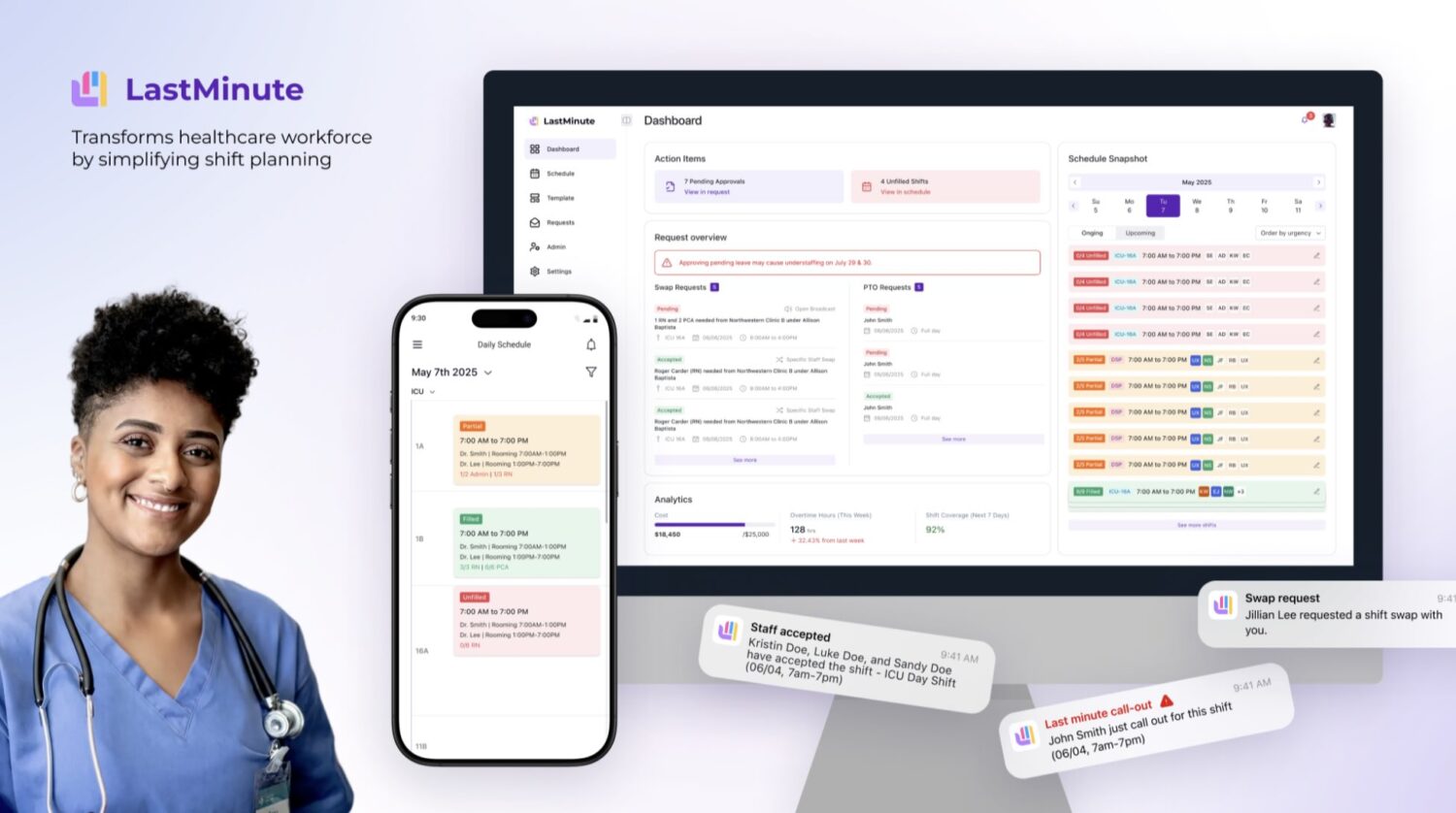
“The design has to show enough of the system’s thinking for people to stay oriented,” Meng says. “You do not build trust by hiding complexity. You build it by making the right parts understandable.”
That is where Meng believes many healthcare AI products are still underdeveloped. Engineers may build powerful models, and organizations may invest in promising platforms, but the final product often reaches users through an interface that was treated as the last step. In healthcare, that order can be risky. The design is not the wrapping around the system. It is the place where people decide whether they can use the system with confidence.
The issue becomes more serious because many healthcare users are not technical. A clinician may not have time to decode a platform’s logic during a busy day. An operations leader may need to evaluate a recommendation quickly. A patient may already feel overwhelmed before opening a portal. AI can help only if the person using it understands enough to act wisely.
“Capability alone does not make a tool useful,” Meng says. “In healthcare, the user needs a clear path to judgment. The system should support that judgment, not replace it without explanation.”
Meng’s years in FDA-regulated pharmaceutical UX sharpened that view. Working across eight pharmaceutical brands taught her to design within environments where accuracy, review, and user understanding all have to coexist. Her work includes therapies connected to spinal muscular atrophy, Friedreich’s ataxia, and follicular lymphoma. That background shaped how she approaches AI-assisted tools. The interface must guide attention, preserve important context, and help users see what matters before they act.
Meng’s earlier regulated-platform work had already shown how structure can affect engagement. On SKYCLARYS, she helped turn reviewed medical content into a clearer digital experience that outperformed both HCP and DTC goals within its first 90 days. For Meng, the result was evidence that rigor and usability can support each other when design is treated as part of the strategy.
“In healthcare, clarity is not the same as cutting detail,” Meng says. “The interface has to help people see what matters and what action makes sense next.”
That principle becomes even more important as AI-assisted workflows expand. In a static healthcare site, a designer organizes information so users can find what they need. In an AI-supported system, the designer also has to account for recommendation logic, user control, uncertainty, and trust. The experience must help people understand not only the content, but the behavior of the tool itself.
For Meng, that is why designers need to be involved earlier in healthcare innovation. The questions that shape trust are not cosmetic. They affect product architecture, workflow, hierarchy, content, and decision-making. By the time a tool is ready for visual polish, many of the most important trust decisions may already have been made.
“Designers should be in the room when teams are deciding how the system behaves,” Meng says. “By the time you are only arranging screens, it may be too late to fix the user’s real problem.”
That perspective has also informed her work as a judge and evaluator. Meng has been invited to serve as a 2026 IDSA Awards judge, a Grand Juror for the A’ Design Award, and a judge for MIT Reality Hack 2026. Those roles place her in conversations about design quality, emerging technology, and how new tools are evaluated beyond novelty.
Her approach to trust in multi-agent AI has also been recognized beyond healthcare. Her work leading the user-flow and trust architecture for the agentic-AI platforms PhotoG and Caster received two additional 2026 Red Dot Awards.
Her long-term focus remains healthcare product design, especially AI-assisted workflows and immersive training that can improve clinical operations and patient outcomes. She also plans to publish a framework for FDA-regulated pharmaceutical UX design, a resource that could help other teams avoid rebuilding the same process from scratch.
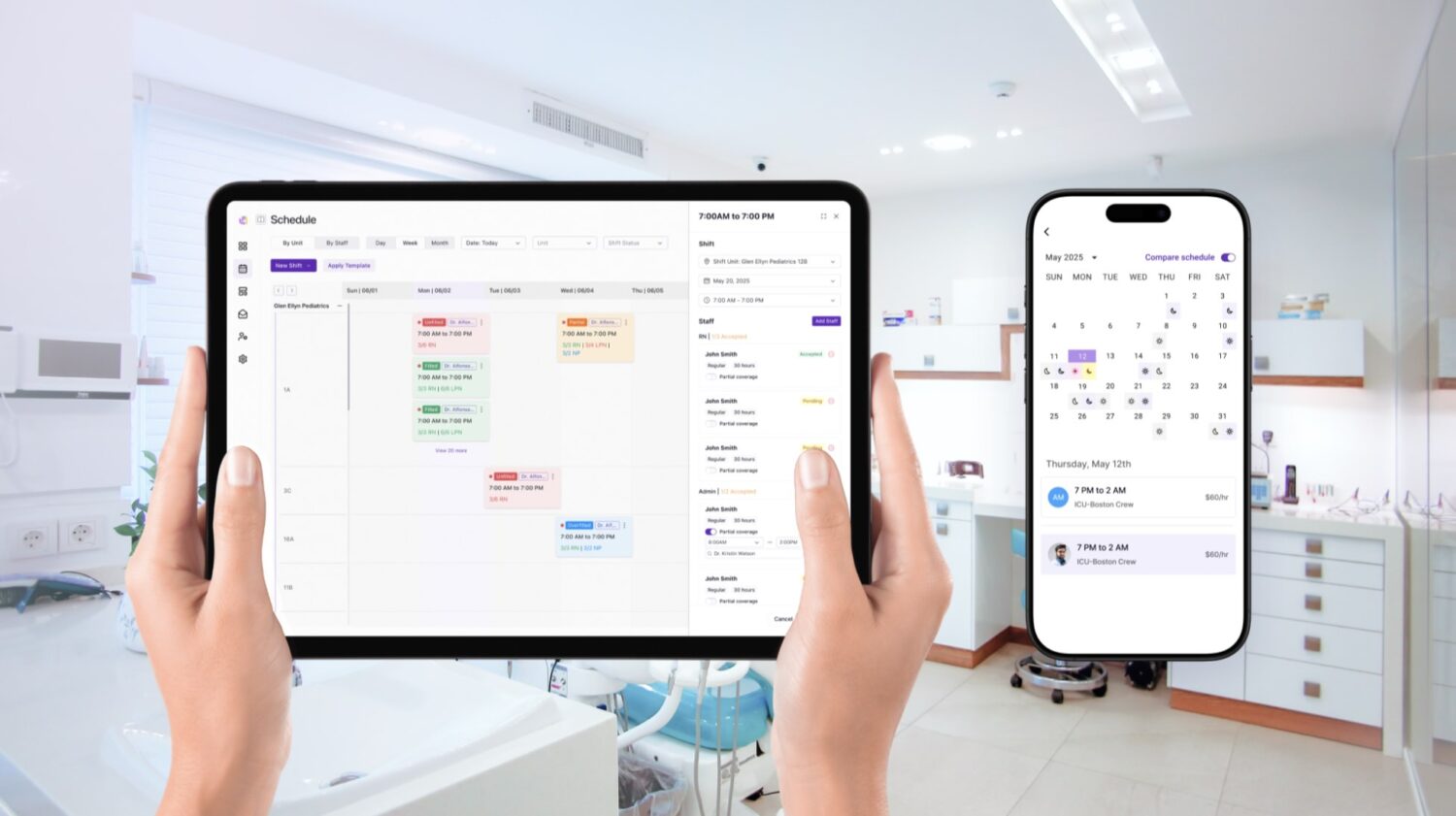
The need for that kind of framework is growing. Healthcare technology is moving into a phase where more systems will assist, recommend, automate, and adapt. The question is whether people will be able to understand those systems well enough to use them responsibly. Meng’s work demonstrates that design methodology can meet regulatory and clinical-trust requirements at scale while helping healthcare organizations adopt advanced technology more safely.
“Healthcare innovation has to meet people where they are,” Meng says. “The most advanced tool in the room is not useful if the clinician does not trust it or the patient cannot understand it.”
That is the standard Meng brings to healthcare technology. The product has to work technically, but it also has to work humanly. In the next phase of healthcare AI, that may be the difference between tools that impress the industry and tools that actually change the way care is delivered.