
 Will Jones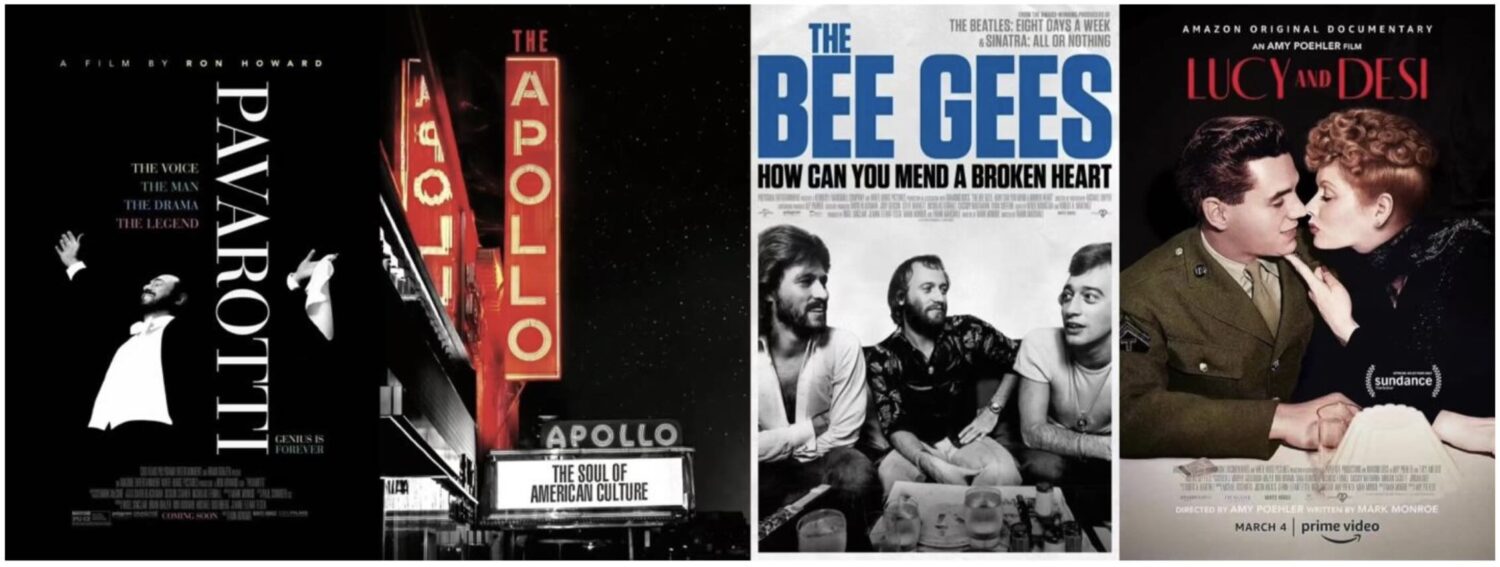
Posters of past projects (left to right):
Pavarotti, The Apollo, The Bee Gees: How Can You Mend a Broken Heart; Lucy and Desi
Pop culture documentaries come in many forms. The spectrum ranges from the concert film—Taylor Swift’s Eras Tour, BTS: Yet to Come—where fans pack theaters as a communal ritual, to documentaries zooming in on significant cultural movements or events, and then biographical documentaries that trace an artist’s life and career. And yet, Windsor Wong argues, the impulse is exactly the same. “It’s always about the power of the art as well as the human story beyond the spotlights,” the producer says of the sub-genre her work has primarily inhabited. “With a biographical documentary, you’re experiencing that artist in a pseudo-live way. You witness the story, you are immersed in the performances, and you feel all the emotions of the ups and downs. For a younger viewer discovering the subject for the first time, it allows them the closest thing to traveling back in time and experiencing the culture firsthand. And for the longtime fan—the one who grew up with the Beatles or heard Pavarotti sing at a Three Tenors concert—it’s about reliving their own life, reliving who they were in those moments.” In a way, the documentary creates a dialogue between then and now, reaching back and pulling the emotional core into the present—for everyone, whether they were there or not.
Windsor Wong has spent her career building exactly that kind of bridge. As a documentary producer whose credits include the Grammy-winning The Beatles: Eight Days A Week and The Bee Gees: How to Mend a Broken Heart, the Emmy-winning Lucy and Desi, and many more, she has stood at the crossroads where pop culture history meets the present tense. Her work has earned six Emmy nominations (winning for Outstanding Writing for Nonfiction Programming), a Grammy, a Peabody nomination, and an Oscar shortlist mention. But she doesn’t see documentary as a mere mirror reflecting pop culture back at us. “The audience wants to feel closer to the artist, to understand the labor behind their work, to be part of a shared experience that extends beyond an album, a performance or a TV show,” she says. “And that’s what we do in this genre—artfully crafting the film as a live wire that channels the audience into that shared experience. This way, a documentary is not just capturing the pop culture of then; it’s simultaneously creating the pop culture of now.”
That philosophy has guided her through a remarkable run of critically acclaimed projects. “Pavarotti is about how he democratized opera,” Wong explains. Before Pavarotti, the classical arts were considered elite—perhaps too foreign or niche to a lot of the world’s music listeners. But Luciano saw the power of mass connection and cultural accessibility. He performed recitals in rural towns with no opera houses, went on popular talk shows, and participated in history-making live telecasts of operas, beaming the art form into living rooms across America and the world. “Pavarotti called himself a peasant, and he had a deep conviction that opera belonged to all people,” she adds. By the time he was filling stadiums all across the world, he had become a rock star a cut above anyone else, across genres. “That belief made him a global sensation—not in spite of opera, but because he understood that opera is pop when it connects,” Wong emphasizes. Bringing that mission to the screen, White Horse Pictures—the powerhouse documentary production company behind the film, with Wong on its producing team—pushed for a theatrical release instead of streaming. “We believed that in order for the audience to fully live the story and feel the power of his art, they must experience it in a theater,” she says. The gamble paid off: Pavarotti grossed over $8 million globally, sits in the top twenty concert documentaries in U.S. box office history alongside Michael Jackson and Taylor Swift, and holds a 97% audience score on Rotten Tomatoes. The documentary didn’t just preserve his legacy—it re-enacted his mission, bringing his voice to newer generations.
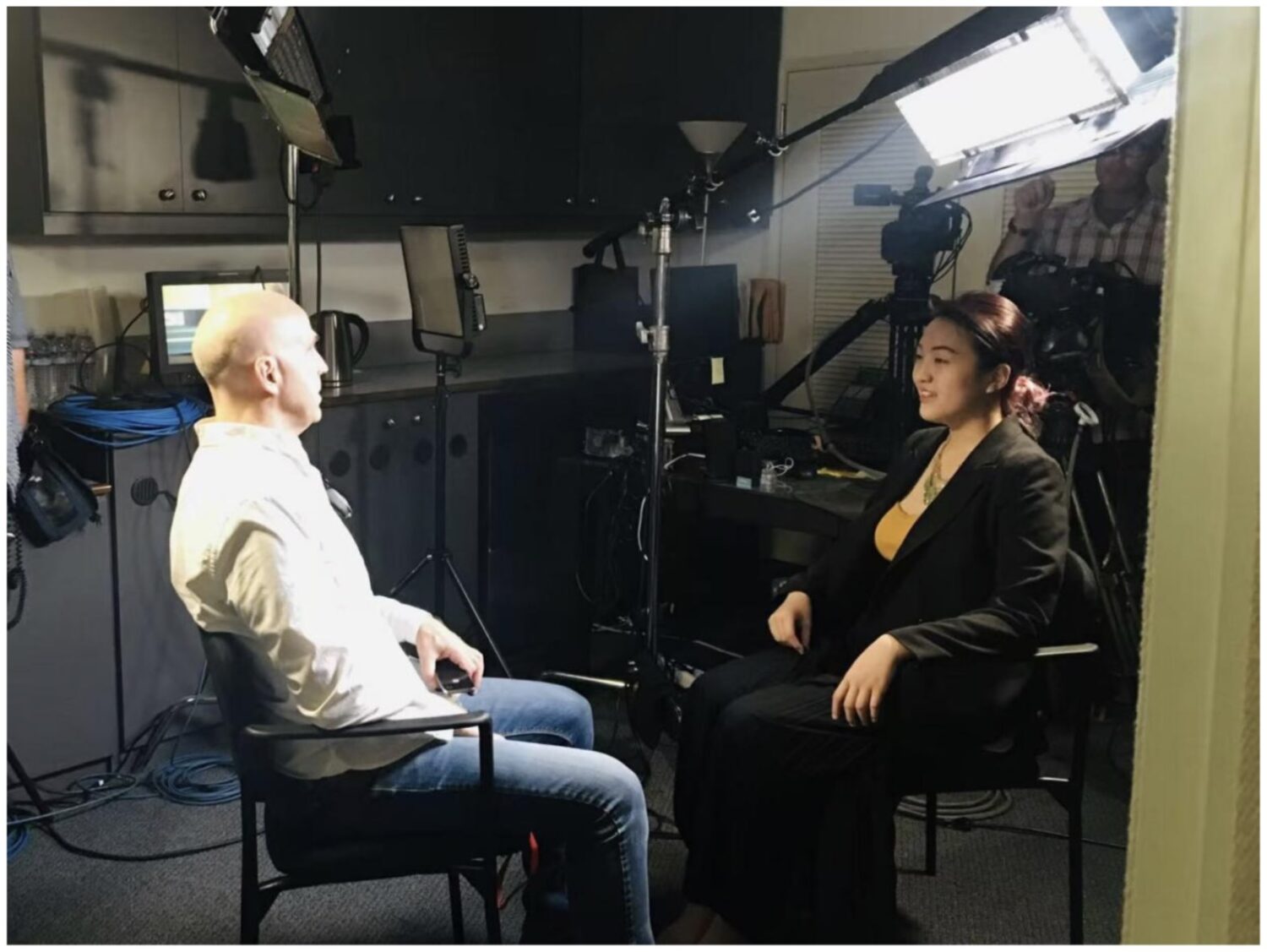
Windsor Wong (on the right)
The same interplay plays out in Wong’s last film, Lucy and Desi, the Emmy-winning portrait of Lucille Ball and Desi Arnaz directed by Amy Poehler. The documentary depicts the Hollywood power couple who shaped American television and pop culture in the 1950s, earning two Emmy award wins and six nominations. “They were pioneers on so many levels, breaking social norms of gender and race, which is still very relevant today,” she continues. “It’s not a coincidence that so many of us in the industry still want to tell their stories.” She nods to the fact that the documentary arrived almost simultaneously with Aaron Sorkin’s narrative biopic Being the Ricardos starring Nicole Kidman and Javier Bardem. In bringing Lucy and Desi’s story back into the spotlight alongside a Hollywood feature, the film created a beautiful feedback loop: “The best documentary doesn’t just preserve a moment,” Wong reflects. “It extends it. It gives the moment new life, new context, new audience.”
But Wong has also stepped beyond the role of observer. In recent years, she has worked directly with pop musicians as a creative producer—contributing to music videos, developing tour content, shaping artists’ brands. “It has certainly informed my perspective as a spectator and storyteller of these pop culture narratives,” she admits. “Just like I’ve always believed, a good documentary is never just capitalizing on an artist’s fame.” Wong is currently developing a new project: she is embedded with a young artist with a K-pop background on a major world tour, toying with the idea of a feature documentary. “It’s very early stages, but the tour waits for no one, so we’re already shooting to capture in real time. But we are also taking the time to ask ourselves: what is the actual story? To me, that’s the most fun part.” Wong notes that the project sits inside the new wave of music documentaries as pop culture events. “All the music docs are doing so well. It’s not just documentation; it’s becoming part of the main text, because there’s so much power in this medium.”
For Wong, this is the natural evolution of a career spent at the intersection of entertainment and meaning. “I love the craft of making these documentaries—creating that connected experience, pulling the emotional core into the present, and in doing so, shaping the cultural conversation today.” She pauses, considering her own words. “To me, though, the real magic on top of it all is the democratizing power of mass media. I’m a child of pop culture—raised by movies, TV and pop music, you know? And I’ve always believed in that power. It makes you feel like you belong in something bigger. Now as a filmmaker, I get to be a part of shaping that. For me, that’s a joy I never take for granted.”