
 Will Jones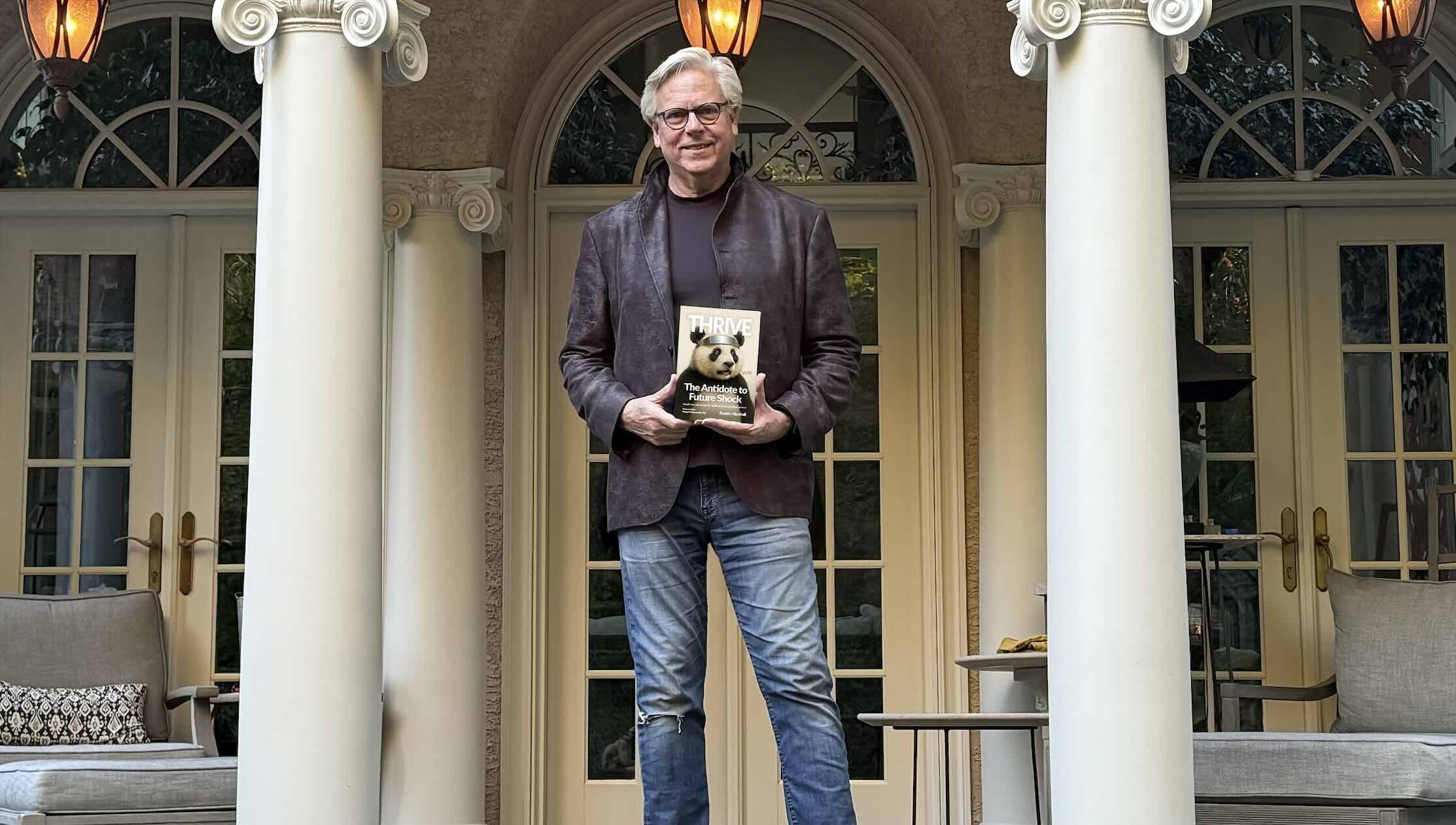
Is AI the Greatest Threat—or the Greatest Opportunity—for LA’s Creators?
Walk down any block in Los Angeles and you can feel it: excitement and anxiety humming in the same frequency. Filmmakers debate deepfakes over lattes in Silver Lake. Editors whisper about automation in post-production suites. Musicians wonder whether algorithms will remix them out of existence.
But what if the story of artificial intelligence in Hollywood isn’t just about loss? What if it’s the next big creative revolution?
That’s the question at the heart of THRIVE: The Antidote to Future Shock, the new book by Fredric Marshall—a former CEO turned writer who splits his time between strategy, systems thinking, and soulful design. His premise is simple: exponential change is coming for everyone, but the people who will flourish are those who learn to partner with it, not panic over it.
From Fear to Flow
Marshall doesn’t dismiss the fear. “When everything accelerates, your nervous system feels it first,” he says. “The negative newsfeeds, the overwhelm, the chaos—it’s Future Shock in real time.”
His solution isn’t to slow the world down. It’s to evolve our internal operating system so we can move with speed and stay sane.
“THRIVE,” he explains, “is about teaching your mind and body to keep pace with exponential change without burning out. It’s a playbook for creators who want to stay human while working with the machine.”
A System Built for Artists and Builders
The book introduces two frameworks now being picked up by entrepreneurs and creatives alike.
- The PANDA System—five steps (Pause, Attention, Narration, Decision, Action)—helps artists interrupt the loop of overwhelm and anxiety and recenter energy into meaningful work.
- The Super 8 Ecosystem is a holistic approach to organizing health, relationships, assets, and purpose into one elegant structure, reminding readers that their art and their life are not separate things.
If that sounds cerebral, it isn’t on the page. Marshall’s writing blends neuroscience, design thinking, and pop-culture rhythm—think Atomic Habits meets The Artist’s Way—with stories drawn from LA studios and tech labs alike.
It starts with perspective: Sampling beats and hooks—and then integrating them into full songs—has been part of the creative process for decades. Mark Ronson famously elevated that craft, turning fragments from older records into new, genre-defining sounds. Today, savvy creators are using AI the same way—generating beats, textures, and melodic ideas that can be woven into larger compositions reflecting their own artistic sensibility. Los Angeles has always lived at the leading edge of creative imagination. AI is simply the next instrument in that lineage, another tool for a city that thrives on reinvention.
Reclaiming the Spark in a Machine Age
For Marshall, AI isn’t just about stealing art—an important issue that needs to be addressed—it’s about elevating our humanity. “The tools can already imitate,” he says. “What they can’t do, at least for now, is give the audience a fresh new perspective. And in many ways, that’s what great art does.”
That line has become something of a rallying cry among his readers. He argues that perspective—caring deeply attention, empathy, and aesthetic judgment—is the new creative advantage. “Machines multiply output. Humans multiply meaning.”
That’s especially relevant in LA, a city built on imagination but powered by deadlines. “Whether you’re directing a short film or running a startup, the game is the same,” Marshall says. “You have to organize your energy so your ideas can reach the world before exhaustion does.”
A Field Guide for the Next Era of Hollywood
If THRIVE has a moral, it’s that creativity will always outrun code—if we learn to work with new tools instead of fearing them. The book offers micro-habits for mental clarity, ways to integrate AI assistants without losing artistic control, and rituals for staying grounded when everything feels like it’s moving at 10x speed.
Marshall calls it “momentum over perfection.” The aim isn’t to master every new technology overnight but to stay in motion, iterating like a filmmaker shooting on the fly.
“Every revolution in art—from sound to CGI to streaming—looked like the end of the world at first,” he reminds. “Then it turned into the next foundation layer.”
The Takeaway
So, is AI the greatest threat or the greatest opportunity for LA’s creative class? Probably both. But if Fredric Marshall is right, the winners won’t be the ones who hide from change—they’ll be the ones who thrive with it.
In a city obsessed with the next big thing, THRIVE isn’t just another productivity book. It’s a survival manual for artists, entrepreneurs, and anyone who still believes that the future belongs to creators who care deeply and move fast.