
 Will Jones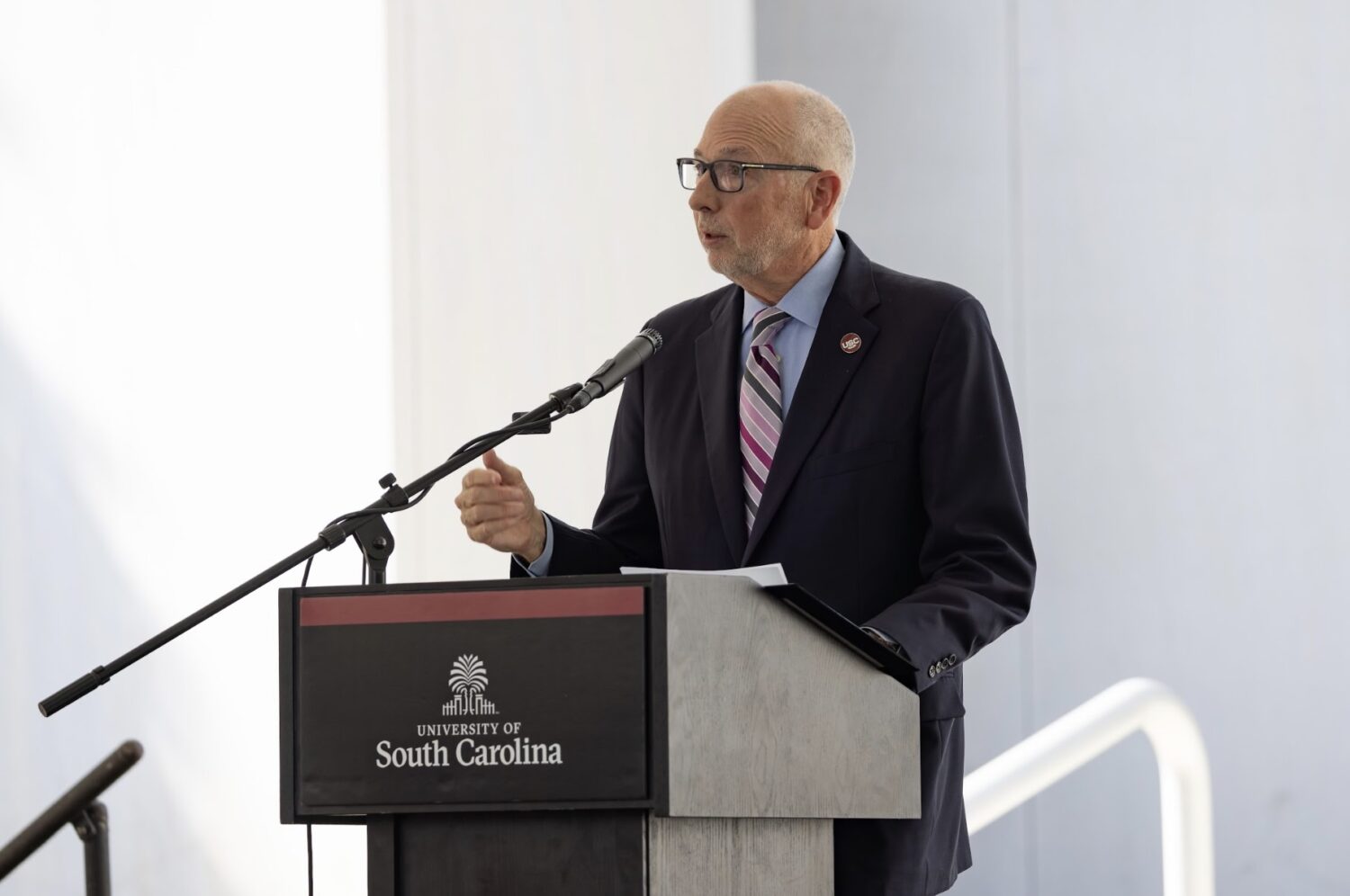
Alex Molinaroli speaks at the University of South Carolina, emphasizing the role of education, leadership, and long-term institutional stewardship.(Credit : University of South Carolina)
Alex Molinaroli stepped down as CEO of Johnson Controls in 2017, having led the company’s transformation into a leader in new technologies. Today, he invests his energies in the University of South Carolina’s Molinaroli College of Engineering and Computing, which he nurtures as his family’s generational touchstone. Far from chasing headlines or building personal brands, he chose to mentor students and systems. shaping futures without seeking a seat for himself. His reflections echo ancient wisdom that true fulfilment lies not in power, but in purposeful contribution.
After stepping away from executive leadership, how did you decide what was worth your time and what was no longer?
I’m not sure whether “worth my time” is the right question. I now have the opportunity and time to work on what is my passion. I truly enjoyed my job, and I am very proud of any success I was a part of, but in the end, it was my job – a role defined by others’ expectations, much like the Stoics warned against tying one’s worth to external duties. I am so fortunate to have the ability and means to work on my passion, pursuing a deeper flourishing. The returns may not be monetary, but are rewarding in so many more important ways, aligning with an inner virtue that outlasts any paycheck.
Was there a moment when you realized you no longer wanted to be “in charge,” but still wanted to be useful?
Being “in charge” was never a thing for me. Perhaps being the team leader was important. But truthfully, being a trusted colleague and good teammate was always most important. We should aim at mastering our own character, not others’ obedience. Usefulness emerges from reliable partnerships, not command, fostering collective good over personal dominion
You’ve chosen to support institutions rather than launch personal foundations or branded initiatives. Why does that distinction matter to you?
This choice allows me to work with an institution in a very focused way. The University of South Carolina, specifically the engineering college, has been a part of my family’s life for generations and has changed the arc of my family’s life journey many times over many decades. Institutions embody a duty that endures beyond one life, serving society impartially, whereas personal brands risk ego. I contribute to a timeless structure, amplifying impact through continuity rather than self-appeasement.
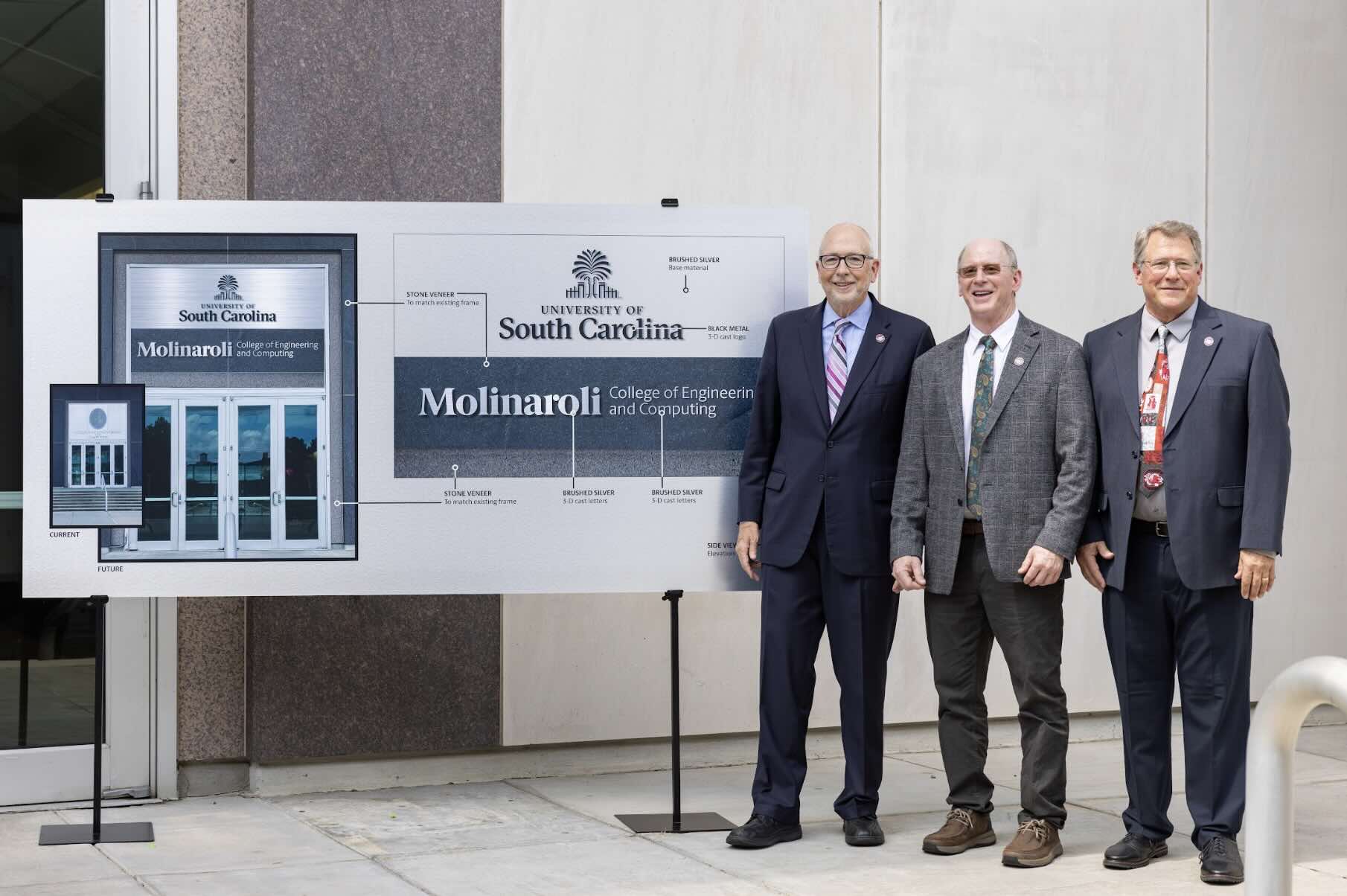
Alex Molinaroli stands with University of South Carolina leaders during the unveiling of the Molinaroli College of Engineering and Computing, marking a milestone in the university’s academic legacy. (Credit : University of South Carolina)
What do strong institutions owe the people who pass through them, especially students who may be first-generation or uncertain about their future?
I’m not sure the institutions like the University of South Carolina owe their students anything more than preparing them for success. Except for first-generation students, many of whom face very difficult paths to graduation, who may need extra support to allow them to reach their potential. These students face so many challenges, and they may not have the family and friends support network that the rest of us may take for granted. Institutions must uplift the least advantaged to ensure justice, providing not charity, but equitable tools for self-realization and societal contribution.
When you meet students today, what concerns or questions do you hear most often that weren’t as visible earlier in your career?
Career paths are much less obvious for today’s graduates than for my generation. How to get started, or where to get real-world experience, are challenges that are less obvious than when I graduated. Technology and tools are changing rapidly, so rapidly that these students could become technically less relevant much more quickly. Changes coming, driven by Artificial Intelligence, are profound and create even more uncertainties. How work is done is changing. This generation will need to reinvent itself continuously to remain employable and productive, much more than my generation ever experienced. Wisdom lies in adaptability, embracing uncertainty as the forge of resilience.
How do you think universities should balance preparing students for jobs that exist today versus roles that don’t yet exist?
Teaching problem-solving and critical thinking skills will become increasingly important. Learning how to communicate effectively, manage projects and work within teams will become indispensable skills. The importance of very specific technical skills will wane quickly. It will become more important to know the right questions versus knowing the answers to a specific set of technical domain problems. Universities must prioritize teaching timeless inquiry over transient expertise to help students navigate tomorrow’s unknowns.
You’ve said institutions outlast individuals. How do you stay engaged without trying to shape how you’ll be remembered?
How I’m remembered will take care of itself. If I make a positive impact where I spend my time and on those whom I touch through my efforts, any legacy will take care of itself. Posthumous fame is beyond our control, so all we can do is focus on the work, not the echo.
What would success look like for you ten years from now, if no one attached your name to it?
More successful and fulfilled lives for the current generation, which then actively pays it forward to the next generation of students….and so on. We as individuals can only hope to be ripples in the sea of societal eternity.
If a student graduating today asked you what kind of work is worth committing to long-term, how would you answer?
Do work that is meaningful to society, meaningful to you and work that you enjoy.