
 Matthew Kayser
Film editor Lu Li is bridging traditional cinema and the vertical drama revolution that’s reshaping how America consumes content
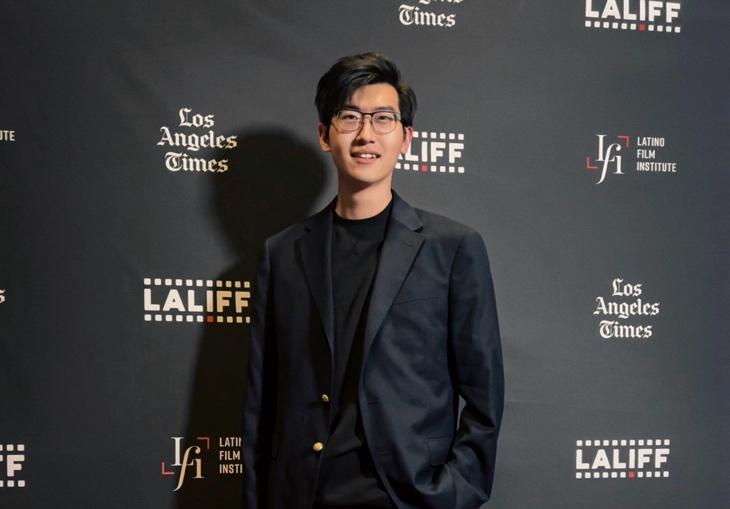
In the sprawling landscape of Los Angeles entertainment, where dreams are edited frame by frame, Lu Li represents a new generation of storytellers who seamlessly navigate between traditional Hollywood and the explosive world of vertical content. The Beijing-born film editor has carved out a unique niche, working on everything from TIFF-selected features to viral vertical dramas.
Li’s journey began in the documentary world, where he honed his instincts for authentic storytelling before transitioning to narrative filmmaking. “Documentary editing taught me to find the story in raw human moments,” Li reflects. “That foundation has been invaluable whether I’m working on a Netflix feature or a two-minute vertical episode.”
Li has established himself as a versatile editor with an eye for pacing and intimate emotional beats, bringing his refined skills from the American Film Institute to projects across multiple platforms. His recent work includes serving as supervising editor on Netflix’s “NAGA,” a feature that earned selection at the Toronto International Film Festival and was crafted remotely while he traveled internationally, and associate editor on “From Embers,” now streaming on Apple TV+ and Amazon Prime Video.
Li’s shorter-form work has also gained significant recognition. His editing on “AZUL” earned the film selection at the LA Latino International Film Festival, while “Life Agreement” was chosen for LA Shorts International Film Festival—both Oscar-qualifying festivals that highlight his ability to craft compelling narratives regardless of runtime.
But perhaps most intriguingly, Li has emerged as a pioneer in vertical drama series, a format that’s rapidly transforming the American entertainment landscape. Working with Dramabox, he has edited series like “The Bad Boy Who Ruined Me” and “Dean: My Mafia Protector,” demonstrating how traditional filmmaking techniques can be adapted for mobile-first storytelling, with the two series combining for an impressive 50 million views so far.
“Vertical drama is more than just turning the camera sideways,” Li explains. “It requires completely rethinking how we approach pacing, visual composition, and emotional beats. Every frame has to work harder.”
The vertical format represents a seismic shift in content creation, designed for how people naturally hold their phones and creating an intimate, immediate viewing experience. This isn’t just experimentation—Dramabox was recently selected for Disney’s prestigious Accelerator Program, signaling major studio recognition of the format’s potential.
“We’re witnessing the birth of a new medium,” Li observes. “Vertical drama isn’t trying to replace traditional formats—it’s creating entirely new storytelling possibilities.” The numbers support this, with vertical series regularly achieving view counts that rival traditional streaming content, often with fraction of the production budgets.
For Li, whose background spans cultures and continents, the global appeal of vertical content represents an opportunity to reach diverse audiences with universal stories. “Whether someone is watching in Beijing, Mexico City, or Los Angeles, vertical drama creates this intimate connection that transcends cultural boundaries,” he says.
As traditional Hollywood grapples with changing viewing habits and streaming platform consolidation, editors like Li are positioned at the forefront of entertainment’s evolution. His ability to move fluidly between prestige projects selected for major film festivals and viral vertical content demonstrates the increasingly blurred lines between “high” and “popular” entertainment.
Li’s trajectory from documentary roots to Netflix features to vertical drama mastery illustrates how modern editors must be adaptable storytellers rather than mere technicians. In an industry where content formats are multiplying as rapidly as viewing platforms, his diverse skill set positions him as a valuable bridge between entertainment’s past and its mobile-first future.
“Every project teaches you something about human connection,” Li concludes. “Whether it’s a feature film or a vertical series, the goal remains the same—finding the moments that make audiences feel something real.”
As vertical drama continues its rapid expansion worldwide, Lu Li stands as both witness and architect of entertainment’s next chapter, proving that great storytelling transcends format, platform, and traditional industry boundaries.
IMDb: