
 Miguel La Torre
Photo Credit: Will Lane
“My work centers on performance optimization, injury prevention, recovery science, and long-term athlete development. The goal is not just to improve output, but to sustain it over a longer career,” says strength and conditioning specialist Will Lane, reflecting on nearly a decade in elite sport.
He describes modern high-performance environments as places where the true competitive edge lies not in pushing athletes to their limits for a season, but in keeping them available and effective over many.
Lane operates in a part of professional sport that rarely draws public attention yet increasingly shapes outcomes. Working across tennis, rugby, adaptive sport, and high-performance academies, he has earned a reputation as a quiet architect of systems that fuse biomechanics, load management, and recovery into coherent, athlete-centered programming. In his view, winning environments are built as much in the weight room and treatment area as they are on the court or pitch.

Photo Credit: Will Lane
From academic rigor to applied practice
Lane’s trajectory is grounded in formal study and deliberate specialization. He holds a Master of Science in Applied Exercise Science: Strength and Conditioning from Concordia University Chicago, where he completed his studies with a 4.0 GPA and distinction, and a Bachelor of Science (Honours) in Strength and Conditioning from the University of St Mark & St John in the UK. Those degrees are reinforced by a run of targeted certifications in speed development, rugby coaching, performance enhancement, medical exercise, and anti-doping education, reflecting a steady commitment to continuing professional development.
Where some practitioners emphasize research papers or laboratory work, Lane has focused on applied translation. His “original research” takes the form of performance systems that are iterated in real time, measured through athlete availability, competitive readiness, and durability across seasons. “I’ve developed integrated, athlete-centric performance methodologies that move beyond traditional, one-size-fits-all strength training,” he explains. “We combine biomechanics, movement efficiency, load management, and recovery strategies into a single, cohesive system.”
Building athlete-centric frameworks
Lane’s methodology begins with the premise that every athlete represents a specific blend of demands, constraints, and opportunities. Rather than starting from a standardized strength template, he begins with movement analysis, positional and sport-specific demands, and existing injury profiles. That information informs what he describes as “competition-cycle–aligned programming,” where training variables are adjusted in concert with schedules, travel, and cumulative stress.
A key part of my approach is aligning training with the competition cycle, he says. “Intensity, volume, and recovery are adjusted dynamically around schedules, travel, and cumulative workload so athletes can stay ready without being run into the ground.” The same logic applies to his work in tennis and rugby, even though the sports differ dramatically: the former demands repeated high-intensity efforts across long seasons, while the latter layers collisions and contact load onto running and power demands.
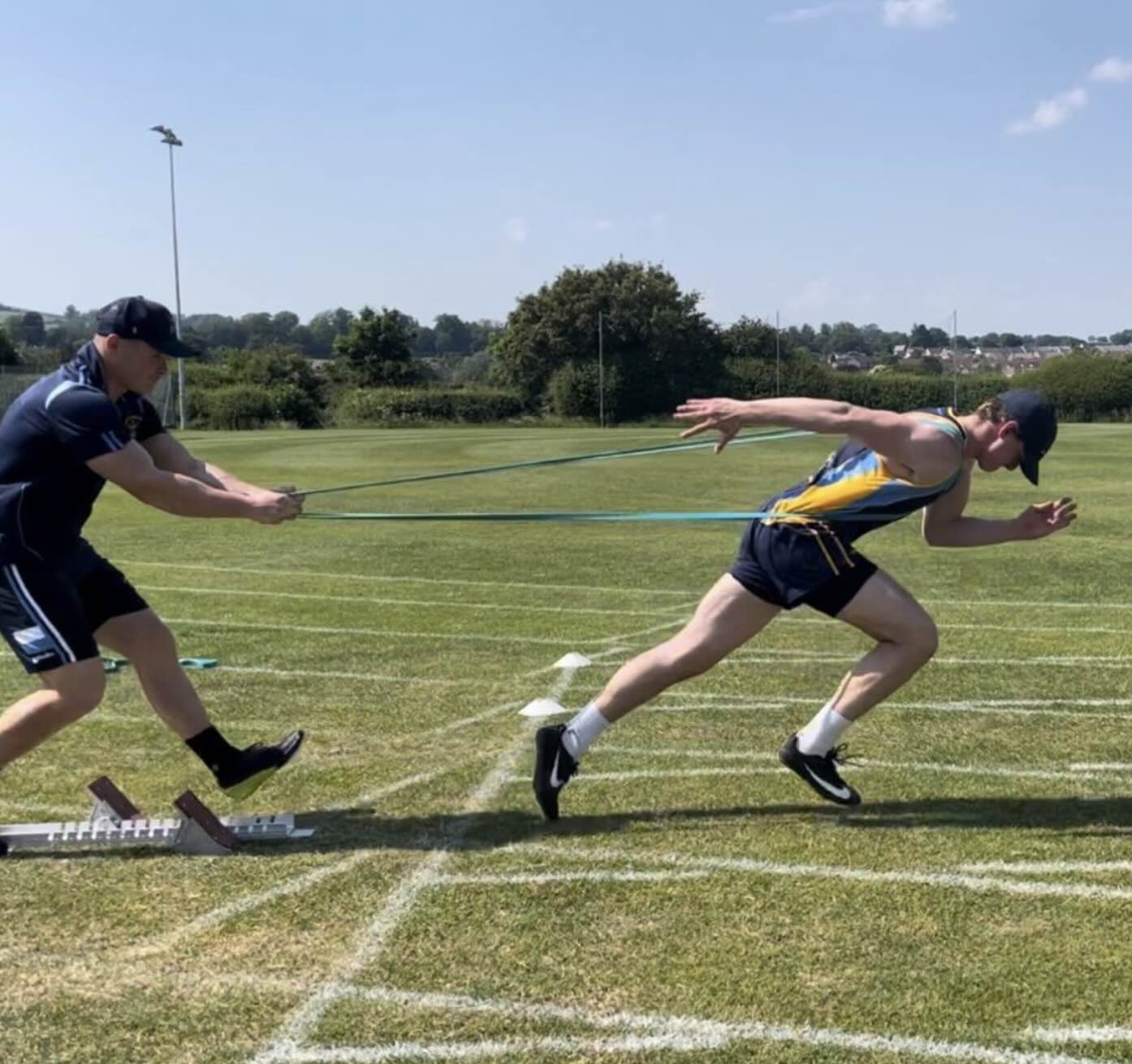
Photo Credit: Will Lane
This kind of structured monitoring and adjustment echoes themes in sports science, where consensus statements on training-load monitoring stress the importance of integrating internal and external load data to manage injury risk and guide performance planning. Lane’s work essentially operationalizes that guidance, turning principles into day-to-day decision rules for athletes and staff.
Load, recovery, and longevity
Lane’s central argument is that longevity and sustainability are not soft add-ons but core performance variables. “The real performance edge is availability,” he says. “If we can reduce injury risk and keep athletes healthy over multiple seasons, we create more value than any single spike in short-term performance.” To that end, he emphasizes joint-preservation strategies, asymmetry correction, and progressive loading rather than chasing maximal outputs in isolation.
This philosophy aligns with broader work on training load and injury, including consensus and review articles that link poorly managed workload spikes to increased injury risk and advocate systematic monitoring to mitigate overtraining and breakdown. Lane’s contribution is less about generating new theory and more about embedding these insights into frameworks that can be adopted by academies, regional squads, professional teams, and private performance environments.
He notes that when organizations adopt structured load management as a baseline rather than an exception, other aspects of performance culture tend to follow. Medical and performance staff share common reference points; coaches gain clearer visibility into fatigue and readiness; athletes learn to interpret their own data as part of their professional toolkit. In Lane’s practice, these changes shift the environment from reactive injury management to proactive sustainability.
Leadership roles and trusted positions
Lane’s influence has grown not only through individual athletes but through leadership roles that positioned him to shape systems. As Head Strength & Conditioning Coach and Physical Education Teacher at King’s School Bruton, he oversaw multi-sport athlete development in a highly competitive school environment, creating frameworks that could be applied across teams and age groups. He went on to serve in institutional roles at the University of Westminster, guide regional squads in Somerset, and support the Plymouth Storm Wheelchair Basketball Team in the National League, extending his methodologies into adaptive sport.
Alongside these institutional posts, Lane has been entrusted with high-discretion assignments, including live-in performance coaching for ultra-high-net-worth and VIP individuals. These roles require tailoring sophisticated performance systems to unconventional contexts—moving between countries, schedules, and resources while maintaining standards of preparation and recovery. “I don’t see strength and conditioning as a standalone service,” he notes. “The best results happen when coaches, medical staff, and performance specialists work from the same plan for preparation, career longevity, and injury mitigation.”
In many of his environments, Lane has effectively functioned as a strategic performance advisor, helping connect physical preparation with competitive objectives and long-term career planning. That stance reflects an understanding that performance outcomes are shaped as much by alignment between departments as by the quality of any single program in the gym.
International reach and evolving standards
While Lane’s base has largely been within the UK and European systems, the frameworks he has designed have been implemented in contexts that extend beyond a single league or country. His work with a high-performance tennis academy, for example, has supported internationally competing athletes whose schedules cross surfaces and continents. Similarly, his engagement with high-level rugby players has required accommodating the demands and standards of national and professional competition structures.
More broadly, his emphasis on sustainability, movement efficiency, and individualized programming reflects an industry trend accelerated by the growth of sports analytics and performance technology. Market research suggests that the global sports analytics market is projected to grow strongly through 2030 as teams and organizations invest in tools for performance optimization and injury-risk assessment. Lane’s systems occupy the applied edge of that movement, where technology and data are useful only to the extent that they inform training, communication, and long-term athlete development.
“In the environments I’ve worked in, we’ve moved away from generic strength models toward sport-transferable, individualized frameworks that prioritize longevity,” he says. “That shift has helped make evidence-based, interdisciplinary performance systems the norm rather than a luxury.” For Lane, this is less a matter of personal brand than of professional responsibility: a belief that the structures behind elite sport should be capable of sustaining the people who compete within them.
In that sense, his work is as much about architecture as about conditioning. It is the architecture of systems that aim to turn advanced sports science into daily practice, protect careers as fiercely as they pursue performance, and redefine what it means to prepare the world’s best athletes for the long seasons ahead.