
 Mark Stefanos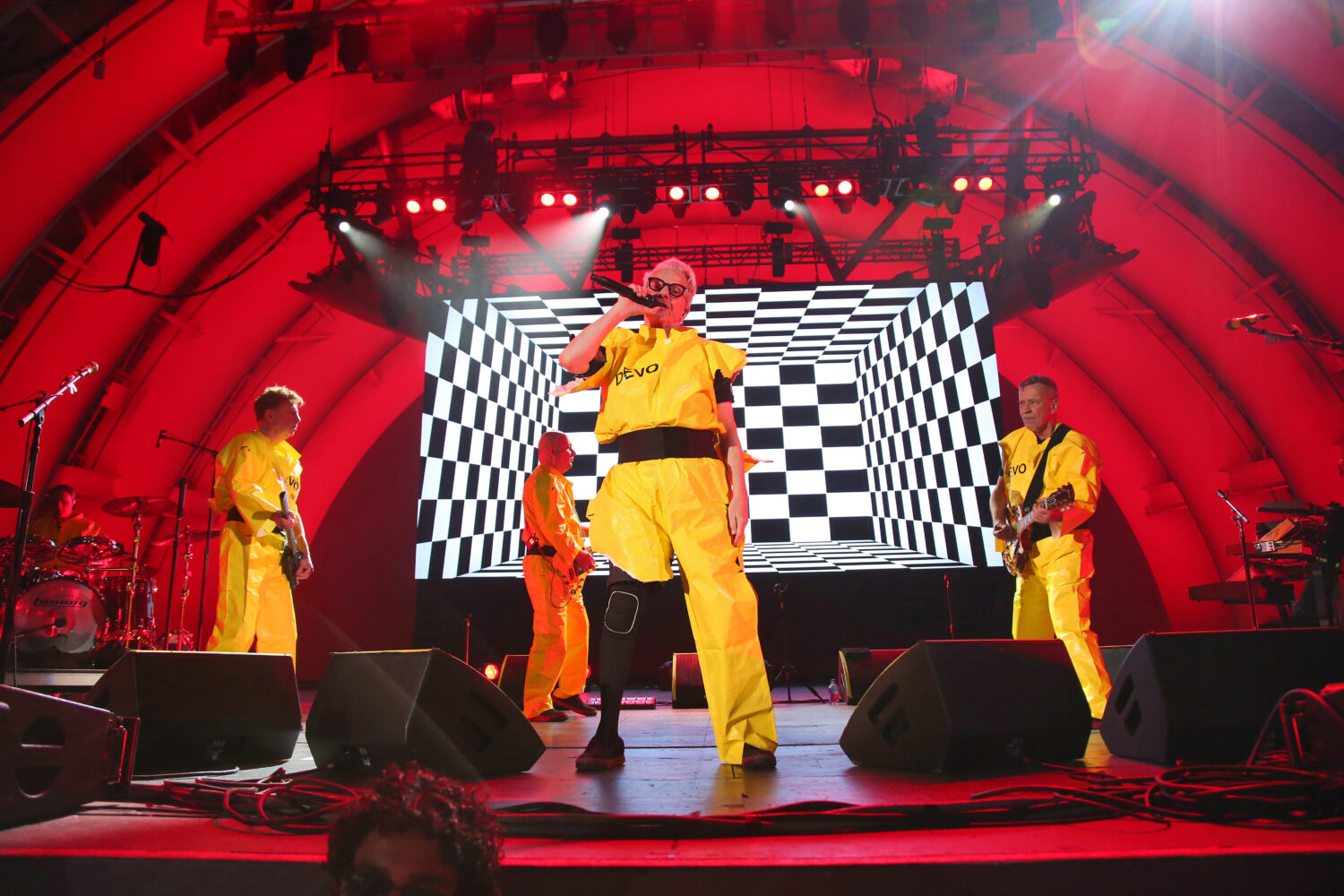



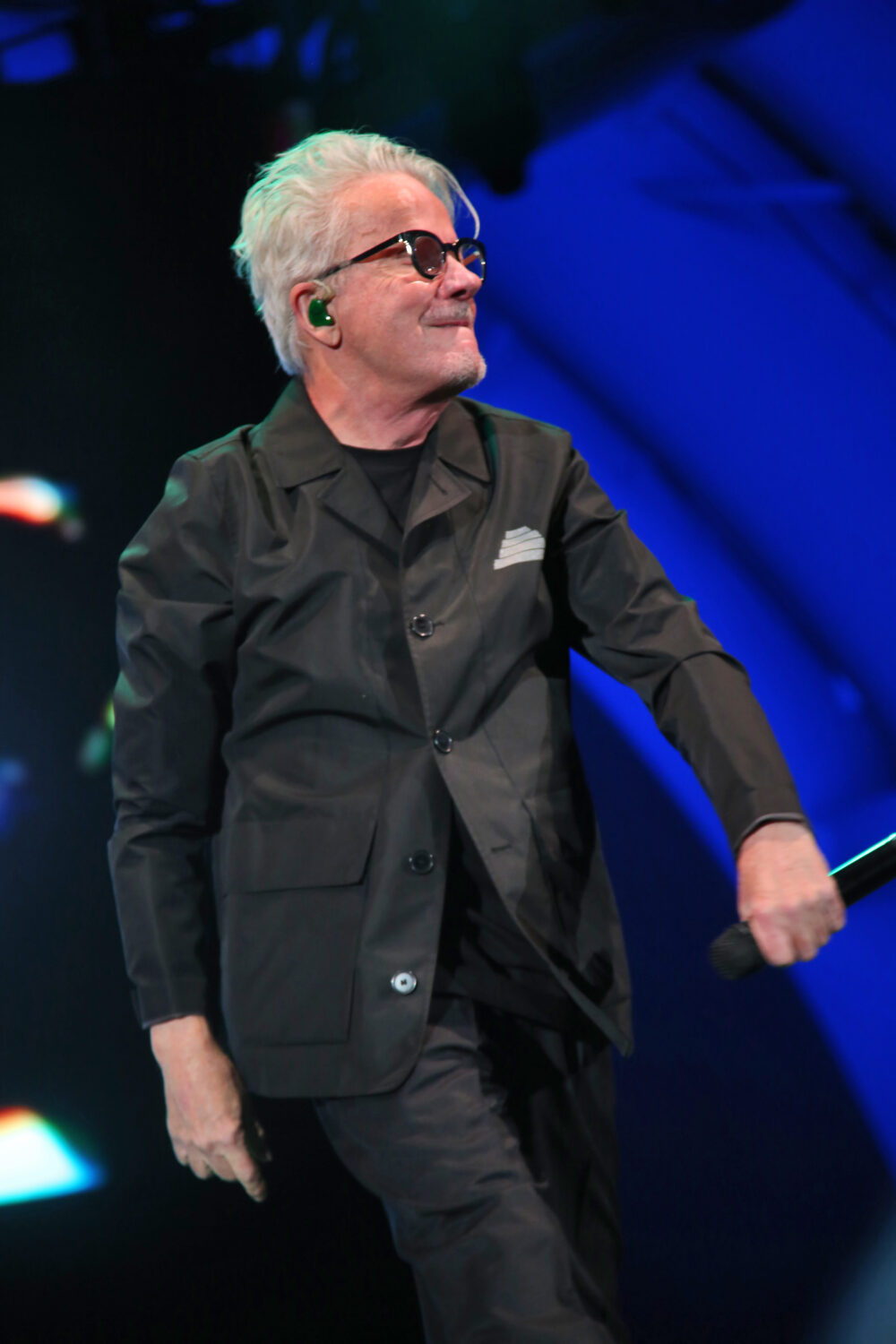
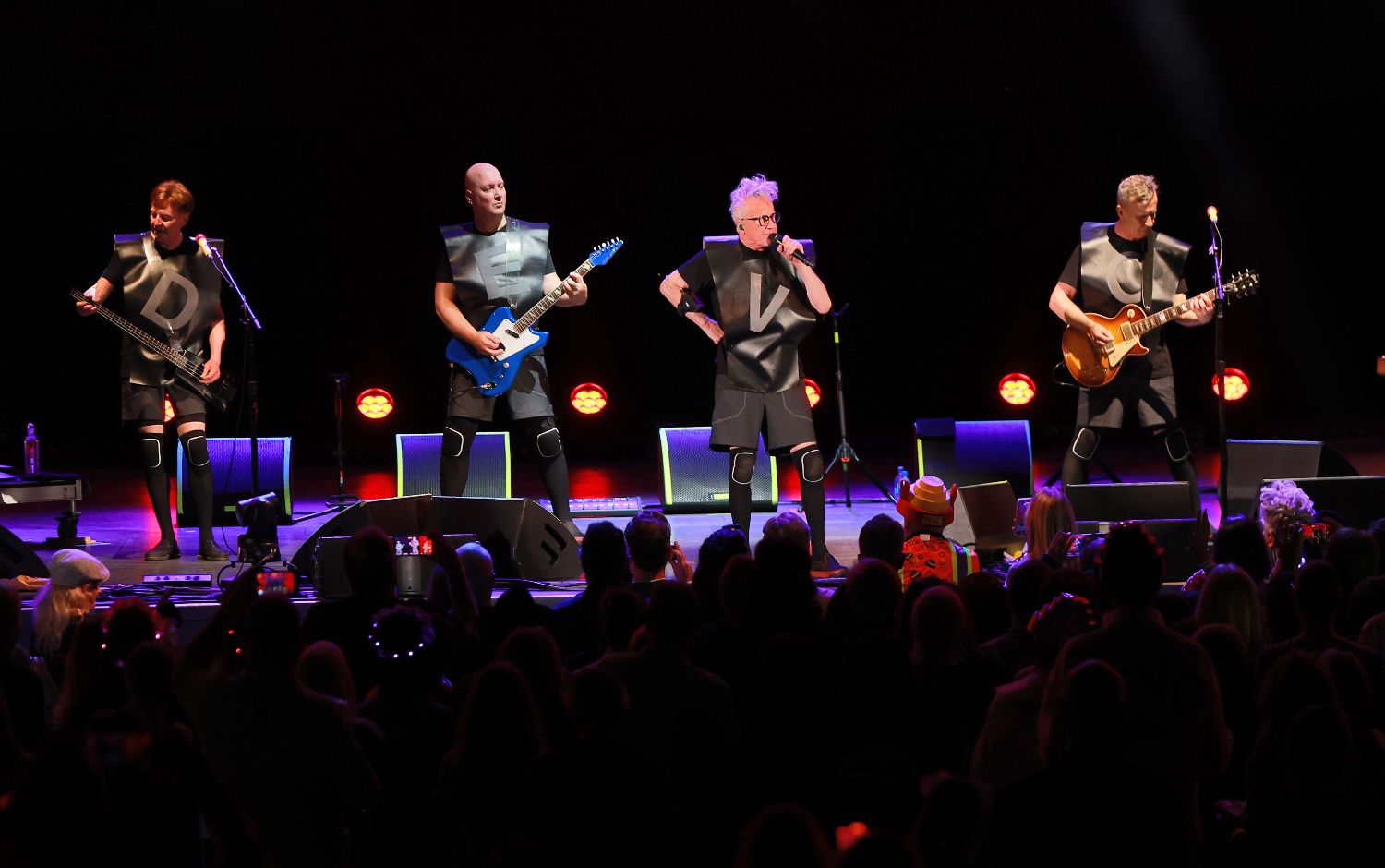

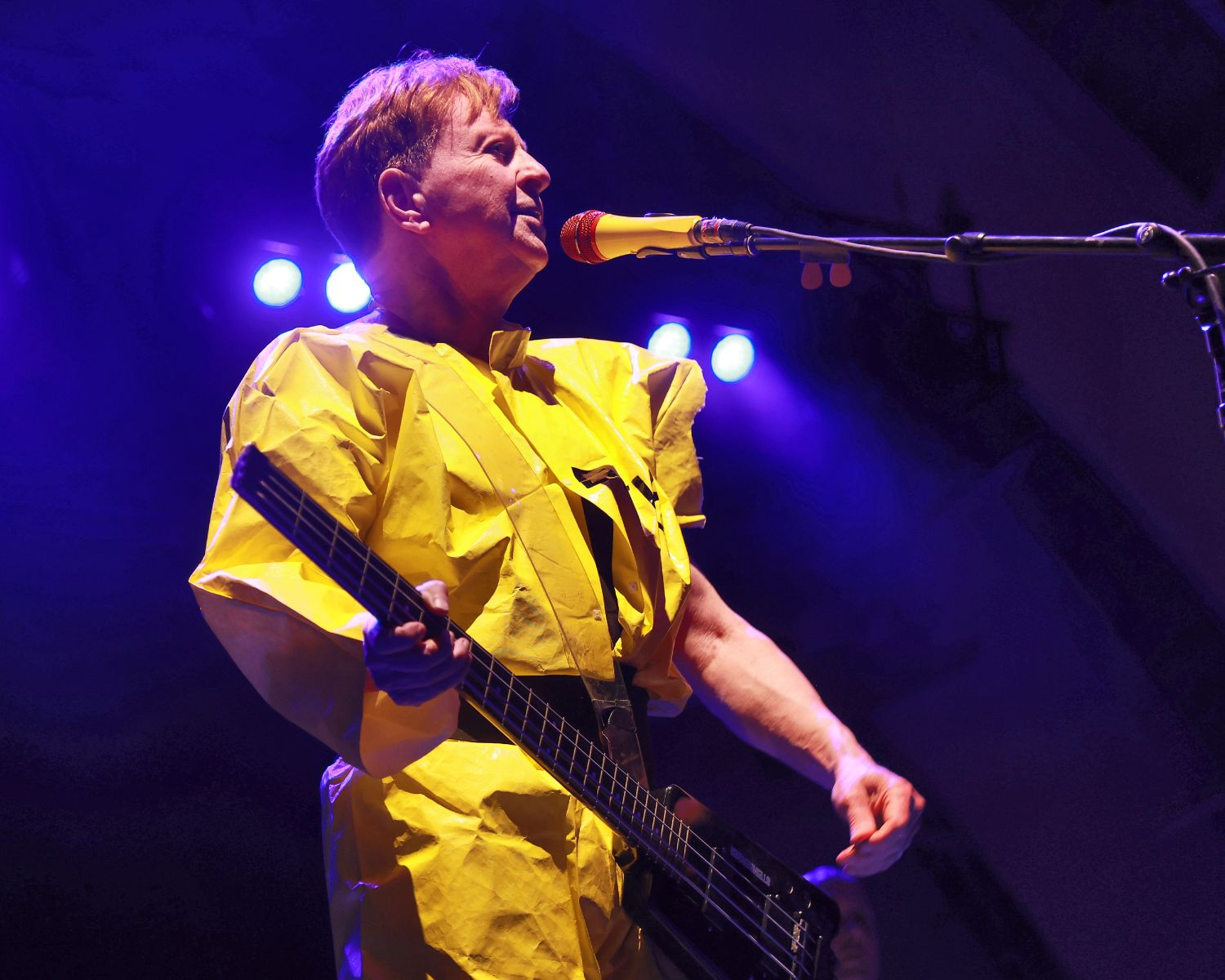
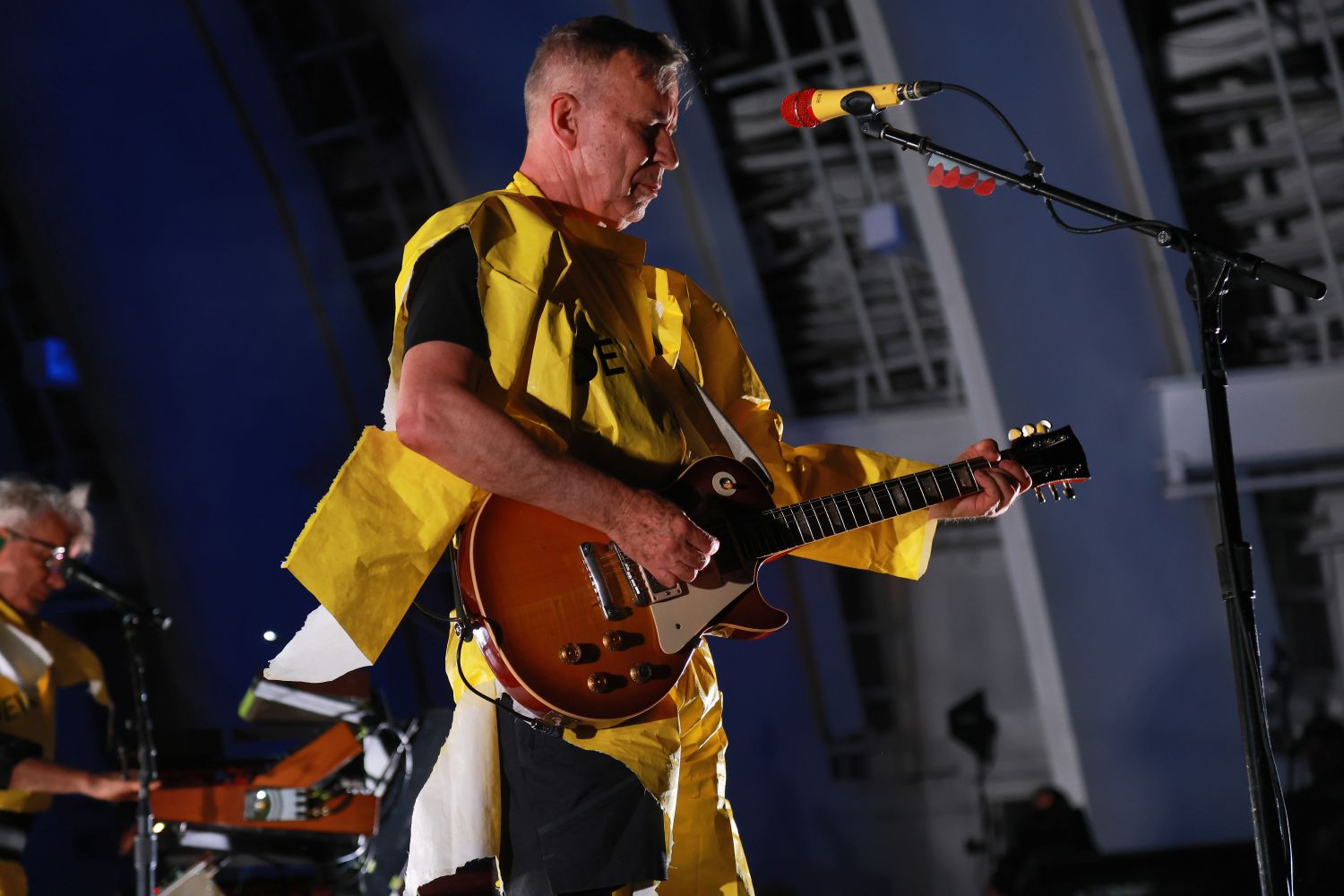
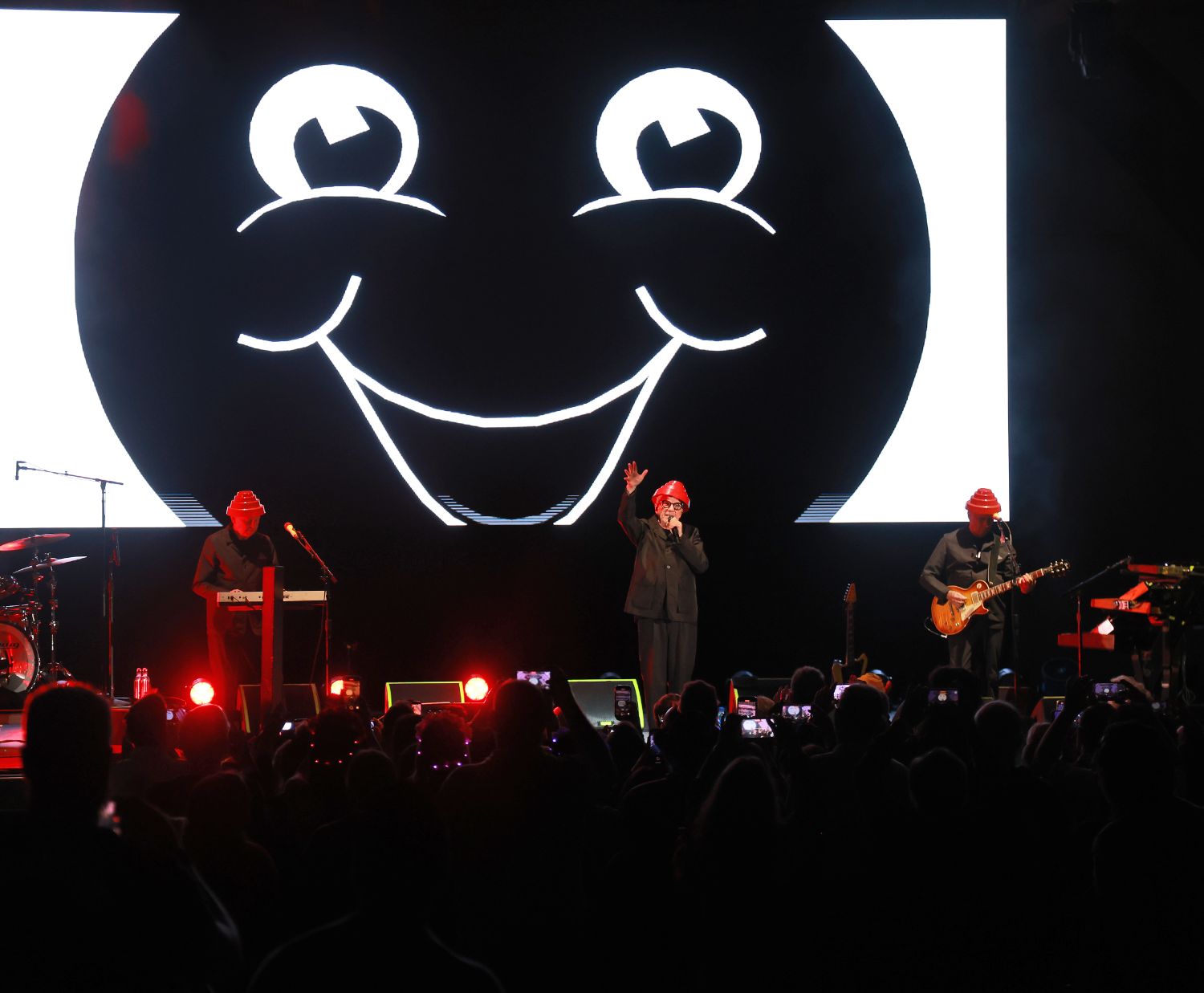
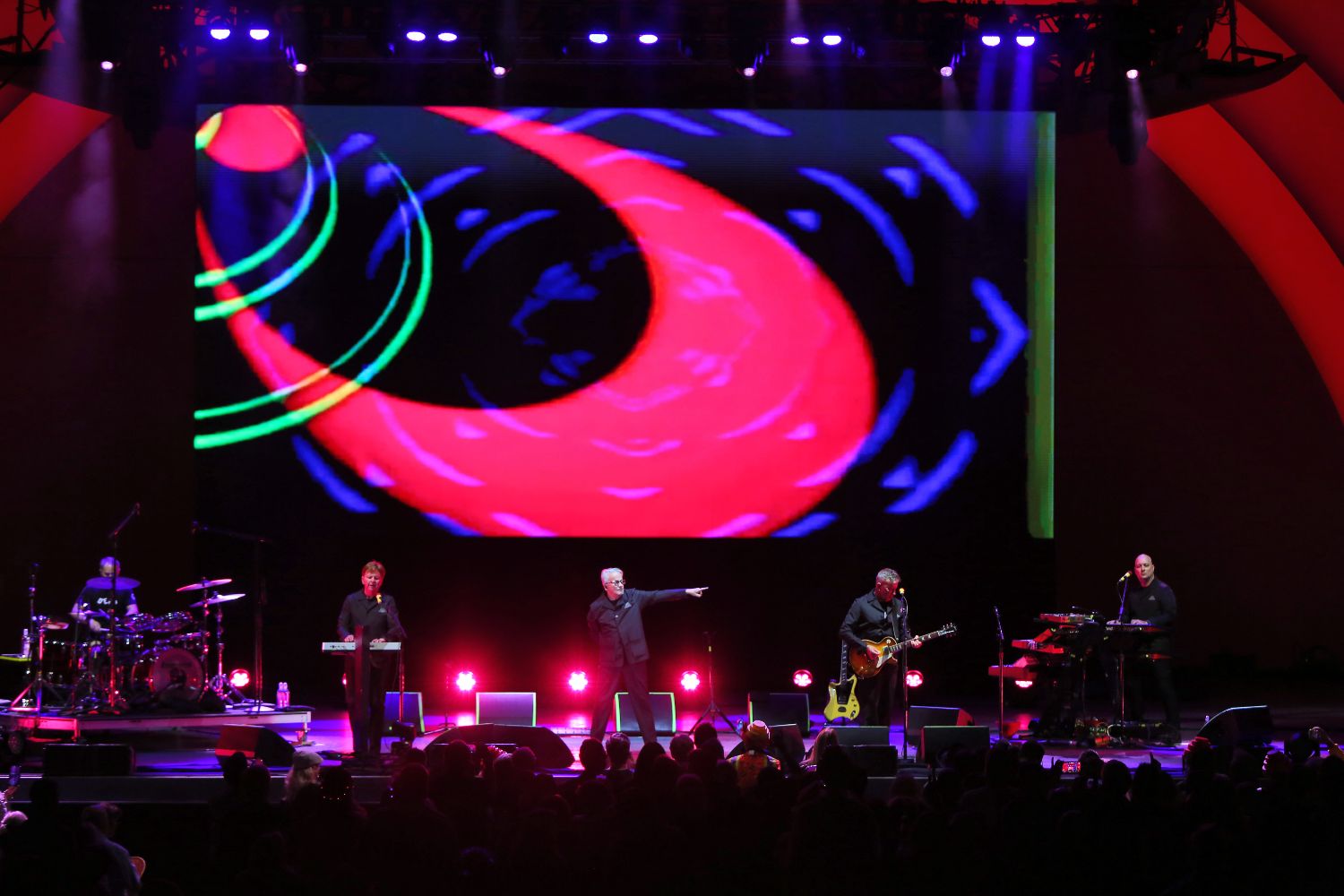
“Are we not men?!” yelled DEVO from the Hollywood Bowl bandshell last Sunday, Oct.19. “We are DEVO!” whooped back the crowd, ranging in ages from 8 to 80, many in signature red DEVO energy dome hats.
For over an hour, the band’s three original members — Gerald Casale and brothers Mark and Bob Mothersbaugh, now in their 70s and joined by Jeff Friedl and Josh Hager — bounced around the stage for the second night in a row, tearing their costumes, and playing with the same vigorous aplomb as when they emerged from Akron in the 1970s, just a gang of nerds destined to revolutionize art, political discourse, and music as we knew it.
DEVO came together at Kent State in the wake of the 1970 massacre where four students were shot dead and nine wounded by Ohio National Guard soldiers at a rally protesting the expansion of the Vietnam War. Gerald was at the protest when the shots were fired, and Mark and Bob the days prior.

(Courtesy of DEVO)
Inspired by the tumultuous world events of their time and disruptive art movements following the First World War, the founding members — including Gerald’s brother Bob Casale and Alan Myers — were attracted to the idea of “de-evolution.” A professor gave them an anti-evolution pamphlet from the 1920s called “Jocko-Homo,” which argued that humans weren’t evolving up from primates, but were actually regressing in a precipitous fall that started with Adam’s original sin. They drew from “The Beginning Was the End” by Oscar Kiss Maerth, a pseudoscientific book that claims humans devolved from intelligent cannibalistic apes who ate primate brains and went nuts. Thus, they became DEVO, “Jocko Homo” would become one of their famous songs, and the question posed by human-animal hybrids in Island of Lost Souls, “Are we not men?!,” became their signature chant.
Their sound and concept would go on to define the New Wave, gaining a legion of loyal fans and the admiration of music’s elite, like Iggy Pop, Neil Young, and David Bowie, who enlisted Brian Eno to produce their debut album. They were pioneers, building their own sound equipment and, from their inception, established as both an audio and visual band, making music videos before that term (or MTV) even existed. In fact, it was their short film The Truth About De-Evolution winning Best Short at the Ann Arbor Film Festival that led to their first big break.
Their major mainstream breakthrough wouldn’t come until “Whip It” off their third album. But that commercial hit came from a band whose message was a critique of commercialism, as DEVO, at their core, was always a band about ideas — a fully-realized performance art with the goal of subliminally injecting their beliefs into the American psyche through pop culture as an act of subversion.
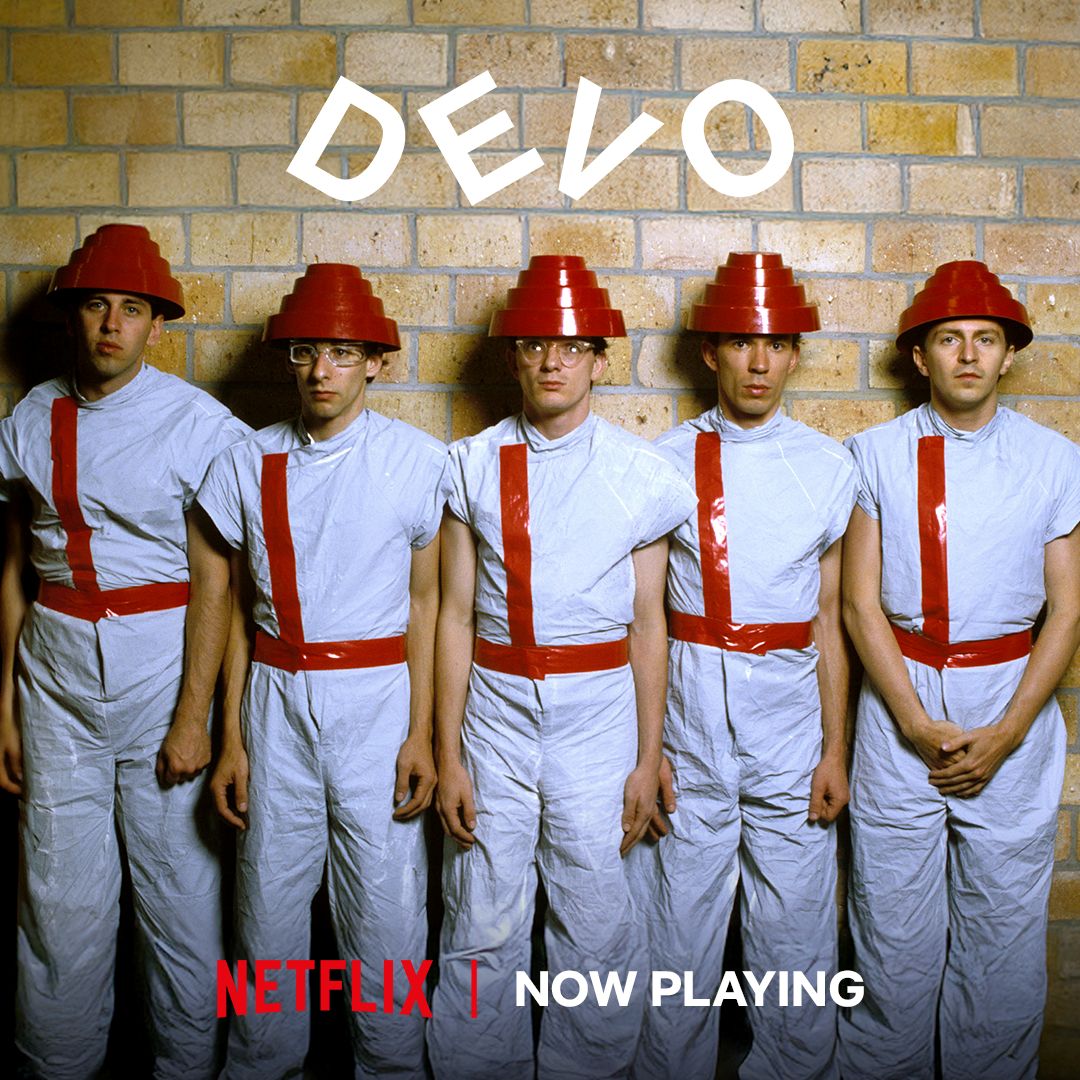
(Courtesy of Netflix)
The battle continues, as the whole story is told in the highly entertaining documentary DEVO, streaming now on Netflix. The members have remained relentlessly creative, with Gerald Casale directing and the Mothersbaughs composing music — so be vigilant about the media you consume.
As they continue their Cosmic De-Evolution Tour with the B-52s, we spoke this week with Mark and Bob Mothersbaugh, who now call the Hollywood Hills home, about their concept, their beginnings, and of course, where it all started: in the end. In our world of the doomscroll, brainrot, and an economy getting gobbled up by AI, their prescient message of de-evolution continues on a hopeful note.
LA WEEKLY: You guys are in your 70s. How do you have the energy to just rock out like that — running around, jumping around for well over an hour?
Mark Mothersbaugh: Nothing special. *Laughs* Coffee.
What struck me right off the bat [from your Netflix documentary DEVO] was that you guys are two sets of brothers. That’s pretty fascinating. How did that work?
Mark: Oh, well, it seemed to work. Actually, the version right before the version that became official DEVO was Bob, our younger brother Jim on drums, and Gerry. So we had two brothers in the band with us and then and then we swapped out a brother — our brother Jim, he was so tech crazy, he was a tech enthusiast. He was like circuit-bending everything we had, amps, guitars, synthesizers, keyboards, stomp boxes, everything, and became more interested in the electronics than he was in drumming. And when he dropped out, Alan [Myers] came in on drums, and Bob 2 [Lewis] came in on.
Was there ever Mothersbaughs versus the Casales, or anything like that that happened?
Bob Mothersbaugh: There was Mothersbaughs against Casales, but not like both Mark and I against Bob and Gerry. *Laughs* I actually got along well with everybody in the band.
Mark: Yeah. I don’t know. I don’t recall that being an issue of Mothersbaughs against Casales. *Laughs* That’s funny.
You guys seemed pretty cohesive, and I can’t think of tons of bands that have such a strong ideological underpinning from start to finish, where they have a message, they have a complete idea that they’re trying to share. Is that common in music?
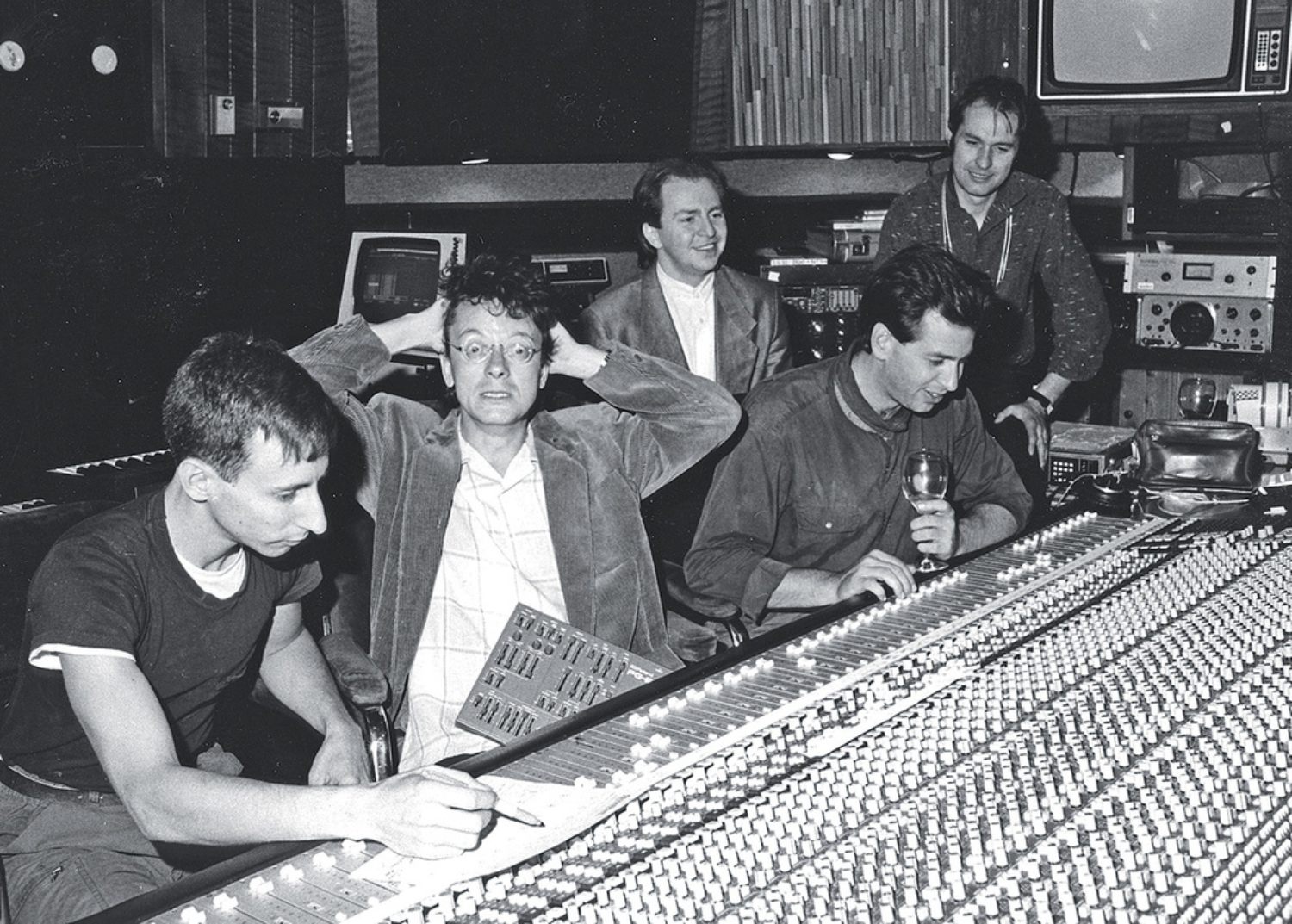
Mark: Well, Bob and Gerry and I were artists also, visual artists. Technically, Bob, of all of us, was the first one to make a short film. He did it in high school. Our things that we did as DEVO came later on.
We were very taken by all the art movements of 50 years earlier than us, things going on in Europe in the 20s — the Dadaists, and the Bauhaus, and Suprematists, and the Surrealists, and the Futurists — we loved all that stuff. We wanted to be a conceptual band. We were influenced by artists like Andy Warhol — he printed, he painted, he did photography, he designed fashion, he produced the Velvet Underground — that’s pretty amazing — and from what I’ve heard, threw the best parties in Manhattan back in those days.
(Courtesy of DEVO)
And we just liked the idea preceding how you executed it. We like the idea that technology, which was new back then — that was like at the beginning of the Technological Age when we were doing this — we like the idea that you use technology to manifest your ideas.
I know that you were inspired by this “Jocko-Homo” pamphlet, which comes from a Christian anti-creationist, right? And you guys are pretty decidedly non-religious, non-Christian, but you found an interesting spell-out of what your thoughts were. How did that come about?
Mark: It’s kind of interesting because the times today have some similarities to 50 years ago, if you think about it. 50 years ago, we found pamphlets from 50 years before us that were like right-wing, anti-evolution, anti-Darwin, and they were making fun. They were making jokes about science.
Spirituality definitely has some sort of relevance in this world. I don’t think it’s all just positives and negatives and plus and minus signs and zeros and ones. I think that there’s something there to spirituality, and science, definitely there’s something there. And there was a collision. They were making fun of evolution and they came up with the term “de-evolution,” and we loved it, and we reapplied it in a more serious fashion 50 years later.
Now it’s 50 years on, and there’s maybe something similar happening again. I see this as being a hotbed of creativity for the art community right now. I would love to be 16 years old right now and just getting involved in art in general.
From the beginning, you were, in a fun satirical way, criticizing commercialism, yet signed to Warner Bros. Did you guys ever have frank conversations with Warner Bros. about your message, or was it all a meta thing that was happening?
Mark: It wasn’t meta. Bob, Gerry and I were from the late 60s, early 70s, and student unrest that was happening back then, 50 years ago. And we were there for Kent State. Bob was there the day before the shootings, I was there the day before that. We all protested. Gerry was there the day of the shootings at the protests. And it affected us because we thought of America as the land of freedom, and we thought you were allowed to speak and say how you felt about things.
Then we found out that in reality, the people with the money and the guns — when they get tired of listening to you talk, they just shoot you. And this is why we were different than other punks, because we felt like rebellion was obsolete in this country and that it was something that when they get tired of you, they just get rid of you. Punks were nihilistic, and that wasn’t an answer either to us.
(Robert Matheu, courtesy of DEVO)
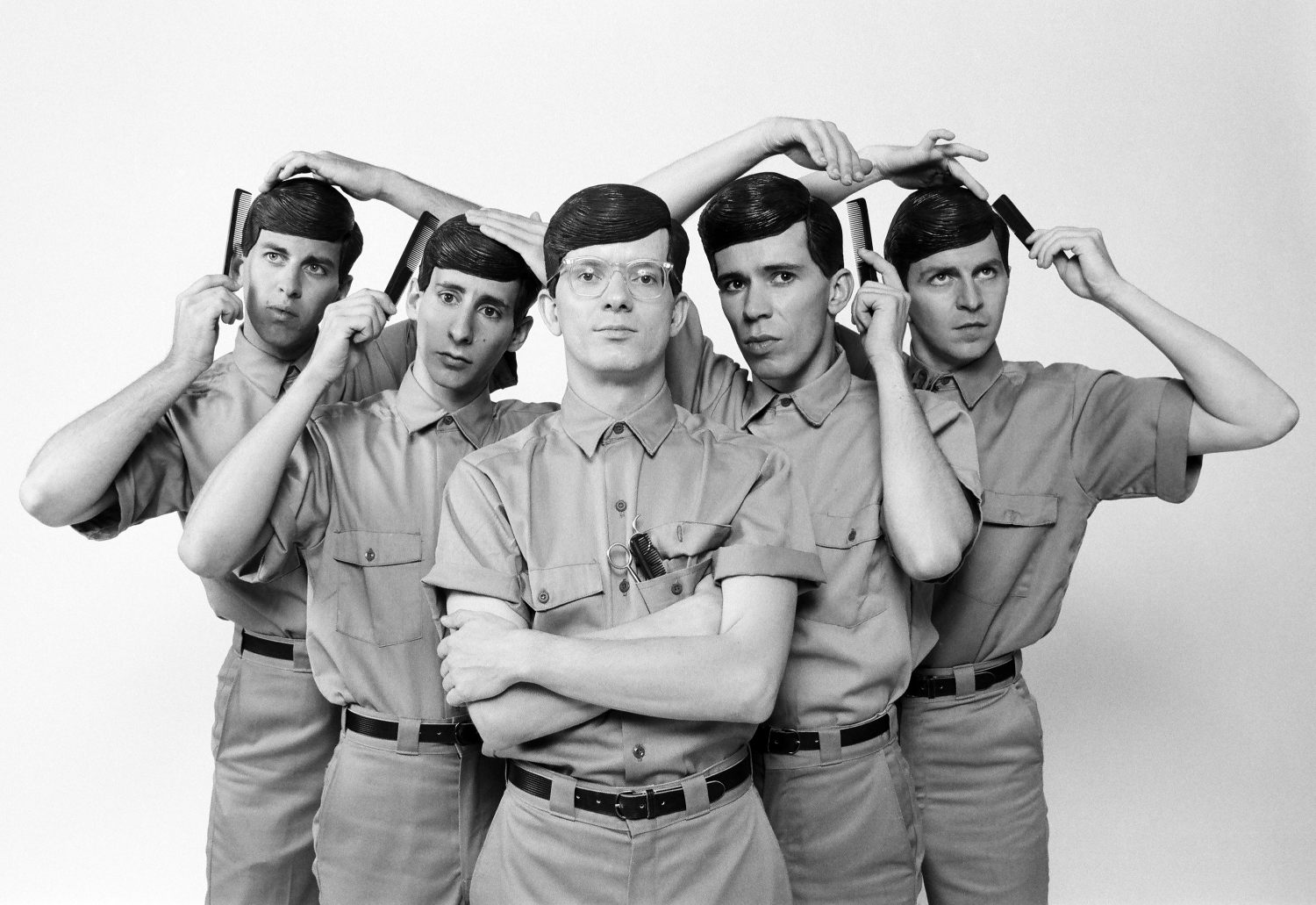
I just remember, we used to think, “Who changes things in this world? Who changes things in this country?” And it was things like Madison Avenue. Through advertising, they got you to buy food that wasn’t good for you, drive cars that were crummy, wear clothes that were foolish, and be happy with all those things.
We thought, well, they use subversion. They use subliminal messages to get their message across. And we thought we should use those same techniques rather than going head-to-head and butting up against somebody bigger that’s got a gun, or a boot, and they can just stomp on you.
You do it by going out to Hollywood, and you enter the country through the digestive system and you go inside our culture and affect it from within. And that’s kind of what we did.
We talked about subliminal messages in our films even before we were doing them. It was kind of funny. We had some lady come up to us at the Akron Art Institute in 1976 when we showed a film before we played on stage, and she came up afterwards, really angry, and she says, “I saw what you guys did!” And we go, “What?” And she goes, “You put the word ‘obey’ and you put the word ‘submit’ in your film!”
And Gerry and I just went, “What a good idea.” *Laughs* She said, “I just saw it in there, it was subliminal messages.” And I told that story to Shepard [Fairey, of Obey Giant] once, and he goes, “Oh no, somebody else to sue me now.”
So we always saw our methodology as being subversive, being a little bit trickster. So we did songs like “Whip It,” which in some ways were kind of lightweight from a political standpoint, compared to other things we were writing or talking about — different than “Freedom of Choice.”
Things like “Whip It” got people into it, and then once they started listening to our music, then they found songs that they went, “What do they mean by that?” So we always had that methodology to us.
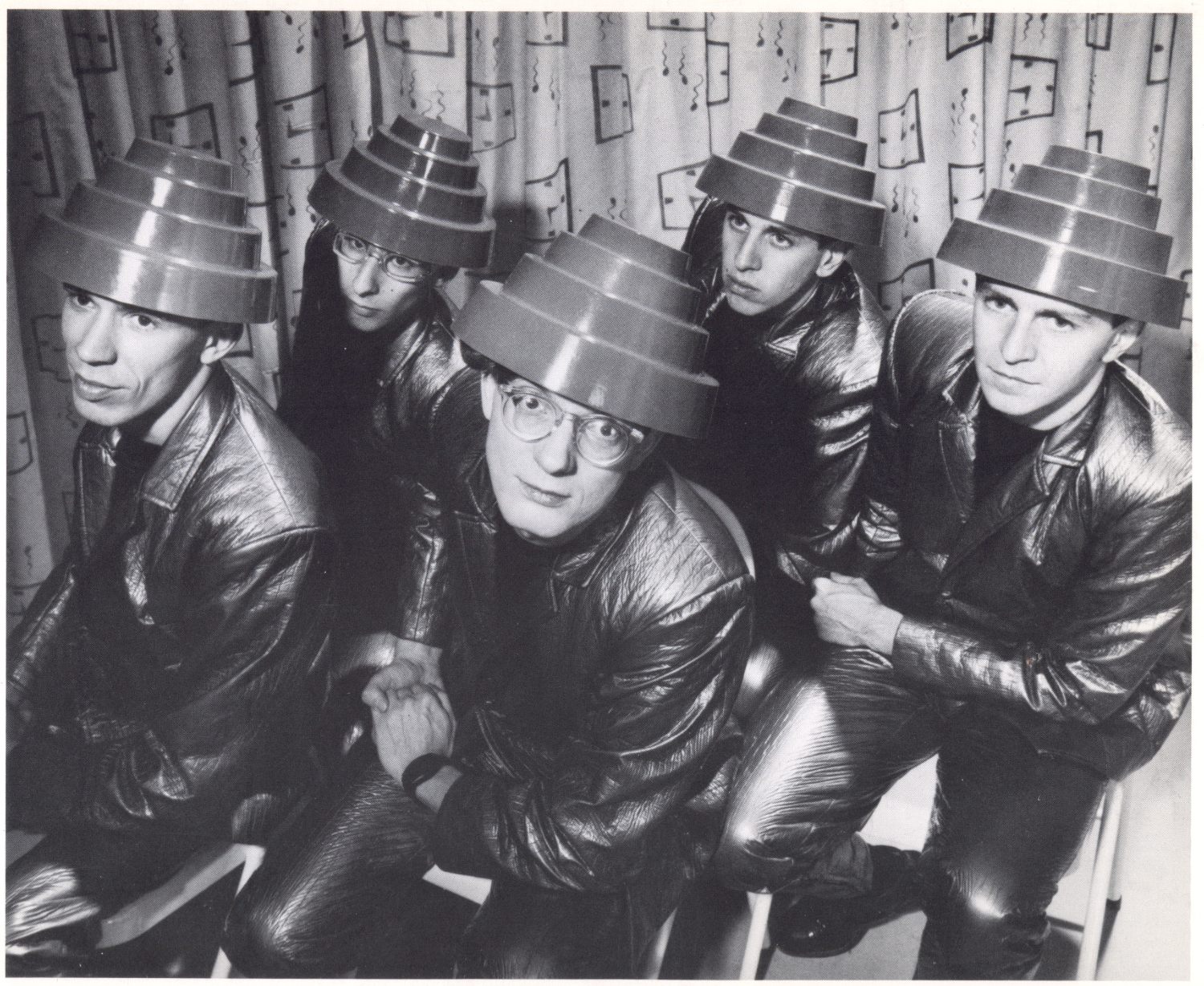
I was struck by how much you guys were doing interviews back then and explaining yourselves. Especially after “Whip It,” you were going out and very frankly talking about what you guys thought. Was it frustrating to have to explain yourselves?
Bob: No, it wasn’t frustrating. Obviously, it’s not what people wanted to hear. You know, Merv Griffin didn’t want to know about de-evolution.
Mark: Because they’re assuming, you know, you have the rock and roll politics, and so that you just come on and you start hitting each other on the top of the head and acting like the Three Stooges and it’s all about sex, drugs, and rock and roll. That’s what they’re already anticipating and knew how to deal with. And so when you came on and you talked about humans being the unnatural species on the planet, they were like, “What? Are they serious or are they kidding? They’re not smiling.”
Bob: Cut to commercial.
(Jules Bates, courtesy of DEVO)
There is a clip from the documentary where you talked about the nuclear protest movement, and you were critical of the methodology and wimpiness of it. What do you think of modern protest movements?
Mark: Now it’s interesting because they have very sophisticated techniques for subverting what people are saying at a protest, so that the bad guys can turn it into they’re the good guys, you know. I think it’s people my age that are more flummoxed by it, but I think younger people can read through what’s going on, and I think they understand.
You go on social media these days, and what do you see? You see extreme left and extreme right screaming at each other and saying outrageous things because that’s what gets reprinted and that’s what people read, and it’s like, I can’t believe that any high percentage of sentient humans really are in either of those two extreme camps.
I think — and I gotta be honest — I never thought I’d ever feel like I was more in the middle. I feel like I’m more in this large group of people that represent common sense.
You hear these voices on the far left and far right. And you know, you’re used to a television set where it was much more reasoned and tempered, and now people are just trying to get online time and onscreen time. So you just have to —
Bob: — be more absurd.
Mark: Yeah. You just have to realize that you’re just looking at a foolish show a lot of the time.
There is a complete lack of a political conversation these days that’s cohesive or gets us anywhere. Is that the answer — be more absurd?
Mark: Gavin Newsom has used it in a very effective way recently and made people that weren’t conscious of what was happening get to see that, “Oh, this is what happens if everybody just says foolish things and silly outrageous stuff, if they just talk outrageously.” I was kind of neither here nor there on Gavin. And that really made me appreciate and respect him when he did that.
I think this time will change. I don’t think it’ll be here forever. At least I’m the optimist in the band. You know, I’m Booji Boy. So, I’m the one who thinks that people are going to go, “Oh, wait a minute. We’re just about to fall off the edge.” And then they pull themselves back. I’m hoping that because I think kids are smarter now. They have more information than humans ever had at a much younger age. And I have faith they’re going to use it.
(Courtesy of DEVO)
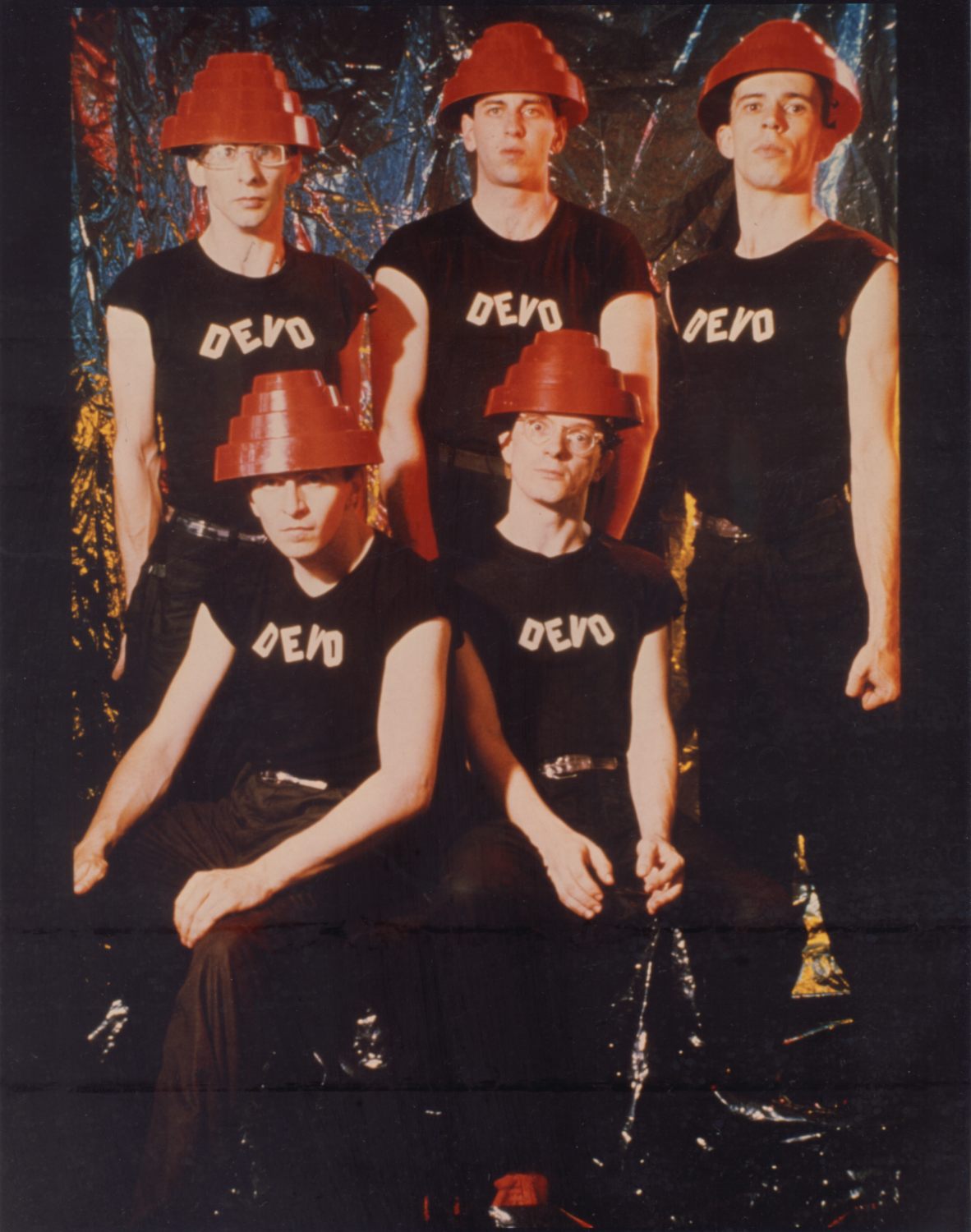
You guys were both an audio and visual band from the very beginning, predating MTV. And even from your show last night, the visuals for each song were different. What’s the key to good visuals to accompany music like that?
Bob: Oh, that’s like asking what’s the key to having a good song. You intake so much stuff and then your brain internalizes it and spews stuff out, whether it’s music or visuals.
Mark: With the videos, we started before MTV, so it gave us the ability to have a much bigger aspiration for what a music television could be if it ever showed up. We thought we were making a product for laser discs. We thought it was going to show up in your local record store, you’d get a 45 that also had a video that went with it.
And so there was no limit to what we were doing. MTV came out, and they quickly devolved into just a commercial station for record companies. And then it just became that videos were just like a Whopper commercial or something, but Van Halen was the Whopper.
Music videos remain popular on YouTube, but there’s the boilerplate boring videos where it’s just like a guy singing with women dancing behind him —
Mark: Yeah. Only about 98% of them are that, but there are the 2% that are what? —
— that have a concept, that you want to rewatch over and over.
Mark: Yeah, it’s a small percentage, but you know, that’s okay. There’s people that will help be your Sherpa guide that’ll say, “Look, if you liked this, you might like this, this, and this.” And so there are ways to find the good stuff.
And you’ve been doing scores pretty prolifically for the past, what, couple decades now?
Mark: Yeah, 40 years, probably starting with “Pee-wee’s Playhouse” and then Bob jumped in somewhere a year or two into it for a TV series at Disney where it required 400 original songs, and Bob wrote songs with me.
And then he got hooked on scoring, and he jumped in on “Rugrats.” I just asked him about a month or so ago, “How many episodes of Rugrats do you think you’ve done?” And he goes, “About a million.” We’ve scored so much stuff.
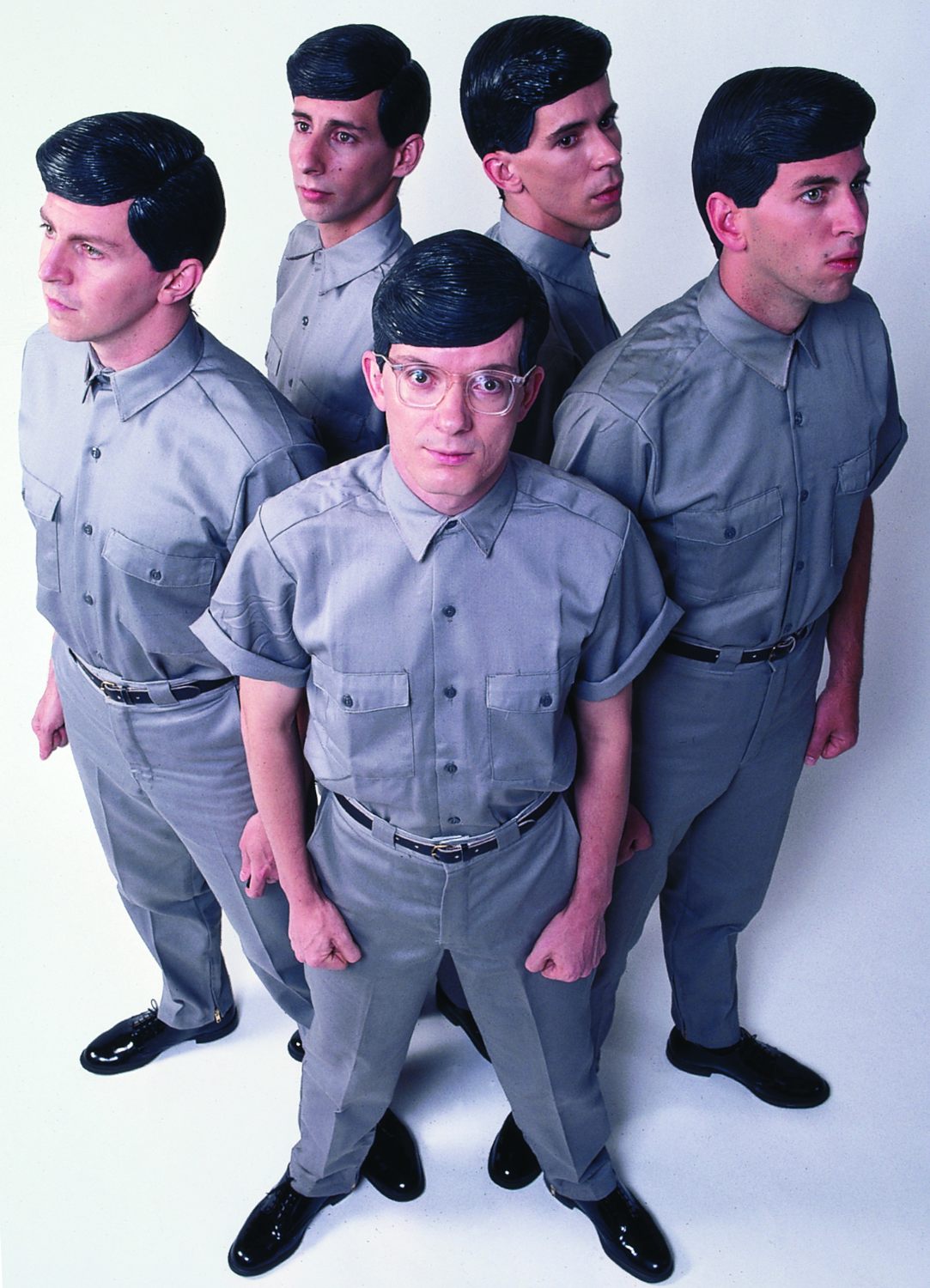
(Robert Matheu, courtesy of DEVO)
‘Cause I love DEVO, but we were only doing like 12 songs a year. So, you write 12 songs, you go on tour, and the performing part’s the part about DEVO that I like the best of all. Bob loves playing his guitar. But we also both love to write music.
So getting into film, TV, video games, telephone music — we’ve done all sorts of stuff. We’ve done very hardcore art projects, to — I got a film out now called Minecraft, which was pretty big. So, we’ve done the whole gamut.
You must be busy as hell. Are you guys just doing that every day?
Mark: Oh, we like that. We like writing music. We like doing art. Yeah, we’re kind of lucky. And then we get to go out and do DEVO on the weekends. So, how about that?
I want to ask about Paul Rubins, RIP. That relationship started early?
Mark: Yeah, I knew him when he was just a comedian at the Groundlings and saw him working on Pee-wee in the early days, and then he asked to score his TV series. And it was kind of a revelation because I went from writing music for 12 songs a year to writing music for 12 songs a week, you know? That was exciting. That was exciting, getting to write that fast and all the time like that. So, he changed our lives in a lot of ways. We owe it to Paul for pulling us in for his show.
You work with a lot of major creatives, like Wes Anderson. But I imagine they’re looking at you guys and saying, “Wow, we get DEVO to work with.”
Bob: Yeah, we do get a percentage of the clients that come to us, it’s because we are in DEVO.
Mark: You know how old they are when they go, “Well, I first heard you guys on ‘Saturday Night Live.’” Or they go, “I first became aware of your music on ‘Pee-wee’s Playhouse.’” Or then they go, “Yo Gaba Gaba.” It’s a different age group for each one of them.
You leave the doc talking about how the first 50 years of DEVO was “humans are an unnatural species.” The next 50 years is “mutate, don’t stagnate. Think positively.” Mark, you said that you’re the hopeful guy in the group. What gives you hope?
Mark: I think people don’t really want to die. They don’t want to really commit suicide. I think there’s a good side to humans and I want it to prevail. I know right now capitalism and greed are ruling the day, but you know, there’s also this other side and the meter goes back and forth.
Obviously, there’s a lot of scary and ridiculous stuff that happens with social media and AI. But I think about a lot of my favorite contemporary artists — they don’t have to go to a record label to get their stuff out there anymore.
Mark: Yeah. That’s pretty liberating. It allows an artist to really be an artist if they want to. If you’re getting into music because you want to get rich, and you want to be the next Britney Spears — if that’s your reason, well, then good luck, and that’s a lot of work, and that’s a whole different thing than what DEVO was about really.
But, if you’re an artist, and you have an idea, and you want to make a statement, I think it’s easier now than ever. You have all this power in your hand and everybody has it. It’s more democratic now than it’s ever been. So, it gives me a feeling of hope.
I know you got 50 more years of DEVO coming up. Anything we can expect?
Mark: 50 years from now, we’re going to try and play the Bowl again. And I’m hoping everybody that came to these two shows will be there and we can all commiserate on what’s happened during the space.
Follow DEVO at clubdevo.com and on Instagram @clubdevo. Interview edited for length and clarity.
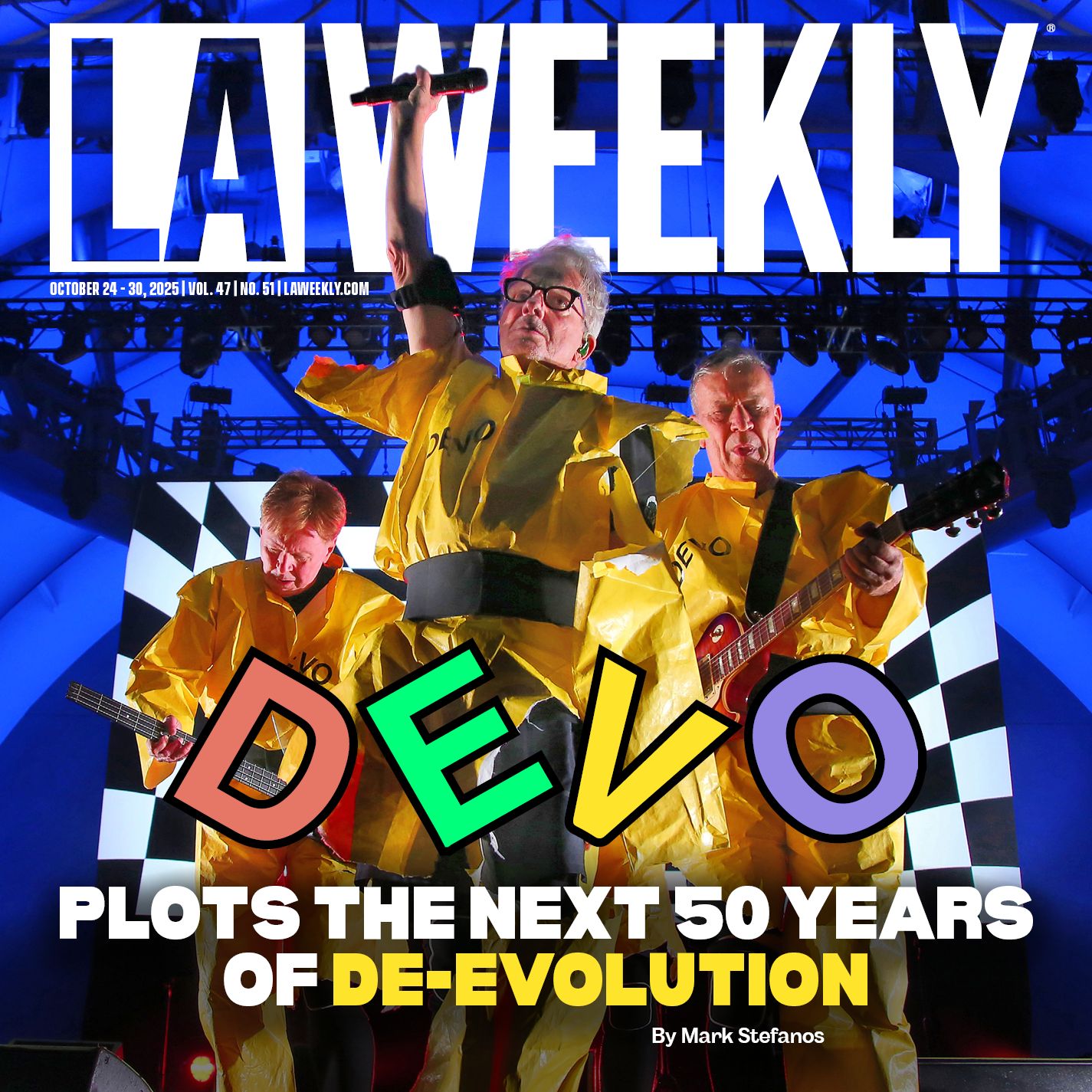
DEVO from the Oct. 19 show at the Hollywood Bowl, on the Oct. 24, 2025 cover of LA Weekly. (Photo: Randall Michelson/Live Nation-Hewitt Silva; Cover design: Mark Stefanos)