
 Jon Stojan
Ten years in the making, The Village of Lovers Documentary is here. Filmmakers John Wolfstone, Ian Mackenzie, and Julia Maryanska share an extraordinary community that challenges societal frameworks and inspires new possibilities through their revolutionary culture. Dive into “The Village of Lovers” and discover how Tamera shattered taboos with liberated eros and radical transparency.

Image credit: John Wolfstone, Ian Mackenzie, and Julia Maryanska
As we enter 2025, people feel inspired to “start fresh.” Excitement for something different leads the way, yet, as time pushes forward, people realize that the things they left behind remain. Setting new goals is one thing, but following through with them is another. This is where choice comes into play. People choose to make a change in their lives, spurred by the onset of a new year, which brings hope, inspiration, and a shift in perspective.
Three filmmakers, John Wolfstone, Ian Mackenzie, and Julia Maryanska (co-founders of RE/CULTURE FILMS), are stepping into 2025 with a call to action for the world: They’re advocating for a trust-filled future. Set to release on January 13th, 2025, their feature documentary, The Village of Lovers, filmed over ten years, explores radical ideas of love, relationships, community living, and global change. The trio of visionary artists devoted themselves to documenting a new culture in Portugal called Tamera—a revolutionary healing biotope founded 50 years ago. The community is a blueprint for a new way of living that prioritizes a peace-culture and a truly regenerative system.
I sat down with Co-Director, producer, and cinematographer John Wolfstone to learn more about this passion project and the lessons Tamera is teaching the world:
“The Village of Lovers is the name of our documentary film that we spent the last 10 years making. And I don’t know many people who have spent 10 years making a film… this is a project born out of our souls and guided by life,” Wolfstone says.
In this award-winning film about love, sex, power, and community, Tamera’s holistic model is an example of what humanity should strive to achieve. But it’s not another “community gone wrong into a cult,” as seen in the Rajneeshpuram community from the documentary Wild Wild Country and other popular communities.
“Cults tend to hide things and practice layers of Dogma, where paradoxically, Tamera figured out that to build true community, participants had to be empowered into their deepest autonomy/sovereignty, and that a functioning community takes individual self-determination, to then reach un-manipulated places of true communal coherence and collaboration,” says Wolfstone.
The Village of Lovers tells a story of a community that actually worked. “What Tamera discovered is the difference between a Cult and true Culture,” he emphasizes, and it all comes down to trust and transparency, liberating eros, and returning to village.
Trust and Transparency
“The reason most villages fail, most partnerships fail, and most things fail when humans come together to do something is due to the core shadow areas of love, sex, money, and power,” Wolfstone explains. Society has ingrained a sense of shame surrounding so many areas of life, which has resulted in what Wolfstone denotes as “shadow,” aka repressed psychological and psycho-emotional content. “It comes out sideways, causing friction and eventually fighting,” he continues.
But Tamera found a solution to this. Through the social technology of Forum, all members within the community bring their “repressed feelings to the center, transparently deal with it as a community, and create a huge field of trust in that process. They call themselves a ‘greenhouse of trust.’” What this looks like is joining together in a safe, ritualized space and forming a large circle to allow each individual to step in and share their raw, authentic truth. There is no shaming, only celebration. Tamera believes that people should be applauded for their vulnerable honesty to alter the way humans interact and connect with one another, and by doing so, creates a feedback loop of honesty and personal growth.
“Imagine doing that with everything you’ve ever done, every bad thought you’ve ever had. Tamera created a culture of no shame because that’s how you get true intimacy. That’s the core of what they’re doing.”
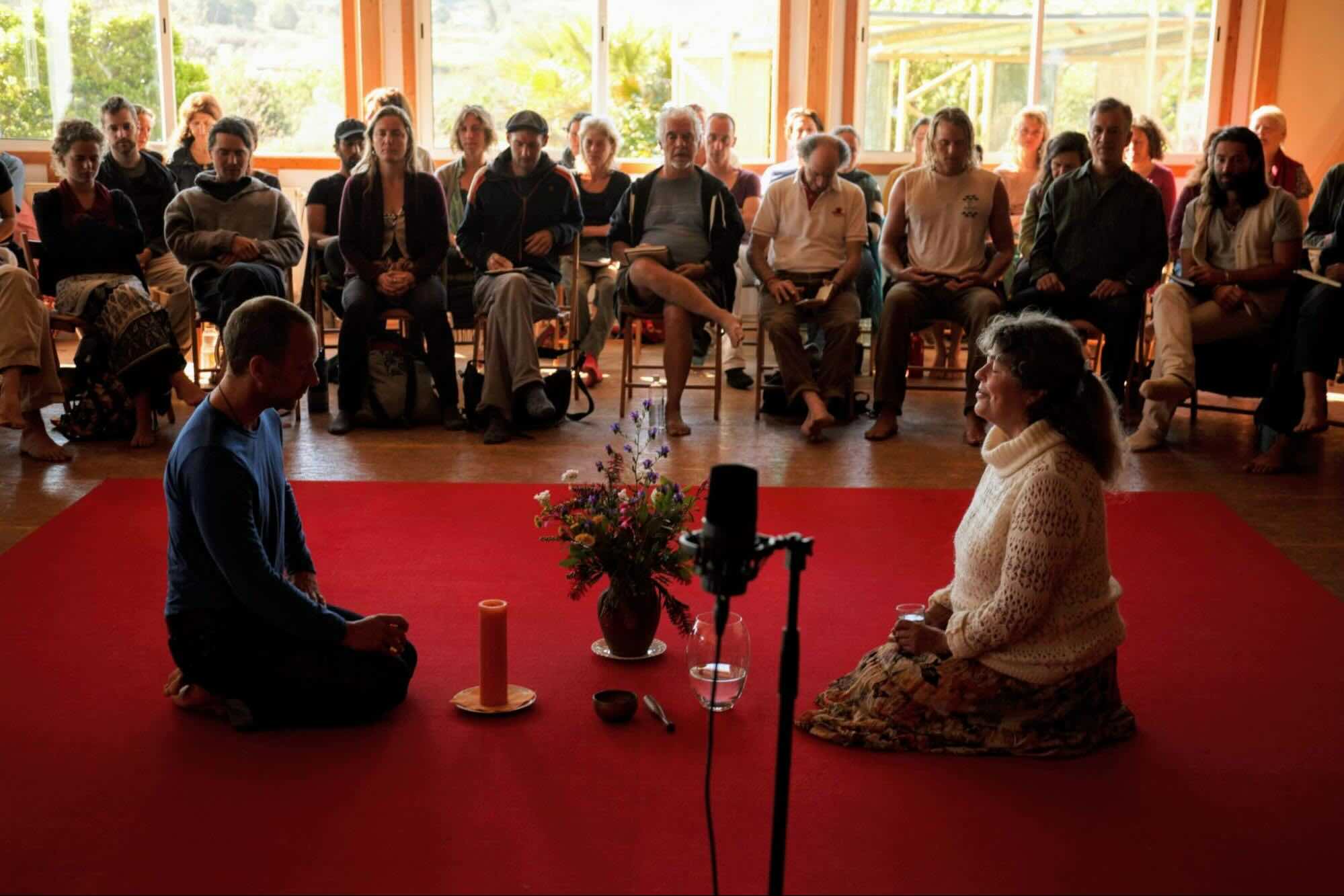
Image credit: John Wolfstone, Ian Mackenzie, and Julia Maryanska
Liberating the Eros
Part of achieving this true intimacy involves eros. Tamera began as a project dedicated to “building an alternative culture founded on ‘the liberation of eros,’” but according to Wolfstone, eros isn’t just about sexuality—it’s a life force. “It’s the same energy that makes trees grow, or flowers bloom. Tamera has learned to integrate that energy into their culture, unlocking the intelligence of life itself.”
Their approach to love is sublime. It rests on liberation, safe spaces, unapologetic truths, and zero shame—the same values promoted by “The Free Love Movement” in the 1960s and early 70s. A foundational part of Tamera is “Open Love” (what the West calls polyamory), and they found it works best in a trust-based village where “the abundance of love can flow naturally.”
“Tamera believes and is an example of ‘free love’ that actually worked. Back then, those folks didn’t have the cultural maturity yet to manage its power, like how some folks don’t have the inner stability yet to manage psychedelics. It doesn’t mean the power of psychedelics is bad. It just needs better containers, and that’s what Tamera found,” Wolfstone says.
“I’ve seen people transform—better than therapy or anything I’ve ever witnessed,” he continues. “Tamera creates an environment where truth and love allow people to fully come into themselves. I’ve seen people go from awkward, geeky, and disembodied to fully in their gifts with a new sense of belonging. It’s profound.”
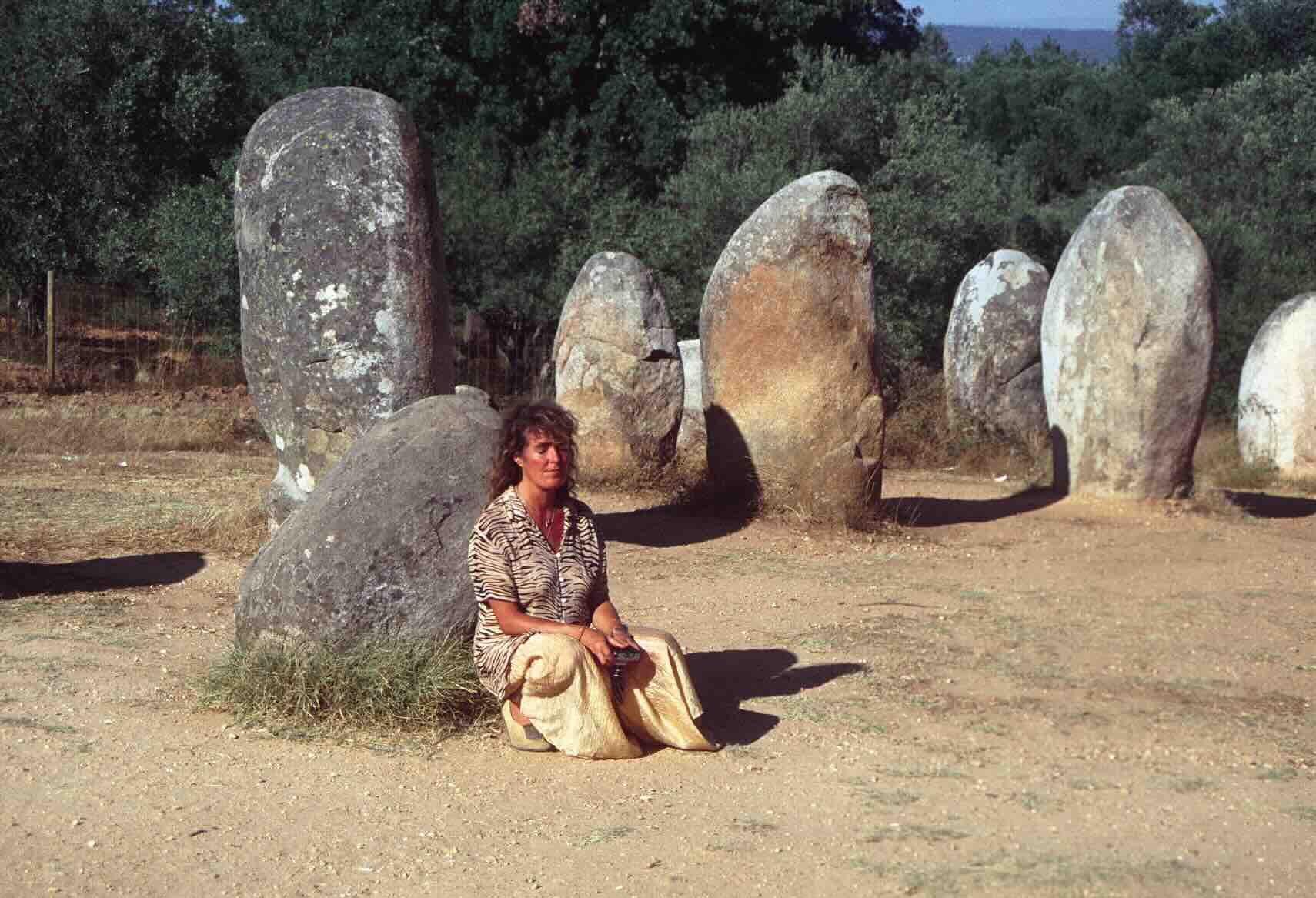
Image credit: John Wolfstone, Ian Mackenzie, and Julia Maryanska
Returning to a Village
These changes can only be achieved through a community that promotes trust, radical honesty, connection, and love. “The original trauma underlying all of humanity is the loss of village. That is the original hurt… the worst punishment you can give a human being is exiling them from a group because that is our deepest need and therefore also our deepest fear.”
“Tamera created an ethical society based on integrity. At the core of that, it’s recognizing that there needs to be a structural change in how humans live. We evolved 98% of our species’ history in tribal villages. We are as tribal as bees or wolves. Humans desperately need to live in the community; that’s how we evolved.”
It begs the question, how do we shift an entire society?
“This isn’t about saying, ‘Everyone should live like Tamera.’ It’s about offering a vision of what’s possible and inspiring people to create their own models of community and trust wherever they are,” says Wolfstone. “We’re not all going to live exactly like Tamera, but I guarantee it will be far more communal when the change does emerge.”
This year, The Village of Lovers encourages you to be part of the discussion, believe in Tamera’s radical community, and engage in solutions within your own lives.
Be part of a global change. Watch The Village of Lovers documentary and explore these ideas further at the upcoming 5-day Summit Fugitive Futures, bringing together radical thought-leaders of regenerative culture from January 29th – February 2nd, 2025.