
 Jon Stojan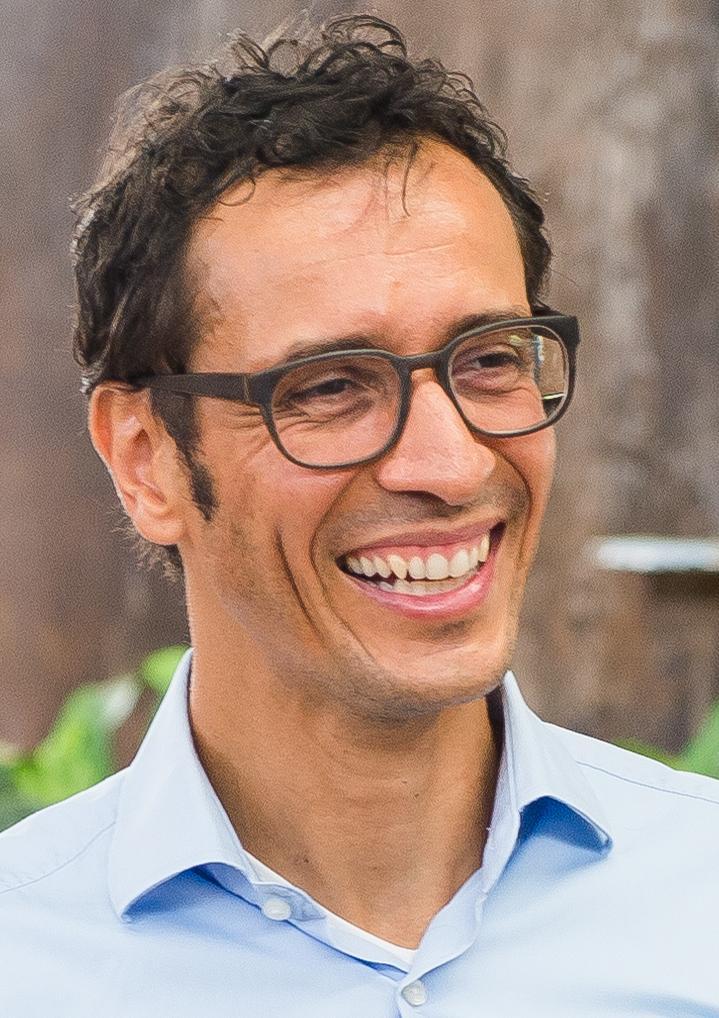
Image credit: Jean-Claude
Jean-Claude Bastos discusses what happens when African scientists and entrepreneurs receive proper support and recognition.
Entrepreneur and philanthropist Jean-Claude Bastos has long believed in Africa’s potential to solve its own challenges. Through his book The Convergence of Nations: Why Africa’s Time is Now and his pioneering work with the African Innovation Foundation, Bastos has championed a vision of African development driven by Africans themselves.
“The advantage of being a comparative economic latecomer is that Africa has the chance not only of making up its gap with the rest of the world but also of assimilating lessons from other successful regions and forging new paths that can set exemplary international standards,” Bastos wrote in his 2015 book.
Jean-Claude Bastos brings a unique perspective to his work in Africa. His dual heritage has shaped his understanding of the continent’s opportunities and challenges.
“I had a very close relationship with my late Angolan grandmother, who taught me the importance of valuing humanity,” Bastos told Forbes in an interview. “She always told me that when you have enough, give to those in need. She also taught me the importance of remembering my origins. Before she passed away, I promised her I would help to make a difference on the African continent.”
This promise materialized in 2009 when he founded the African Innovation Foundation with a clear mission: to unleash Africa’s dormant potential and support sustainable projects improving lives across the continent.
“When I look at what the African Innovation Foundation has accomplished — supporting hundreds of innovators across the continent, creating platforms for African-led solutions, witnessing groundbreaking discoveries in health care and agriculture — I believe my grandmother would see that her lessons took root,” he says.
“Every time I see an African innovator transform their community with a homegrown solution, I feel her wisdom validated. If she were here today, I think she would recognize that the seeds of compassion and purpose she planted have grown into something meaningful for the continent she loved.”
The Innovation Prize for Africa: Catalyzing Scientific Breakthroughs
The foundation’s most notable initiative came in 2011 when it launched the Innovation Prize for Africa in partnership with the United Nations Economic Commission for Africa. With prizes totaling $185,000 annually, the competition quickly became a premier platform for African scientists, researchers, and entrepreneurs to showcase solutions addressing local challenges.
“For Africa, by Africa was a core pillar on which the African Innovation Foundation was built,” Jean-Claude Bastos says. “My belief has always been that Africa’s future lies in its ability to create solutions according to its own socio-economic needs. The Innovation Prize was designed to uncover the incredible potential that would otherwise have gone untapped.”
The award has highlighted groundbreaking scientific discoveries in health care, agriculture, environmental conservation, and technology. Winners have secured over $135 million in investments, and their companies are collectively valued at more than $200 million.
The inaugural 2012 prize went to Egyptian professor Mohammed Sanad for developing a lightweight, multi-broadband base station antenna, technology that continues to advance mobile connectivity across the continent today.
The following year witnessed a scientific breakthrough in sustainable food production when South Africa’s AgriProtein team won for their method of using waste and fly larvae to produce natural animal feed. This nutrient recycling approach improved the nutritional value of meat while lowering costs for African processors and farmers.
Health sciences have featured prominently among the winners. The 2014 prize recognized South Africans Dr. Nicolaas Duneas and entrepreneur Nuno Pires for creating Altis Osteogenic Bone Matrix, the world’s first injectable bone graft substitute derived from bone morphogenetic proteins. This medical device provides complete natural bone and bone marrow restoration following injuries.
“Many of the inventions of recent IPA winners and finalists can go a long way in improving the lives of communities around the world,” Jean-Claude Bastos told Forbes. “This innovation is expected to radically change the way orthopedic surgeons treat bone injuries, not just in Africa but all over the world.”
Moroccan researcher Adnane Remmal claimed the 2015 honor for developing a natural formula for reducing health hazards in livestock by preventing the transmission of multi-resistant bacteria through meat. His solution provides farmers with an alternative to antibiotics in livestock, addressing a growing global health concern.
The 2016 competition highlighted additional medical breakthroughs, with Dr. Valentin Agon of Benin winning for Api-Palu, an anti-malaria drug derived from natural plant extracts. The medication proved both more effective and significantly cheaper than mainstream pharmaceutical options.
“This is a disease that a child dies from every 30 seconds in Africa. We should fight this disease,” Agon said upon receiving the award. “This is an African solution, made in Africa, by Africans, for Africans. And for the world.”
The competition’s special prize for social impact recognizes solutions with exceptional potential to address pressing community needs. Nigerian Dr. Eddy Agbo received this honor in 2016 for creating a rapid urine test for malaria that delivers results in under 25 minutes, making diagnosis accessible even in remote areas without medical facilities.
Egyptian scientist Dr. Aly El-Shafei secured the 2017 grand prize for his Smart Electro-Mechanical Actuator Journal Integrated Bearing, a patented device supporting energy-generating turbines more efficiently and cost-effectively. The technology represents a significant advancement not currently available in Western markets.
“The IPA has evolved well beyond its original conception as merely an awards program,” Bastos explains. “Over the years, we’ve witnessed remarkable progress in the sophistication of submissions. I attribute this growth primarily to our network of ambassadors — those who have experienced the program firsthand.
“There’s an organic multiplication effect that occurs when successful innovators share their stories with peers across Africa, which strengthens the entire innovation community in ways we couldn’t achieve through traditional outreach alone.”
Jean-Claude Bastos Talks Africa’s Scientific Future
The scientific achievements highlighted through the Innovation Prize for Africa represent just a fraction of the continent’s potential. With Africa’s youth population expanding rapidly — over 75% of the continent’s population is under 35 — Bastos sees tremendous opportunity for continued scientific advancement.
“African youth are right in the middle of a paradigm shift. Traditional jobs are no longer the sole source of employment, and reliance on natural resources alone will not address high youth unemployment rates,” Jean-Claude Bastos says.
“A new approach to unlocking Africa’s economic potential is required. Science and technology-driven entrepreneurship will fuel economic diversification while addressing pressing challenges in sustainable ways.”
Bastos believes Africa possesses abundant untapped talent and professionals who deserve support and opportunities for learning and skill development. He has said, “This will be key for business and economic development across Africa.”