
 Lina Lecaro
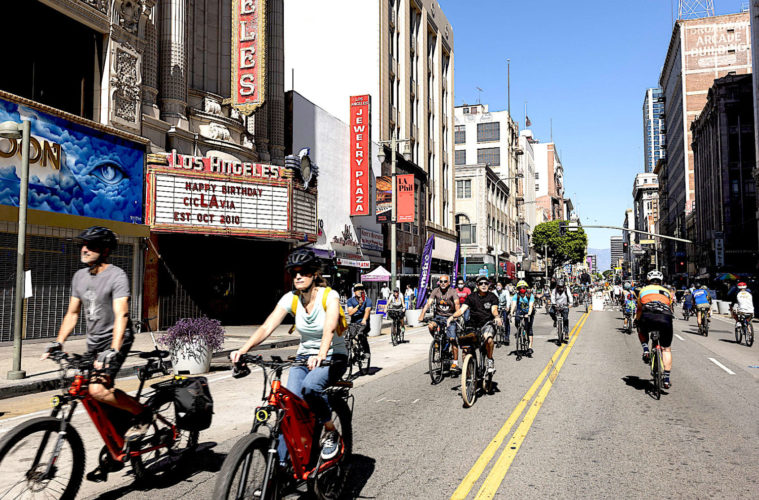
During the very first CicLAvia –the bike-driven gathering which closes L.A. roads to car traffic– thousands of people got the opportunity to see their city in a whole new way. The new perspective brought communities together out onto the streets, using people-powered modes of transportation: bikes, skates, skateboards, scooters and bodies (walking and running). The event’s success proved that Angelenos have a strong desire to connect with each other outside of their automobiles when the streets feel safe and welcoming. After pandemic cancellations and lockdowns, this is truer than ever.
CicLAvia (inspired by Bogotá South America’s weekly ciclovía) has been turning our city’s streets into what its organizers see as “parks for a day” for 12 years now. It allows Angelenos to explore and experience neighborhoods at eye level, with a secure, family-friendly environment and a sense of community they don’t get while traveling by car.
(Courtesy CicLAvia)
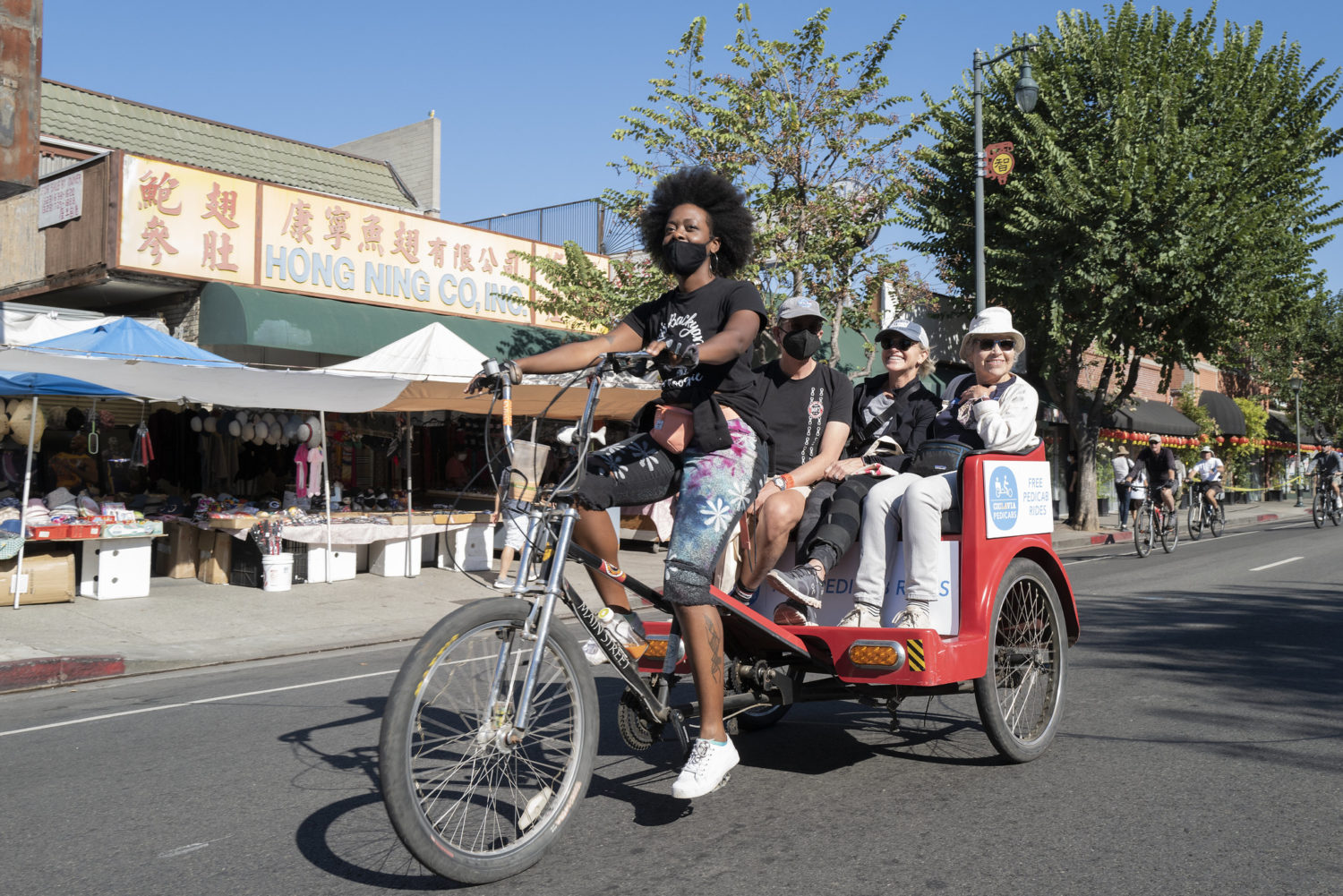
Additionally, local businesses along the routes see an uptick in customers and sales not only on the day of the events, but after, as residents discover new neighborhoods and places they may not have otherwise. Covering hundreds miles via 40 events over the years, this is one of the most transformative gatherings in the city, in more ways than one.
Beyond connecting communities, CicLAvia has impacted (local and regional) transportation policy. After incorporating as a nonprofit in 2009, the organization eventually teamed up with the Mayor’s office and the Los Angeles Department of Transportation (LADOT) to plan logistics for the event. CicLAvia is now also a partner in S.T.E.P. (Sustainable Equity Transportation Project), a project aiming to address community residents’ transportation needs and reduce greenhouse gas emissions by supporting clean transportation and projects to promote them.

(Courtesy CicLAvia)
“Since the first CicLAvia in 2010, we have seen more and more bike lanes and pedestrian infrastructure built in the city,” Romel Pascual, the event’s executive director, tells LA Weekly. “I think the growth of CicLAvia over the years has shown the viability of active transportation, and that we need more infrastructure built to support and encourage mode shifts in L.A..”
With the opening of Metro’s new K line this week and the recent re-vamp of the 6th Street Bridge, the return to CicLAvia’s most popular event, “Heart of LA,” in downtown (coinciding with Grand Park’s 10 year anniversary celebration– read more about it in this week’s Arts Calendar), spotlights the civic center and its surrounding regions as an important hub for connecting and rethinking transpo in the city.

(Courtesy CicLAvia)
“Heart of LA is a CicLAvia anchor community event – we return to it every year,” shares Pascual. “Grand Park has become a central point of gathering and/or recreating, with programs targeted at connecting people to their built environment. Both Grand Park and CicLAvia share that.”
Yes, city environments face challenges — from increases in unhoused citizens to crime to traffic– but it seems that out-of-the-box events like CicLAvia offer new ways of addressing these issues and making a difference. Traffic for autos is temporarily tougher during these events, with road blockages around the city, but that’s sort of the point. It’s just another reason to leave the gas guzzler in the garage and get some sunshine and exercise on a bike, skates or foot; the event has enough to see and do even if you’re not a biker or skater. Just stroll it.

(Courtesy CicLAvia)
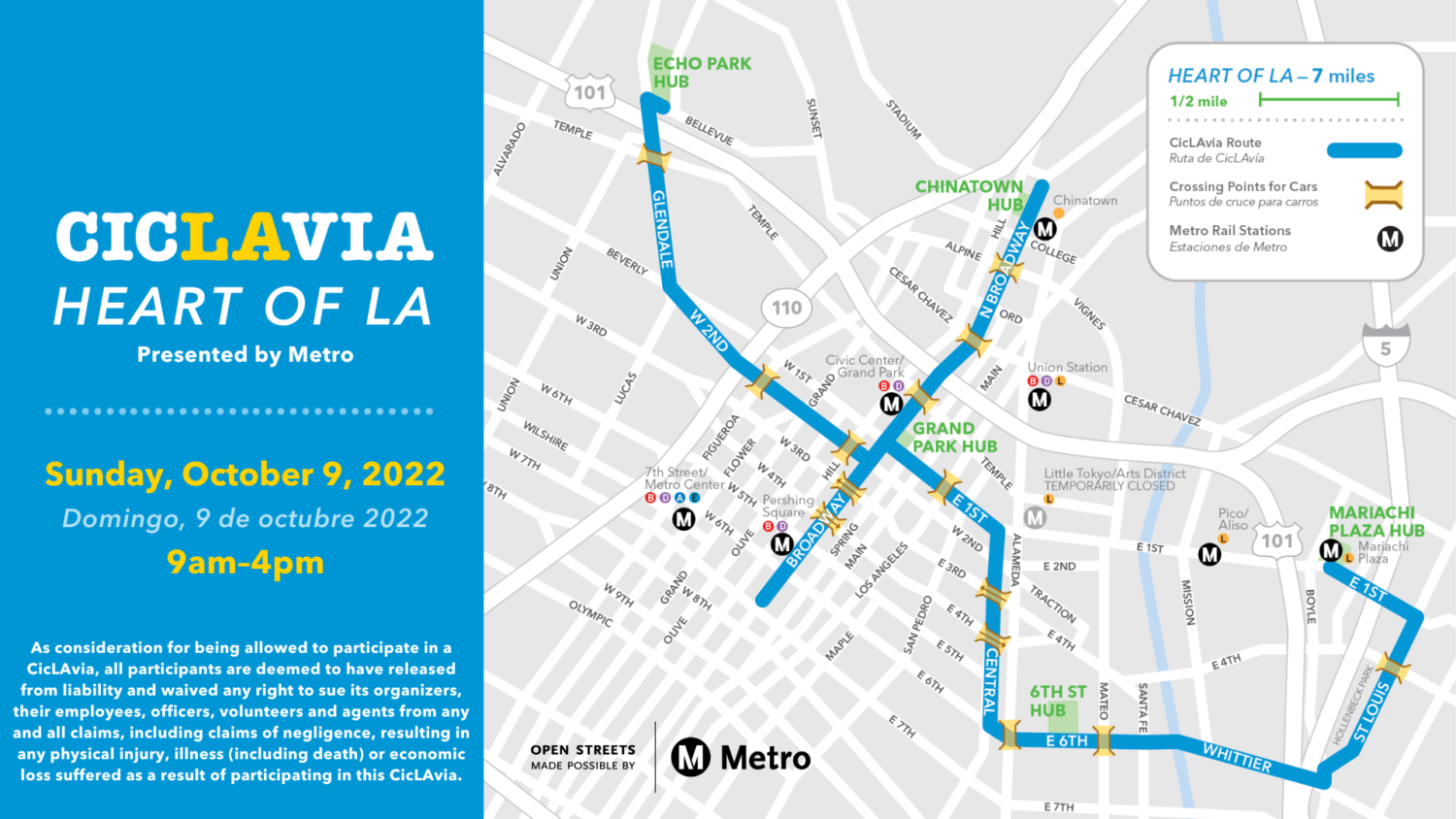
The free event, which runs about 7 miles and is sponsored by Metro, just completed its 40th gathering, so Heart of LA will be the 41st. After this weekend, they’ve got one more event headquartered in South L.A. on December 4. In 2023 they’re planning nine events, and in 2024 they hope to hold the rides monthly with shorter routes geared more toward walking.
“It has never been more important to improve people’s lives and strengthen communities, breaking free from isolation, exploring the connection between our health and our planet’s health and to support sustainable systems and materials that sync with nature,” Pascual aserts. “Through events like CicLAvia we can imagine and experience a cleaner, more sustainable and less car-centric Los Angeles.”
CicLAvia, Sun., Oct, 9, 9 a.m.- 4 p.m.; free. See route map below. More info at https://www.ciclavia.org/heart_of_la22
Editor’s note: The disclaimer below refers to advertising posts and does not apply to this or any other editorial stories. LA Weekly editorial does not and will not sell content.