
 Wyles Daniel
Artificial intelligence has long promised to change how people live, work, and play, but only recently has that promise begun to feel personal. For Parthsarthi Rawat, a computer vision engineer and AI innovator, the mission has always been clear: take AI out of the research lab and put it into people’s hands.
That mission has led him to help reshape youth sports, one of the most human, community-driven arenas imaginable. Through his work at GameChanger by Dick’s Sporting Goods, Rawat has introduced AI tools that give young athletes, coaches, and parents access to video analysis once reserved for professional broadcasters. His technology now supports over six million users, signaling a major shift in how families experience and learn from the games they love.
An Engineer’s Path to AI
Rawat’s path into artificial intelligence was anything but conventional. Trained initially as a mechanical engineer, he first encountered robotics during the ASME Student Design Competition in 2018, where his team secured first place in the Asia-Pacific region. That win, he says, was more than just a trophy; it was a revelation.
“I realized how much intelligence and precision a robot could achieve when guided by the right algorithms,” Rawat recalls. “That’s when AI became more than a concept for me; it became a calling.”
His growing fascination with machine perception, how computers interpret the world through cameras, soon became the foundation of his career. His first major academic contribution came with his research paper on computer vision, which earned the Best Paper Presentation Award at the 2020 IEEE International Conference on Control, Automation, and Robotics (ICCAR).
He later earned his Master’s degree in Robotics Engineering from Worcester Polytechnic Institute, where he refined his understanding of AI modeling, data systems, and autonomous behavior. “The challenge,” he says, “is not just building AI that works in theory, but one that adapts to messy, unpredictable real-world environments.”
AI’s New Playing Field
After his studies, Rawat joined SportsVisio, Inc., a sports technology startup where he built the AI pipeline that would later help the company secure $3 million in seed funding in 2023. That success proved that AI could generate commercial and community value simultaneously, but Rawat wanted to see its effect in real time.
“I wanted to see what happens when people actually use what I build, when they smile at a replay or spot a move they can improve,” he says.
That desire led him to GameChanger, the digital scorekeeping and video platform acquired by Dick’s Sporting Goods. In May 2024, he became one of the first engineers hired for its Computer Vision AI team, a small but ambitious group tasked with embedding AI into the daily rhythm of youth sports.
Reimagining How Families Watch Sports
At GameChanger, Rawat spearheaded the development of FilmRoom, an AI-powered feature that helps families and coaches analyze game footage with near-professional precision. Using only a smartphone camera, the system automatically detects and removes downtime from long recordings, creating quick, engaging highlight reels that showcase only the most important moments.
“Parents and players don’t have time to scrub through three-hour recordings,” Rawat explains. “FilmRoom’s AI identifies when the action stops, a timeout, a lull, a pause, and filters it out. What’s left is pure gameplay.”
The technology has since been featured in major media outlets, underscoring the growing demand for accessible sports analytics. Building on FilmRoom’s success, Rawat has also designed AI architecture for baseball and basketball clip-generation tools, broadening the feature’s reach across multiple sports.
Rawat has filed a patent for downtime classification, a breakthrough that could change how sports video is edited, consumed, and understood.
Pushing AI Beyond the Lab
The success of FilmRoom reflects a larger trend in artificial intelligence: the move from complex, isolated models toward everyday usability. For Rawat, the key to this transition lies in designing systems that thrive in real-world conditions.
“AI can’t live in controlled environments forever,” he says. “It needs to make sense of noise, unpredictability, and human behavior. That’s how you make it truly helpful.”
He points out that while many AI models perform flawlessly in simulated settings, they often struggle when faced with imperfect data, the kind found in an average youth sports video. His approach flips that challenge into an advantage, using real-world footage to help AI adapt faster. “The world is imperfect,” he adds. “AI should learn from that imperfection.”
Recognition and Mentorship
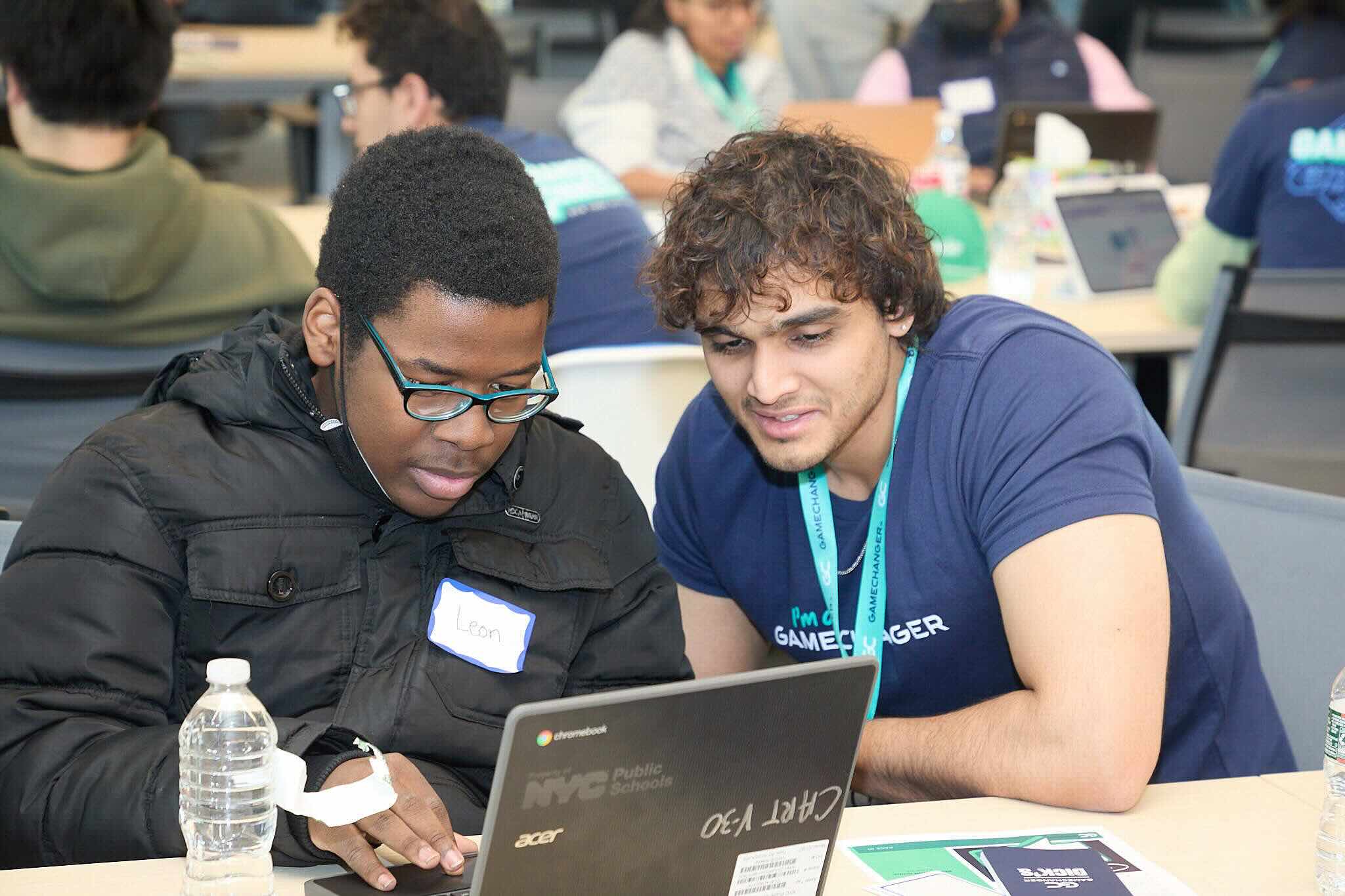
Rawat’s achievements haven’t gone unnoticed. He now serves as a reviewer for IEEE conferences and has been invited to judge hackathons at MIT and Harvard, mentoring aspiring engineers and innovators. For him, the responsibility is as much about education as it is about inspiration.
“I tell young engineers that if your fundamentals are strong, especially in math and physics, you can build anything,” he says. “AI is moving fast. The only way to keep up is to keep learning.”
His mentorship mirrors his own philosophy: that democratizing technology starts with democratizing understanding. The more people grasp how AI works, the more they can shape its evolution responsibly.
AI Beyond the Game
Looking ahead, Rawat envisions a world where AI quietly integrates into daily life, not as a novelty, but as an invisible assistant that simplifies tasks and enhances creativity. “The stigma around AI is fading,” he says. “People are starting to trust it in their homes, their classrooms, even their hobbies. That opens the door to innovation at every level.”
In youth sports, that evolution is already underway. What began as a tool for video highlights is now inspiring a new wave of applications, from player performance analysis to community storytelling. For Rawat, it’s proof that technology doesn’t have to replace human experience; it can amplify it.
“The goal,” he says, “is for AI to become as natural as turning on your phone. If it can help someone get better at their game, learn something new, or simply relive a memory, then it’s doing exactly what it should.”
Transforming an Industry, One Game at a Time
By bridging the gap between technical precision and emotional connection, Parthsarthi Rawat is helping redefine what AI can mean in everyday life. His work is more than a technological contribution; it’s part of a larger transformation in how artificial intelligence meets humanity on its own terms.
For millions of athletes, coaches, and parents around the world, that transformation is already underway, one highlight reel at a time.