
 Nia Bowers
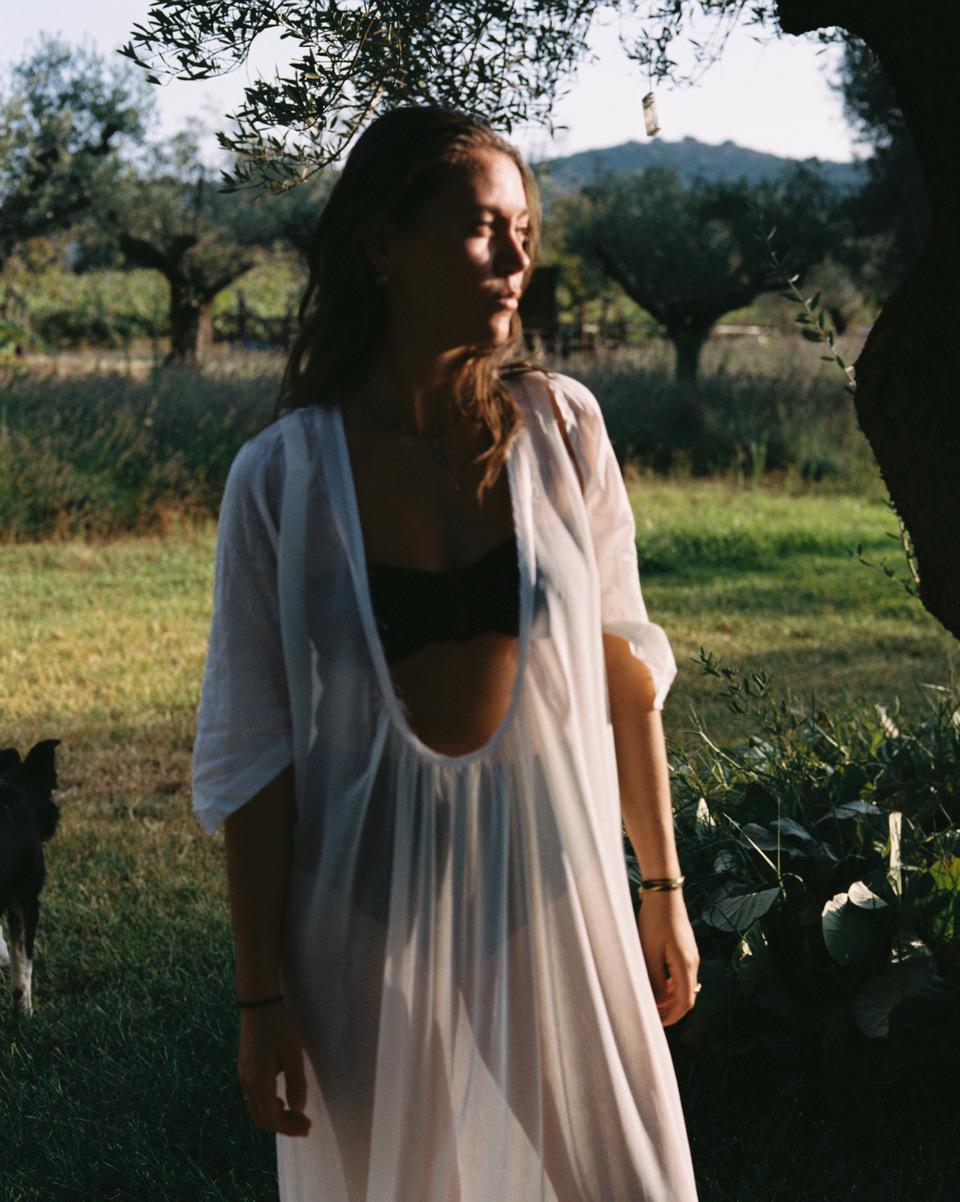
The contemporary art world has long relied on the gallery as its primary stage. Clean white walls, controlled lighting, and carefully choreographed layouts have defined the way audiences encounter art for decades. Yet a new generation of curators and cultural producers is challenging that formula, searching for ways to reconnect artistic production with the environments and communities that surround it. Among those reshaping this conversation is Inès Trafford, whose work positions curatorial practice not simply as exhibition making but as a form of cultural architecture.
As co-founder of Cuadra Projects, Trafford operates at the intersection of art, design, and spatial strategy. Launched in 2024 alongside Matilde Sirolli, it was conceived as a flexible curatorial initiative that moves across geographies and disciplines. Rather than anchoring itself to a permanent venue, Cuadra Projects focuses on developing exhibitions that respond directly to the characteristics of each location. Industrial structures, historical buildings, and open urban environments become the framework through which artistic ideas are explored. In this context, space is not a neutral container. It becomes a collaborator in the work itself.
From conceptual planning to final installation, Trafford oversees the development of each project in its entirety. Her responsibilities include identifying artists, commissioning new works, coordinating production logistics, managing partnerships, and shaping the editorial and public-facing components that accompany each exhibition. This integrated approach requires a combination of curatorial insight and operational precision. It also reflects a broader shift within contemporary art institutions, where leadership increasingly involves building networks that connect artists, audiences, and spaces in meaningful ways.
The origins of Cuadra Projects can be traced to Trafford’s time at Sotheby’s Institute of Art in New York, where she pursued a master’s degree in Art Business. It was during this period that she and Sirolli began outlining a framework for a curatorial platform that would operate outside conventional institutional structures. Their shared interest in emerging artistic practices, combined with a commitment to creating sustainable opportunities for artists, shaped the initiative’s guiding philosophy. The goal was not simply to mount exhibitions but to design cultural situations where art, architecture, and public participation intersect.
This philosophy became visible with Cuadra Projects’ inaugural exhibition, The Paper Room, which debuted during Milan Design Week in April 2025. Rather than presenting a conventional display of objects, the exhibition was conceived as an environment built around a single material concept: paper and its extended material family. The project brought together two French designers based in London, Joséphine Bourdariat and Luana Meneux, who developed a collection of furniture, lighting, and works on paper specifically for the occasion.
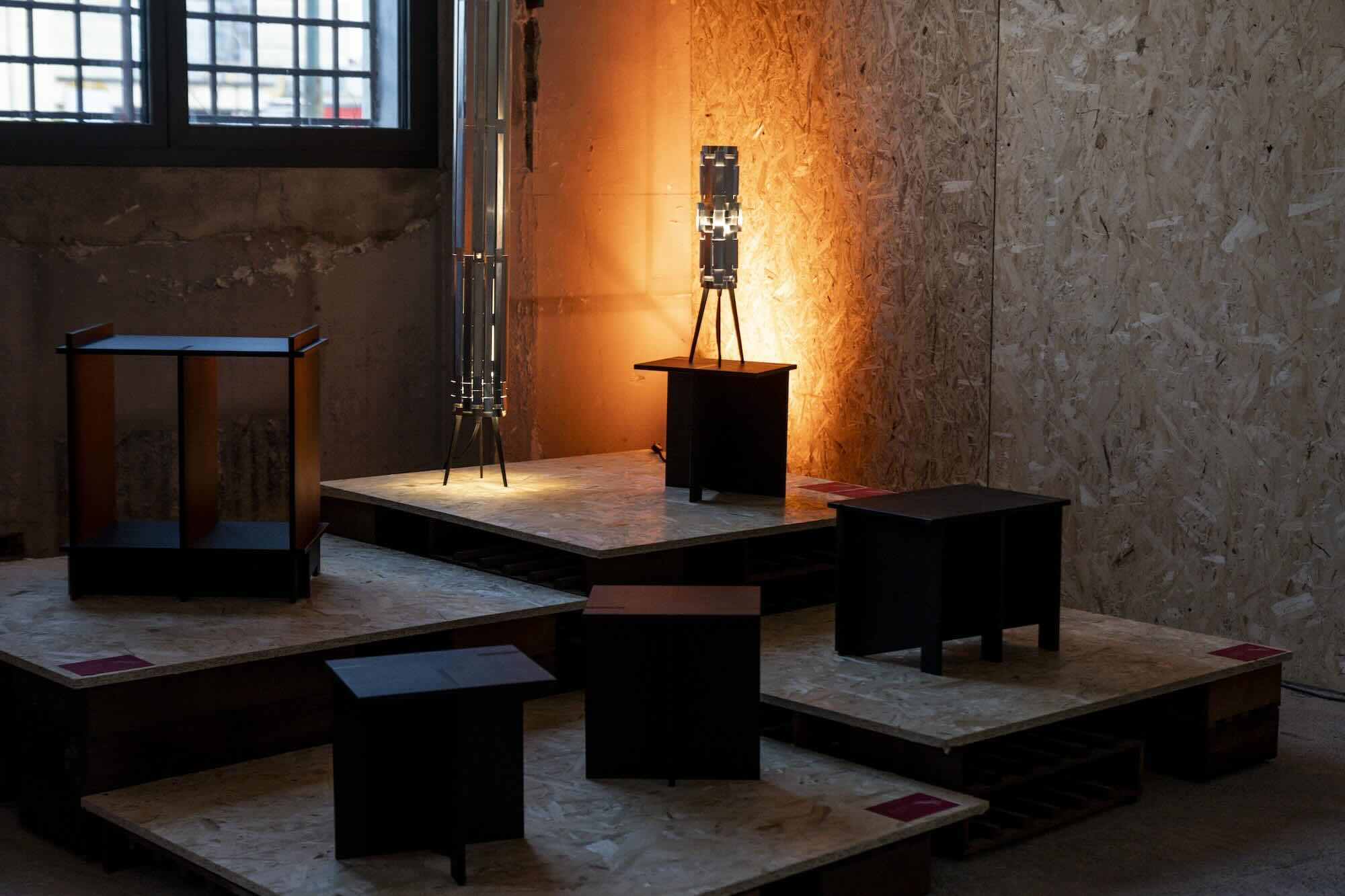
The exhibition took place inside the Pennellificio, a former brush factory located within Milan’s emerging Certosa District. Like many industrial areas in European cities, the neighborhood has undergone significant transformation in recent years, with creative initiatives playing a central role in its renewal. By situating The Paper Room within this evolving context, Cuadra Projects positioned the exhibition as part of a larger urban narrative. The architecture of the site, with its industrial scale and raw surfaces, provided a stark contrast to the delicate conceptual origins of the material explored by the designers.
Bourdariat and Meneux approached paper not simply as a medium but as a conceptual starting point. Their collection explored the material’s structural qualities and extended them into more durable forms. The series focused on repetition and accumulation, reflecting patterns found in contemporary consumer culture and mass manufacturing. At the same time, the designers emphasized sustainability and longevity, prioritizing responsible material use and counteracting the fragility of paper through the choice of more durable alternatives.
Within the exhibition layout, furniture pieces were intentionally designed with lower proportions, encouraging a sense of physical closeness among viewers. Seating arrangements promoted conversation and shared presence rather than distant observation. In contrast, a series of vertical lighting elements extended upward through the space, altering the scale of the environment and guiding the viewer’s movement through the installation. The juxtaposition between grounded furniture and rising illumination created a spatial dialogue that echoed the designers’ interest in human connection.
Trafford’s curatorial direction ensured that the exhibition extended beyond the static presentation of objects. A series of public events activated the space throughout the week of Milan Design Week. The opening gathering introduced a site-specific light installation by Italian artist Marco Nereo Rotelli, transforming the courtyard into a luminous environment that merged visual art with live performance. Another evening program brought together designers, artisans, and the public through a collaborative event that included a live crafting demonstration and the creation of a limited-edition tote collection produced on site. These moments expanded the exhibition’s reach, turning it into a social platform where creative production unfolded in real time.
Attendance figures reflected the strong interest generated by these initiatives. Hundreds of visitors passed through the exhibition during its run, while public programs drew large crowds and online registrations. Yet the success of The Paper Room cannot be measured solely through visitor numbers. More significant is the way the project demonstrated an alternative model for curatorial practice. Instead of positioning art as an isolated experience, the exhibition functioned as a cultural meeting point connecting designers, audiences, and the surrounding neighborhood.
Central to this approach is Trafford’s understanding of curating as a process that unfolds across multiple layers. The exhibition itself represents only one component. Publications, events, collaborations, and digital platforms all contribute to shaping the broader ecosystem around a project. For The Paper Room, Cuadra Projects produced a limited-edition catalogue that documented the exhibition while extending its conceptual framework into print. Conceived and directed under Trafford’s supervision, the publication served as both an archive and an interpretive tool, ensuring that the project continued to circulate beyond the physical duration of the exhibition.
This emphasis on continuity highlights an important dimension of Trafford’s practice. Rather than treating exhibitions as isolated moments, she approaches them as nodes within a longer trajectory of cultural production. Each project generates relationships, knowledge, and creative dialogue that inform future initiatives. Over time, these interconnected efforts form a network that supports artists and encourages experimentation across disciplines.
The itinerant nature of Cuadra Projects reinforces this dynamic structure. Without the constraints of a permanent venue, the platform retains the flexibility to adapt its format to each context. A former factory might host one exhibition, while another project could unfold in a historical site or an open landscape. This mobility allows Trafford and her collaborators to explore how artistic work interacts with different architectural and social conditions.
Such strategies reflect a broader transformation in the cultural sector, where independent initiatives increasingly play a significant role in shaping the public experience of art. As institutional structures evolve, smaller platforms often operate as testing grounds for new ideas. They can move quickly, experiment with unconventional formats, and cultivate partnerships across fields ranging from design and craftsmanship to urban development.
In this environment, Trafford’s work stands out as being strategic. Her projects demonstrate how curatorial practice can operate simultaneously as artistic direction, spatial design, and community engagement. By combining these elements, she contributes to a growing movement that sees exhibitions not merely as displays but as temporary cultural infrastructures.
Looking ahead, Cuadra Projects has planned two upcoming exhibitions. The first is scheduled for Winter/Spring 2026 in New York City, where the team is conducting studio visits and developing a new curatorial narrative while exploring partnerships with local cultural institutions. The second is a multi-site exhibition in Spain during Summer 2026, designed to unfold across several cities or venues and supported by a network of collaborating institutions, cultural spaces, and municipal partners. Both initiatives build on Cuadra Projects’ approach of site-responsive art and collaboration with contemporary practitioners.
For Trafford, the challenge lies in maintaining the balance between experimentation and structure. Successful exhibitions require careful planning, precise logistics, and the ability to coordinate diverse contributors. Yet they also depend on openness to the unexpected possibilities that emerge when artists encounter unfamiliar spaces.
The significance of Trafford’s work lies in her ability to rethink how art circulates in contemporary society. By moving beyond the confines of the traditional gallery, she encourages audiences to encounter creative work within environments that carry their own histories and identities. The result is a curatorial practice that treats space not as a passive setting but as an active participant in the cultural experience.
In doing so, Inès Trafford is helping to redefine what an exhibition can be. Through Cuadra Projects, she is building a framework where art, design, and architecture interact with the rhythms of everyday life. It is a model that replaces static display with living dialogue, transforming spaces into sites of shared discovery.
Discover more from Inès Trafford on Instagram