
 Will Jones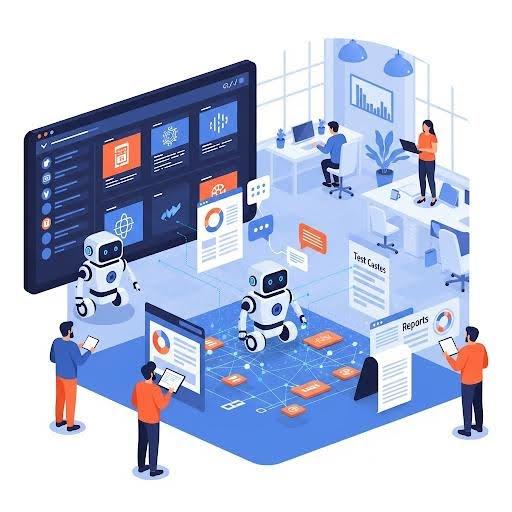
With innovation outpacing what most systems can cope with in today’s technological era, reliability and precision have emerged as the unseen keystones holding progress together. Karan Lulla stands at the forefront of technology experts, with trailblazing work in system diagnostics, intelligent automated testing, and large-scale reliability engineering that has left an observable global footprint.
For over a decade now, Karan has been pioneering complex computing ecosystems—where hardware performance, data integrity, and precision automation define the fate of whole industries. His work has directly improved the quality, efficiency, and scalability of some of the world’s most sophisticated technological systems. By redesigning the way smart machines are tested, validated, and trusted, Karan has established new standards of product dependability and excellence in operation across industries, from enterprise software to artificial intelligence hardware.
Very early in his professional life, Karan identified a significant void within conventional testing techniques. Traditional validation models were no longer able to match the fast-changing needs of GPU-based AI systems and distributed cloud infrastructures. In response, he created a modular diagnostic model that could integrate on any variety of platforms. The model put together performance and reliability metrics, thereby allowing hardware anomalies to be detected in the here-and-now with predictive analytics, sizably minimizing post-production defects and maximizing manufacturing yield—attainments that are benchmarks for test automation and data-driven decision-making across the industry.
Building upon this foundation, Karan spearheaded projects to craft and deploy end-to-end automation pipelines that integrated hardware validation with machine learning-based defect prediction. By integrating automated testing with continuous data feedback loops, he reduced overall validation cycles by more than 30%, saving organizations significant time and resources while improving accuracy. These contributions have since been replicated across multiple domains, establishing a global model for reliability engineering in high-performance computing systems.
Karan’s technical skills seamlessly translate to leadership and mentorship. His paradigms are now the foundation of global testing infrastructures, empowering engineers and validation experts across the world. He has revolutionized testing culture from being reactive to becoming problem-solving and further on to making proactive innovation through internal training initiatives and knowledge-sharing exercises. His mentorship has improved technical competence among teams, establishing a self-perpetuating pool of expertise in diagnostic automation and quality engineering.
His impact has been particularly profound in the areas of AI system validation and GPU diagnostics, where the stakes of performance and stability are exceptionally high. Karan designed adaptive testing modules that employ AI-driven analytics to monitor system performance under real-world stress conditions, such as thermal variation, power distribution, and acoustic interference. This predictive diagnostic methodology has enabled earlier fault detection, reduced production delays, and established new reliability thresholds for next-generation AI systems.
Prior to his current leadership in intelligent testing automation, Karan also made significant contributions to enterprise data systems—where he architected performance monitoring frameworks capable of handling billions of transactions while maintaining near-zero downtime. His reliability optimization work in complicated software ecosystems formed the basis for quicker, safer, and more robust enterprise operations. These innovations played a key role in assisting worldwide enterprises in scaling to data-driven infrastructure with high performance and compliance.
Karan’s impact on the engineering profession is equally impressive. His methods and processes have been referenced in internal reports and shared throughout professional networks as models of efficiency and innovation. He is admired by colleagues for bringing analytical discipline and design accuracy to test engineering—the once routine technical task turned strategic discipline vital to the life cycle of current technology.
Looking back, Karan points out, “Reliability is not a measure; it is the language of trust between man and technology. My mission has always been to make intelligent systems powerful and reliable.” This guiding principle underlies his long-time commitment to creating systems that transcend performance and accountability in the digital age.
Today, Karan Lulla’s legacy continues to shape the thinking of global business companies, research and development labs, and AI hardware manufacturers about reliability. His work has advanced the boundaries of test automation, established new standards for predictive diagnostics, and promoted the greater mission of sustainable innovation. As industries move forward with smarter automation and edge computing, his legacy is clear: that the technology that powers the world must run with precision and reliability that humanity depends on.