
 Nia Bowers
From the sun-soaked campuses of Los Angeles to the bustling artistic heart of New York City, soprano Haiming Wu has been on a journey of growth, discovery, and artistic refinement. With a voice that combines technical precision with deep emotional resonance, she has captivated audiences across continents. In this exclusive interview, Wu shares her experiences, insights, and reflections on her evolving stage career.
Reporter: Haiming, can you share how your experiences in different cities, from Los Angeles to New York, have influenced your artistry and performance style?
Haiming Wu: Los Angeles was the first city I went to on my own for my studies, so it holds a very special place in my heart. At USC, my classmates and professors were incredibly welcoming—they made me feel part of the community and encouraged me to join various activities. For someone arriving in a new country for the first time, everything felt both exciting and refreshing. I try to carry that same energy into my singing as well. While improving my vocal skills, I spent a lot of time observing, being curious, and learning to adapt.
New York is completely different from California. Its pace, energy, and artistic atmosphere are far more intense. Here, I can study at the Met Opera every day, watch performances, and attend shows at Carnegie Hall and Broadway, with each evening offering something new. I feel like a sponge, endlessly absorbing and internalizing.
For an artist, experience is the most valuable asset. I often think of what the great German mezzo-soprano Christa Ludwig once said: to perform well and sing beautifully, opera singers must accumulate life experiences. Technical mastery is important, but it’s life experiences that shape the depth and authenticity of a singer’s artistry.
Reporter: How do you incorporate these life experiences into your character interpretations?
Haiming Wu: It’s an ongoing process of learning, self-practice, and self-correction. It’s challenging, but absolutely worth it. Every new experience adds to my understanding and helps me grow as an artist.
I’ve studied how native speakers express themselves, their vocal techniques, and their approach to art. I’ve learned how Americans sing English, Italians sing Italian, and French sing French. During my studies in the U.S., I also have spent time furthering my training in Europe, in Italy, France, Germany and Isreal during the summer and winter break. Interacting with locals, experiencing local culture, attending opera performances, and visiting museums to view art from the same periods as the music I perform have all enriched my singing and character interpretation immensely.
Reporter: You studied opera at USC and starred in Jules Massenet’s Chérubin as well as Tom Cipullo’s Glory Denied. How did these experiences shape your growth as an artist?
Haiming Wu:At USC, I played Younger Alyce in Cipullo’s Glory Denied, my first American opera. It’s emotionally intense, and I love performing serious art because opera is not just entertainment; this work is deeply meaningful. Preparing for Younger Alyce, I studied the history of the Vietnam War, which definitely deepened my understanding of war and peace. Beyond that, I carried the character home with me, and at times it left me feeling quite melancholic.

These experiences foster growth. When preparing my next role, which is Monica, I set clear boundaries: fully invest emotionally during rehearsals, but outside rehearsal, focus on studying the role, understanding motivations, learning the music, and practicing technique without emotional immersion. This balance is essential.
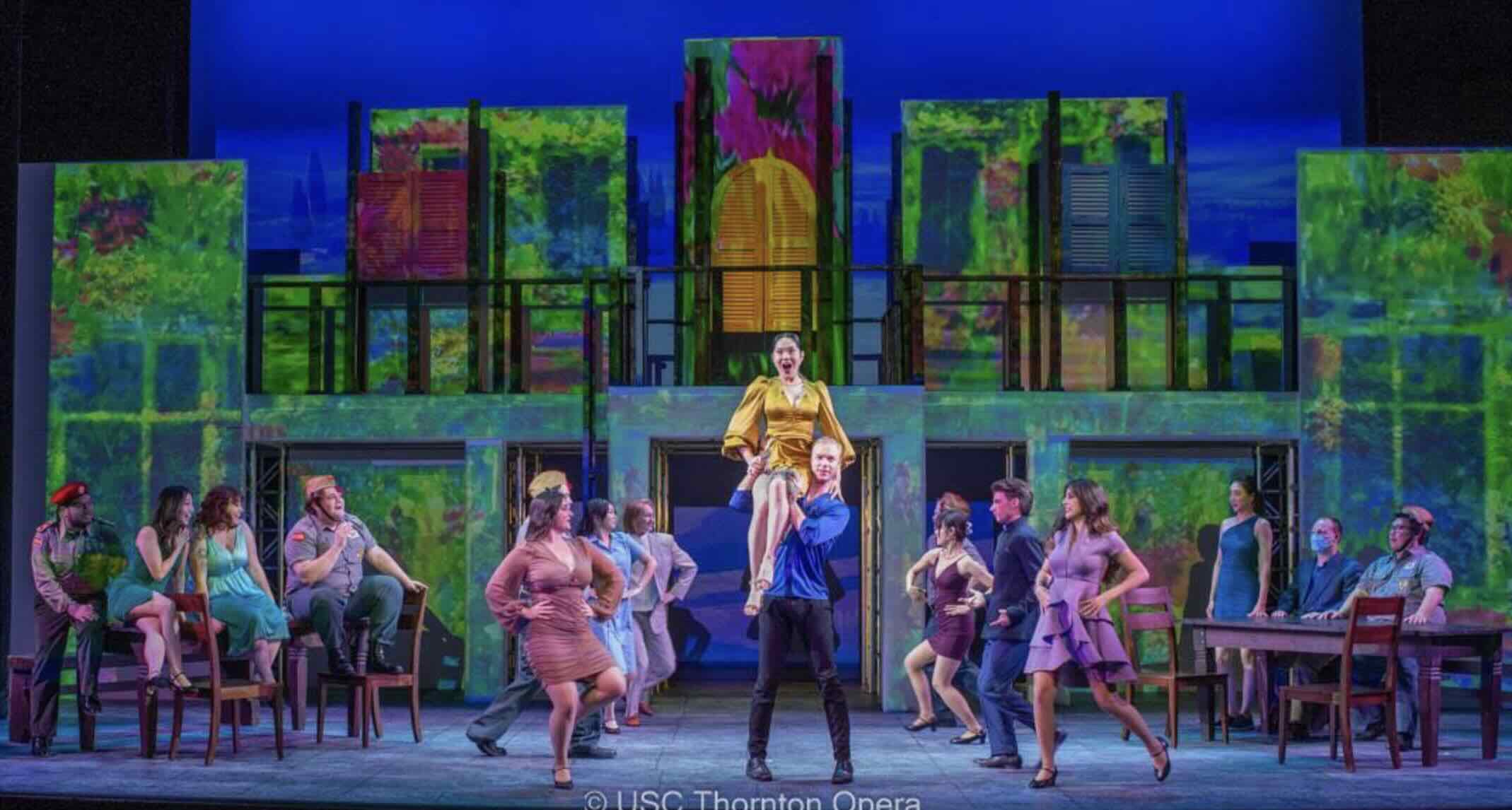
Massenet’s comedies, like Chérubin, are different—they are lighthearted, yet meaningful. I played L’ensoleillad, a Spanish dancer, which challenged both my singing and dance skills. During one run, I even contracted COVID before a performance, which reminded me of life’s unpredictability. These moments reinforced my commitment to give my all every time I step on stage.
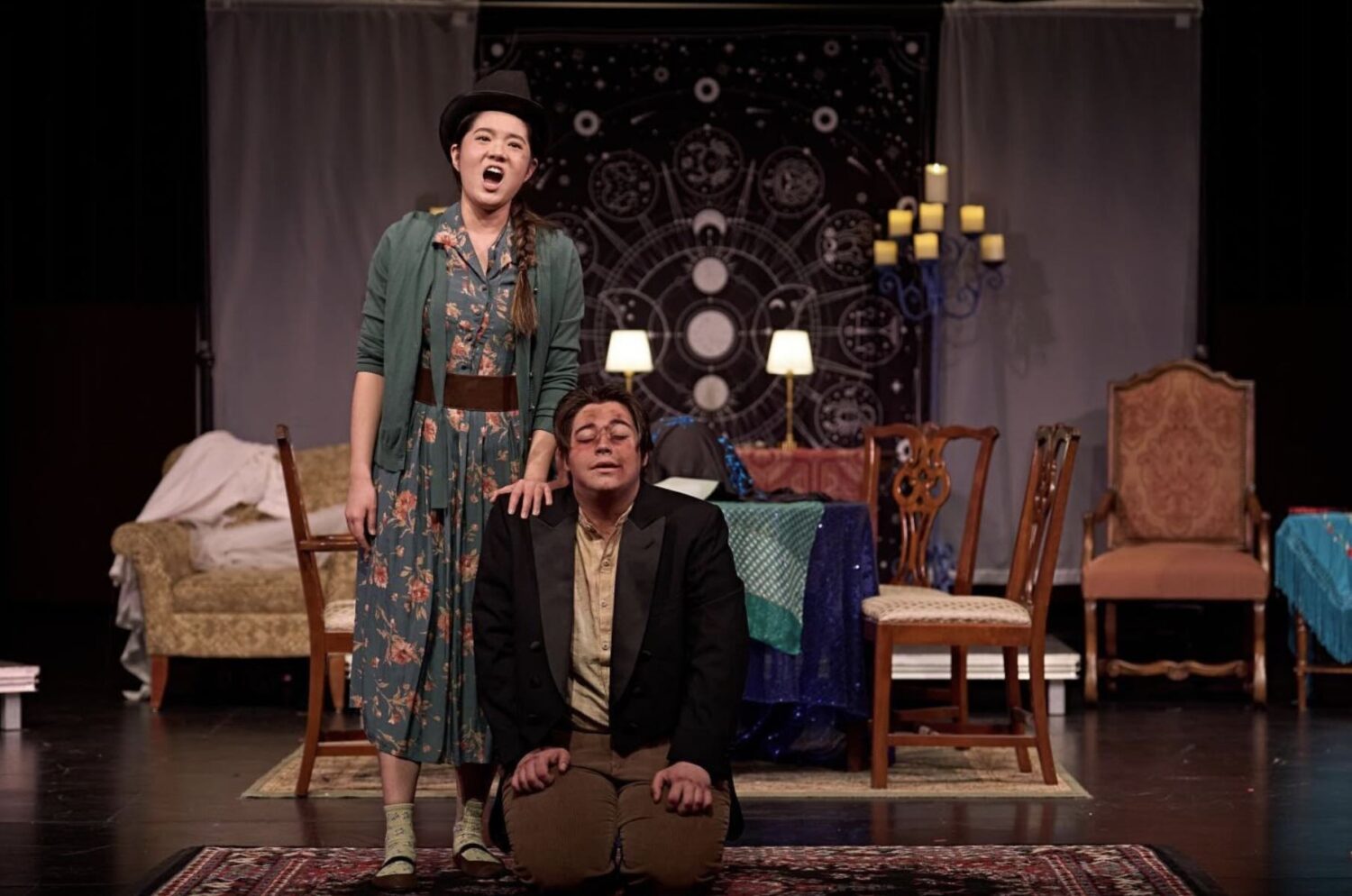
Reporter: Thank you. Your recent performance as Monica in Menotti’s The Medium was truly compelling. Could you share your approach to preparing for this role, and talk about any challenges you encountered along the way?
Haiming Wu: As the only Asian cast member in this production, one of the biggest challenges for me was the language. Singing in English is quite different from Italian and French, which are the languages I most often perform in. I even borrowed some musical theater techniques to ensure every word was pronounced clearly. While my director and vocal coaches offered invaluable guidance, I also spent a great deal of time on independent study and practice.
I’ve had a long-standing connection with this role. I first studied the most famous aria in this opera, “Monica’s Waltz,” when I was an undergraduate student at the Shanghai Conservatory, and being able to perform Monica truly felt like a dream come true. Menotti’s writing is technically demanding; much of the role sits right around the soprano passaggio. Once I worked through those technical challenges, however, I discovered that the role suited me beautifully. I’m especially proud to perform this leading role as an Asian singer; it represents an important personal and professional milestone for me.
Reporter: Could you also share a bit more about how you built onstage chemistry with the other characters?
Haiming Wu: The singer who played Baba and I clicked immediately. Monica and Baba’s relationship is incredibly complex, full of love, conflict, and inner tension. I really admire my colleague’s portrayal of Baba’s mental instability and struggles with alcoholism. It was so precise, emotionally powerful, and brought so much depth to our scenes. Performing alongside her felt exhilarating, almost like a chess match between equals.
“The Black Swan” demanded that we convey tension, fear, and inner struggle, and the rehearsal process was intense and moving. Working with Toby presented its own challenges, as it took time for us to fully understand each other’s character psychology. At first, we had many disagreements about how our characters’ relationship should play out, and building trust required patience and collaboration.
A lot of credit goes to our incredible director, Karen Driscoll, who helped us through the process and helped us navigate these challenges. Thanks to that guidance—and to the time we invested in understanding each other—the final result was very effective. I’m proud of what we achieved together, and it’s been wonderful to see the audience respond so positively to our performance.
Reporter: Haiming, what are your aspirations for the future?
Haiming Wu: I hope to keep challenging myself with diverse roles on larger stages. Every performance is a chance to grow as a singer, to better understand myself as an artist, and to share my journey with audiences, to spread positive energy and love through my voice. My contribution may be small, but that’s all the more reason to keep sharing and passing it on.