
 Will Jones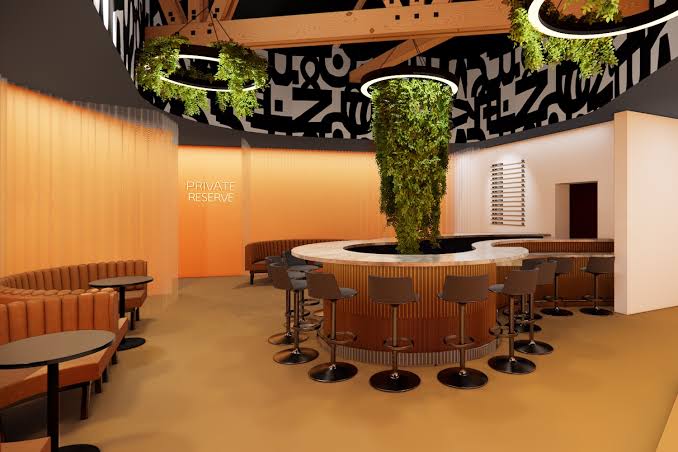
Off The Charts founder Norman Yousif on delivery, consumption lounges, and why the storefront was only ever step one
Norman Yousif has opened more cannabis stores in California than most people have walked into. Off The Charts, the family-run chain he founded and still runs, has passed 40 locations across the state, with recent openings in Cudahy, San Pablo, and San Jose. He is, by any reasonable measure, a dispensary guy.
So it is a little strange to sit across from him and hear him talk about dispensaries the way a restaurateur talks about a takeout counter. Useful. Necessary. Not the whole business.
Los Angeles is the largest legal cannabis market in the country, and for most of the last decade the story here has been about storefronts: how many, where, and who gets to open one. Yousif thinks that chapter is closing. The more interesting question, he says, is what happens on either side of the counter. How the product gets to you. Where you are allowed to enjoy it once you have it.
Here’s what he thinks comes next.
You’ve built your career on dispensaries. Why are you arguing they are not the future?
I am not arguing against them. I have built my whole life on them and we are still opening more. But a dispensary is a transaction. You come in, you buy something, you leave, and whatever happens next is not really part of the experience.
That was fine in 2018, because just having a legal store open with the lights on was the achievement. Nobody was thinking past the counter. Ten years in, the customer has changed and the store has not changed with them. People want cannabis to fit into their day the way a coffee shop or a wine bar fits into their day. Right now in most of LA, your two legal options are a retail counter or your own living room. For a city this size, that is a short menu.
West Hollywood has become your testing ground for that. Your store there started delivering. Delivery is not new in California, so why does this matter?
Delivery is not new. Delivery that actually works is newer than people think.
There is a real difference between a company that ships you a package in three hours from a warehouse somewhere in the Valley and a store on Santa Monica Boulevard that is already in your neighborhood. We are pulling off the same shelf the walk-in customer sees. Same menu, same pricing, same staff. If somebody calls and asks what is genuinely good this week, they are talking to the person who has been selling it all day.
That is the part the delivery-only companies have never solved. They can move product very efficiently. They cannot tell you anything about it.
Who is actually ordering?
A wider group than the stereotype suggests. Sure, some of it is people who do not feel like getting off the couch. But a lot of it is people who cannot easily come in. Older customers. People whose work hours do not line up with store hours. Somebody with a mobility issue. People who are simply private about it and would rather not be seen walking out with a bag.
Nobody designs for that customer and there are a lot of them. Delivery is the only thing that reaches them.
Then there is Private Reserve. Explain what it is, because “cannabis lounge” means about six different things at the moment.
Private Reserve cannabis lounge is on Santa Monica Boulevard in West Hollywood, and the simplest way to describe it is a place where you buy cannabis and then stay. Comedy nights. Strain sessions where people sit down and actually go through product together. Infused drinks. Music, games, a room full of people. It is closer to a bar without alcohol than it is to a dispensary with a few chairs added, and that distinction matters more than it sounds like it does.
The reason I care about it is not the revenue. It is that for the first time we get to watch how people actually consume. In retail you never see the second half of the story. In a lounge you find out within twenty minutes whether something works, whether the dose is right, whether people like the way it tastes, whether they are going back for a second one. You cannot buy that information from a data company. You have to be in the room.
Has that changed what you buy for the stores?
It has changed what I trust. A product can look great on paper, test well, have beautiful packaging, and then you watch a table of six people try it and nobody reaches for it again. That tells you something no sales sheet is going to tell you.
It also completely changed how I think about beverages. I was skeptical of infused drinks for years. Watching people order them in a social setting, where the whole ritual of holding a glass matters, made the category make sense to me in a way it never did on a shelf.
West Hollywood allows lounges. Most of Los Angeles County does not. What is the city missing?
I would rather frame it as what West Hollywood figured out early. They looked at the reality that people were buying legally and then had nowhere legal to consume, because hotels do not allow it and the street is obviously not an option, and they built for that instead of pretending it away. The state has since made it easier by letting these places serve real food and host ticketed events, which turned a lounge from a waiting room into an actual venue.
That is a hospitality question more than a cannabis question. West Hollywood happens to be very good at hospitality. I think other cities will get there once they see it working, and honestly, seeing it work is more persuasive than any argument I could make.
Is the tourism angle real, or is that a talking point?
It is real, and it is bigger than people in the industry admit. Somebody flies into LAX, and cannabis is one of the reasons they picked California. They buy it on day one and then spend the rest of the trip with nowhere to go. That is a failure of imagination, not of law.
Every other thing this city is famous for has a room attached to it. Food has restaurants. Music has venues. Film has theaters. Cannabis has a counter and a paper bag.
Running legal retail in LA is expensive. Is that changing?
The state rolled the excise tax back last year, and that helped. I will take it. But the cost of doing this correctly is still high, and it is felt hardest by the smallest operators, the ones with one store and no cushion.
What I would say is that the answer is not only about tax rates. It is also about giving legal businesses more ways to earn. If a licensed operator can run a lounge, host events, serve food, and deliver, then the same license supports more revenue and the economics start to work. Right now we ask legal businesses to carry a heavy cost structure and then limit them to one narrow way of making money. That is the squeeze.
You have 40-plus stores. How do you keep it from feeling like a chain?
Hiring, mostly. The person behind the counter is the entire brand as far as the customer is concerned. Everything else is paint. We are a family business and I still walk stores. Not in a performative way, I just like being in them. The day I cannot tell you what is happening in a store without checking a report is the day this stops working.
Five years out. What does cannabis in LA look like if things go well?
More rooms. Lounges in more parts of the city, delivery that feels as normal as ordering dinner, and a legal market that can compete on experience rather than only on the fact that it is legal and tested.
And a lot more small brands surviving, which is the part I actually care about. The interesting product in this industry has always come from small operators. Whatever the next version of LA cannabis is, it should have room for them.
And Off The Charts in that picture?
More places to buy, and more places to be. That is the whole plan, honestly. The store was step one. It was never supposed to be the destination.