
 Nia Bowers
He helped build the data layer that trains modern AI, then watched it fold into one of the enterprise sector’s larger consolidations. Now Gökhan Urul is back at the consumer edge where he started, pursuing what he calls human-AI symbiosis: software that understands people over time, remembers, speaks their language, and works alongside them rather than in their place.
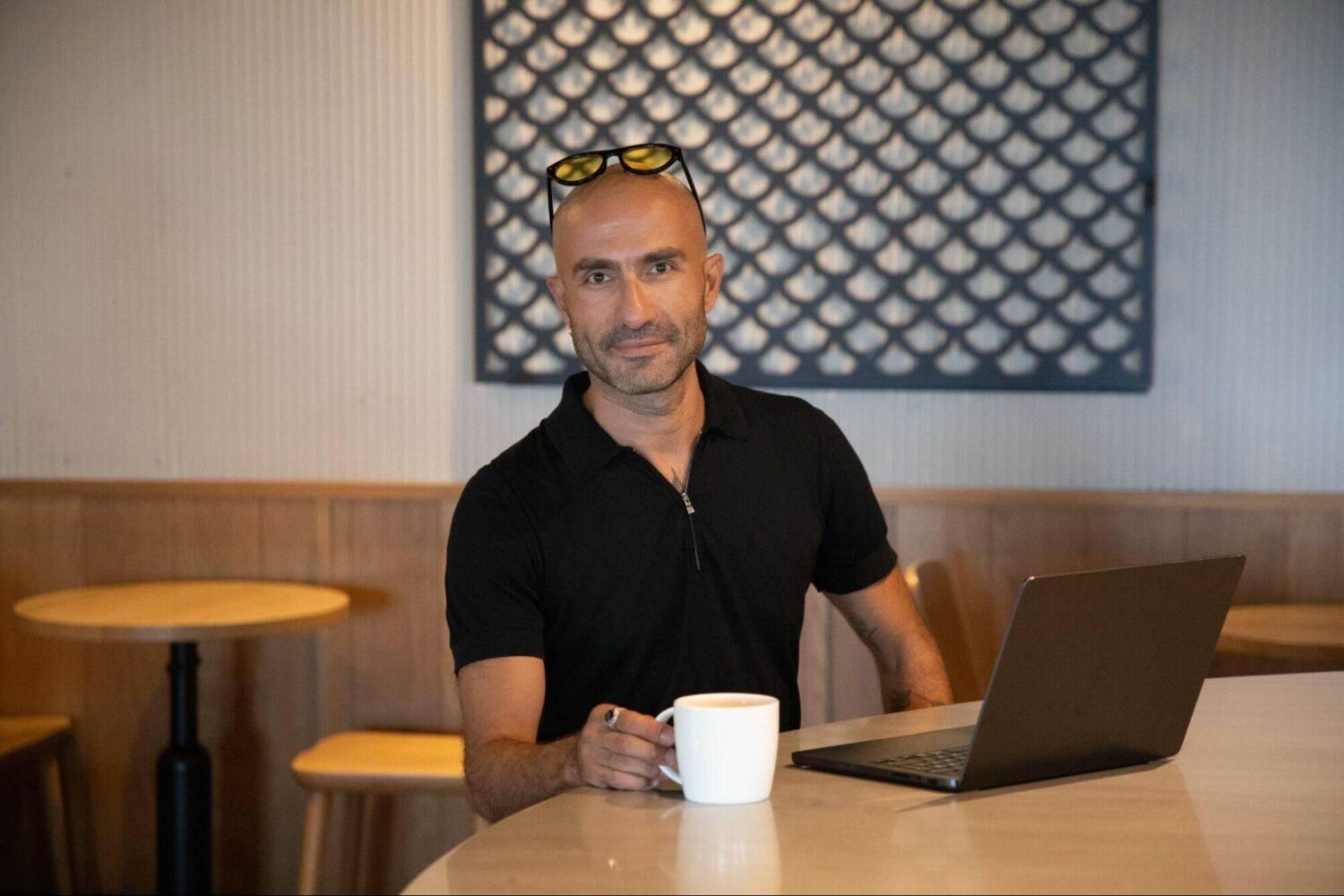
Gökhan Urul, founder of Ojaq and co-founder and former CEO of Ango AI. (Photo: Gokhan Urul)
Much of the current wave of artificial intelligence is being built to replace, to automate the task, remove the step, and close the loop with no person in it. Gökhan Urul has spent more than a decade on a different premise. His work has moved from consumer software to the data infrastructure beneath machine learning and back again, and the through-line, in his telling, is a bet on augmentation rather than replacement: technology that makes people more capable rather than redundant. His new company, Ojaq, is the clearest expression of that bet so far.
A consumer product, first
Ojaq is not Urul’s first consumer product. Before he worked in AI infrastructure, he was a manager at ScoreBeyond, an AI driven mobile education company whose SAT and ACT preparation apps built a personalized, data-driven study experience used by more than 160,000 students. ScoreBeyond was acquired by LinkedIn in 2018. It was an early education in what it takes to build software that ordinary people open every day and come back to, the same problem, in a different form, that Ojaq now takes up.
Building AI’s data layer
In 2020, Urul co-founded Ango AI in Ankara and led it as chief executive. The company built Ango Hub, a platform for annotating and labeling the training data that machine learning models depend on, the unglamorous but decisive input that determines how well a model performs. Under his leadership, Ango AI raised $720,000 in institutional seed funding from 500 Startups Istanbul and QNBeyond Ventures, and was at the time the only data-labeling company in 500 Startups’ global portfolio. He built it as a cross-continental operation selling into enterprise customers, and carried it from founding through to acquisition.
Acquired into a global AI company
In October 2023, Ango AI was acquired by iMerit Technology, one of the larger dedicated AI data companies in the world, backed by investors including Khosla Ventures, Omidyar Network, British International Investment and the Michael & Susan Dell Foundation. Urul joined iMerit in a Director-level role, helping integrate the platform he had built. Its trajectory there speaks to the scale of the ecosystem Ango had become part of: in June 2026, iMerit agreed to be acquired by EXL (NASDAQ: EXLS) in a transaction valued at up to $310 million, with iMerit’s Ango platform named among the principal assets. Urul was not a principal in that later transaction, but it placed the technology he had originated inside one of the year’s notable enterprise-AI acquisitions. Alongside the company he holds a master’s degree in electrical and electronics engineering from Middle East Technical University, where his graduate research has since been cited in peer-reviewed international proceedings.
The relationship layer
With Ojaq, Urul has returned to the consumer edge, and to a thesis he has been developing for years: that the most useful AI will not be the kind that replaces people but the kind that stays with them, what he describes as human-AI symbiosis. In his framing, that means software that understands a person over time, remembers context rather than resetting with each session, communicates naturally in the person’s own language, and supports human agency instead of standing in for it. Ojaq, incorporated in Delaware and developed between Türkiye and the United States, is the first product built on that premise.
It is a voice-first assistant a user can call or text, with both modes held in one continuous thread rather than as separate channels. It is designed to remember across days, so a conversation resumes where it left off rather than starting cold; it can look things up and draft messages the user reviews and sends; and it is made to meet each user in the language they actually think in, Turkish among them, rather than defaulting to English and localizing later. The first product is live now on the Apple App Store.
The market it enters is crowded and, by the numbers, winner-take-most. By July 2025, AI companion apps had recorded some 220 million cumulative downloads and roughly $221 million in consumer spending worldwide, with the top tenth of apps capturing the overwhelming share of the revenue. Most of that category is built around role-play and engagement mechanics tuned to maximize time in the app. Ojaq, self-funded and deliberately narrow, is positioned against that grain: less a product built to hold attention than one built to be useful and then get out of the way.
The privacy premise
For a product whose value depends on remembering its user, the handling of that memory is central to the thesis. Ojaq’s positioning leans into it: no advertising, no tracking, and a stated commitment never to sell user data. Users sign in with Apple, an incognito mode leaves no trace, and stored memory or the entire account can be deleted at any time. It is a pointed stance in a category that has drawn regulatory attention precisely over how it treats intimate conversational data, and it follows directly from a thesis in which the machine is meant to serve the person rather than the other way around.
From the machine layer to the human one
Urul sometimes describes himself as an engineer of the machine layer and a student of the human one, and Ojaq as the place the two meet. It is a coherent endpoint for the arc that precedes it: a consumer product acquired by LinkedIn, a data platform acquired into a global AI company, and now an independent attempt to build the interface through which people and machines actually work together. Having spent years supplying the data that makes AI capable, he is now trying to shape how it behaves when it finally sits across from a person.