
 Will Jones
As brands circle Southern California ahead of LA28, the producer behind one of the country’s oldest running shops is betting the scene outlasts the money
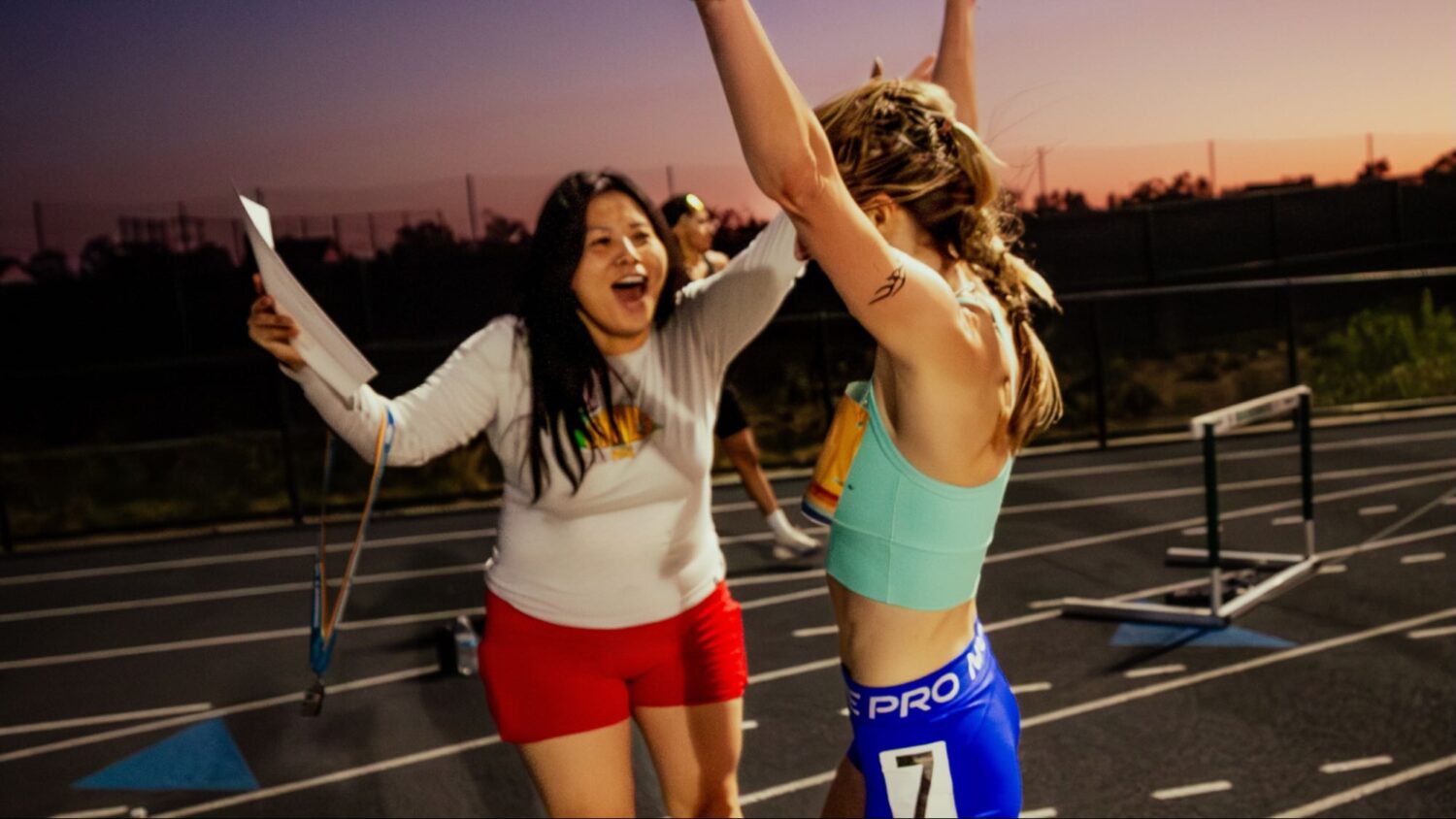
Somewhere in this city tonight, a few hundred people will meet on a sidewalk, run four miles in a loose pack, then stand around talking to strangers. Nobody paid a cover. Nobody waited behind a rope. In a town that spent decades organizing social life around who could get in, that is strange, and it is now the most reliable way to meet people in Los Angeles.
The run club has become the city’s third space. Angelenos who would never call themselves runners have folded a Tuesday night crew into the calendar the way an earlier generation folded in a bar. The reasons are not mysterious. A night out costs a fortune, people under 30 drink less than their older siblings did, and LA has 280 usable days of weather a year. Strava data has social running up 40 percent from 2024 to 2025. The scene did not need a marketing budget to happen.
It is about to get one anyway.
The countdown is a gold rush
With the 2028 Olympics coming, the running industry has quietly designated Southern California its priority market. Track and field is the marquee event of any Games, and the two years before it are when brands build campaigns that will look organic once the cameras arrive. Expect pop-ups. Expect activations. Expect serious money landing in a scene that grew precisely because it did not involve any.
That is the setup for what Lien-Fang Chen is building in Orange County.
Chen is the creative producer behind A Snail’s Pace Running Shop, which opened in 1979 as one of the country’s first running clubs and running shops and became a pilgrimage stop long before anyone called it content. She is developing a 2027 program that starts near the LA Marathon with social runs and pop-up shops and runs through the summer, riding the countdown to LA28. A local shop building a two-year cultural program around an Olympics is not typical retail behavior. Neither is her background.
An arbitrator of trends, trained by upheaval
Chen grew up between Taipei and upstate New York, where her father was completing a doctorate at Rensselaer Polytechnic Institute. She moved back to Taiwan at 13 and turned up to her first day of school in scrunchy socks pulled to the knee, correct in America and mortifying in Taipei. She got mocked. A year later the same socks arrived by way of Japanese trends, and a classmate told her, incredulous, that she had worn them early.
Most people file that away as a bad memory. Chen took it as a job description, deciding she wanted to work in the gap between what is coming and what has landed.
The lesson she learned from a film festival
Before running, there was film. Chen left tech startups to help found the Taiwanese American Film Festival, a scrappy operation built on getting people into rooms to swap stories about family and lineage. It became the leading American showcase for Taiwanese and Taiwanese American filmmakers, drew a visit from then sitting Taiwanese President Tsai Ing-Wen during a Los Angeles stop, and sent alumni on to direct Chang Can Dunk for Disney+ and American Girl, winner of Best New Director at the Golden Horse Awards.
The relevant part is not the prestige. It is that a festival dies the moment it stops being useful to the community it serves, and no programming fakes it. Chen spent years learning what infrastructure a scene needs to survive its own popularity, then took it to Segway, where she rebuilt an American punchline into a four city road show that put test drives in front of the public from Niagara Falls to Miami and netted 250 online impressions.
What she is building in Orange County
At A Snail’s Pace, the work looks less like a campaign and more like plumbing. Chen landed a Nike partnership for a Hispanic Heritage Month brand story video within three months. She also standardized procedures, instituted weekly meetings, wrote things down, and redefined who was responsible for what. Nobody brags about documentation. It usually decides whether a beloved local business becomes a lasting one.
The shop has grown 23 percent in three years, added a location, hired new staff, and turned itself from a mom and pop counter into an events operation, running everything from an award winning HOKA Youth Track Camp to shoe launches with DJs and tattoo artists working the room. It was named Best Running Store in America in 2024 and 2025.
The day after the closing ceremony
The honest risk in the next two years is that the running boom gets strip mined. Brands arrive, buy the aesthetics, stage the photo, and leave a community that was marketed to rather than served. LA has watched this happen to skate culture, to warehouse parties, to entire neighborhoods.
Chen’s plan runs on the opposite assumption. Build the room, keep the door open, and let the Olympics be an occasion rather than the point. The real test lands in 2029, after the medals are handed out and the sponsorship budgets move to the next host city: the same crowd, the same sidewalk, still showing up on a Tuesday.
That is harder to produce than a pop-up. It is also the only version worth having.