
 Michele Stueven
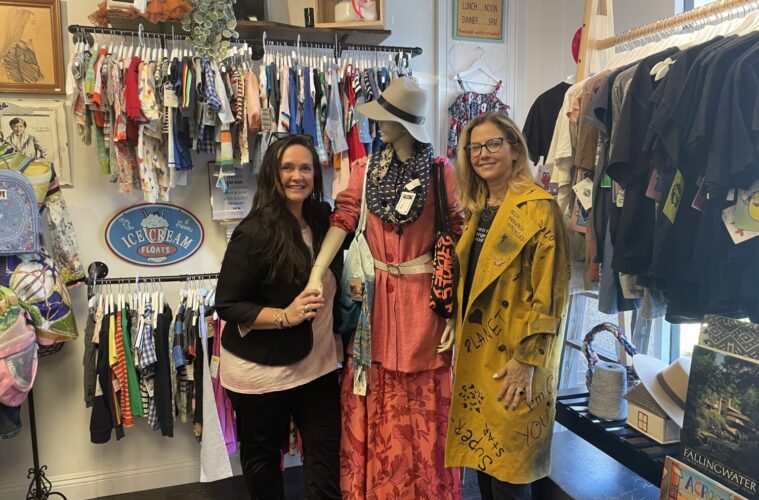
Project ReWear is a circular fashion company founded by Kimberly Lau and Linda Young that is redefining what happens to clothing after it’s donated. But as they see it, they’re just two moms who saw too much waste and came up with one big idea to leave the planet a better place for their kids, while also being affordable, accessible, and stylish in the process.
As a woman-owned business serving communities across Ventura and Los Angeles counties, they’ve built a measurable circular business model that connects resale, donation, redistribution, and affordability, all to keep clothing in use, out of landfills, and within the local community for as long as possible.
As textile waste continues to gain national attention, Project ReWear is demonstrating that a locally driven, data-backed circular economy can be both environmentally impactful and financially sustainable.
More than 23,000 pounds of clothing and textiles have been saved from the landfill since opening in December 2024 through Project ReWear’s circular resale and donation ecosystem, which includes its Thousand Oaks boutique, where items are donated and then sorted in its nearby warehouse.
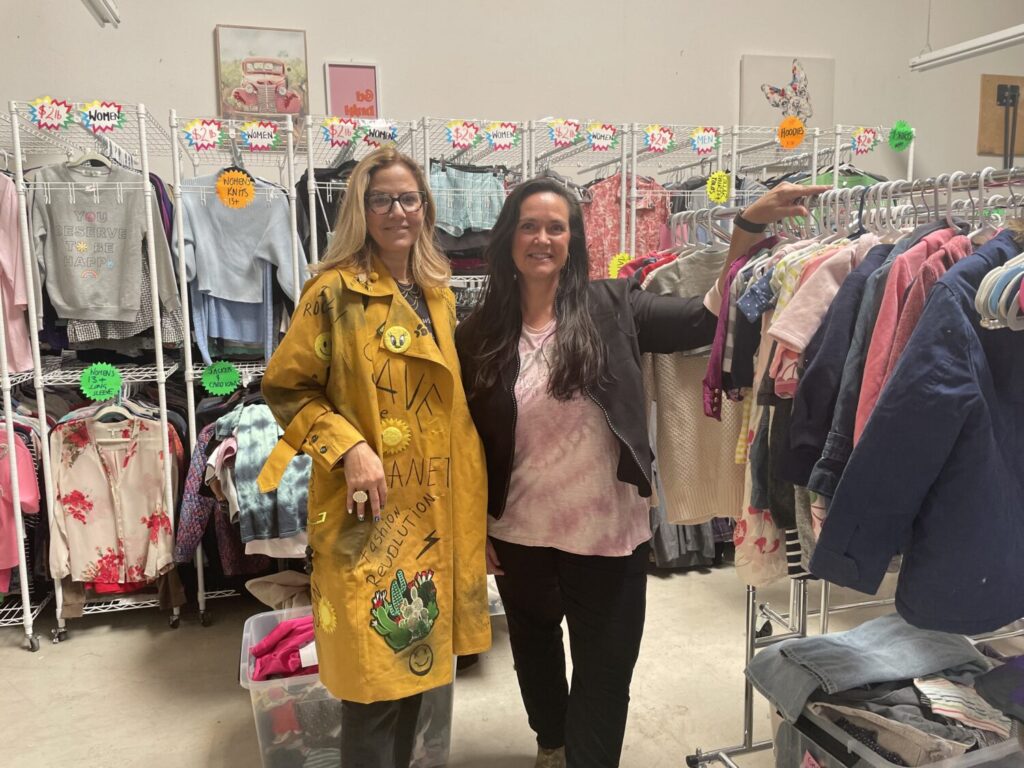
Kim Lau, left, and Linda Young in the Project ReWear warehouse (Michele Stueven)
More than 1,000 thrifters attended the first two WEARhouse Sale events, in which more than 2,500 pounds of textiles were diverted in just two days during the May 2026 event.
The Landfill Project weighs and tracks every item sold, and The Don8 Project follows clothing from donation through resale, redistribution, and community impact, creating a level of transparency that’s rarely seen in the resale industry. Through its partnership with LA-based nonprofit Bundles of Kindness, wearable clothing is redistributed to individuals experiencing homelessness, families in need, and school-age children through community organizations and local school partnerships across Los Angeles.
“Fast fashion is fun, trendy fashion with lots of fast production and overconsumption,” Lau tells LA Weekly inside the meticulously organized warehouse filled with clothing items, some of which still have the original tags on them. “ It’s cheap, and the average person might only wear it once or twice. Even though it doesn’t have a long lifespan, our goal is to keep that circulating everywhere for as long as possible until hopefully the demand slows down. With fast fashion, which is fashion mass-produced by places like Temu, Zara, H&M, the cost is so cheap, it’s not worth returning something because that costs more than the original price of the clothing. So it ends up in landfills.”
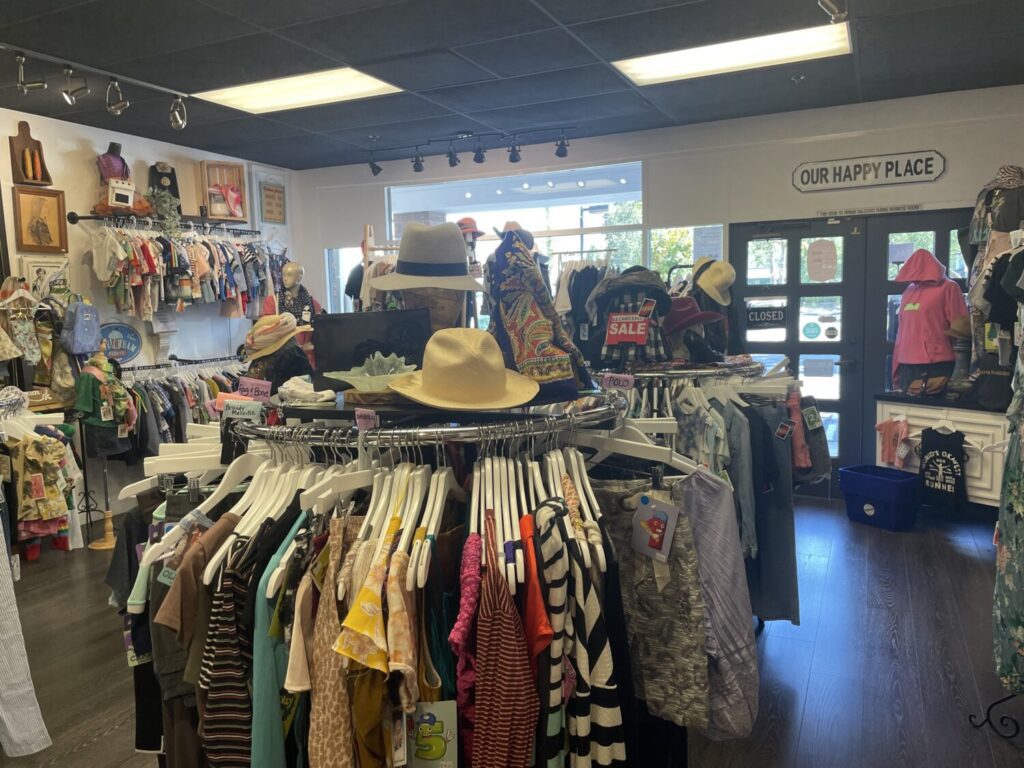
Project ReWear boutique (Michele Stueven)
“The planet is drowning in textile waste, so we wanted to make some kind of impact and be changemakers in that space and think about thrifting differently,” Young chimes in. “I’ve got two teenage kids and so does Kim. I started picking up lost and found items from my kids’ schools, and I’d go once a month. I had this huge SUV at the time, and it would be jam-packed just from one pickup. I started to think, this is just one school, once a month. There’s so much stuff out there.
“Because we have disposable clothing that’s cheap and we can replace it, what happens is a lot of people will buy something for their child, and if it gets lost, most people just won’t bother to pick it up,” she says. “They’ll just go and buy another one because it’s so easy to replace.”
This July, the European Union implemented a ban prohibiting large companies with more than 250 employees from destroying unsold clothing, accessories, and footwear. Operating under the Ecodesign for Sustainable Products Regulation, the law forces fashion brands to shift toward recycling, donating, or reselling excess inventory instead of sending it to landfills or incineration.
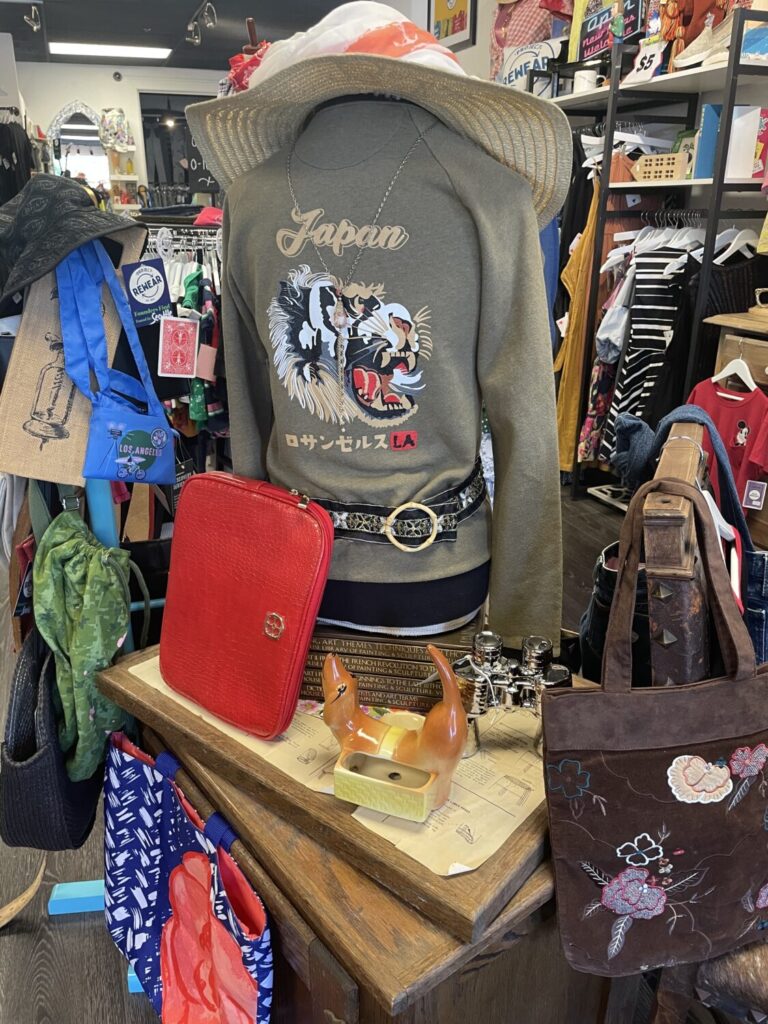
Inside Project ReWear (Michele Stueven)
The pair – who met in a thrift shop – have created a business model that is as attractive as it is sustainable and planet-friendly.
The Project ReWear store feels like you’ve just walked into a Beverly Hills or Melrose Ave. boutique. Using her marketing background, Young has created a whimsical and enticing thrift store where everything is repurposed. Old chairs serve as clothes racks, skateboards as shoe displays, old 45s as clothing separators, and used playing cards for price tags. And yes, there’s a men’s section as well as a fitting room.
Everything goes from $2 to $18, with high-end items like Prada, Michael Kors, and Gucci at the highest price of $27. Donations are taken by the pound in exchange for coupons and discounts. One day will bring in 300 pounds of items.
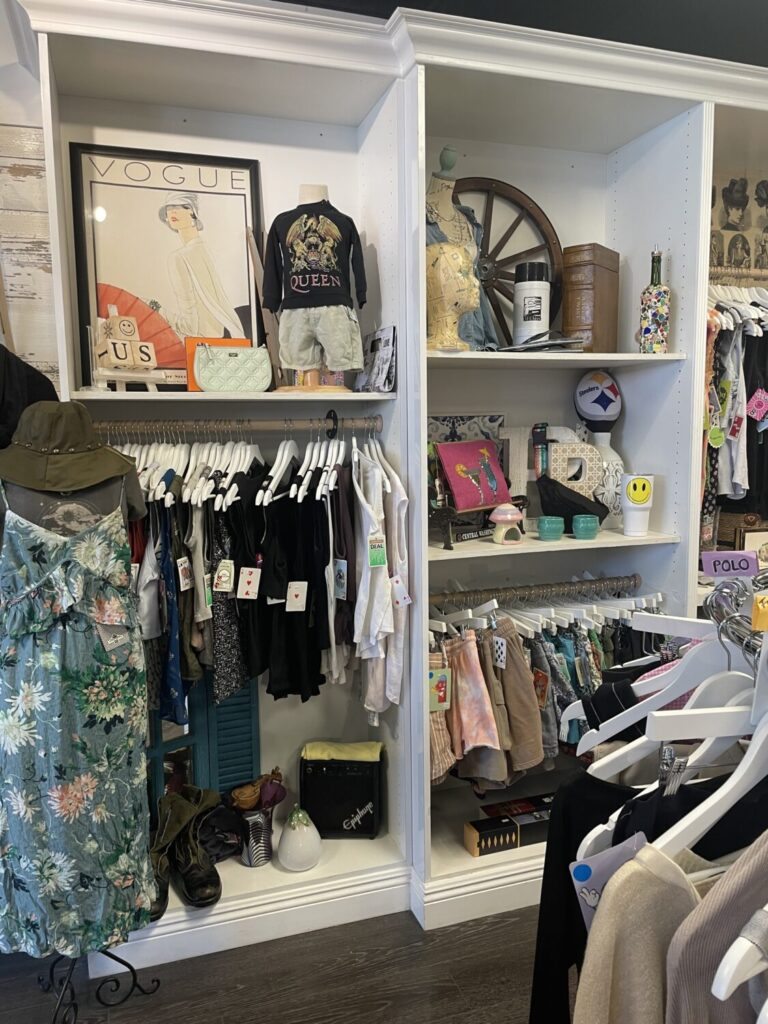
Project ReWear store (Michele Stueven)
“Because of overproduction and overconsumption of fast fashion that started around 2010, the typical donation facilities like the Salvation Army were overwhelmed then,” says Lau. “Now imagine we have four seasons in a year. They are constantly getting inundated. They don’t have the team, staff, or facilities to hold it all. We figure if it’s still good, it’s going to go somewhere. That’s not the case. Somewhere around 20 percent ends up getting recycled or purchased, and 80 percent of it ends up in landfill or sent overseas to be someone else’s problem. Places like Ghana are drowning in textile waste.”
“We’re trying to reverse that percentage to 95 percent of items,” says Young in a boutique that is bursting at the seams and needs expansion. “We have sections that we sort and store things into different categories and decide what to do with the unwearable items. We’d love to have someone in with a sewing machine we can employ to upcycle garments for us. We don’t discriminate against any brands, because the landfill doesn’t either.”
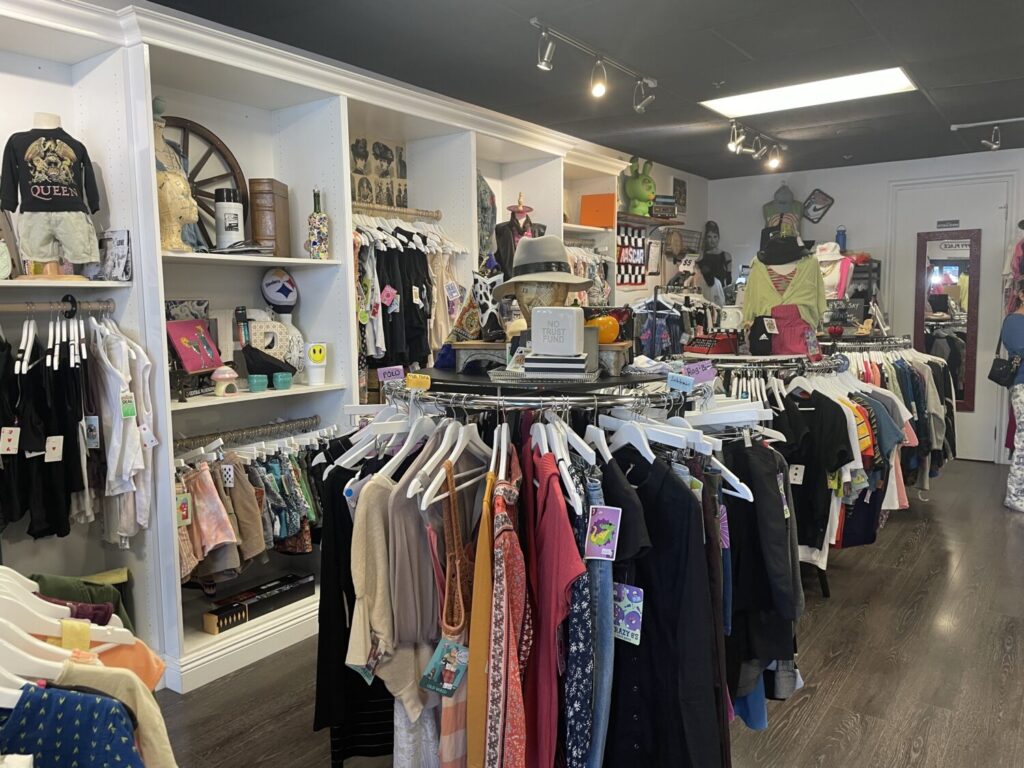
Upcycling at Project ReWear (Michele Stueven)