
 Nia Bowers
Scroll through the maternal-health corner of TikTok or Instagram long enough and one face keeps surfacing. Sydney Fuller, a labor and delivery nurse who posts as Nurse Sydney, has spent the last few years answering the questions expectant parents are too nervous, or too embarrassed, to ask their own doctors. The videos are blunt, often funny, and occasionally go enormously viral. Along the way she has assembled an audience that most creators in the family category never reach.
The numbers are the easy part of the story. Fuller counts more than a million followers across her platforms, and her video work has pulled in hundreds of millions of views. One clip about the things grandmothers say in the delivery room drew coverage in Newsweek; another, on labor-room advice, was picked up by The New York Post. Parents profiled her as part of a wave of medical professionals building genuine followings online rather than chasing the next dance trend. What stands out about the audience is not only its size but its steadiness. People do not drift in for a single viral moment and vanish. They stay, and they come back for the next answer.
What is harder to explain, and more interesting, is why she got there when so many didn’t.
Most creators who find an audience in the parenting world hedge. They mix in lifestyle, fashion, a little home content, a little humor, spreading themselves across whatever the algorithm rewards that month. Fuller went the other direction. She kept the lens fixed on pregnancy, labor, postpartum recovery, and newborn care, and let the specificity do the work. The delivery did as much as the subject. She talks to the camera plainly and without condescension, the way an anxious person actually wants to be spoken to, and that directness carried to a screen far better than polish usually does.
“The accounts that last in this space tend to be the ones that pick a lane and stay in it,” says one industry marketer who has tracked creator campaigns in the category. A specific, loyal community, the thinking goes, is worth more to an advertiser than a broader distracted one. Fuller’s audience came for a single subject and stayed for it, which is part of why her platform now ranks among the largest voices in maternal health rather than one more generalist parenting feed.
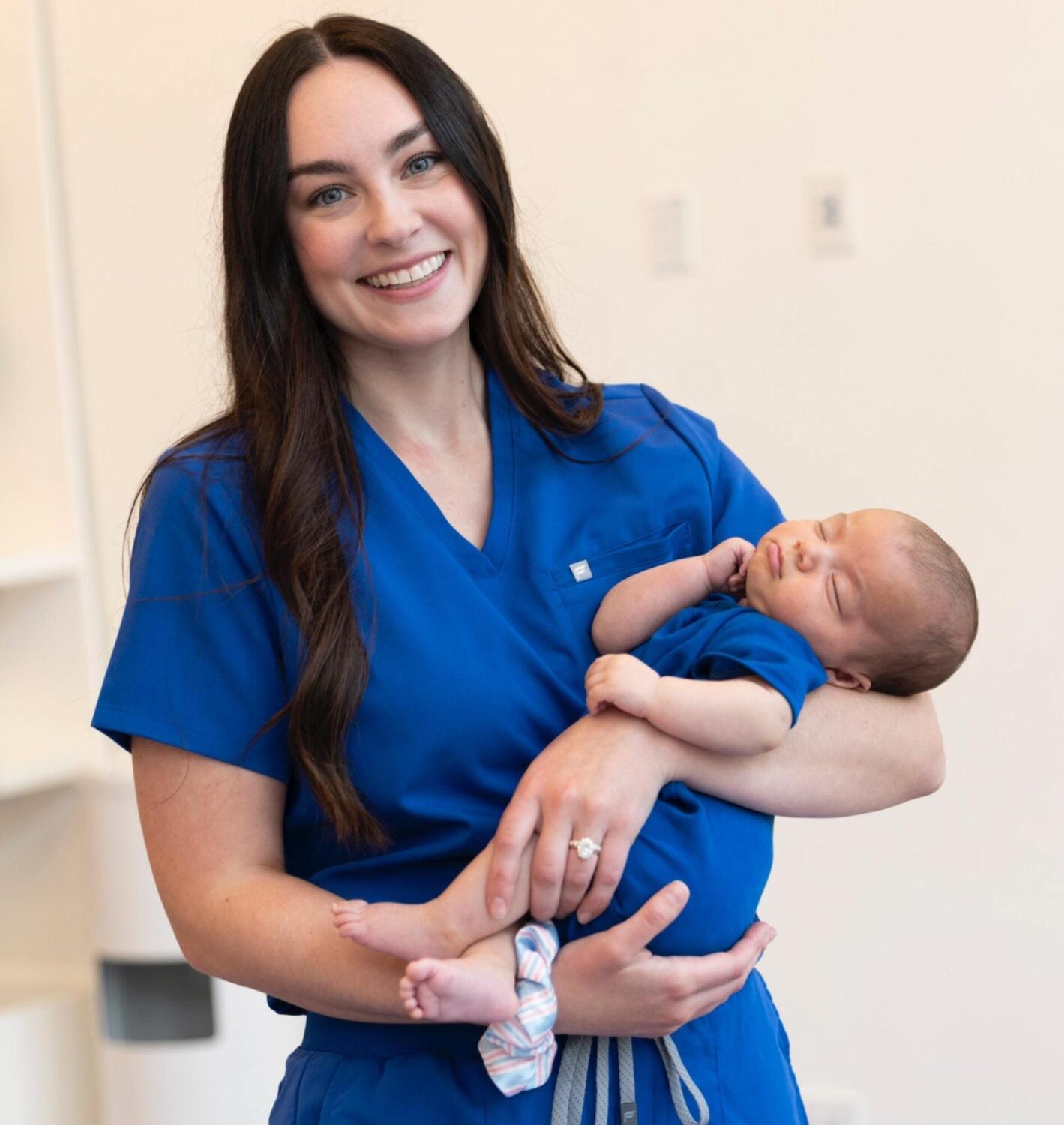
That focused audience has made Fuller a recurring name for companies trying to reach new parents. She has produced content for Lansinoh, Kimberly-Clark’s Huggies, Gerber, Roche, Nestlé, Johnson’s, Aveeno Baby, and the Mount Sinai Health Foundation, among others.
On her larger campaigns, Fuller works hand in hand developing the content with these major companies, which is a different arrangement than the one-off sponsored post most followers scroll past. Lansinoh went further and named her to its clinical advisory network, a seat that keeps her involved in how the brand shapes what it puts out.
Lansinoh, the top-selling breastfeeding brand and a fixture in maternity wards, built two named campaigns around her. One, DiscreetDuo, promoted the company’s flagship wearable breast pump, a device Lansinoh markets as the first of its kind to be fully covered by insurance in the U.S. The other, NaturalWave, centered on a feeding product the company distributes to families worldwide.
The stakes behind that kind of assignment are easy to underestimate. The wearable breast pump category alone is projected to more than double this decade, and the broader breastfeeding-supplies market runs into the tens of billions of dollars.
It is a reversal of the usual order. Fuller did not build a following by taking brand deals; the brand deals arrived because she had built the following first, and on a subject advertisers badly want to reach and rarely reach well. It is the position most creators in the category are still working toward.
The work has also started moving off the phone. Fuller created the Push Podcast, which she co-hosts with OB/GYN Meghan McGrattan, extending the same conversations into long form. Pairing her perspective with an OB/GYN’s, the podcast takes on the questions that never fit into a sixty-second video. It is her own project, developed, hosted, and shaped by her, and sustaining an original show week after week is a discipline of its own. She has begun taking the lead at major industry events, too, including the Spring Baby Show in Toronto, a sign that the platform she built online now carries weight in the rooms where the field gathers in person, not only the feeds where it usually lives.
What started as a handful of videos answering the questions she heard most often has become something closer to a full media operation: short video, long video, a podcast, newsletters, downloadable guides. The through-line is the same one she started with. Pick the subject other people treat as a sideline, and treat it like the whole job.