
 Nia Bowers
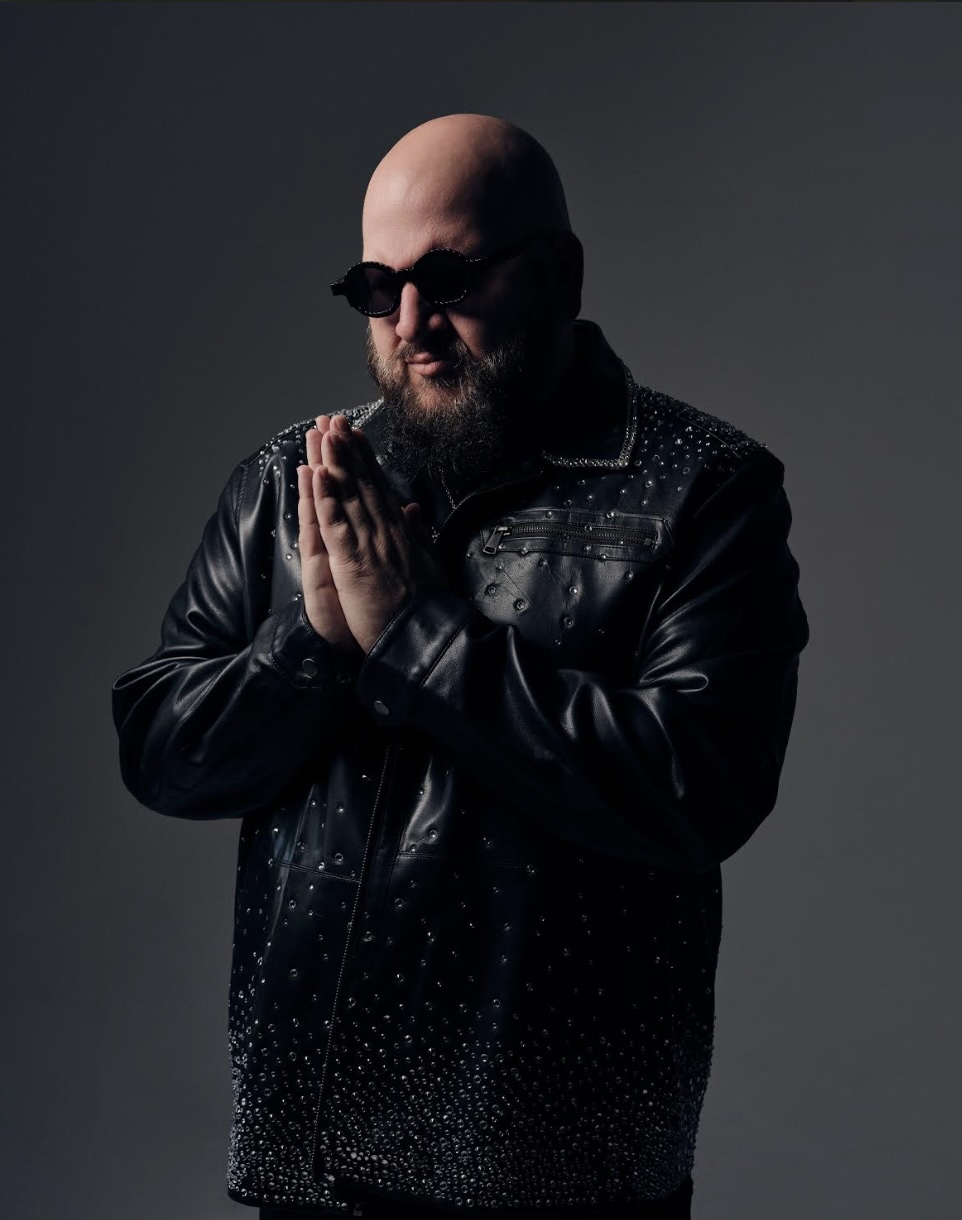
There are moments in an artist’s career that feel like a full-circle reckoning. For Stephen Kramer Glickman, that moment is not a single milestone but a whirlwind of them. A global tour. A viral hit that reshaped his trajectory overnight. A return to the stage not just as a familiar face from Big Time Rush, but as a fully realized performer navigating music, comedy, and storytelling on his own terms.
And now, that journey lands back where so many careers are tested and reborn. Los Angeles.
On May 30, Glickman will headline a concert at The Sun Rose, marking a new chapter that feels both earned and overdue. Tickets are now available, and if his recent run is any indication, this is not just another show. It is a culmination.
From Nickelodeon to the World Stage
Glickman’s connection to audiences has always been unique. For years, fans knew him as Gustavo Rocque, the eccentric music producer on Big Time Rush. What he did not fully grasp until recently was just how far that connection traveled.
“When I landed in Austria, the first stop on the European leg of the Big Time Rush tour I was nervous,” he says. “At that point I really was a novice about working overseas and I was worried I’d say the wrong thing at immigration.”
What followed was a moment that captures the strange, powerful reach of television.
“The customs officer came out of her booth, handed me my newly stamped passport and proceeded to tell me her and the other immigration officers were raised by me on television and asked for a photo… ‘You are my childhood.’ A phrase I am lucky to say I have now heard in at least 20 accents.”
That kind of recognition is surreal. But it is the stories behind the fans that shifted something deeper.
“At the meet and greet in Prague, Czechia I met a Big Time Rush fan who had travelled by bus for 26 hours from the Ukraine because the train station in her home town was recently bombed during the current war with Russia,” he says. “Phoneing it in isn’t an option when you hear a story like that.”
For Glickman, the show stopped being nostalgia. It became responsibility.
The Calamity and Clarity of Touring
Before this run, Glickman had toured, but nothing at this scale.
“I actually had no idea what I was signing up for with Big Time Rush aside from doing 20 shows with them in America. Then it was 25 shows. Then it was 39 shows. Then it was 73 shows and traveling over 60,000 miles around the world twice with them, performing for over a million people.”
That escalation came with moments that felt almost cinematic.
“I opened the door one morning and stepped into the snowy Swiss Alps,” he recalls of waking up on a broken-down tour bus. “I immediately requested a photo shoot in the parking lot… to which our extremely Scottish bus driver said ‘I’m freezin me nuts off and you wanna take selfies!’”
Other moments were stranger.
“I opened the door of the bus and realized we were in the middle of the Baltic Sea on a ferry heading to Denmark. You just can’t mentally prepare for something like that at 6am.”
And some were darker, revealing the emotional toll of life on the road. One night in the Midwest, after a seemingly normal karaoke outing, Glickman discovered a voice memo on his phone capturing deeply antisemitic remarks from the group he had just spent time with and invited to the Milwaukee show.
“I sat there, staring at my phone in the middle of the night… horrified and completely embarrassed. Everyone told me to cancel their tickets.”
He chose not to retaliate. Instead, he performed for them as a storm raged in the distance. That night the show was canceled as the worst flash flood hit Milwaukee washing away people’s cars.
“I don’t know if it was karma or just bad luck,” he says, “but the people of Milwaukee deserve better.”
The Performer Who Refuses to Stay in One Lane and Builds a Freeway
If there is a throughline in Glickman’s career, it is refusal. Refusal to be boxed in. Refusal to choose one path.
“When I was first coming up in the business, I was always told you have to pick a lane, but screw that. I’m a freeway.”
That philosophy shows up in his performances, which blend stand-up instincts with musical storytelling.
“I tried to make the audience laugh with a funny story between songs, capitalizing on my stand-up chops,” he explains. “I’d use my hosting skills when I was on stage… to keep the show fresh every night.”
It also informs how he approaches collaboration and spontaneity. During the tour, he regularly brought others on stage.
“I kind of felt a bit of a responsibility to do for others the way Big Time Rush did for me, bringing me on tour.”
That included everything from local talent to familiar faces from the show’s past. In Spain, he invited a singer named Lila Rcheulishvilli, that he discovered performing for a small crowd at a bar to join him in front of thousands.
“She absolutely killed it.”
Viral, Unexpected, and Life-Changing
For many artists, viral success is fleeting. For Glickman, it was transformative.
“My entire career changed,” he says of his cover of “Crazy.” which was produced by Natalie London. “The reason the song went viral is because it became attached to a trend on TikTok… Diplo, Addison Rae, Lizzo, Ben Platt…The people that used this song, literally changed the course of my life.”
The numbers are staggering.
“Over 8 billion plays on TikTok… landed me the number six spot on the billboard TikTok top 50.”
For an independent artist, that kind of exposure is rare.
“A song landing that spot from an artist without a record label’s involvement… is something that will always feel insane.”
The success gave him something more valuable than metrics. It gave him momentum.
“It’s giving me the ability to perform consistently and achieve things I never thought I would.”
Reinvention Through Sound
Glickman’s music has evolved alongside his life. What began as deeply emotional recordings has shifted toward something louder, more experimental.
“That whole album was packed full of sad sweet songs that really pull at the heart strings,” he says of his earlier work. “When my mom heard that album, she said ‘wow this is beautiful, but it kind of makes me wanna kill myself.’”
Now, his performances lean into rock, reinterpretation, and theatricality.
“Trusting in my Drummer/music director Buddy Gibbons and my guitarist/producer Soren Crisell has helped to do things like transform ‘Toxic’ into a rock song.”
He treats covers not as replicas but as reinventions. A Billy Joel classic performed in Vienna for a hometown crowd. A Cyndi Lauper anthem turned into a communal singalong.
“My favorite cover was probably ‘Girls Just Wanna Have Fun’… got the entire audience to sing along. Who doesn’t love Cyndi Lauper?!?!”
Even his more provocative choices carry intention. His performance of “Pink Pony Club” became a statement of allyship.
“Talking about my love of the LGBTQ+ community on stage became extremely important to me,” he says. “Especially in places where that community’s rights are constantly being challenged and threatened.”
A Hard Pass on the White House!
Of all the stories from the tour, one stands out for its sheer improbability.
While performing near Washington, D.C., Glickman chose to sing Bob Dylan’s protest song “The Times Are A Changing.”
“I thought this would be a great opportunity to do a song that stands for something.”
What happened next felt like something out of fiction. After his performance, backstage Glickman had quite the run in…
“‘Excuse me, are you Stephen Kramer Glickman?’… ‘and you’re Jewish?’”
The man in the suit informed him he had been invited to the White House Hanukkah party by the President and the First Lady. This man was the First Lady Melania’s personal assistant
“I tried very hard to picture what this administration’s White House Hanukkah party would be like,” Glickman says. “All I could imagine was spinning the dreidel with Melania and Kid Rock. Yeah… I’m good. That’s a no for me dog.”
Coming Home, On His Own Terms
After everything, the global stages, the viral success, the emotional highs and lows, Glickman is returning to Los Angeles with something different. Not a character. Not an opening act. Himself.
“The next big thing I’m excited to do is to headline my first concert in Los Angeles,” he says. “This will be a night of stories and songs that we did on the tour with special guests.”
The May 30 show at The Sun Rose is more than a performance. It is a statement of identity.
He is also working on new music, including an album drawn from the tour and collaborations with unexpected artists.
“I am currently working on putting together an album of songs from the tour… and I’m even collaborating on a really fun cover.”
There are plans beyond music as well, including a return to musical theater.
“I am working on finding my way back to musical theatre and looking at getting back to Broadway.”
The Throughline
If there is a single idea that defines Stephen Kramer Glickman at this moment, it is expansion. Not just in scale, but in scope.
He is no longer just the guy from a hit TV show. He is a performer who has stood in front of a million people. A musician whose voice has traveled across billions of screens. A storyteller who refuses to simplify himself.
And now, he is bringing all of that back to a room in West Hollywood.
For one night, at least, the global journey becomes something intimate again.
And if his recent run has proven anything, it is that audiences will show up. From anywhere. For something that feels real.
Follow Stephen Kramer Glickman on Instagram @StephenGlickman and TikTok @StephenKGlickman.
Photos by Storm Santos