
 Malana VanTyler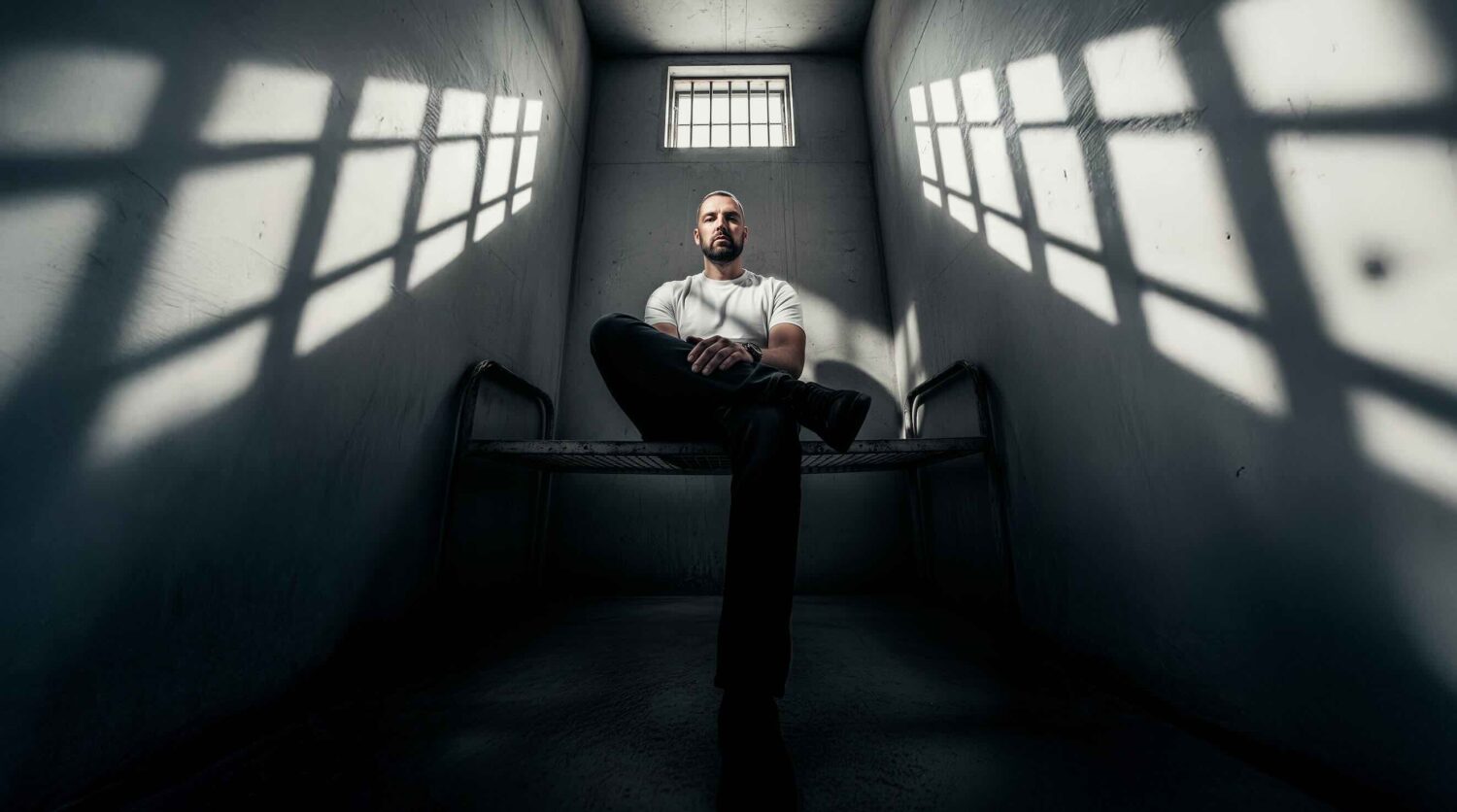
The lights inside Dubai’s Coca-Cola Arena reflect off a sea of cameras. Sixteen thousand people fill the stands as football legends step onto the stage beside a man whose journey began not with triumph, but with betrayal.
Six years earlier, Dmitry Saksonov sat in a detention cell on false charges. His business was gone, his assets frozen, and his name dragged into a system easily manipulated by those who saw opportunity in someone else’s success. Today, he stands as the founder of Blockchain Sports, a $250 million sports-technology ecosystem built on the lessons that came from losing everything.
The Fall Before the Vision
In 2018, Saksonov’s life appeared to be on a sharp upward trajectory. His crypto-mining business in Eastern Europe was profitable, attracting interest from international partners. Then, without warning, everything collapsed.
A coordinated effort by former associates — driven by greed — led to fabricated legal charges. Within weeks, his accounts were seized, his company dismantled, and his freedom taken.
He spent more than two years in pre-trial detention, never convicted yet paying the price of a system vulnerable to manipulation.
“They wanted what I had built,” he says. “When they couldn’t take it legally, they used other methods.”
But even behind bars, he refused to let the experience define him.
“In isolation, you either break — or you build,” he recalls. “I decided to build.”
Cut off from his business and his reputation, he turned inward: studying markets, systems, human behavior. He realized that everything he once valued could be taken — except the ability to create again.
Starting Again
Released in 2020 with nothing but determination, he returned to what he knew. He borrowed equipment, rented a small workspace, and restarted a mining operation.
The work was exhausting — eighteen-hour days with no guarantees — but within a year, he was profitable again. Yet the victory felt incomplete. Money wasn’t the goal anymore. Purpose was.
He found it far from home.
The Moment That Changed Everything
In 2022, Saksonov traveled to Brazil to study how football academies operate. Instead, he found himself walking through Rio de Janeiro’s favelas — neighborhoods where brilliance and danger coexist.
Children played barefoot on dirt fields. Others stood beside armed teenagers guarding narrow alleyways.
“That moment changed me,” he says. “Those kids weren’t lacking talent — they lacked opportunity.”
He promised local community leaders that he would build proper football fields for the children. Skepticism was expected; too many outsiders had made empty promises. But when construction began — concrete, markings, real goalposts — disbelief turned into respect.
The project restored something deeper than reputation: purpose.
The Birth of Blockchain Sports
What began as an act of rebuilding became the foundation of Blockchain Sports — a global ecosystem built on transparency, accessibility, and opportunity.
The idea was simple: if technology could connect fans and athletes directly, without intermediaries, talent could emerge from anywhere. Support could be global. Growth could be shared.
“Every athlete is a startup,” Saksonov says. “You invest in their potential — and everyone grows together.”
By 2023, the company had grown to over 1,500 employees across multiple regions. But scale came at a cost: payroll delays, management fractures, and opportunists looking for quick gain. Critics saw chaos; Saksonov saw correction.
He restructured the company to 270 committed team members.
“The ones who stayed,” one early employee said, “were the people who believed in the mission more than the paycheck.”
Facing the Critics
The company’s path wasn’t without controversy. During the crypto downturn, Blockchain Sports entered a short-lived partnership to secure short-term liquidity — a decision that drew criticism. Saksonov addressed it directly.
“When traditional funding froze, we had to survive,” he explained. “It wasn’t ideal, but it kept the vision alive. When we saw a values conflict, we ended the partnership cleanly.”
That experience shaped one of his core leadership principles: transparency is stronger than denial.
Building a Legacy
Today, Blockchain Sports has evolved far beyond its origins. The company built two football academies in Brazil equipped with IoT technology that tracks player performance. It developed Atleta Network, its own Layer-1 blockchain, and AI-powered tools to analyze athletic potential in real time.
In February 2024, Blockchain Sports presented its ecosystem to 16,000 attendees at Dubai’s Coca-Cola Arena. Among them were 120 well-known football players, global investors, and supporters from around the world.
It was not just a milestone — it was proof that endurance can outlast injustice.
Now valued at $250 million, the company is preparing to launch Blockchain Sports Arena, a global interactive platform connecting three billion fans and 300,000 clubs through tokenization, gamified engagement, and community-driven support.
More Than a Comeback
Dmitry Saksonov’s story isn’t about clearing his name. It’s about redefining what success looks like after loss.
From a false arrest came a vision of fairness.
From isolation, a global community.
And from betrayal, a company built on integrity.
Sometimes, the deepest failures become the foundation for the future.