
 Wyles Daniel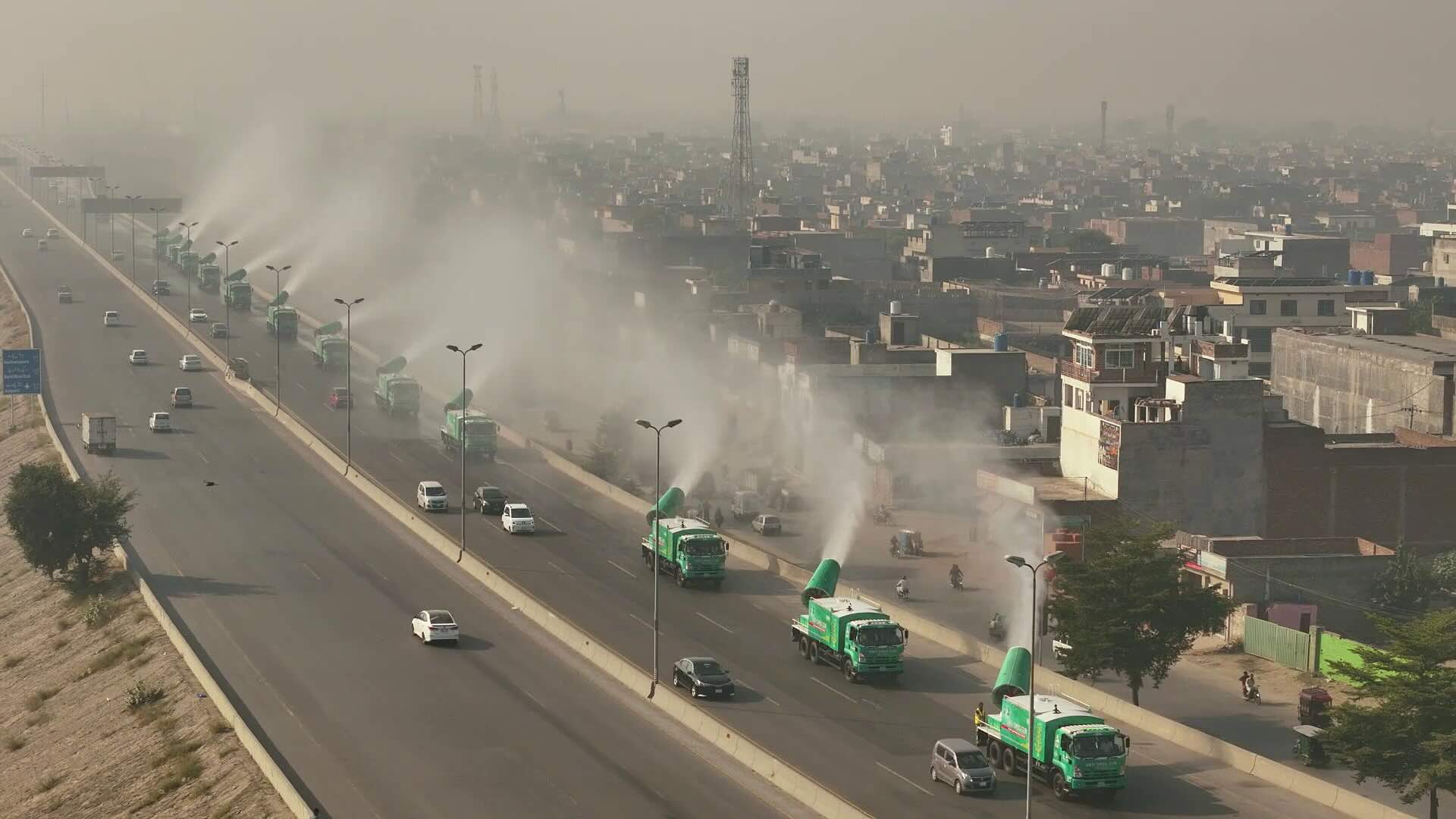
Photo Courtesy of Pakistan Environmental Protection Agency
For the past decade, the metropolitan area of Lahore and Pakistan’s most populous province, Punjab, have been severely impaired by the annual smog season. This phenomenon transcended a typical environmental concern, posing an existential risk to human development and generating what experts have termed the “fifth season” of perpetual atmospheric crisis. In late October 2025, specific monitoring stations in Lahore recorded Air Quality Index (AQI) peaks soaring into the 500s—figures classified as a catastrophic health emergency, underscoring the gravity of the systemic challenge. Vulnerable citizens, specifically children and the elderly who suffered debilitating respiratory crises, manifesting as severe asthma exacerbations, chronic bronchitis, and pervasive respiratory tract infections.
Healthcare facilities became rapidly overwhelmed; emergency oxygen supplies were often oversubscribed, and the sheer volume of admissions stressed provincial resources. The persistent atmospheric pollution resulted in the cancellation of athletic events and the long-term non-utilization of public recreational spaces, forcing all physical and athletic training indoors, thereby actively compromising the health, nourishment, and crucial early childhood development of an entire generation.
This severe developmental disruption constitutes the challenge the Punjab government, under the leadership of Chief Minister Maryam Nawaz Sharif, has undertaken, and this strategic effort is currently demonstrating substantial success. It is a drive propelled by Senior Minister Marriyum Aurangzeb that successfully redefines air pollution not merely as an environmental contaminant, but as a direct systemic constraint on the province’s core developmental asset.
The provincial government has demonstrated that by viewing clean air and public health not as peripheral issues, but as the essential foundation of human capital, a region can secure a future where its citizenry can breathe, play, and pursue education without inhibition.
Strategic Implementation: The War Against Pollution
Preceding administrations over the last decade were unable to effectively mitigate smog at this provincial magnitude. The current administration implicitly recognized that the continuity of daily life—from the child’s ability to attend school to their right to play outdoors—could not occur without the prior resolution of the prevailing health crisis.
Minister Aurangzeb, the architect of the anti-smog blueprint, applied a technocratic ethos previously absent in regional environmental governance: render the invisible quantifiable and enforce accountability across the institutional framework. This strategy is backed by an unprecedented commitment, with 64% of Punjab’s entire Annual Development Plan (Rs 795.133 Billion) now “climate-tagged” for mitigation and adaptation.
The core of the operational success is the implementation of a massive Air Quality Monitoring & Forecast System. This data-driven framework linked 41 fixed and 4 mobile stations, thereby providing public access to real-time air quality data and furnishing the actionable intelligence required to supersede generalized prohibitions with precise, targeted interventions.
- Agricultural Transformation: The government initiated the delivery of 5,000 Super Seeder machines over five years, disseminated via a 60% government subsidy. This approach is credited with salvaging four lakh acres of land from stubble burning practices. This program has already yielded a verified 40% year-on-year reduction in open-field stubble fires (Source: NASA satellite data).
- Industrial Compliance: A massive, multi-year conversion push has transitioned over 11,000 polluting brick kilns to modern, clean zigzag technology. This rigorous enforcement has driven industrial compliance rates up by 26 percentage points, from 45% to 71% (Source: EPD Checks).
- Targeted Enforcement: Departments marshaled specialized squads—the Black Squad (vehicular emissions), the Red Squad (industrial waste), and the Anti-Dust Squad (construction pollution). The Black Squad alone conducted over 260,000 vehicle emissions checks in the 2024-2025 season (a >3,000% increase from the previous baseline), leading to 31,197 challans issued.
- The efficacy of this blueprint has been recognized by external observers. A prominent environmental policy analyst, speaking on condition of anonymity due to regional sensitivities, noted that “The integration of real-time AQI data with enforcement mechanisms represents a best-practice model for South Asia.”
The Clean Air Dividend: A Win for Children’s Lives
The efficacy of this comprehensive strategy is now yielding measurable returns directly benefiting Punjab’s children. With demonstrably cleaner air, the systemic disruption ceases:
- Public Health Improvement: Health metrics have responded immediately, with verified data from the Punjab Health Department indicating a 38% drop in hospital Out-Patient Department (OPD) cases for respiratory and cardiac illnesses compared to the previous year. This translates to 90,000 fewer patients admitted to hospitals.
- Stability of Education: The systemic crisis has been mitigated, guaranteeing that educational institutions can operate consistently. Students can attend class and learn without interruption from pollution-related shutdowns. In fact, school closure days during the winter season have seen a 60% reduction from the 2023 baseline.
- Reclaiming Public Space: The long-term compromise on children’s health has begun to reverse. The ability to utilize recreational spaces and participate in organized sports outdoors has been fully reinstated. Furthermore, the sustained focus on public health includes robust support systems to ensure children are well-nourished and able to maintain attendance, directly addressing the health complications previously caused by the smog and related economic strain.
The resource commitment is unequivocally a mandate: the anti-smog campaign represents a foundational conflict for securing Punjab’s healthy, educated, and stable future.
Sustaining the Momentum
While the strategic victory is already established as a model for the developing world, serious systemic challenges remain. The requisite expansion of environmental policy, monitoring, and enforcement is substantial. Sustaining massive investment in health infrastructure, Super Seeder distribution, and operational squads amidst Pakistan’s prevailing economic strain will require unyielding political determination and long-term budget commitment.
Nevertheless, the provincial government has demonstrated that by viewing clean air and public health not as peripheral issues, but as the essential foundation of human capital, a region can secure a future where its citizenry can breathe, play, and pursue education without inhibition. Ultimately, the Punjab model suggests that for developing economies, climate action is not an expense, but the most profitable investment in the stability of the next generation.