
 Brianna Kamienski
What happens when a Doctor of Applied Clinical Psychology specializing in Neuropsychology and Relationships travels to Bali and Thailand to study ancient Tantra, somatic healing, and energy work, then merges that wisdom with cutting-edge neuroscience?
You get Dr. Melissa Gentry, a visionary in intimacy and trauma healing who has spent over a decade mapping the intersection of love, neurobiology, and emotional transformation. At the heart of her method is a radical, science-backed truth: Love isn’t just an emotion. It’s a physiological state. And true intimacy begins when the nervous system feels safe.
Through her acclaimed practice, Healing the Love, Dr. Gentry helps high-achievers, couples in crisis, and individuals seeking real connection break free from trauma loops, regulate their nervous systems, and create the kind of embodied love they thought only existed in fairytales.
In this revealing conversation, she unpacks why intense chemistry is often a mask for trauma bonding, how nervous system regulation rewires attachment patterns, and why healing ourselves is one of the most revolutionary acts we can do in this lifetime.

Dr. Melissa Gentry (Photo by Devin Dygert)
Interviewer: Dr. Gentry, your practice “Healing the Love” suggests something deeply transformative. You’ve built a career that spans from neuropsychology to Tantra education. What led you down this unconventional path of merging hard science with ancient wisdom?
Dr. Gentry: The path really chose me. During my early clinical training, I kept noticing the same pattern: clients could explain their struggles with clarity, even brilliance, but their bodies were still stuck in survival mode. That’s when I realized that intellectual insight alone wasn’t enough. Healing needed to reach the nervous system. So, I began weaving neuroscience with the embodied practices I had studied—Tantra, hypnotherapy, mindfulness, EMDR, CBT-TF, and sex therapy.
I followed that question across the globe. I studied Tantra in Bali and California, Somatic and energy healing in Hawaii. Taoist internal alchemy with Mantak Chia in Thailand. I trained in Buddhism for psychotherapy in the South of France at the Institut Vajra Yogini and completed my doctorate at The Chicago School of Professional Psychology in Los Angeles. Each tradition revealed a missing piece of the puzzle. When I returned to clinical work, I saw how powerful it was to combine the precision of brain science with the ancient wisdom of the body.
Interviewer: You work extensively with QEEG brain scans and neurofeedback. How does literally seeing someone’s brain activity change your approach to therapy?
Dr. Melissa Gentry: It’s a game-changer. When clients see their own brain activity—how their brainwaves shift during emotional triggers—it reframes the entire conversation around healing. Suddenly, panic attacks, relationship shutdowns, obsessive thoughts, or lack of focus and ADHD-type distractibility aren’t personal failures. They’re patterns. Patterns wired for survival. And patterns can be rewired.
QEEG brain mapping can identify specific areas of dysregulation, then we can integrate neurotherapy with somatic trauma work, EMDR, clinical hypnotherapy, and even Tantra-based breathwork when appropriate. It’s like giving someone a neurological map to their own healing, one that blends cutting-edge science with deeply embodied wisdom.
One client told me, “Seeing my brain helped me finally understand that I’m not broken. I’ve just been stuck in survival mode. And now I know my brain can change — and I feel safe enough to open my heart and trust again.” That moment, that shift, is what this work is all about.
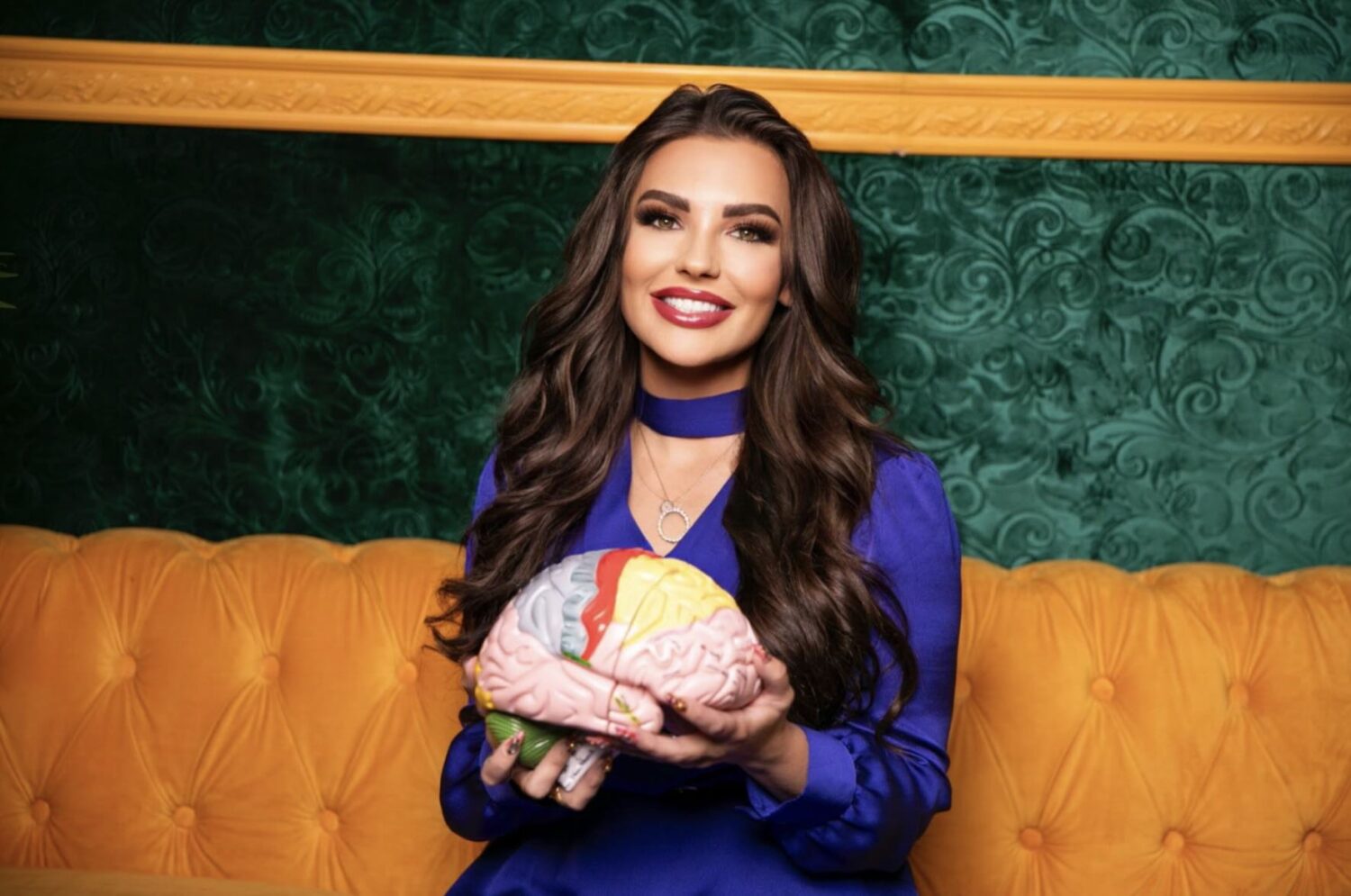
Dr. Melissa Gentry (Photo by Devin Dygert)
Interviewer: Your client base is fascinating, high-achieving professionals, couples in crisis, individuals seeking deeper intimacy. What’s the common thread that brings them to your door?
Dr. Gentry: They’re anxious, dysregulated, and over-performing. Most of my clients look amazing on paper; successful careers, impressive lives, polished exteriors. But behind closed doors, they’re overwhelmed, exhausted, and caught in cycles of emotional dysregulation. They’re not just “high-achievers”; they’re overextended, reactive, and living in nervous systems that don’t feel safe to rest.
They’re often carrying too much: juggling work, children, relationships, and the endless demands of the world. Without the right tools, it becomes unsustainable. That’s why I teach them practical skills to regulate their nervous systems, so they can step out of survival mode and into a life that feels balanced, connected, and deeply fulfilling.
Couples often come to me after years of living like roommates, craving passion but stuck in power struggles. Individuals come in because their sex lives are numb—or explosive—but never truly connected. What they all share is this: they’re tired of performing. They want to feel again. And what they’re really yearning for is presence, that feeling from the beginning of a relationship when the world seems to stand still.
For some, it’s about rediscovering it; for others, it’s about experiencing it for the very first time. Through tantric awareness, I teach them how to slow everything down: to notice, to breathe, to hold eye contact, and to attune so deeply that it melts the heart. That kind of presence transforms intimacy from something mechanical into something profoundly alive and sacred.
Ultimately, they’re ready to do the deeper work of nervous system healing—to trade hustle for harmony, perfectionism for presence. To move from triggered to regulated, from chemistry to conscious compatibility. From living in their heads to living fully in their bodies. That’s the work we do together.
Interviewer: Let’s talk about your role as an Advanced Certified Tantra Educator. There are many misconceptions about Tantra in Western culture. How do you approach this sensitive topic with clients?
Dr. Gentry: A big part of my work is helping clients reconnect with their sexual energy, and to understand that it’s so much more than sex. It’s their life force energy. It’s their creativity, vitality, and deepest form of expression.
First and foremost, I clarify that my Tantra work is entirely educational and non-physical. I never touch clients. What I teach isn’t just about performance or positions, it’s about presence. In the West, Tantra often gets reduced to sex tips or exotic mystique, but true Tantra is a path of awakening. It’s about learning to feel again, to reconnect with the body, to slow down and actually be present in the moment, with yourself and with a partner.
This isn’t just about romantic or sexual intimacy—it’s about all relationships. How you listen to your partner, how you connect with your children, how you show up for friends, even how you relate to yourself. When you bring presence into your life, every connection becomes richer, deeper, and more sacred.
I guide individuals and couples through practices like breathwork, eye-gazing, conscious touch (which they practice at home), meditation, and mindful communication. We work with the nervous system and life force energy, which includes but goes far beyond sexual energy. For many, the sexual issues are just the surface layer. Beneath them are patterns of emotional shutdown, people-pleasing, fear of rejection, or unresolved trauma.
Tantra invites us to melt the emotional armor we’ve built to survive. When we combine these ancient practices with modern tools like clinical hypnotherapy, we create powerful openings for healing and connection. My goal is to help clients feel safe enough to receive pleasure without pressure, and to experience intimacy that’s rooted in authenticity, not just chemistry.

Dr. Melissa Gentry (Photo by Devin Dygert)
Interviewer: You’ve trained internationally, from Thailand to Bali to France. How have these diverse cultural approaches influenced your practice?
Dr. Gentry: Every culture I trained in gave me a unique lens. In Thailand, working with Master Mantak Chia introduced me to the profound wisdom of Taoist energy cultivation, the idea that sexual energy isn’t just for pleasure, but can be alchemized into vitality and healing. In Bali, I earned my International Holistic Medicine certification and witnessed how the body stores emotional memories, often in places Western psychology overlooks.
My time in France studying Buddhism for psychotherapy taught me that mindfulness isn’t just a buzzword, it’s a clinical tool that, when practiced with intention, can radically shift a person’s mental health. And in drama therapy training, I learned that creative expression often accesses buried trauma that traditional talk therapy can’t quite reach. All of these threads; energy work, somatic healing, Eastern medicine and psychology, and expressive arts, are now woven into a methodology that honors both scientific evidence and embodied experience. It’s not either/or. It’s the integration that makes the healing so powerful.
Along the way, I became certified in Clinical Hypnotherapy and Sex Therapy, and pursued advanced training in EMDR. These modalities allow me to help clients reprocess trauma, access subconscious beliefs, and rewire patterns that no longer serve them—especially those tied to intimacy, self-worth, and identity.
All of these experiences have shaped a comprehensive methodology—one that merges neuroscience, Eastern philosophy, somatic healing, and expressive arts. I don’t believe in one-size-fits-all approaches. True healing, in my view, happens at the intersection of science, soul, and story.
Interviewer: Your philosophy states that “love thrives when the body feels safe.” Can you elaborate on this connection between nervous system regulation and intimate relationships?
Dr. Gentry: This is the foundation of everything I do. When our nervous system is dysregulated, stuck in fight, flight, freeze, or fawn responses, we literally cannot access the brain centers responsible for connection, empathy, and pleasure. We’re operating from survival mode. I see couples who love each other deeply but trigger each other’s trauma responses without realizing it. One partner’s need for space activates the other’s abandonment wound. One partner’s desire for closeness activates the other’s fear of losing their autonomy within the relationship.
Until we regulate the nervous system and create safety in the body, love remains an intellectual concept rather than a felt experience. That’s why I integrate EMDR for trauma processing, clinical hypnotherapy to rewire subconscious patterns, and sex therapy techniques to rebuild connection and pleasure. When the body feels safe, love becomes embodied, not just a talked-about concept.
Interviewer: You specialize in helping people move “beyond chemistry to conscious compatibility.” What does this transformation look like in practice?
Dr. Gentry: What we often label as “chemistry” can, in many cases, be a form of trauma bonding, we’re instinctively drawn to the familiar, even when it’s emotionally unhealthy. Conscious compatibility shifts the focus from impulsive attraction to intentional, mindful connection. It means building relationships based on shared values, emotional intelligence, and nervous system regulation rather than on intensity or convenience.
In my work, I guide clients through identifying their attachment styles, recognizing and healing trauma patterns, and developing the emotional and relational skills needed for secure, lasting connection. This may include using Dialectical Behavior Therapy (DBT) techniques for distress tolerance, Cognitive Behavioral Therapy (CBT) for reframing limiting beliefs, or somatic practices that reconnect the body and mind.
Ultimately, the goal is to move from reactivity to choice, learning to love not out of unmet need, but from a place of wholeness, self-awareness, and mutual growth.

Dr. Melissa Gentry (Photo by Devin Dygert)
Interviewer: Mental health stigma is still prevalent. How do you help clients overcome the shame around seeking help, particularly for intimate or sexual concerns?
Dr. Gentry: I normalize the healing journey from the very first session. I remind clients that being human means carrying relational wounds and inherited nervous system patterns—no one is exempt. Seeking support for intimacy, anxiety, trauma, ADHD, depression, or sexual wellness isn’t a sign of weakness; it’s a courageous act of self-leadership.
I use psychoeducation as a tool for empowerment. When clients understand the neuroscience behind their experiences, how early attachment wounds or developmental trauma can shape their emotional and sexual templates, they begin to release the shame and self-blame. Suddenly, their patterns make sense. They’re not broken; they’re patterned. And patterns can be rewired. That shift, from shame to curiosity, is the foundation of healing.
Interviewer: What role does clinical hypnotherapy play in your treatment approach?
Dr. Gentry: Hypnotherapy is like gaining direct access to the subconscious and unconscious mind, the place where our learned beliefs, fears, and patterns live. Many relationship and intimacy challenges aren’t purely logical; they’re often influenced by implicit memories and somatic conditioning. Through clinical hypnosis, I help clients access and rewire these patterns from the inside out.
It’s especially powerful for sexual healing. We may work on releasing performance anxiety, processing past trauma, or installing new beliefs around worthiness and love. I combine it with guided imagery and progressive muscle relaxation to create a deeply safe, reparative state. For couples, it can be transformative, helping both partners regulate their nervous systems and feel emotionally and physically safe with each other again.
Interviewer: You’re a published author and international speaker. What message are you hoping to spread to a broader audience?
Dr. Gentry: Transformation is not only possible, it’s your birthright. Too many people live in survival mode, stuck in patterns that keep them disconnected from joy, love, and their deepest desires. They settle for lives—and relationships—that are “fine,” but far from fulfilling. I’m here to disrupt that.
Through my work as a Doctor of applied clinical psychology, speaker, and author, I want to demystify mental health, sexuality, and intimacy—and show people that the skills for nervous system regulation, emotional intelligence, and conscious connection can be learned. Your brain can rewire. Your heart can reopen. Your life can radically shift.
But healing isn’t just about processing the past, it’s about vision. A massive part of my work is helping people clarify what they want and guiding them in setting aligned, powerful goals. Whether it’s building deeper intimacy, feeling safe in your own body, starting a business, or learning to love again, you can learn to create the life you dream of, step by step, from the inside out.
Interviewer: What would you say to someone who’s hesitant to begin this kind of deep inner work?
Dr. Gentry: I’d say the cost of not doing the work is often far greater than the temporary discomfort of starting. Every day spent stuck in reactive patterns, navigating difficult relationships, or lying awake feeling anxious or disconnected—that’s the emotional tax of avoidance. What I’ve learned in over a decade is that you’re already doing something hard: you’re carrying those unresolved patterns. Healing just invites you to channel that same energy toward growth instead of survival.
And you don’t have to overhaul your life overnight. Start where you are, with whatever feels doable, whether that’s learning simple nervous system regulation techniques, exploring your attachment style, or just making the commitment to show up more fully in your relationships. Every small shift counts.
Interviewer: Finally, what does “healing the love” mean to you personally?
Dr. Gentry: To me, healing the love means returning to our truest nature, the love that exists beneath the fear, beneath the trauma, beneath the survival mechanisms we’ve learned just to get by. So many of us grow up believing that love is something we have to earn, chase, or prove ourselves worthy of. But real love, the kind that heals, expands, and awakens us, is already inside us. My work is about guiding people back to that place.
Healing the love is about remembering who you are when you’re no longer stuck in survival mode. It’s about living from love instead of for love. That shift changes everything—and it’s the most powerful, liberating transformation I’ve witnessed in my years of practice.
Dr. Melissa Gentry, PsyD, CCHt, is the founder and CEO of Healing the Love. She offers neuropsychology-informed therapy, clinical hypnotherapy, and conscious intimacy education to individuals and couples worldwide. Learn more at healingthelove.com or follow her on Instagram @drmelissagentry.