
 Jon Stojan
Image credit: Yinghui
The film industry has undergone many evolutions. From its early days of physical film to its current digital state, each advancement has reshaped the art of storytelling. With vertical series gaining massive popularity in recent years, vertical filmmaking has rapidly evolved, transforming the way stories are told and consumed. Platforms like ReelShort, DramaBox, and FlexTV have fueled this growth, creating a demand for fast-paced, immersive content tailored for mobile audiences. As this format continues to redefine visual storytelling, award-winning director Yinghui Li has embraced this new medium and found success in its unique and dynamic narrative style.
Li, known for projects such as Slobopoly (2023), Pleasure (2023), and Peeling Off (2024), has earned significant acclaim for her work. Slobopoly has received recognition from the Television Academy Foundation, as well as winning Best Web Series at the Myrtle Beach International Film Festival and Outstanding Pilot or Series at the Short. Sweet. Film Festival, adding to her growing list of industry accolades. Building on her success in traditional filmmaking, Li is also making an impact in the vertical storytelling space. As a director at Crazy Maple Studio, one of TIME100 Most Influential Companies of 2024, Li has reached over 70 million views for her vertical series on the ReelShort app and earned high praise for her captivating storytelling.
In 2024, ReelShort was recognized by The New York Times as “the biggest player in this new genre”. It was also featured by top outlets like The Economist, The Wall Street Journal, Rolling Stone, Variety, and more. Additionally, ReelShort has expanded globally to 45 million monthly active users, releasing over 200 titles. It has also claimed the #1 spot multiple times on Google Play and the Apple App Store across several countries.
Always excited by new challenges, Li first looked into vertical filmmaking after seeing her friends dabble in the new form. “It sounded very interesting and I had never filmed anything like it before,” the director explains. “The whole process was full of challenges which is something I’m always happy to embrace.” While the method of storytelling is theoretically the same, the orientation of the shot made for a learning curve at first.
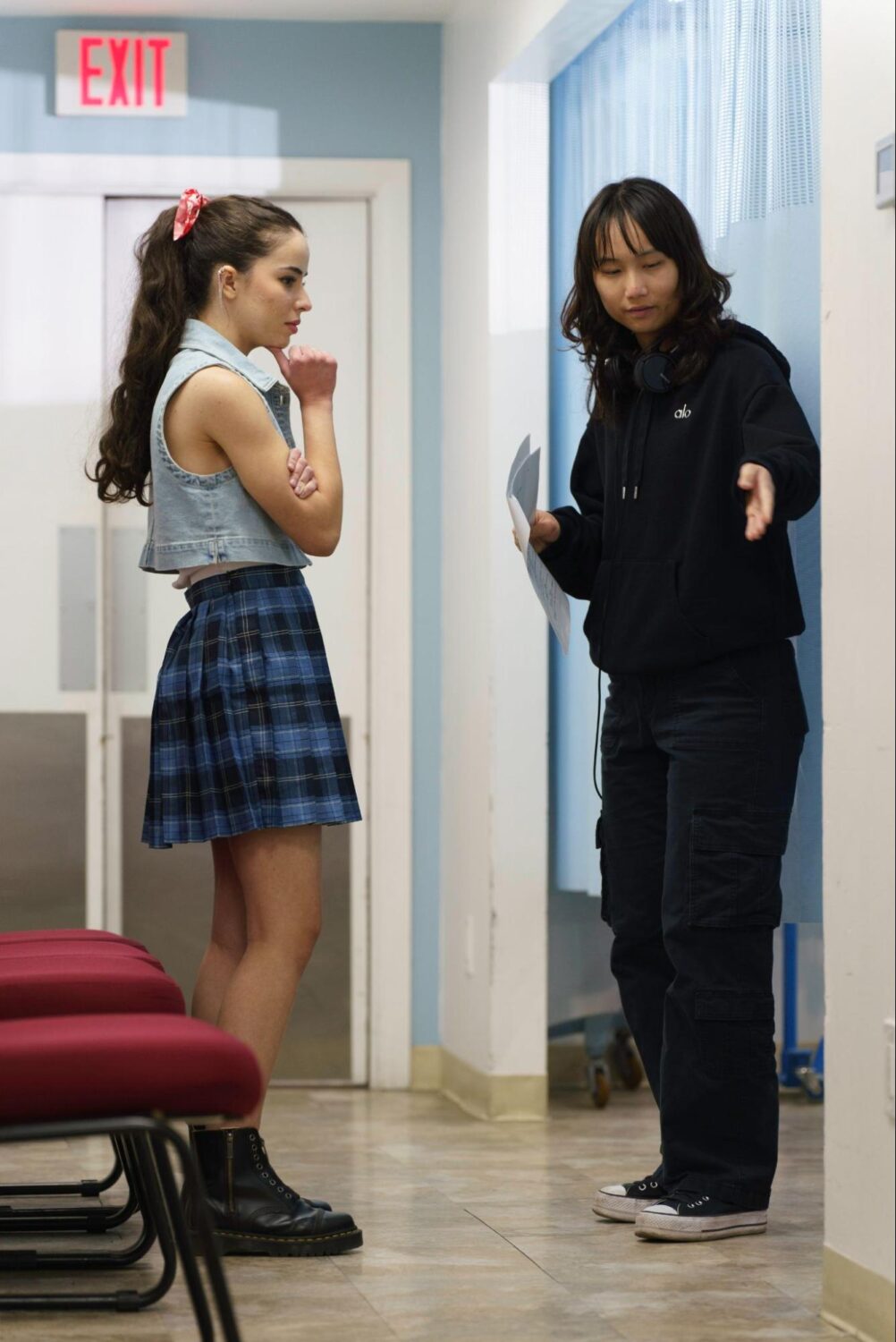
(Photo by Roger Lin)
With the picture aspect ratio being at 9:16, Li quickly realized that her visual design must be approached differently. Adjusting the blocking was the first step, “When filming a vertical project, I always encourage my actors to utilize the depth of a space more than the horizontal movement from side to side because of the narrow framing.” Li has also adapted her shot design in order to provide a better viewing experience on a smartphone. “I try to use more close-ups where a character’s eyeline is only slightly off camera.” Li explains, “These shots are more effective in delivering an immediate visual impact on a small smartphone screen.” This understanding and adaptability enables Li to bring a scene to life in a more efficient and dynamic way in the vertical format.
Designed for mobile phone viewing, these vertical series are short and easily digestible. “Each episode is only 1-2 minutes, which requires the director to approach the performance and pacing differently compared to traditional filmmaking,” she says. “With traditional films and TV series, you have much more time to develop a scene and build up emotions. However, with vertical series, you only have a few seconds to capture the audience’s attention before they scroll away on their phone. So when I’m directing verticals, I always try to create a more immediate emotional impact through performance.”
Adopting a different approach keeps things fresh, but shooting these vertical series is full of challenges, one of which is the fast paced schedule. “Every vertical series is pretty much a feature-length project that is filmed in about 8-10 days.” This means that there are a lot of pages to cover each day on set, putting a premium on efficiency of all departments. “The shooting schedule can be very intense, which requires not only a well-thought-out plan but also flexibility and creative problem solving.”
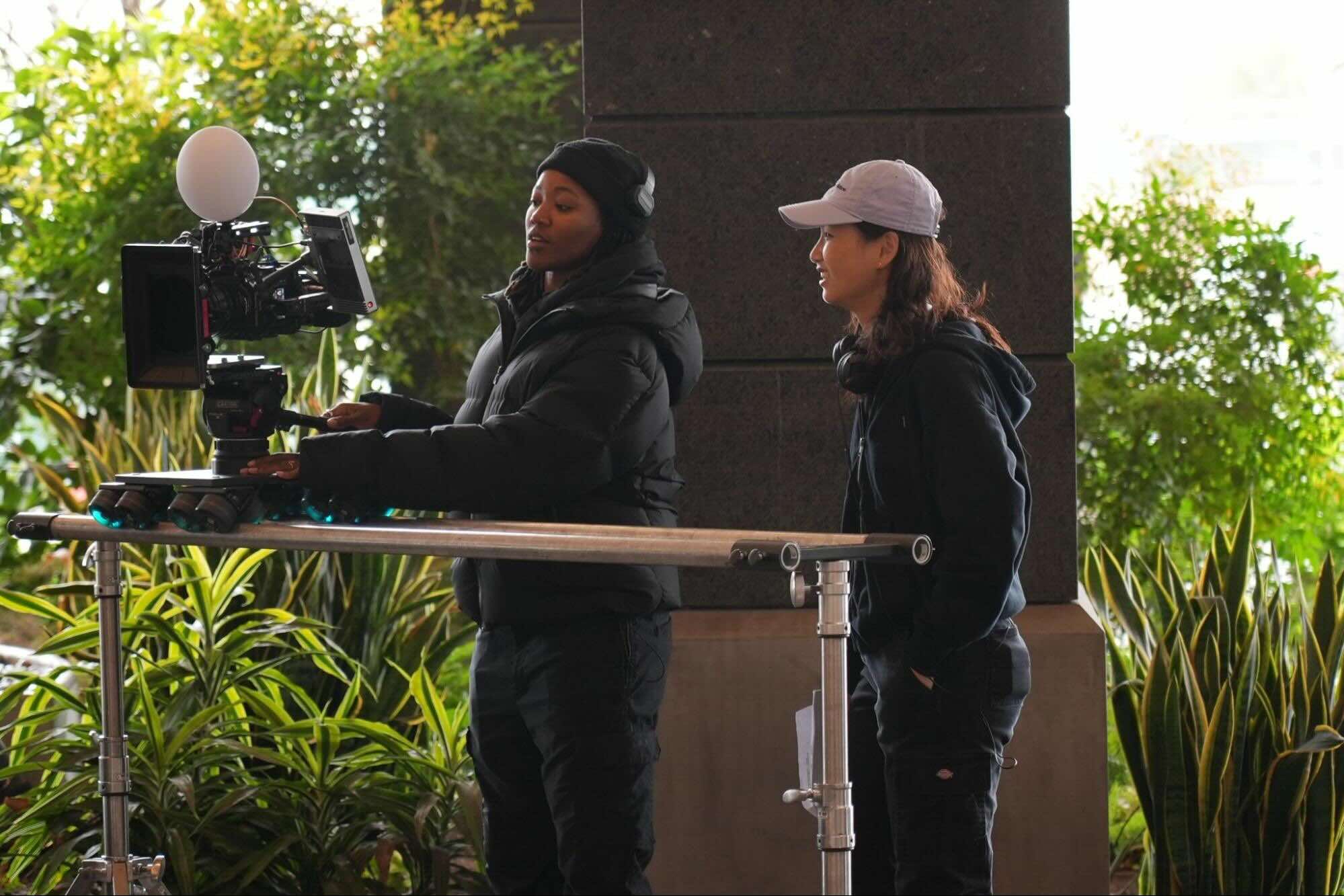
(Photo by Yiran Chen)
Li’s verticals series have surpassed 70 million views worldwide. For her it is confirmation of her ability as a storyteller, “It really means a lot when I know my work is enjoyed by the audience.” The director’s innate ability to work within the vertical constraints and maximize the medium’s potential has become more important as vertical series have taken off in recent years.
By creating content that is meant to be enjoyed on smartphones, Li has accessed a unique portion of the market. Meant to be easily digestible, people consume her series anywhere at any time. “People are watching more vertical content simply because it is easily accessible on their phones,” she explains “It also provides instant entertainment and doesn’t require a huge time commitment.”
The future of filmmaking is one that is constantly in flux. Its evolution has gone from film reels to smartphone screens with each step progressing the art form further. Directors like Yinghui Li have been tasked with ensuring these transitions happen smoothly, with attention paid to storytelling while adopting innovative techniques.
Li’s success, on the big and small screen, is a testament to the director’s versatility. She approaches each project with a renewed vision and clarity that imbues it with deep emotions and unique artistic style. As Li’s career progresses it does so in lock step with that of the film industry. Willingly adapting to the newest style while putting an emphasis on quality. Yinghui Li’s story is that of persistence and innovation, creating visually stunning cinematic experiences regardless of screen orientation.