
 Will Jones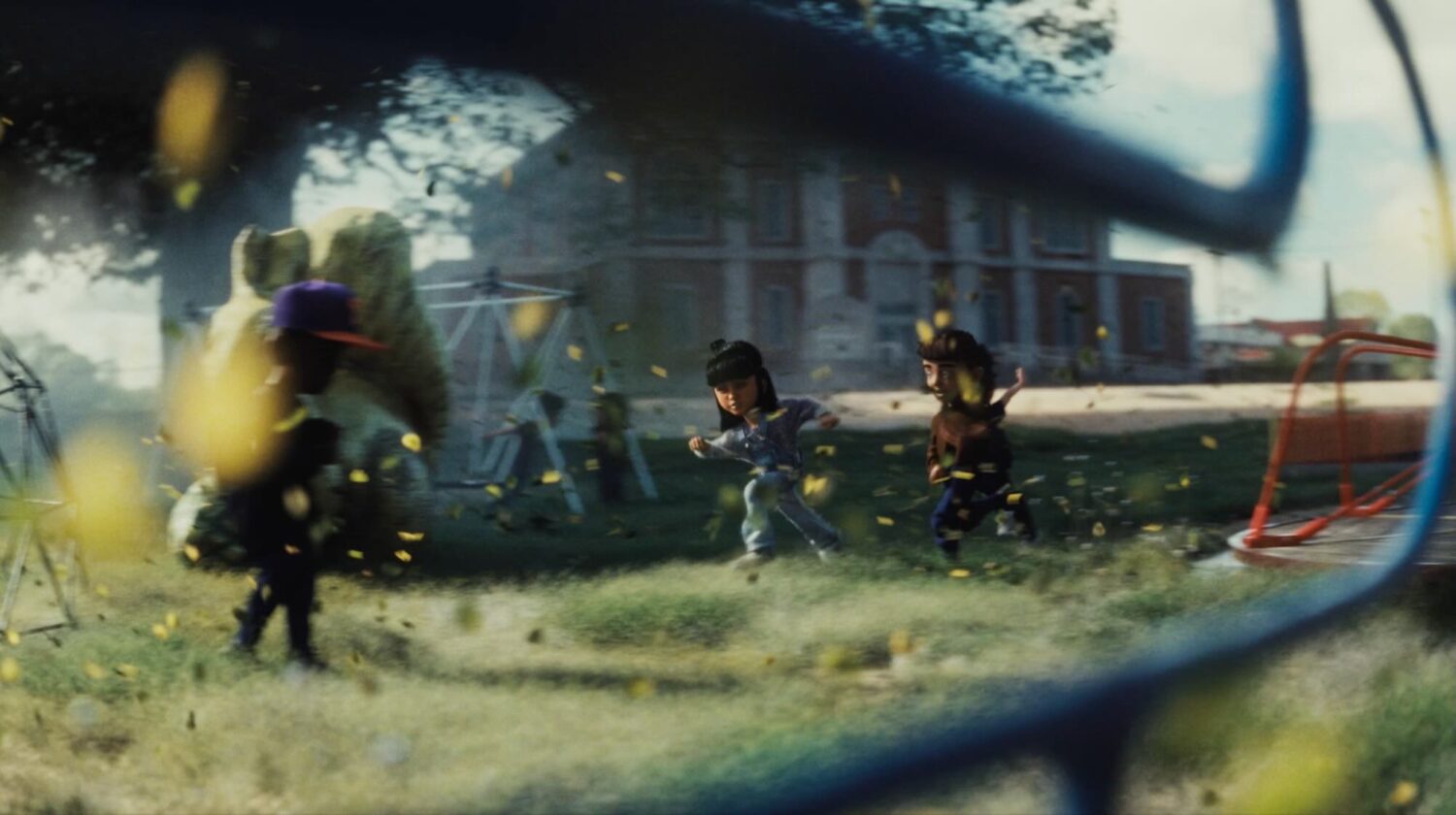
On January 17th, 2025, just days before what would have been the late singer Mac Miller’s birthday, his seventh studio album Balloonerism was released alongside a short animated film of the same title. Directed by Samuel Jerome Mason, the film follows a group of humanoid small animals through a wild, melancholic dream journey. Within the music video genre, it stands in a class of its own: 19 minutes long, featuring eight songs from the album, and presenting a complete narrative arc. The visionary digital artist who led the team behind this acclaimed film, Rui Zhu, has pioneered a series of technical and methodological innovations that redefined what a small team can achieve.
The first challenge raised by the compact scale of the team is that using the standard animation pipeline wouldn’t finish the film in time. The traditional pipeline is highly modular, relying on specialized departments where artists focus exclusively on isolated steps such as modeling, layout, animation, or compositing. This would have left Zhu’s team with only one or two artists per department. Zhu rejected this structure in favor of what she calls a “Full Ownership” methodology, drawing inspiration from the motion design field, where a single designer routinely builds, animates, and renders a complete piece of video art independently. Under this system, each Balloonerism artist was assigned a sequence of shots set within the same environment. That artist was responsible for the entire lifecycle of those shots – constructing the set, integrating animated characters, and defining the final look through lighting and rendering. Zhu thinks this approach avoided the assembly line feeling of the traditional pipeline. Rather than passing work down a chain where individual contribution gets diluted, each artist developed a genuine creative investment in their sequences. Zhu believes this structure encourages each team member to infuse more personal artistry into their work, countering the kind of technical inertia that can make mainstream 3D animation feel generic.
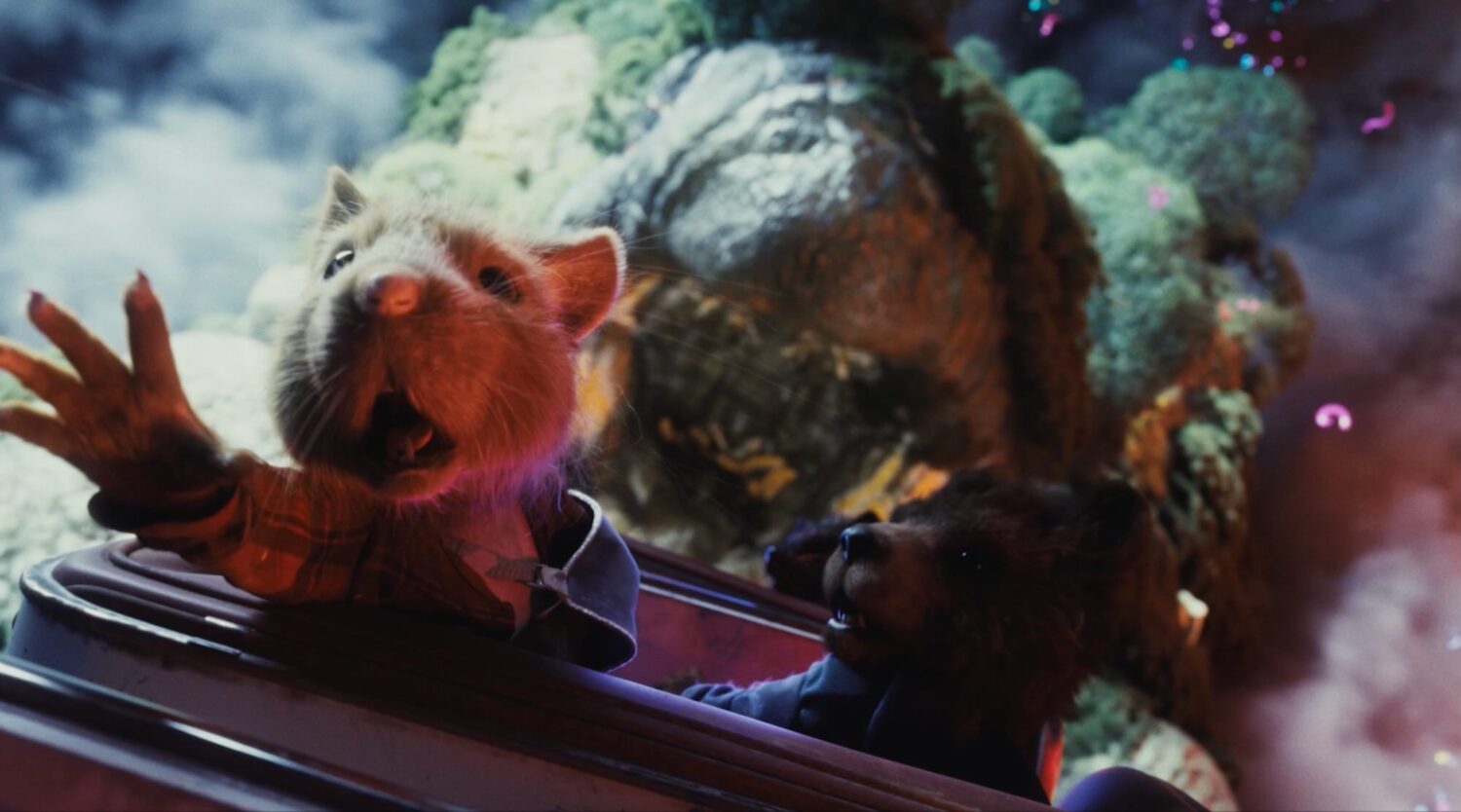
Beyond pipeline innovation, Zhu pioneered technical workflows to conquer long-standing computational hurdles in the animation industry, specifically regarding complex organic environments. The visual world of Balloonerism is defined by organic textures: fur, moss, fog, water, and heavy vegetation that echo the “dreamcore” nature of Mac Miller’s music. These elements pose a significant technical challenge. Organic surfaces require substantially more processing power than hard surfaces, making them slower to manipulate and far more expensive to render – a long-standing difficulty across the animation industry. To address this, Zhu turned to Houdini, a software previously considered too mathematics-heavy and niche for mainstream production but one that has been steadily expanding its accessibility. Houdini enabled the team to handle organic surfaces with efficiency while retaining the flexibility to modify them as needed to fit a given scene – a combination that no other software could reliably provide.
Selecting the right renderer – the algorithm responsible for producing the final image – was equally critical. After evaluating the available options, Zhu’s team landed with “Karma”, Houdini’s native but relatively new rendering engine. It was far from a conservative choice; at the time, most of the studio’s work was being completed in other established renderers. What drew Zhu to Karma was a combination of practical and technical advantages: its seamless integration within the Houdini ecosystem, no additional licensing cost, and crucially, its hybrid CPU-GPU architecture. Karma makes full use of available hardware, producing the same output in significantly less time. Because Balloonerism was the first feature-scale project to rely on Karma, Zhu’s team received direct technical collaboration and support from SideFX, Houdini’s parent company.
Further technical agility was needed due to the geographical distribution of the production, with the animation team based in France, various vendors scattered globally, and Zhu’s finishing team operating out of New York. To seamlessly unify incoming 3D assets from different origins, Zhu adopted and optimized the Universal Scene Description (USD) framework. Because standard 3D applications rely on proprietary file formats that do not natively interact, asset integration across platforms has been inefficient. While the USD system offered a solution, originally developed by Pixar, it was historically a high-budget framework reserved exclusively for feature scale productions with dedicated technical departments. Zhu pioneered the system’s viability for compact workflows by “custom-fitting” the USD framework for her small team. She accomplished this by architecting a specialized, step-by-step pipeline workflow and programming several custom plug-ins, successfully democratizing a powerful studio tool for smaller, independent teams.
Implementing both an advanced Houdini pipeline and a customized USD management system introduced steep technical risks that fell well outside the studio’s comfort zone. To mitigate these risks, Zhu conducted exhaustive stress tests to definitively prove to the studio that these cutting-edge systems were production-ready. The result was a definitive proof of concept: the combination of Houdini, Karma and USD is not only viable for high-fidelity animation but also rivals industry standard alternatives. The project established a technical blueprint for rendering at scale with emerging industry tools.
Following Balloonerism, Zhu has continued to apply and advance the philosophy and methodologies from Balloonerismto projects for high-profile clients including Spotify, Google, and Estée Lauder, with her small teams consistently delivering results that compete with larger commercial studios.
Since its release, Balloonerism has earned widespread acclaim from both the Mac Miller fan community and the broader public, accumulating a remarkable awards record including wins at the ADC Awards, Clio Awards, and Ciclope, as well as a coveted spot on the VMA shortlist. The film has been screened to sold-out audiences in major cities around the world, including New York, London, Berlin, Sydney, and Pittsburgh – Mac Miller’s hometown and a city central to his artistic identity.
Beyond its commercial and critical reception, Balloonerism has sparked sustained engagement across professional and public communities alike. Discussions about the film’s narrative metaphors, visual language, and “easter eggs” – nods to Mac Miller’s hometown and upbringing, continue to circulate on social media. In a genre where the music video format rarely preserves viewer’s attention, Balloonerism has demonstrated that small production, technically ambitious animated short films can generate the kind of cultural conversation typically reserved for major animation films.