
 Sourav Mondal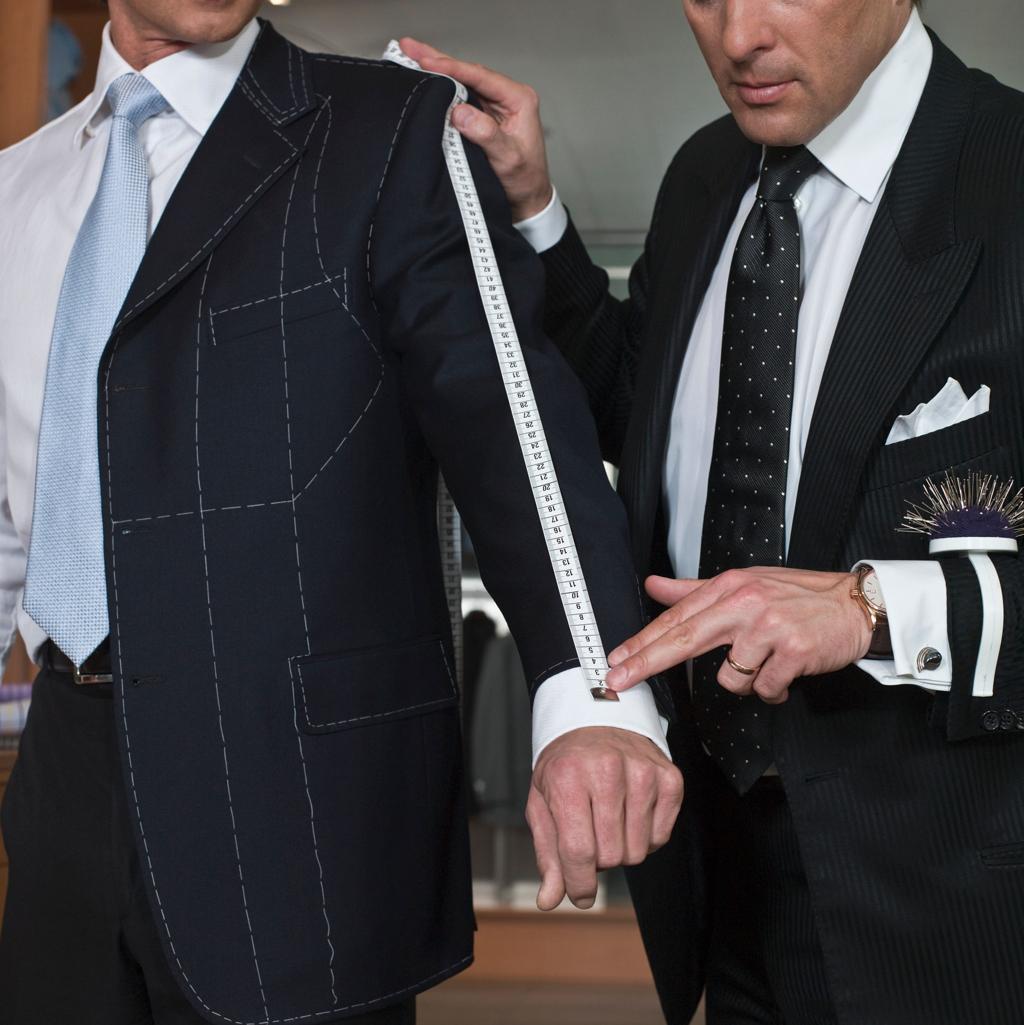
Here is something that everyone in the industry knows but nobody particularly advertises: the men who look best on a red carpet, at a premiere, in a meeting at CAA, or walking into a table at Nobu on a Tuesday night are almost never wearing something they picked off a rack. The suit that photographs perfectly, that sits exactly right in movement, that makes a person look like they belong in whatever room they have just walked into: that suit was made for them specifically, and it shows in a way that is immediately legible to anyone who has spent time in this city.
Los Angeles has a complicated relationship with formality. It is a city that invented the power casual, that turned the absence of a tie into a statement, that made flip flops at a meeting feel like confidence rather than carelessness. And yet when LA actually dresses up, it does so with a seriousness that few cities can match. Because in a city built on image, on performance, on the studied construction of how things appear, the people who understand dressing understand it deeply. And what they understand, almost universally, is that fit is everything, and fit is the one thing that only a custom suit can truly deliver.
The problem with off-the-rack in a city that watches everything
Los Angeles is a city of cameras. Not just the obvious ones, the film sets and the red carpets and the press lines, but the constant ambient documentation that comes with living in a place where everyone is either in the industry, adjacent to it, or deeply aware of it. The photograph exists before the shutter clicks. The impression forms before the introduction happens. And in that environment, wearing a suit that almost fits is the sartorial equivalent of almost knowing your lines.
Off-the-rack suits are designed for a statistical average that does not correspond to any actual human being. They fit the mannequin, which is a shape that has never eaten a meal or spent a decade building a specific body in a specific gym. On a real person, with real proportions, a suit from a rack requires a series of compromises: the shoulders work but the chest is loose, or the chest fits and the sleeves are too long, or the trouser fits the waist and bags at the knee. Every compromise is visible under the kind of light that Los Angeles specializes in producing.
A custom made suit starts from scratch. It is built around the actual measurements of the actual person who will wear it, accounting for the fact that human bodies are asymmetrical, that posture varies, that the way a person moves changes how a garment needs to be cut. The result is a suit that appears, on the person wearing it, to have been the only possible outcome. Which, in a sense, it was.
What the industry figured out a long time ago
Hollywood has understood the relationship between fit and presence since the studio era, when costume departments made everything from scratch as a matter of course. The screen test was as much about whether the clothes worked as whether the face did. A suit that fit perfectly was part of the performance, not separate from it.
That understanding never went away. It just moved off the studio lot and into the wardrobes of the people who had enough experience in the industry to know what they were looking at. Agents who have been in rooms with powerful people for long enough develop an eye for fit. Directors who have spent careers framing human bodies understand what a well-cut jacket does to a silhouette. Executives who have attended enough events where being looked at is part of the job have learned that the right suit is not a luxury expense. It is a professional investment.
The custom suit is the industry’s open secret in the same way that good lighting is an open secret. Everyone who works with it knows what it does. They simply do not announce it, because part of what makes it work is that it appears effortless.
The process and why it matters
Getting a custom made suit made is not the intimidating process that people who have never done it tend to imagine. It begins with measurements, a full set taken by someone who knows what they are doing and accounts for posture, dominant hand, and the way the body actually carries itself rather than the way it stands for a photograph. From there, fabric is chosen: weight, weave, color, the small decisions that determine not just how the suit looks but how it moves, breathes, and holds up over a day that starts with a morning meeting in Burbank and ends at a dinner in West Hollywood.
The fitting process is where the investment becomes visible. Seeing the suit on your own body, in an early form, and being able to adjust the details, lapel width, jacket length, trouser break, button stance, is the part that cannot be replicated by any amount of tailoring applied after the fact to something that was designed for someone else. It is the difference between a garment that fits and a garment that belongs.
In Los Angeles, where the day can move between half a dozen different registers before sunset, a suit that was built for the person wearing it handles those transitions with a quality that nothing off a rack can approximate. It goes from the meeting to the lunch to the event without announcing itself, without requiring adjustment, without reminding the person inside it that they are wearing a suit.
The LA occasions that make it make sense
The city produces a specific category of event that makes the case for a custom suit better than any argument could. Award season is the obvious one: the Emmys, the Grammys, the Oscars, the Globes, the long corridor of ceremonies and adjacent events that runs from January through spring and requires looking a specific way in front of specific audiences, including the permanent audience of the photograph.
But the more persuasive case is actually made by the smaller occasions. The premiere at the Dolby where you know the director personally. The charity dinner in Beverly Hills where the room is full of people whose first impression of you will be formed before you reach the table. The anniversary dinner at a restaurant that takes reservations six weeks out. These are the moments where a custom suit does something that no amount of money spent at a department store can replicate: it makes you look like you expected to be there.
That quality, of appearing to have always belonged in the room, is something that Los Angeles understands at a cellular level. It is what the city runs on. And a custom suit, built for the person wearing it, is one of the most reliable ways to produce it.
Beyond the red carpet
It would be a mistake to think of the custom suit as exclusively the territory of the industry’s most visible figures. The case for it is actually strongest for the people who are in rooms regularly but not on camera constantly: the lawyer who represents talent, the music executive who has developed an eye from years of watching artists perform, the creative director whose personal style is part of their professional identity, the entrepreneur who has built something in this city and needs to be taken seriously when they walk into a meeting.
For all of these people, the custom suit is not about ostentation. It is about efficiency. One suit made correctly, in a fabric and color that works across the range of situations a working week in Los Angeles can produce, is more useful than three suits that almost work. And it communicates something about the person wearing it that no brand name or price tag can communicate: that they paid attention, that they understand the value of things being done right, and that they know the difference.
In a city that knows the difference, that is not a small thing.