
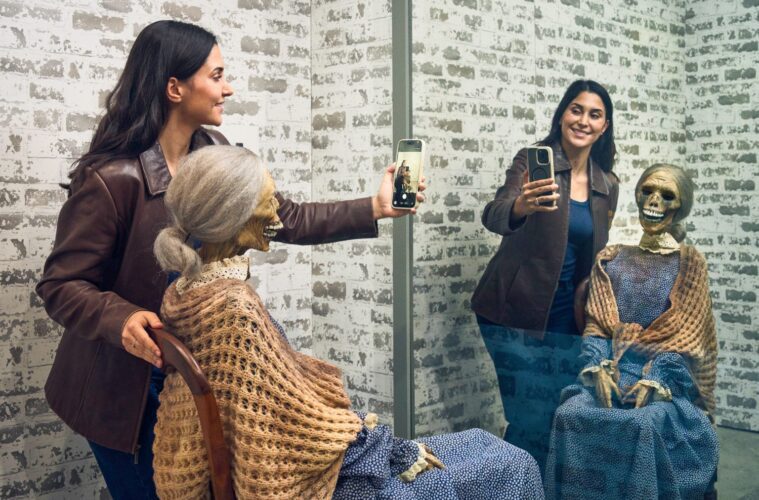
 Kalyn Corrigan
“It’s a great time for horror films,” says Senior Exhibitions Curator of the Academy Museum of Motion Pictures and Academy Collection, Jessica Niebel. Niebel, along with a qualified team of fellow caretakers, has just put the finishing touches on The Horror Show, their latest installation for the Academy Museum, which opens on September 26 and stays on view through July 25, 2027. “It falls right into the perfect time of year,” she tells me. “With the spooky season coming up and all, the timing couldn’t be better now.”
Stationed right in the heart of Los Angeles, the Academy Museum provides cinephiles and casual moviegoers alike the chance to experience artifacts from their favorite films in person, allowing audience members to dive even more deeply into the art of motion pictures.
The museum has already done an excellent job of showcasing in-depth displays of standouts Hayao Miyazaki and John Waters, as well as highlighting aspects of the legendary Jaws franchise, and comprehensively examining black cinema. Now, given the success of stunners like the witchy Oscar-winning Weapons, Ryan Coogler’s sensational southern gothic vampire flick Sinners, and more recently, surprising sleeper hits like Backrooms and Obsession, the Academy has turned its attention toward horror. By celebrating one of global cinema’s most enduring, popular, and influential forms of filmmaking with the new exhibition, The Horror Show seeks to explore all of the components of this multifaceted genre, which consistently commands an overwhelming turnout at the box office.
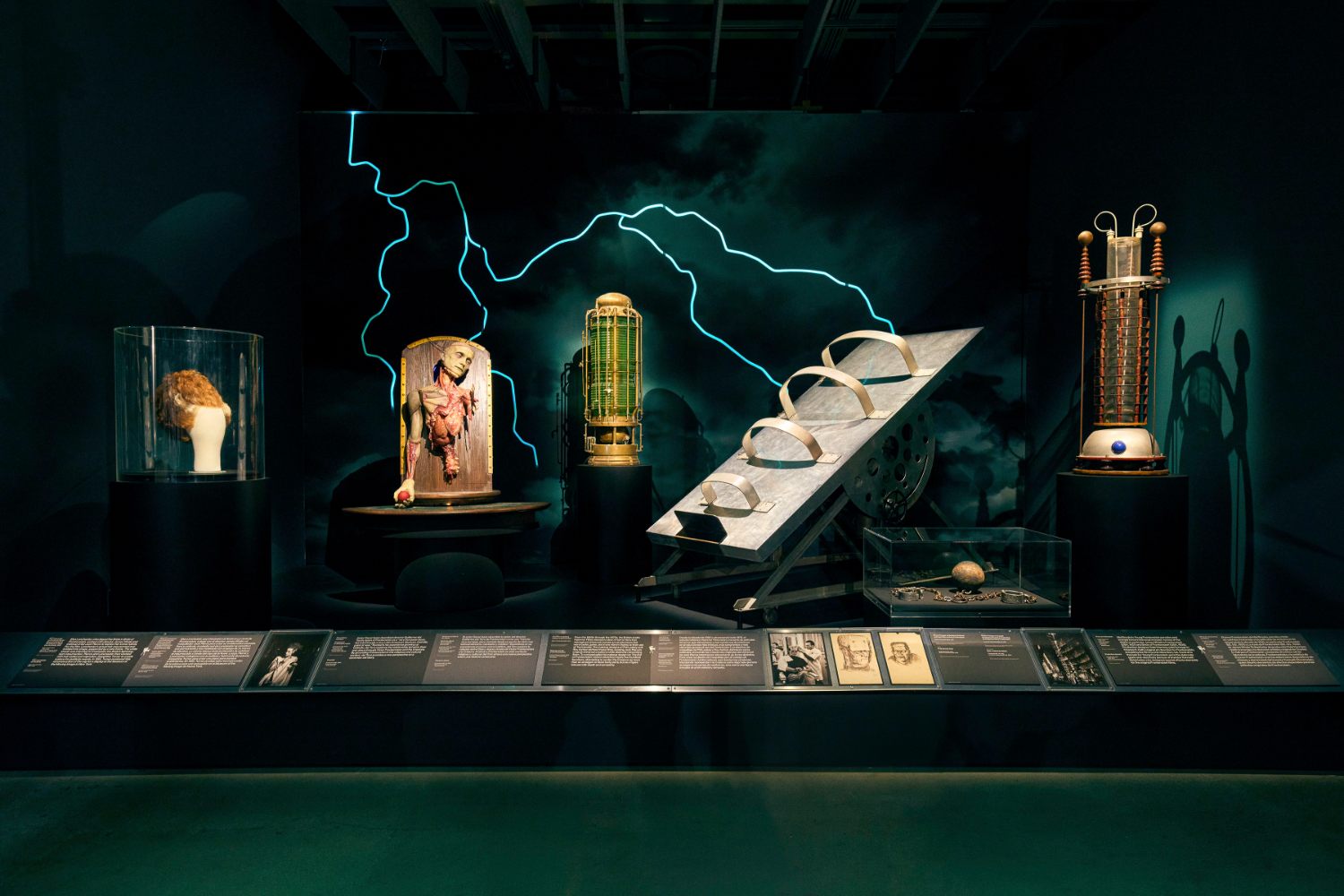
“The Horror Show” at the Academy Museum. (Photo: Emily Shur / Academy Museum Foundation)
“Recently, there’s been a movement to invest more in horror films,” says Niebel. ”We’ve seen high quality, inspirational, original horror films recently in past years, and I think we will continue to do so. That’s not an official Academy opinion, but my personal opinion is that I think horror will continue to thrive for a while longer.”
Featuring props, costumes, and creatures, the exhibit is set to cover a wide range of genre entries, including storytelling tools from movies like The Substance (2024), The Shining (1980), Blade (1998), The Monkey (2025), Talk to Me (2022), It (2017), Tales from the Hood (1995), and so many more.
“I personally have underestimated how much horror films mean to people, especially people who wouldn’t consider themselves at the center of society, like more on the margins, or a little different,” muses Niebel. “They find a home in horror cinema, and that is something that is just beautiful. Horror truly brings so many different people together. A lot of people wouldn’t think of horror that way, but horror fans feel that way, and it’s a communal thing. They feel seen, and horror films have been life-changing to a lot of people, even, which is just wonderful. We’ve heard so many great stories.”
Filmmaking icons James Wan, Howard Berger, Willem Dafoe, Osgood Perkins and Ari Aster serve on the advisory team for The Horror Show. Together, these exemplary figures in the industry have graciously donated their items, words, and resources to the exhibit, rendering these articles even more precious.
“We worked with a lot of filmmakers,” Niebel grins. “Willem Dafoe and Osgood Perkins contributed the foreword and the afterword, respectively, to our catalog. Osgood is also a lender. Howard Berger, also on the advisory board, helped us with the Blood Room. He is a specialist of film blood, so it was a lot of fun to work with him.”
Above all else, curator Niebel hopes to instill the same love for horror that she has embraced herself, not too long ago.
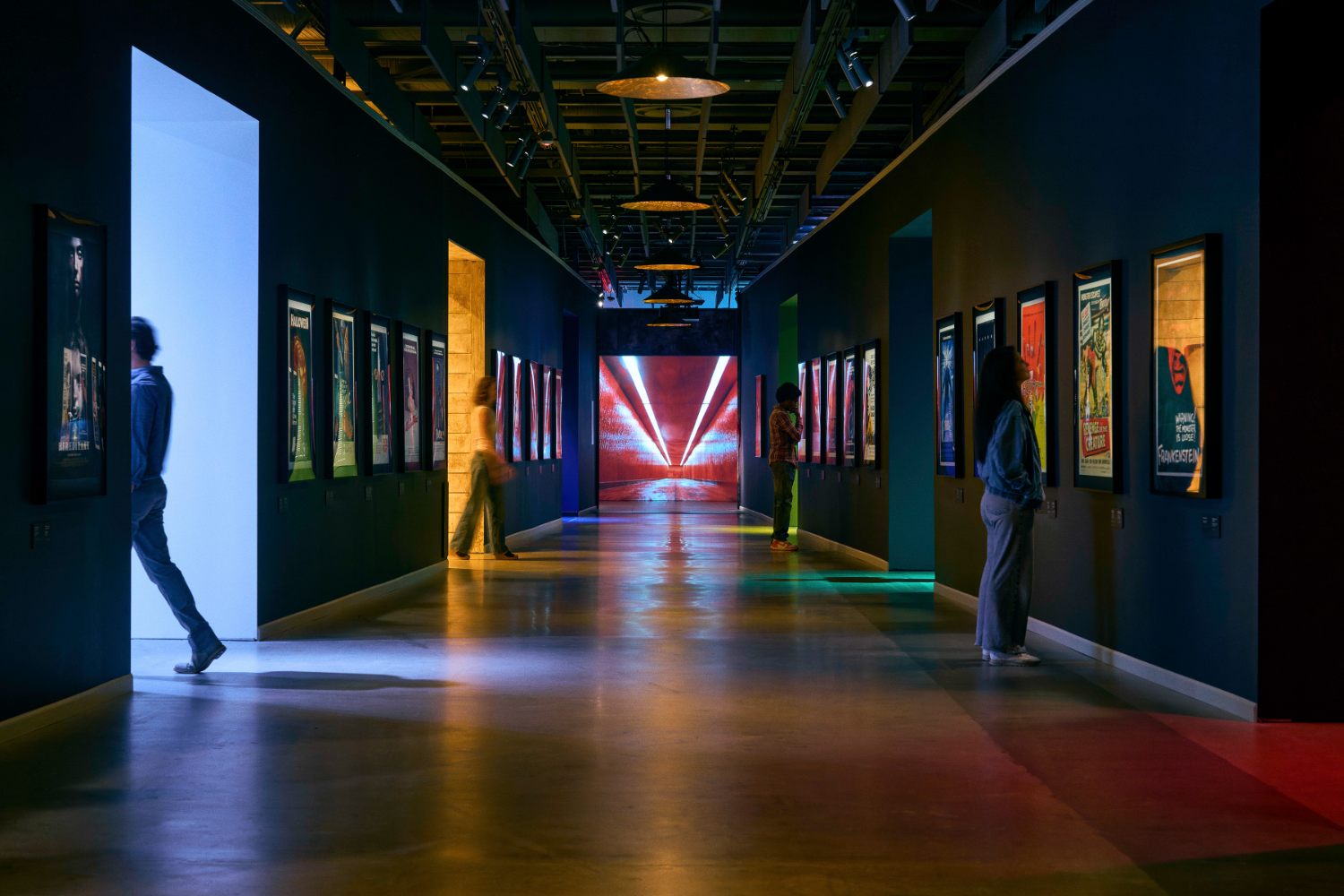
“The Horror Show” at the Academy Museum. (Photo: Emily Shur / Academy Museum Foundation)
“When I set out on this journey, it wasn’t necessarily that I was a horror fan, per se,” she admits. “I was just fascinated by horror films, and how they reflect our fears and our desires. They truly hold up a mirror to ourselves. You want to know yourself? Watch horror films. If you want to know what’s going on in society, and what’s going on in the world, watch horror films. They are quick to respond, and they’re deeply reflective of who we are as human beings.”
She expands, “In their way, they’re daring, and transgressing, and going places where other films won’t look. And horror films just live off of going there, and looking, and showing it, and confronting you with it. This can go right, this can go wrong. It can be anywhere in between. The result is unknown, but those filmmakers are daring enough to go there. I admire that.”
ENTERING THE EXHIBIT: A SOUNDSCAPE OF TERROR
Visitors will enter The Horror Show through a darkened, introductory gallery featuring a “soundscape” of music, voices, and sound effects, and then emerge into a long hallway lined with classic horror film posters from the Academy Collection and other lenders.
Advised by documentary filmmaker Ariel Baska, Niebel sought to make the room as accessible as possible for a wide audience, including those who might be disabled.
“We wanted to make everyone who is hearing impaired, or even visually impaired, feel just as welcome as able people,” the curator explains. “We hired an expert in the field, Cheryl Green, who works on accessible captioning and animations, to make those captions a part of the experience. This is inspired by silent films, like The Cabinet of Dr. Caligari, where you see the words appearing on the screen. These three walls are in English and Spanish, and we have a different way of open captioning, which is part of this room and part of this experience, rather than an afterthought to accompany the sound installation.”
ABANDON ALL HOPE YE WHO ENTER HERE: THE SIX CHAMBERS OF HORROR
After exiting the soundscape room, patrons will enter the hallway of horrors. On either side of this central space, six immersive galleries, or “chambers,” are devoted to major strains of horror cinema.
GOTHIC
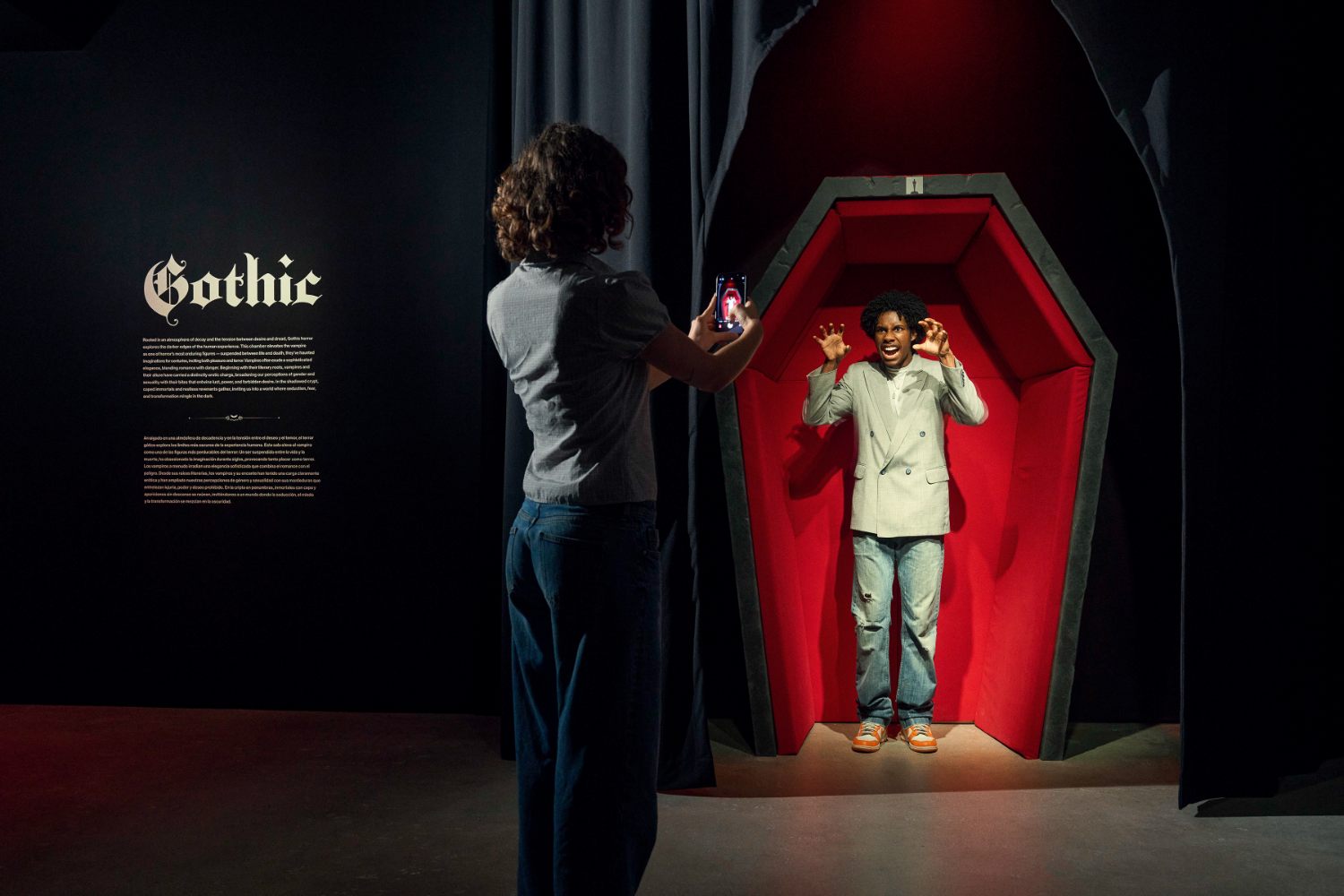
“The Horror Show” at the Academy Museum. (Photo: Emily Shur / Academy Museum Foundation)
Gothic horror explores the darker edges of the human experience, often through the character of a vampire, one of horror’s most enduring figures. “I always wanted to do a gothic section, with the vampire being something that isn’t just a horror archetype,” says Niebel. “It’s appealing to horror fans, but also to a general audience. I feel like a lot of people love vampires that don’t necessarily identify as horror fans.”
This chamber, which resembles a shadowed crypt, is adorned with original concept artwork and in-character portrait photos of classic horror stars and serves as the setting for an array of original objects, including the Academy Collection’s recently restored cape worn by Bela Lugosi in Dracula (1931).
“In 2019, we were able to acquire Bela Lugosi’s Dracula Cape from the Lugosi family, which is now a highlight of our collection,” Niebel beams proudly. “This piece has undergone tremendous years of conservation work, preservation work, and it’s going to go on display for the first time now. It’s hard to believe it’s over 100 years old.”
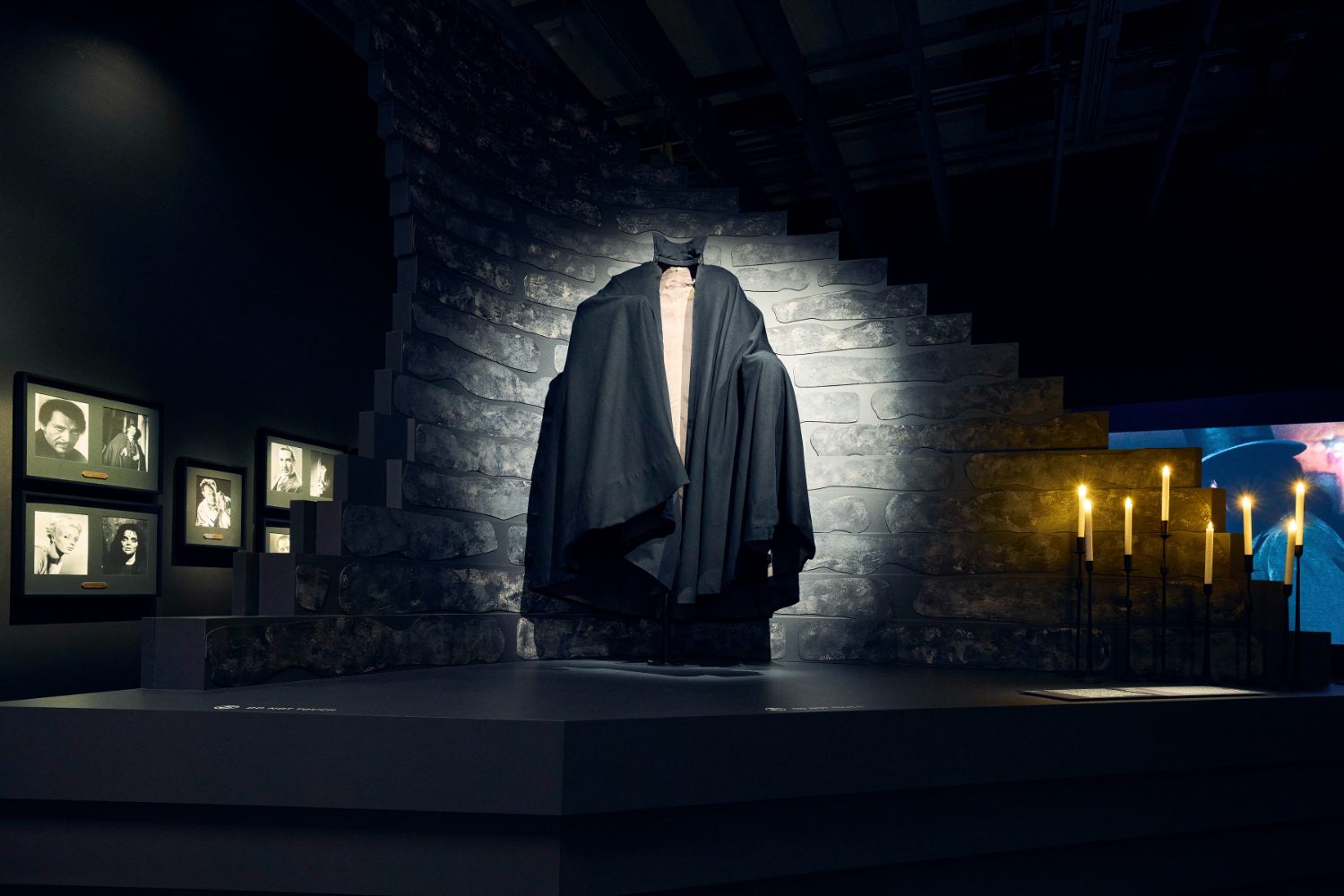
“The Horror Show” at the Academy Museum. (Photo: Emily Shur / Academy Museum Foundation)
PSYCHOLOGICAL
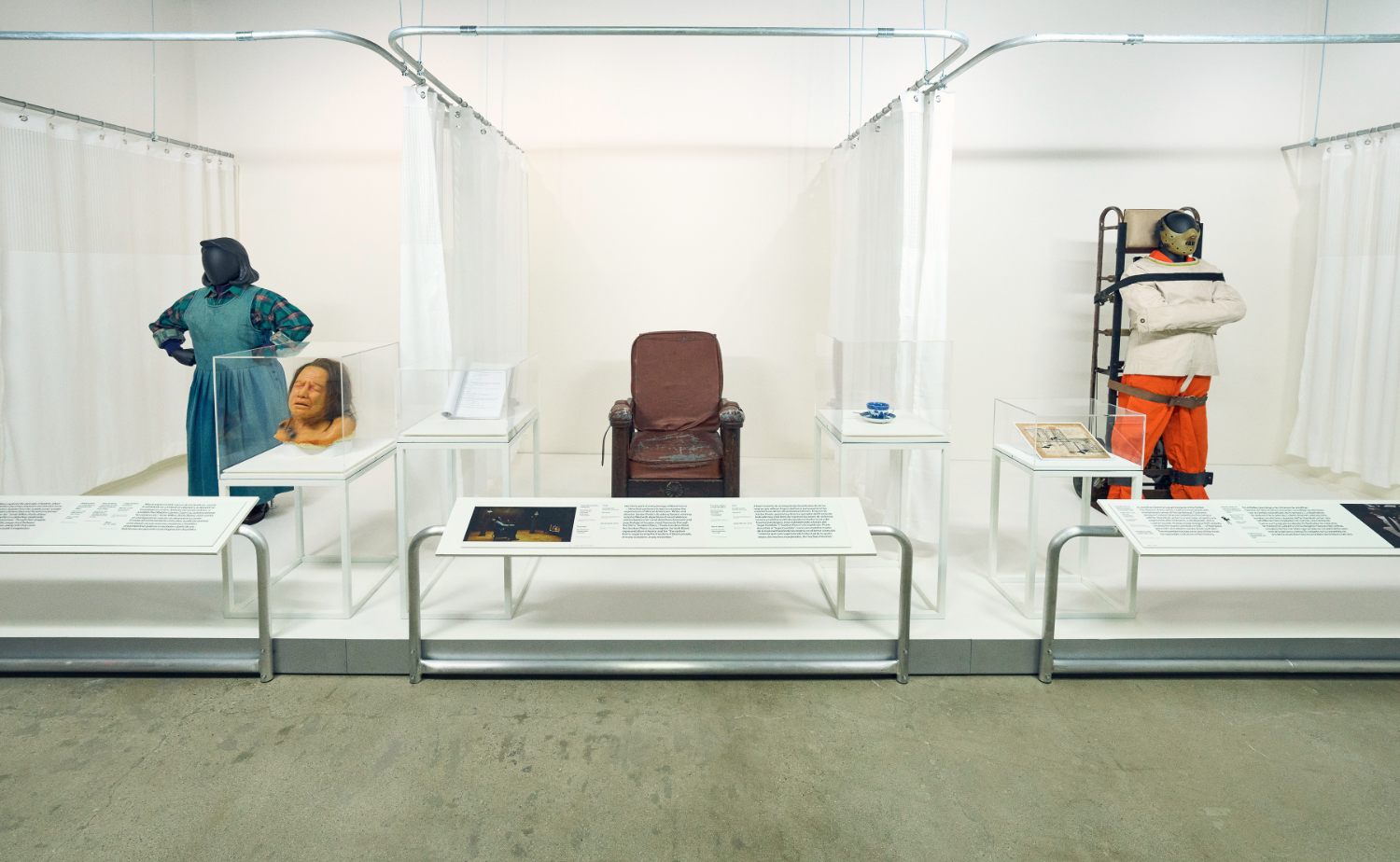
“The Horror Show” at the Academy Museum. (Photo: Emily Shur / Academy Museum Foundation)
Blurring the boundaries between reality and delusion, psychological horror explores the mind in all its complexity, often leaving audiences questioning their own perceptions. A chamber resembling a stark white clinical space serves as the setting for objects and production materials that trace a history of psychological horror on film.
“A lot of people over the years have told me that they’re not horror fans,” recalls Niebel. “Then I’d say, ‘Name some of your favorite films’, and they would say something like Psycho or Silence of the Lambs, or Alien. So I was like, okay, there seems to be a lot of people who love these films, without realizing that they love horror films.”
In a way, many of these brain busters act as a gateway movie for newcomers to the genre. “Psychological horror is right at the beginning there, exactly for that reason, because a lot of people are into psychological horror that wouldn’t necessarily say that they’re slasher fans, which is another of our chambers.”
SCIENCE
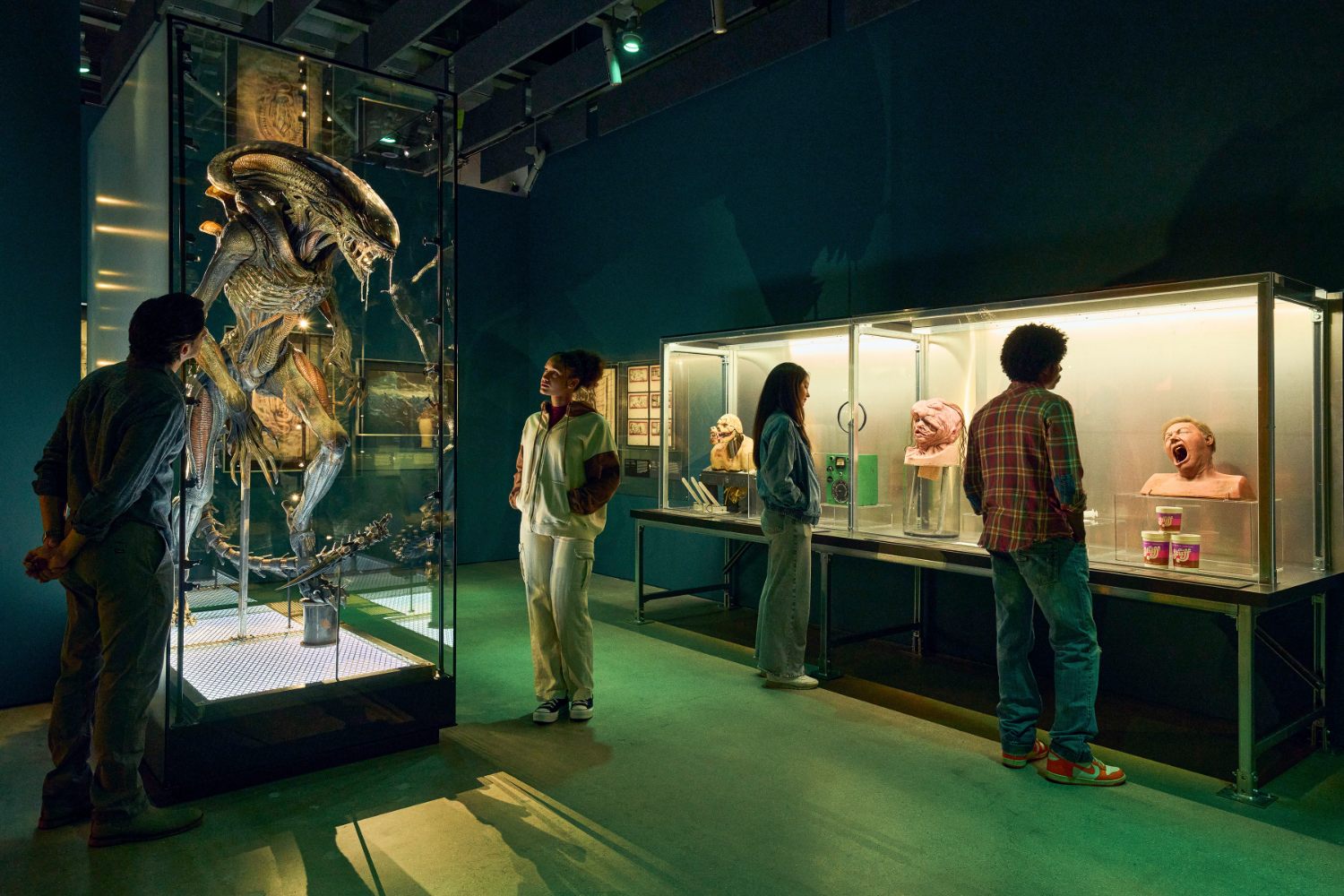
“The Horror Show” at the Academy Museum. (Photo: Emily Shur / Academy Museum Foundation)
Born in a laboratory, science horror confronts the dangers of ambition, hubris, and humanity’s unsettling urge to engineer and manipulate life. This chamber replicates a laboratory setting, showcasing special effects prosthetics, creature designs, makeup, concept artwork, and artifacts from historical to contemporary science horror films. Displayed as curious specimens and instruments of experimentation are production elements from films, including a special focus on Frankenstein and its various film adaptations, Alien (1979), The Fly (1986), The Thing (1982), and an original mask from Creature from the Black Lagoon (1954).
“Science horror is super fascinating to me, because really it all started with a little story that a woman, Mary Shelley, wrote when she was still very young, and it became Frankenstein,” Niebel gushes. “Frankenstein has become so many different iterations, but also, such a major influence on other horror films. So, science fiction horror was important to me, especially being a woman.”
SLASHER
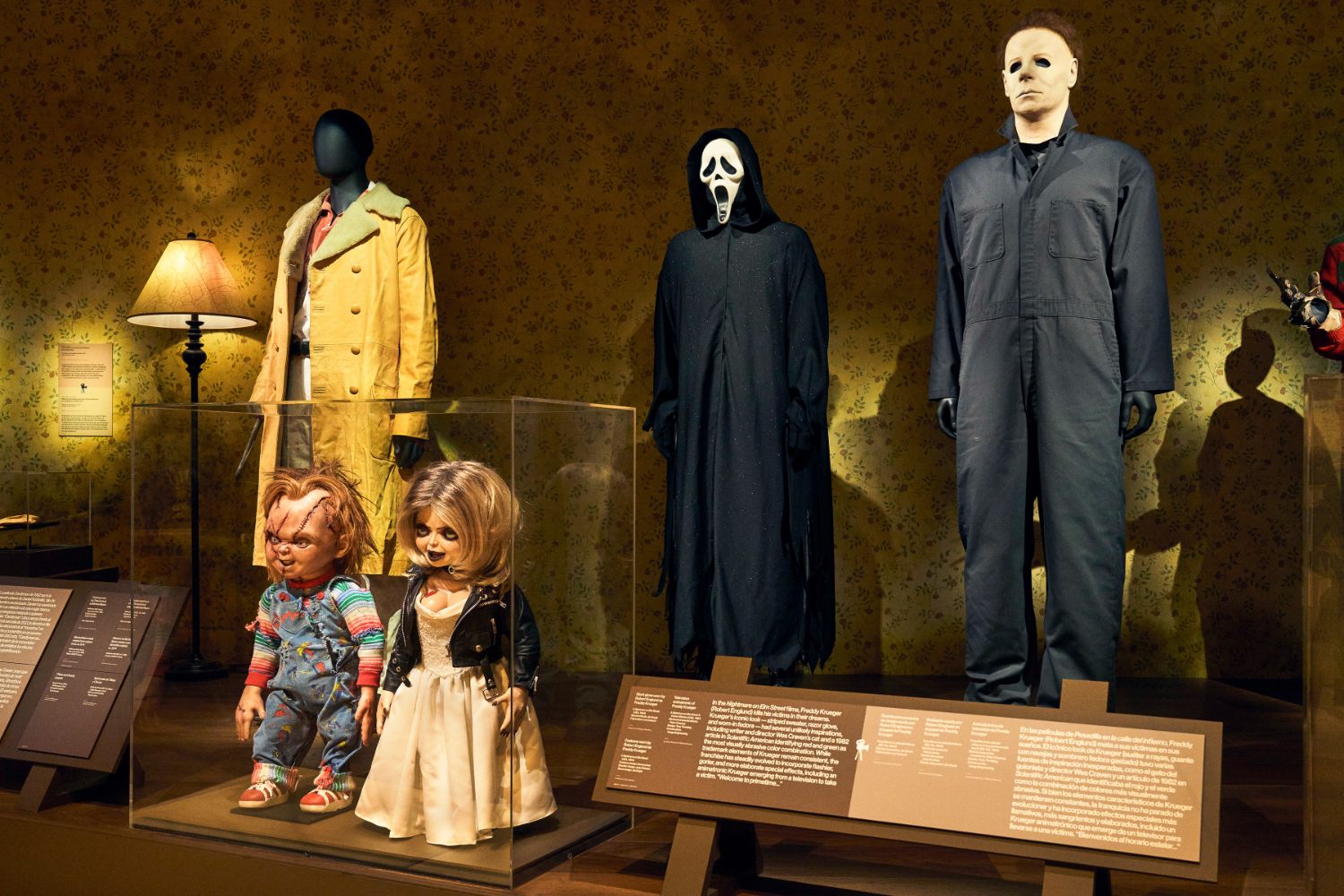
“The Horror Show” at the Academy Museum. (Photo: Emily Shur / Academy Museum Foundation)
Slasher films are notorious for their blood and gore, making audiences face fear dead on — an unsettling reminder that anyone could be next. Trespass into this chamber, the killer’s home, where fully costumed figures include Freddy Krueger, Michael Myers, Ghostface, and Art the Clown. As visitors explore the house, they will encounter a cabinet filled with masks and weapons, as well as rare objects from films including The Black Phone (2021), M3GAN (2022), A Nightmare on Elm Street (1984), Peeping Tom (1960), Saw (2004), and The Texas Chainsaw Massacre (1974).
“[Slashers have their] own little world,” says Niebel, “The world of slashers with their own rules and their own fan audience, which is very distinct, but certainly has its place in horror history.”
RELIGION
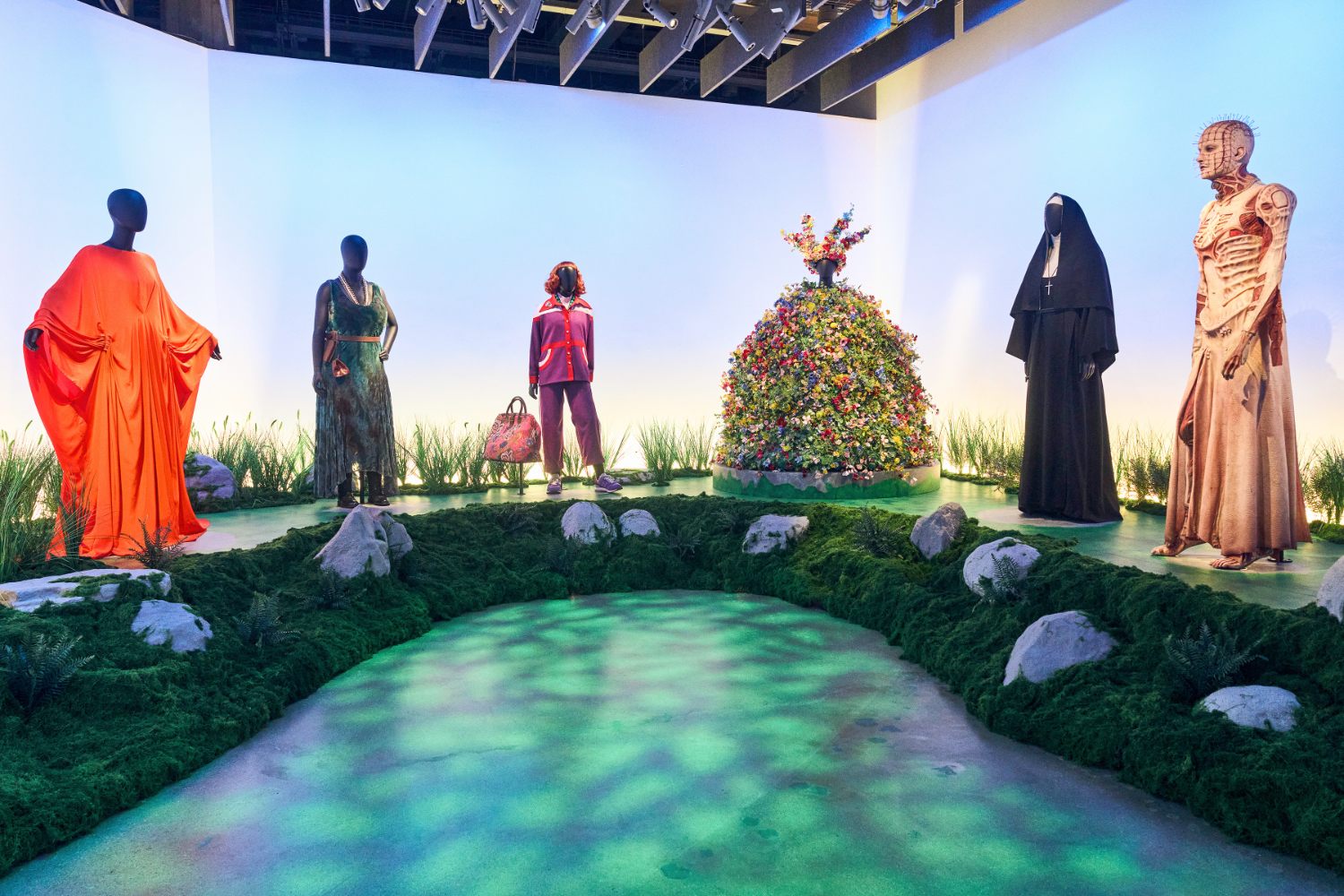
“The Horror Show” at the Academy Museum. (Photo: Emily Shur / Academy Museum Foundation)
Religious horror films offer narratives of meaning, mystery, and morality, shaping how power, belief, and the body — both pure and possessed — are understood. From this space emerges the witch, a symbol of collective female strength and a figure through whom fascination and fear continue to be explored. Visitors will walk into a witches’ circle, with key costumes from Hellraiser (2022), Midsommar (2019), Sinners (2025), and Suspiria (2018), as well as objects from films including Eve’s Bayou (1997), The Exorcist (1973), Rosemary’s Baby (1968), and historical documents from the Salem witch trials.
“Having read some stats that more — a lot more — women signed up or identified as witches during the pandemic,” states Niebel. “This is all still also linked to the pandemic, and a new revival of horror films that came through the pandemic amongst other things. I really wanted to celebrate the witches as women who live outside of the patriarchal structure.”
GHOSTS
This chamber spotlights the prevalence and power of the spectral and supernatural in film, with ghosts serving as inspiration for special and visual effects innovation. Visitors will walk into a haunted living room and are invited to surf through the original marketing website for The Blair Witch Project (1999) and view an array of haunted objects from films, including The Conjuring (2013), The Monkey (2025), Poltergeist (1982), The Ring (2002), and more. This chamber also explores historic Japanese woodblock prints and 1960s and ’70s theatrical release posters, testifying to the resonance and prevalence of ghost stories in Japanese culture.
SEEING RED: THE BLOOD ROOM
The only pathway out of the exhibition lies through “The Blood Room,” an immersion in the many textures and shades of cinematic blood. Spilling out from the hallway of horrors, visitors are engulfed in a final sensorial macabre: gallery walls layered with gore, pushing the knowledge gleaned from the exhibition through one last, gooey visual of horror.
“Having worked on color in motion before another exhibition that we did about cinematic colors, I had thought about the color red for a long time,” recalls Niebel. “I feel like red, and the idea of blood is something of a grand finale to something like a horror show. So, I wanted a blood room to end it. Something that is dedicated to the very essence of living, that makes a difference between life and death — and that we’re fearful to lose, and forced to see in horror films. I thought that would be a climactic moment for this show.”
ZOMBIES! – AN OFFSHOOT EXHIBIT
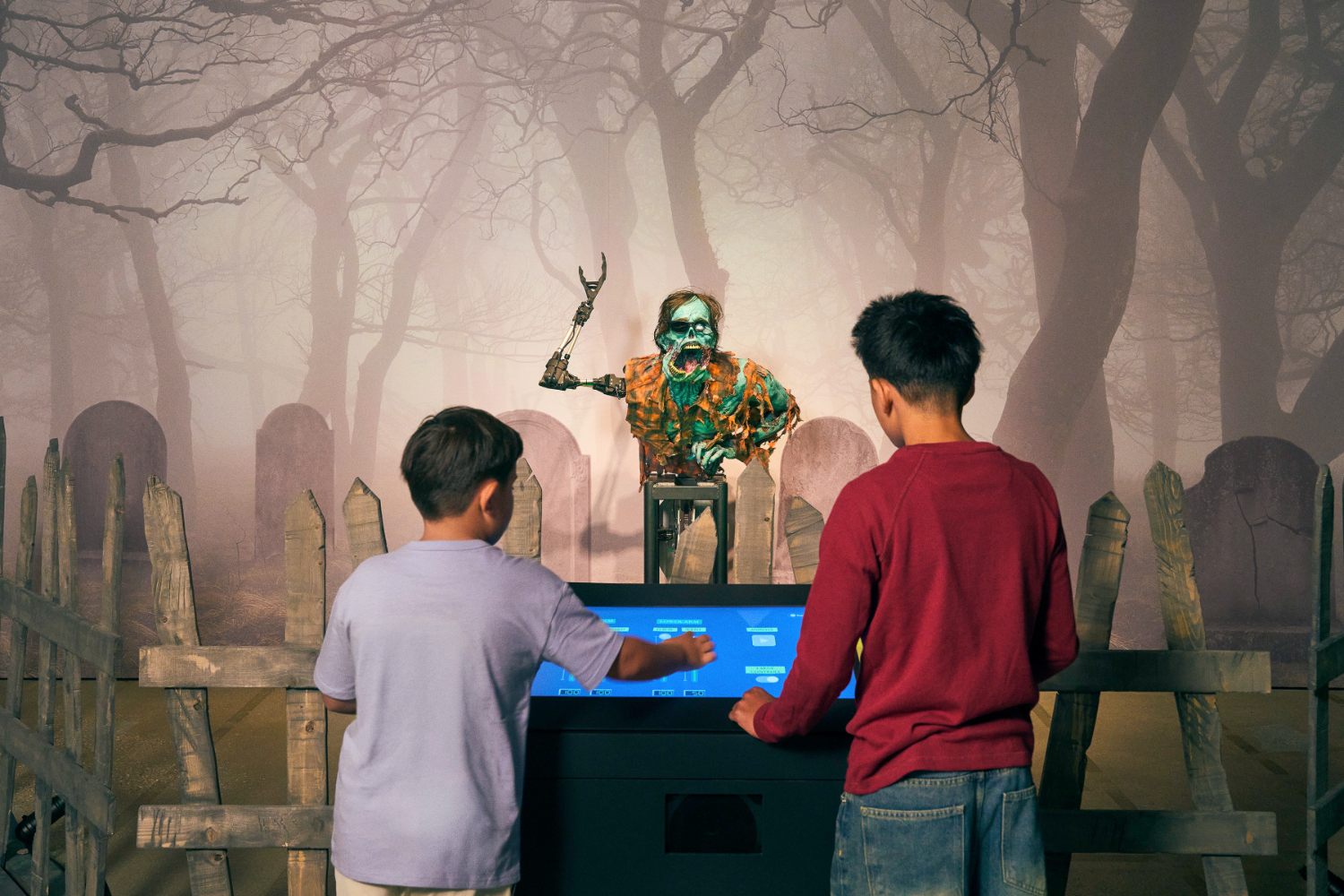
Zombies! (Photo: Emily Shur / Academy Museum Foundation)
“Zombies!” explores how movie zombies are created and where their stories come from. Set in an interactive educational space, “Zombies!” showcases how filmmakers and artists create the unforgettable images of the undead we see on screen. Visitors can also discover the origins of zombies and how they have been adapted to become the classic horror monsters we know today.
“The zombies never quite fit in and they never quite fell into place, and then we didn’t have room,” says Niebel. “Speaking with our director Amy Holmer, she was always like, ‘horror is what it is, so naturally it will cater to a more mature audience.’ It’s not catering to a young audience, but that audience is also very important to us.”
For those seeing a tamer version of the exhibit, or perhaps for the patrons who want to bring their kids, the “Zombies!” exhibit is the perfect way to include the little ones on a day at the museum.
“So then we thought in the adjacent little gallery, which is a small chamber on its own, separate from The Horror Show, but right next to the entrance. We thought maybe we could give zombies its own place, and at the same time, make it a little bit more family-friendly. ‘Zombies!’ is conceptualized by my colleague Alex James, and she made sure that this is an experience that reveals how zombies are made, and how they appear in the films, so kids don’t have to be scared of them.”
Niebel confesses that she’s spent a great deal of time tooling around in their little offshoot addition, where fans can get a more tactile experience.
“We have a cool zombie animatronic in there,” she says, “I just went in the other day, and it’s fun to play with. I will say, not just for kids. You can animate your zombie animatronic. You can play around with different horror zombie sounds. You can touch zombie skin.”
Although popularized by director George Romero in the sixties, the origins of zombies can actually be traced back to Haitian voodoo rituals, and the belief that the loss of one’s autonomy turns them into the living dead. “There’s also some historical background, how the zombie idea came from Hoodoo originally,” shares Niebel. “That can be experienced in the adjacent gallery, and I think it’s a fun combo.”
YOU’RE INVITED TO THE PROM: THE 50TH ANNIVERSARY SCREENING OF CARRIE
In addition to the incendiary exhibit, the Academy will also be hosting a handful of thrillers every month in their jaw-droppingly gorgeous David Geffen Theater. “I always like to say for a film museum, our true exhibition spaces are our theaters,” affirms Niebel. “This is where the films were meant to be seen, in their full glory. What we do in our exhibitions is in reference to these films, if you will. It’s on a meta level. It’s not really the film itself, but is just as important, because we can provide context, tell a story, and create a narrative.”
Along with essential showings of crucial forays into the genre, like John Carpenter’s Halloween (1978), the spellbinding ‘90s entry The Craft, and a throwback to the Hammer horror films of old, the Academy will also be presenting a fiftieth anniversary screening of Brian de Palma’s Carrie (1976). According to Niebel, the event sold out in record time – too fast for even the curator herself to reserve tickets. “I hope I can sneak in,” she laughs. “I wasn’t fast enough.”
Check out the full breakdown of film screenings and programs below, and make sure to visit the Academy Museum’s Horror Show when it unveils its treasures this month.
September 26–October 25, 2026 | John Carpenter: Prince of Darkness
Timed with the opening of The Horror Show, the museum welcomes one of the most celebrated masters of horror, John Carpenter, for the opening weekend of a retrospective film series. John Carpenter: Prince of Darkness will kick off with a screening of Halloween (1978) on Saturday, September 26, followed by screenings of They Live (1988) on Sunday, September 27, and Assault on Precinct 13 (1976) on Monday, September 28. Tickets go on sale to Academy Museum members on August 17 and to the public on August 18.
Saturday, October 24, 2026 | Monster Mash
Calling all creatures of the night! Join the Academy Museum for an all-ages, fang-tastic day of special-effects makeup demonstrations, thrilling tours, appearances by monsters, film screenings, and activities—all exploring the vampire, the famous creature of the night. Enjoy film screenings throughout the day, including Blade (1998), the US premiere of the 4K restoration of Horror of Dracula (1958), and Hotel Transylvania (2012). This event is for visitors of all ages and free with general admission. Separate tickets needed for film screenings.
Saturday, October 31, 2026 | Museum After Dark
Celebrate Halloween at the Academy Museum with a goth-themed after-hours party: cocktails, tarot readings, a special guest, and a screening of The Craft (1996). Inspired looks are highly encouraged. We want to see your most hauntingly glamorous costumes. This event is for adults 21 and over.
Thursday, November 19 | 50th Anniversary of Carrie with Sissy Spacek
Celebrate the 50th anniversary of Brian De Palma’s horror classic with a screening of the film and a conversation with its star, Oscar-winning actress Sissy Spacek. Tickets go on sale to Academy Museum members on August 17 and to the public on August 18.
January 2027 | A Celebration of Hammer Films
In Winter 2027, the museum will celebrate the history of iconic British production company, Hammer Films, with a 10-film retrospective featuring rare and newly restored horror titles. Hammer Films has played a defining role in shaping horror cinema, producing some of the genre’s most iconic films. Under the ownership of John Gore Studios, the studio is now undertaking a program of 4K restorations to celebrate this legacy and bring its classic films to contemporary audiences.
Curation and Public Programming
The Horror Show is curated by Jessica Niebel, senior exhibitions curator, with Nicholas Barlow, assistant curator, and Alexandra James Salichs, curatorial assistant, Academy Museum of Motion Pictures. Additional support by THI Moving Image Lab Curatorial Fellow Bradford Nordeen. The Horror Show will be the museum’s sixth large-scale exhibition in its Marilyn and Jeffrey Katzenberg Gallery, following Hayao Miyazaki (2021–22), Regeneration: Black Cinema 1898–1971 (2022–23), John Waters: Pope of Trash (2023–24), Color in Motion: Chromatic Explorations of Cinema (2024–25), and Jaws: The Exhibition (which closes July 26, 2026). Zombies! is curated by Alexandra James Salichs, curatorial assistant, Academy Museum of Motion Pictures. Public programs and film screenings are organized by Christina Ybarra, Director, Education and Public Engagement and K.J. Relth-Miller, Director, Film Programs.
Exhibition Credit
The Horror Show is made possible in part by leadership support from Hammer Films and John Gore Studios. Generous support provided by Dave and Tara Dollinger, Regal, and Kimberly V. Strauss. Additional support provided by the Los Angeles County Department of Arts and Culture. Academy Museum Digital Engagement Platform supported by Bloomberg Philanthropies. Technology solutions generously provided by Christie.