
 Rhiannon Frater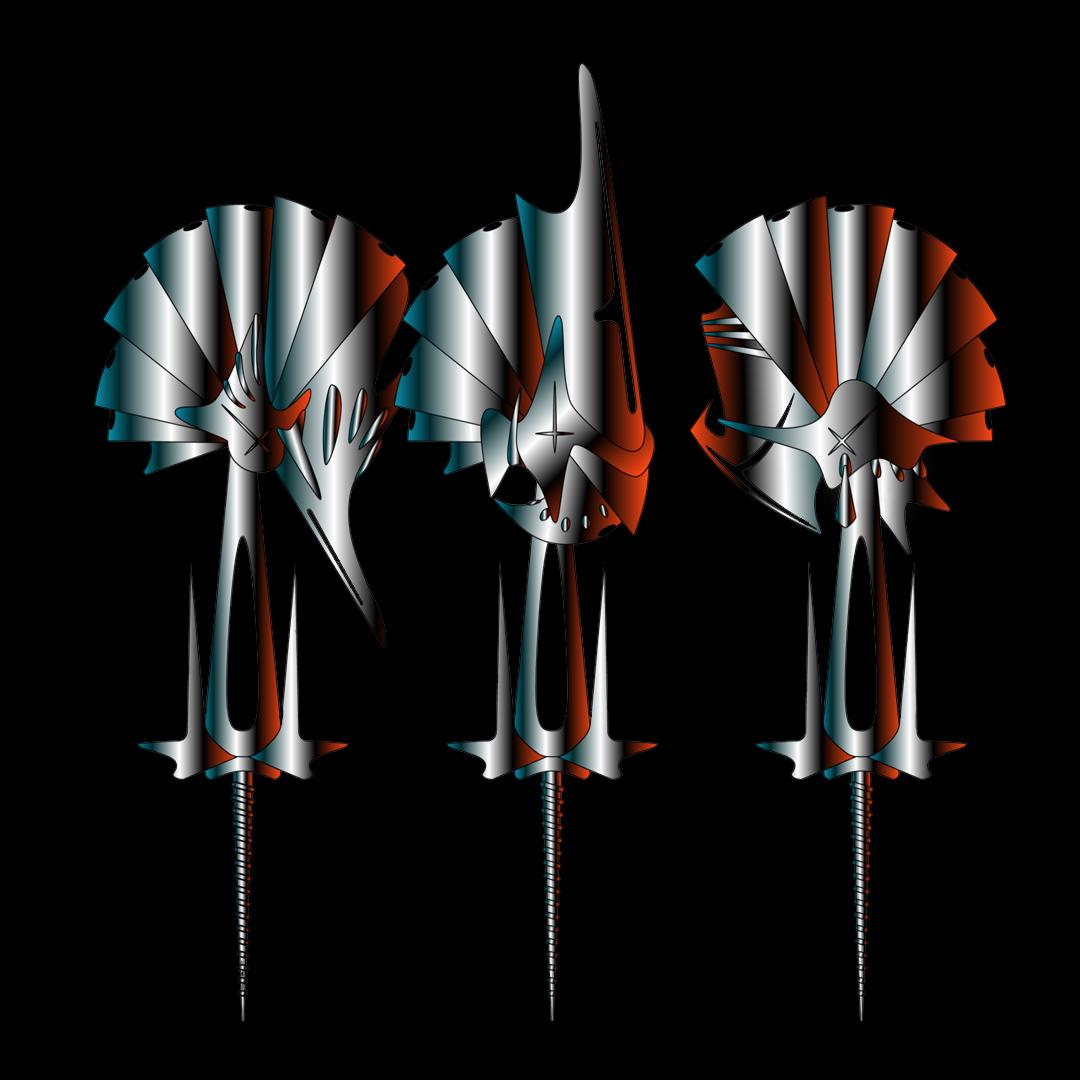
The pursuit of efficiency and function in contemporary design practice often relegates structure and systems to the background, expecting them to act as invisible frameworks that disappear in the final work. Designer Hongzhou Wan, however, challenges this deeply rooted paradigm. His work does not treat the grid as a silent utility but elevates it to the main stage, granting it explicit, even dramatic, visibility. Through his project ‘The Masque,’ he redefines the relationship between graphic structure and the content it supports, transforming a theoretical question into a widely resonant visual declaration within the contemporary design landscape, achieved through daily persistence and a spirit of play.
Nearly 60 years after the first edition of Josef Müller-Brockmann‘s Grid Systems in Graphic Design came out, this canonically conceptual tool has been widely adopted by designers trained in its rigorous methodology. The grid has long been revered as the problem-solving tool in graphic design, a method that often facilitates the designer to program their thinking toward efficiency and clarity. The resulting necessity for neutrality and invisibility is intended to guarantee legibility and ensure that the structure does not interfere with the information’s primary message. Hongzhou Wan, operating within this tradition, asked a provocative question: Can these hidden structures be seen and given equal significance to the content they shape?
In response to the question, he initiated the project ’The Masque’ as part of his thesis in the last year at California Institute of the Arts. In October 2023, a few months after graduation, he set himself the challenge of designing a masque every day for 365 days, which eventually formed the full scale of ‘The Masque’. Strictly followed the rule of posting the design on Instagram before 12 AM every single day during the challenge, he made the project a game — the fundamental ethos he pursues. This rigid constraint—the daily deadline—was a crucial strategic decision. It not only enforced a disciplined pace but consciously compelled Wan to simplify concepts and create ‘series’ of Masques. This serialization became a key strategy for handling the sheer volume of designs required, ensuring the project remained prolific without sacrificing conceptual consistency.
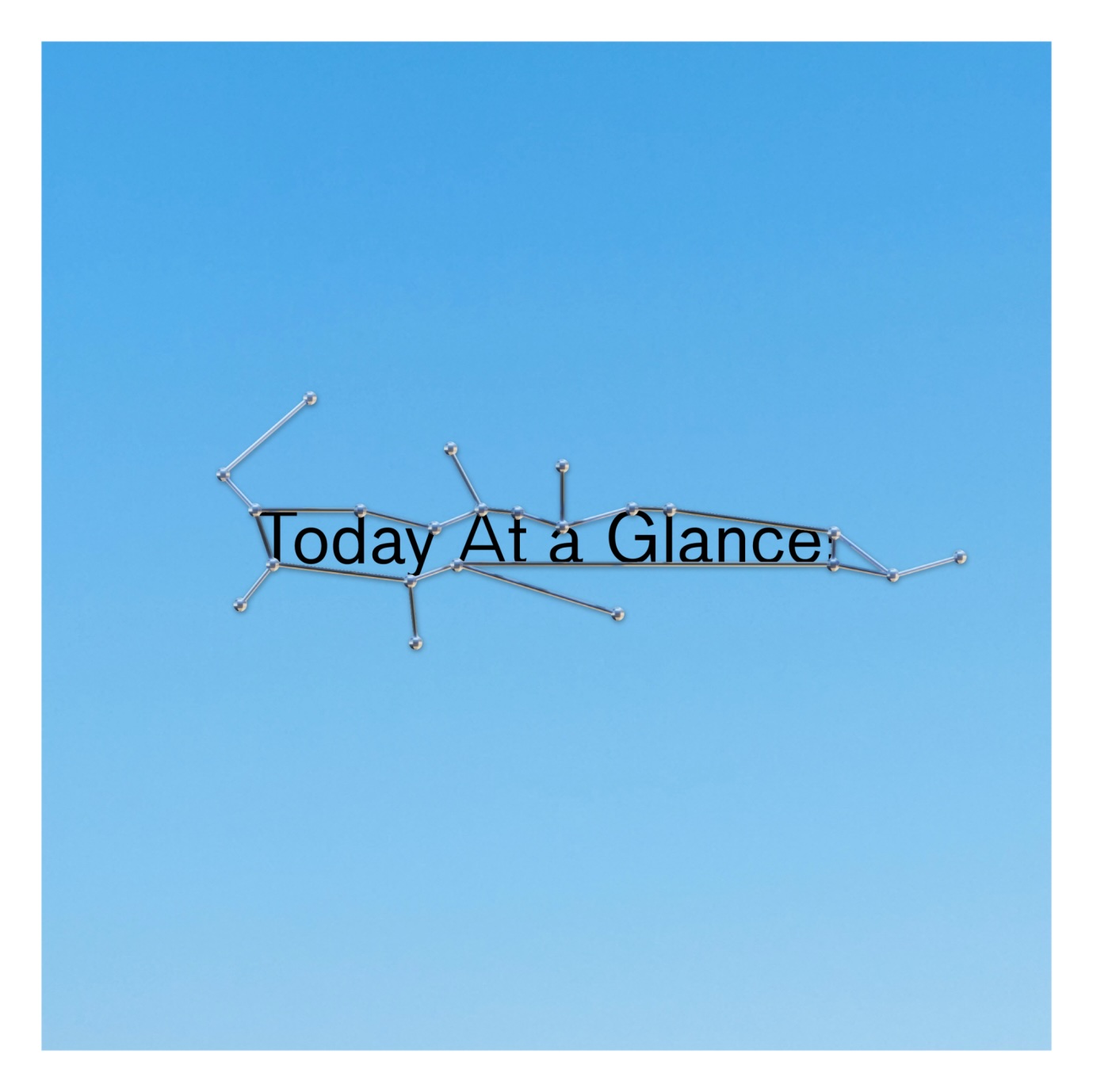
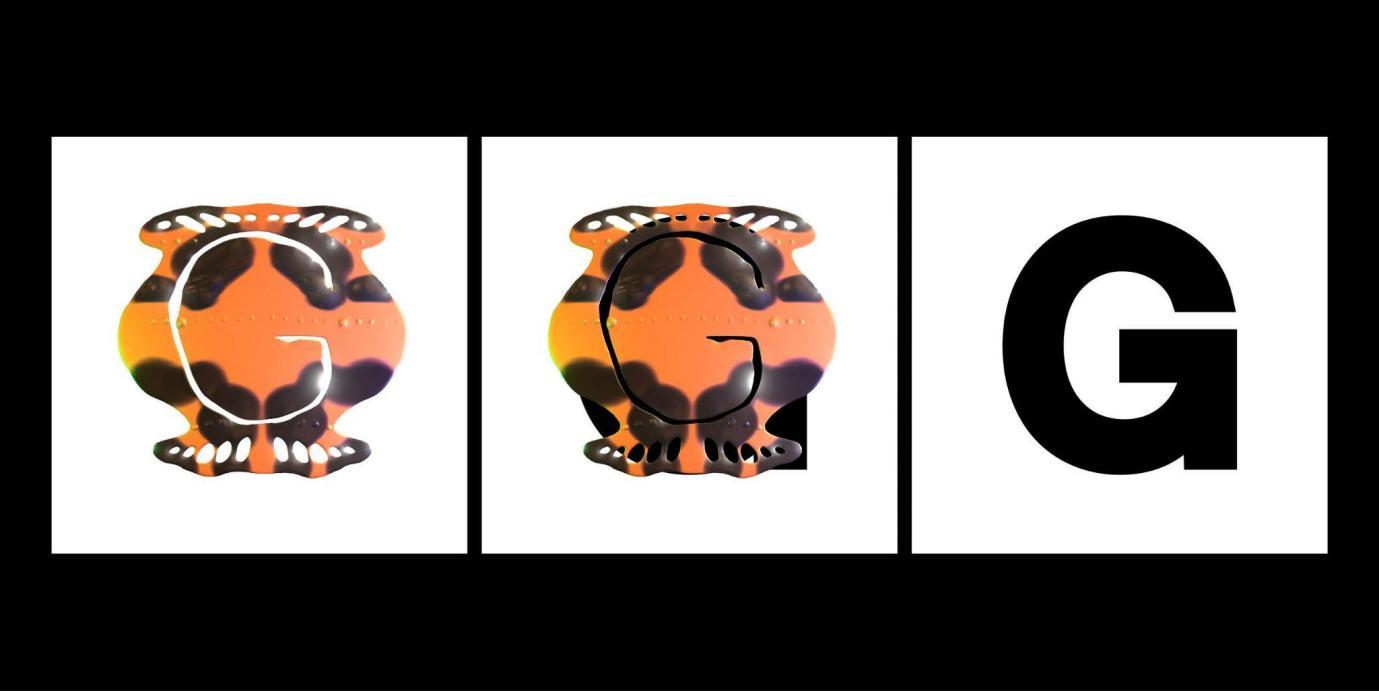
Viewed in its entirety, ‘The Masque’ reveals a rigorous system underpinning an astonishing visual lexicon. Each of Hongzhou Wan’s daily posts on Instagram is structured to methodically demonstrate the project’s concept, consisting of four visual components: the abstract structural Masque, followed by the Masque applied onto a block of type, the resulting typographic deformation, and finally, the original unmasked text for comparison. Far from being a dry exercise, the series showcases an inventory of fictitious, palpable objects. The aesthetic of the Masque designs is deliberately eclectic, reflecting Hongzhou Wan’s open-ended creative process. His inspirations are often derived from a unique blend of theoretical, visual, and rule-based sources: from the conceptual framework of video game mechanics and the stylistic flair of 90s graphic design, to more immediate, observational inputs like a striking photograph or the structure implied within a specific sentence he reads. These daily creations—whether perceived as intricate micro-compositions, detailed 3D renderings, or abstract illustrations—are deliberately classified by Wan into three evocative categories: Wearables, Gadgets, and Concrete Systems. This practice re-contextualizes typographic elements by personifying them and connecting them to various fictitious worlds, establishing a dynamic universe where the Masque design, not the text it shapes, is always the protagonist.
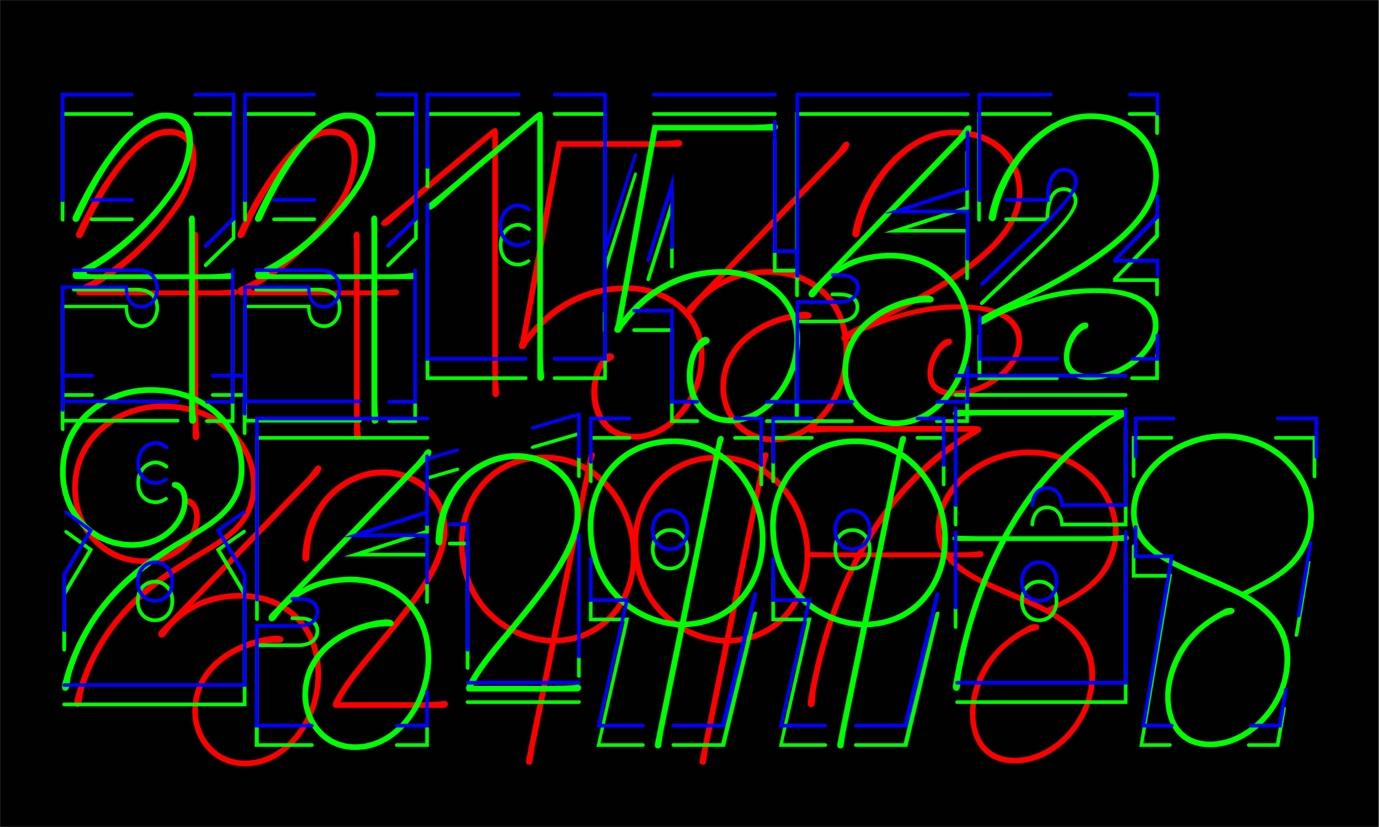
As an extension of the original 365 masque, he created ‘Rule = Rule + 1’, the 366th design, a family of Arabic numeral sets that can be nested with one another. Conceptually, this work is a direct extension of The Masque’s philosophy, with the grid structure becoming an explicit, visual carrier of the design rules themselves. The novelty lies in its self-explainatory, or reflexive, nature: the design of the typeface visually articulates the rules of its own construction and subsequent nesting potential. This design won him the prestigious Tokyo Type Directors Club Excellent Award, and it was included in its annual, titled Tokyo TDC Vol.36: The Best In International Typography and Design.
‘The Masque’ made its debut in Soft Systems during the LA Design Weekend in September 2025. The exhibition features 8 designers who challenged the status quo in an age of constant change. The inclusion in Soft Systems immediately validated Wan’s non-conventional approach, positioning his practice alongside others who actively subvert expected norms. It brings him and his practice onto the radar of the field of graphic design in an era of uncertainty.
Hongzhou Wan envisions the project as prototypes, a fresh perspective on the threshold between written language and systems that shape it. By elevating the supporting grid from an invisible utility to a central, performative element, ‘The Masque’ successfully demonstrates that structural rules can be catalysts for expressive, playful design. By insisting on the structure’s explicit presence, Wan successfully carves out a new visual grammar that is both conceptually rigorous and playfully expressive. The sustained playful making of ‘The Masque’ serves as a powerful testament to the potential of self-initiated challenges to drive significant conceptual innovation in the design field. The Masque introduces a vocabulary of its own to the contemporary design landscape.