
 Matt Emma
In an era saturated with images of spectacle and crisis, award-winning photographer Yizhen Zhang’s photography does something quietly radical: it slows down. His work resists urgency, even when confronting urgent realities. Instead of amplifying shock, Zhang lingers in moments most people pass over, such as rooms, routines, gestures, and pauses. This distinct visual language takes center stage in his highly anticipated solo exhibition, Suspended Existence, currently on view at the Sasse Museum of Art. The show brings together two bodies of work, The Liminal Innocence and Win or Lose, that appear geographically and narratively distinct, yet are bound by a shared concern with lives lived in suspension.
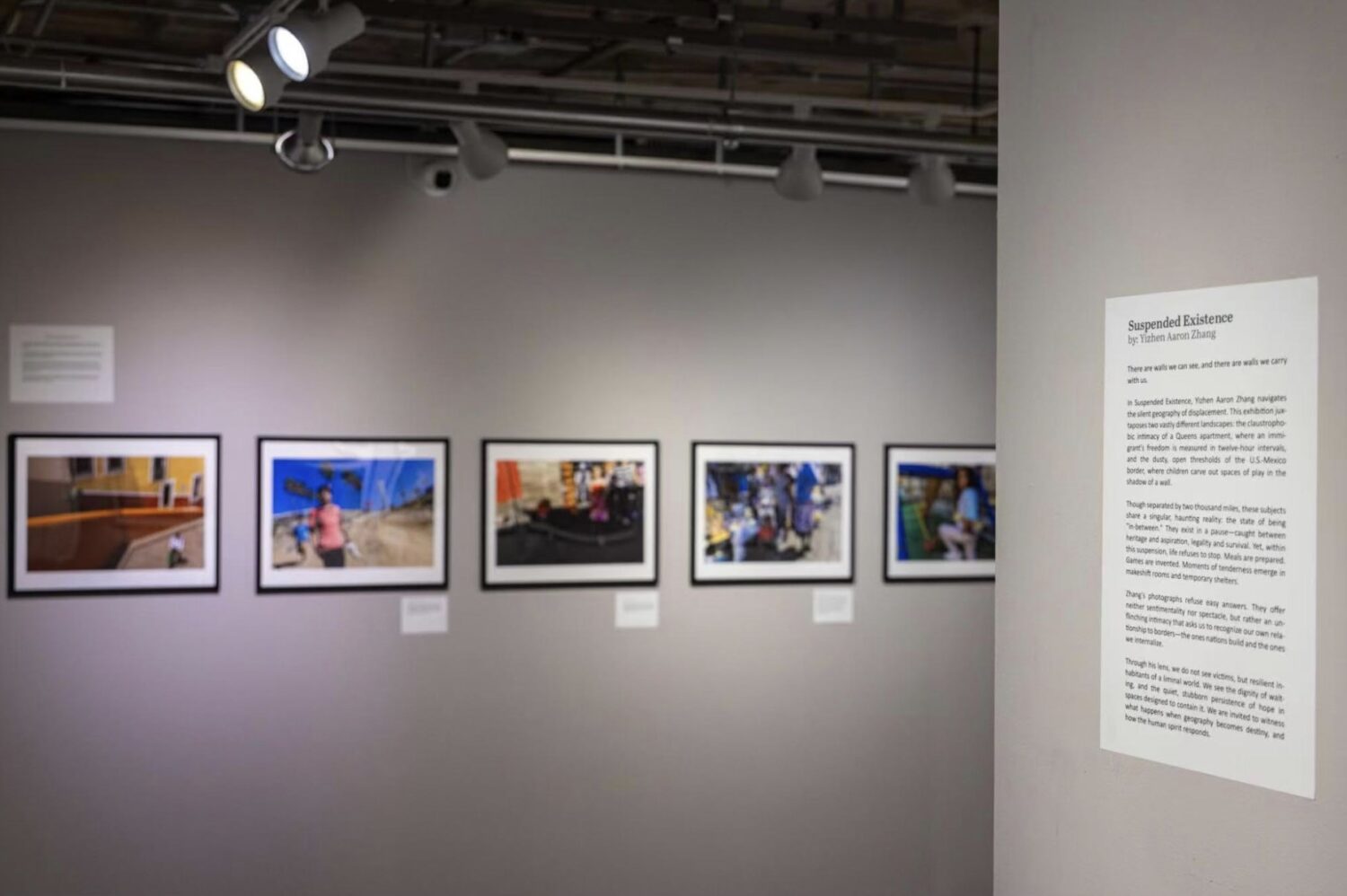
Zhang is drawn to liminal spaces, not as abstract concepts but as lived conditions. His subjects are not in motion toward resolution; they are caught between systems, borders, and expectations. Whether photographing children growing up along the U.S.–Mexico border or following the constrained daily life of a Chinese immigrant in New York City, Zhang approaches photography as an act of witnessing rather than intervention. His images do not argue. They observe. The Liminal Innocence unfolds along the borderlands of Tijuana, where the U.S.–Mexico border is ever-present yet rarely centered in the frame. Rather than photographing the wall itself, Zhang turns his attention to the ecosystem of daily life that persists beside it. Children run along beaches where steel interrupts the horizon. They play, carry groceries, share snacks, and assume adult responsibilities far too early. These images reject the dominant visual language of borders as sites of spectacle or confrontation. Instead, they insist on dignity, particularly the dignity of childhood, even as innocence erodes under prolonged uncertainty.
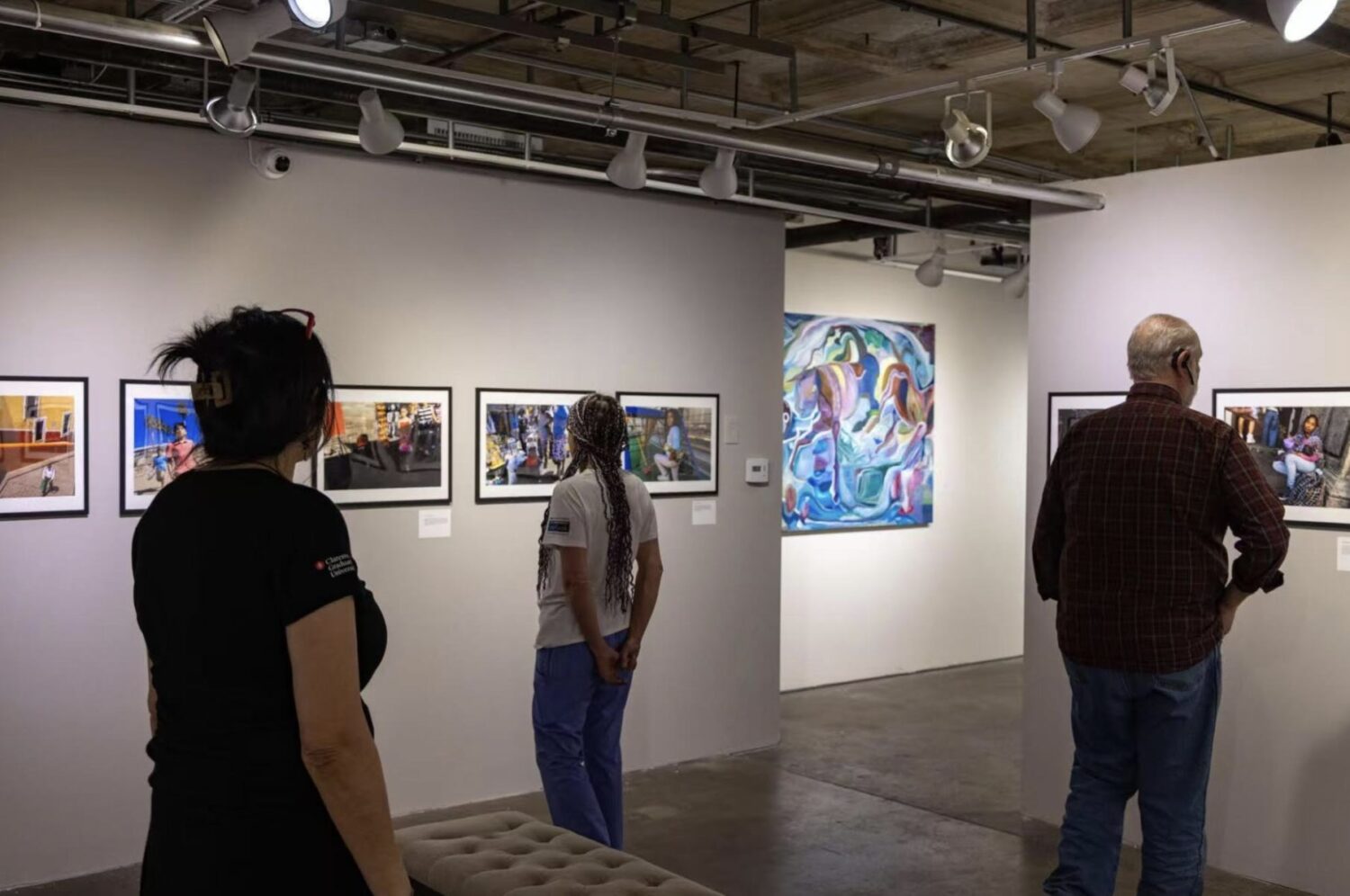
In one image, boys sprint barefoot near the ocean, laughter colliding with the immovable presence of the barrier behind them. In another, a child sits quietly in a plastic crate at an open-air market, surrounded by sacks of rice and household goods. Zhang’s compositions are careful but unforced. Color plays a structural role, but nothing feels ornamental. Light is natural, often harsh, sometimes forgiving. What emerges is not pity, but proximity. The viewer is placed close enough to feel the weight of time pressing down on these young lives. Zhang refers to these children as a “liminal generation,” suspended between inherited histories and futures that remain inaccessible. Yet his photographs resist fatalism. Even in scenes of extreme deprivation there is restraint. The camera does not intrude. It stands back just far enough to allow the subject to remain intact as a person, not a symbol. Zhang’s refusal to aestheticize suffering is deliberate. Humanity, in his work, is not something to be extracted; it is something to be protected.
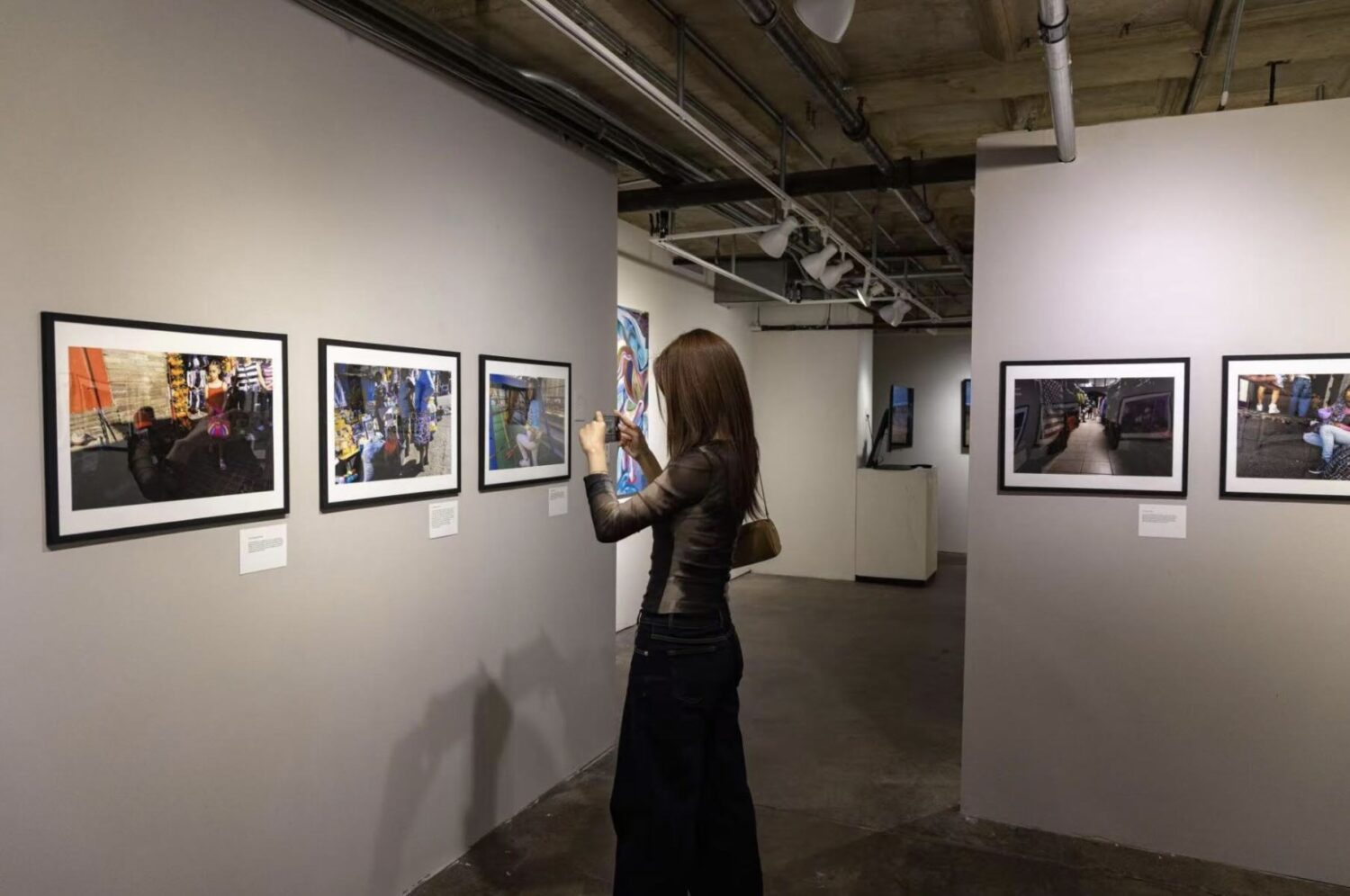
That same ethic shapes Win or Lose, a deeply intimate, biographical project centered on Win, a Chinese immigrant barber living in Flushing, Queens. The story is not one of dramatic downfall, but of prolonged limitation. Win arrived in the United States alone at fifteen, his family having sold their home in Guangdong to fund what they believed would be an American future. Instead, his life contracted. Limited English, social isolation, and eventual entanglement in a money-laundering case left him confined not by walls, but by time, restricted to twelve hours of movement each day by an electronic ankle monitor. Zhang photographs Win’s world as it actually is: a small bedroom, long bus rides, a barbershop, poker games, church, laundromats, subway platforms. These spaces recur because they are all that exist. The repetition is the point. In one image, Win sits between washing machines, wishing he could emerge “clean” as someone else. In another, neon light spills into his cramped room at night, illuminating a solitude that feels both chosen and imposed. Zhang does not frame Win as a victim, nor as a cautionary tale. What makes Win or Lose particularly striking is Zhang’s refusal to editorialize the American system that constrains his subject. He does not accuse, nor does he excuse. Instead, he documents the quiet erosion of possibility that occurs when a life is reduced to routine survival. The question posed by the project’s title, whether Win has won or lost, remains unanswered. He documents the quiet erosion of possibility that occurs when a life is reduced to routine survival, posing the haunting question of whether such survival is a victory or a forfeiture.
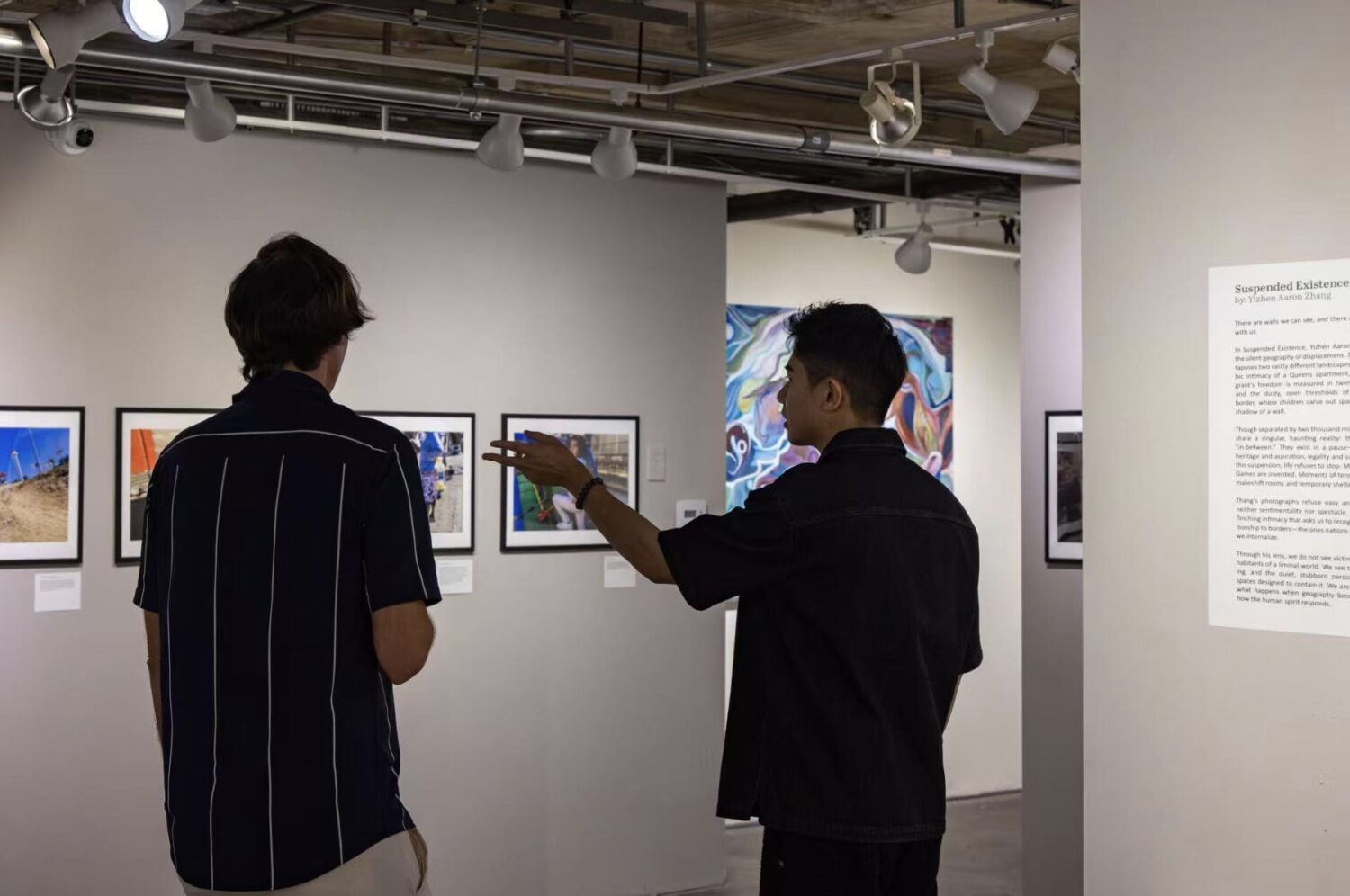
Across both projects, Zhang’s visual language is consistent. He relies on structured color, natural light, and an unobtrusive camera presence. His approach is neither detached nor sentimental. He calls it “observational intimacy,” a phrase that captures the balance his work maintains between closeness and respect. Photography, for Zhang, is not about access but accountability. To photograph someone is to remain responsible for their complexity, even after the shutter closes.