
 Will Jones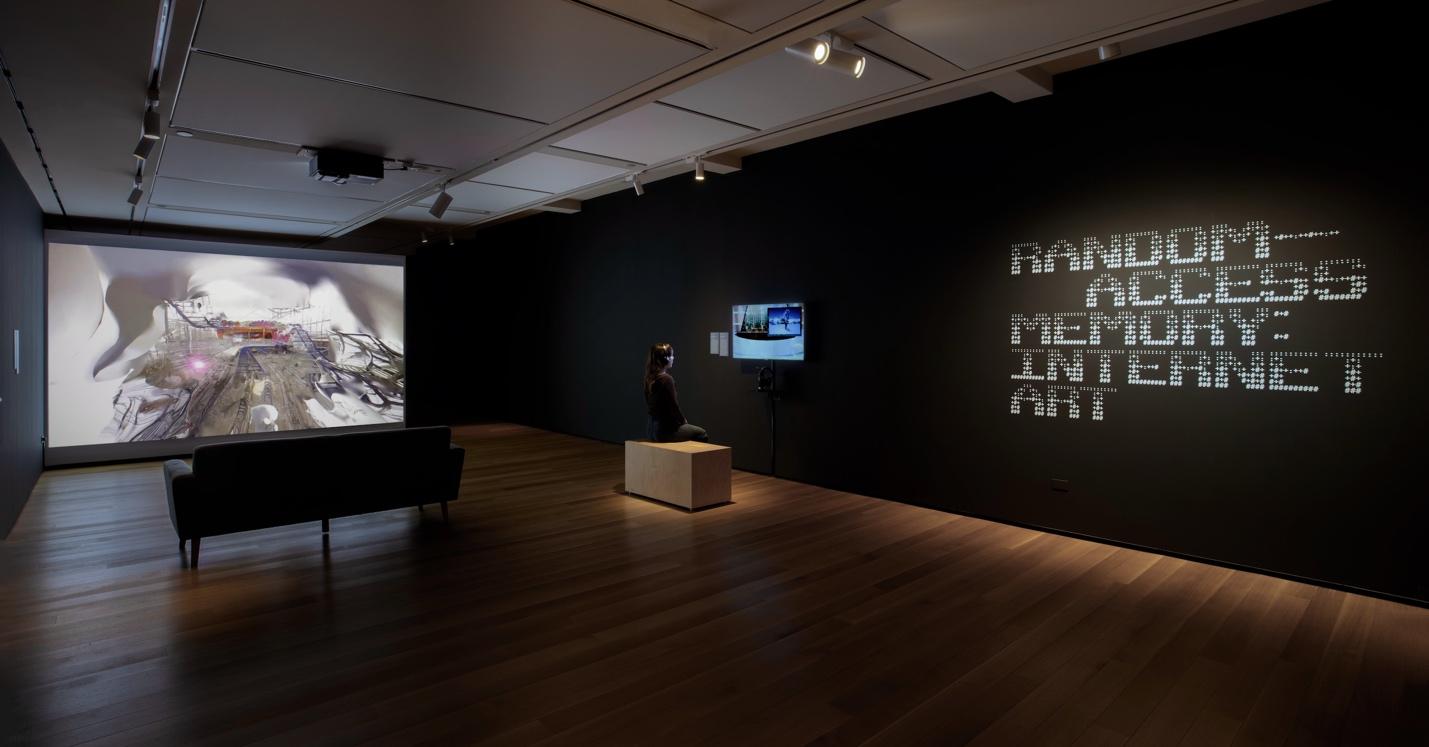
Installation view of Random Access Memory: Internet Art at the Santa Barbara Museum of Art. Photograph: Brian Forrest.
As conversations around identity, technology, and cultural memory continue beyond the recently concluded AAPI Heritage Month, Random Access Memory: Internet Art arrives at a particularly resonant moment. Running from March 15 to September 27, 2026, at the Santa Barbara Museum of Art, the exhibition, curated by Andrew Witte, brings together works by Zhanyi Chen, Claire Hentschker, and Andrew Norman Wilson—three artists whose practices engage with the internet not simply as a tool, but as a cultural condition that shapes contemporary life. This is also the museum’s first thematic exhibition that takes the internet as both a source of creation and a central subject of research.
The internet has become one of the most influential media of the twenty-first century. From social interaction to news sharing, and from personal records to collective memory, the network keeps shaping how people connect with the world. However, just like memory itself, the internet is not stable or neutral. It forgets, shifts, and gets rebuilt. Data can be stored and copied, but it can also disappear, lose accuracy, or be rewritten. At the same time, even though connection is easier than ever, people often feel a new sense of distance and separation.
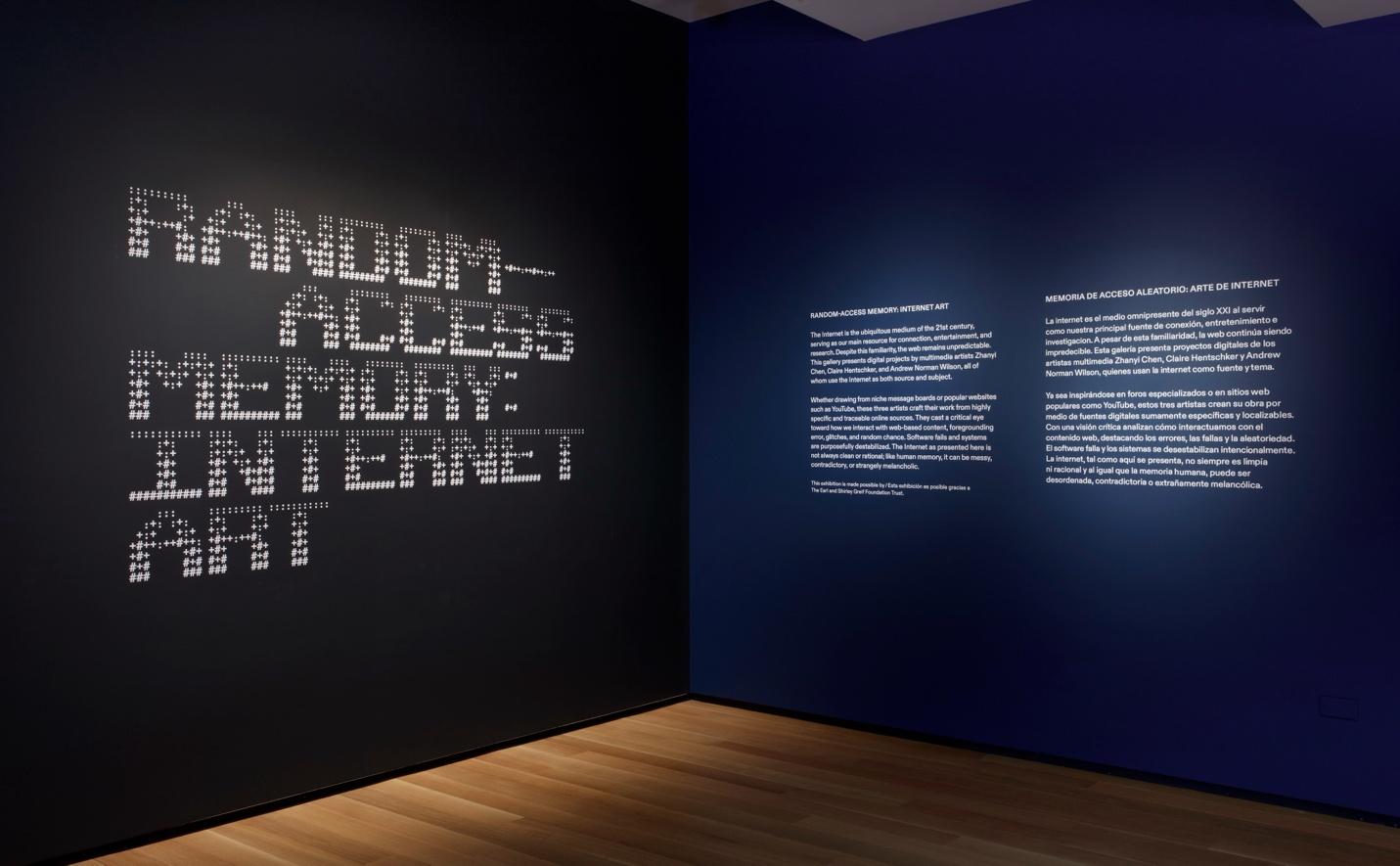
Installation view of Random Access Memory: Internet Art at the Santa Barbara Museum of Art. Photograph: Brian Forrest.
This exhibition treats the internet as a system of memory that is always forming and changing. It carries personal experience, but it also reflects shared imagination. Here, the network is not only a channel for distributing artworks. It also becomes something that artists directly work with and question. The three artists in the show all start from real digital archives, online platforms, and internet materials. Through video, data translation, photogrammetry, and fictional storytelling, they explore how technology helps shape modern ways of thinking, feeling, and living.
Zhanyi Chen approaches these questions through the lens of infrastructure, technology, and speculation. As an Asian artist engaging with the American art scene, her practice contributes to a growing generation of artists who are expanding how technology, infrastructure, and scientific knowledge can be understood through personal, cultural, and speculative lenses. For Chen, the internet is inseparable from larger systems of infrastructure that extend beyond the screen. Working across video, installation, and research-based practice, she is known for exploring the emotional and cultural dimensions of technologies that often remain invisible—from weather satellites and atmospheric monitoring systems to communication networks and public infrastructure. Drawing from scientific archives, internet culture, and speculative fiction, she creates works that blur the boundaries between technical systems and human experience, asking how people locate meaning, intimacy, and belief within increasingly abstract technological worlds.
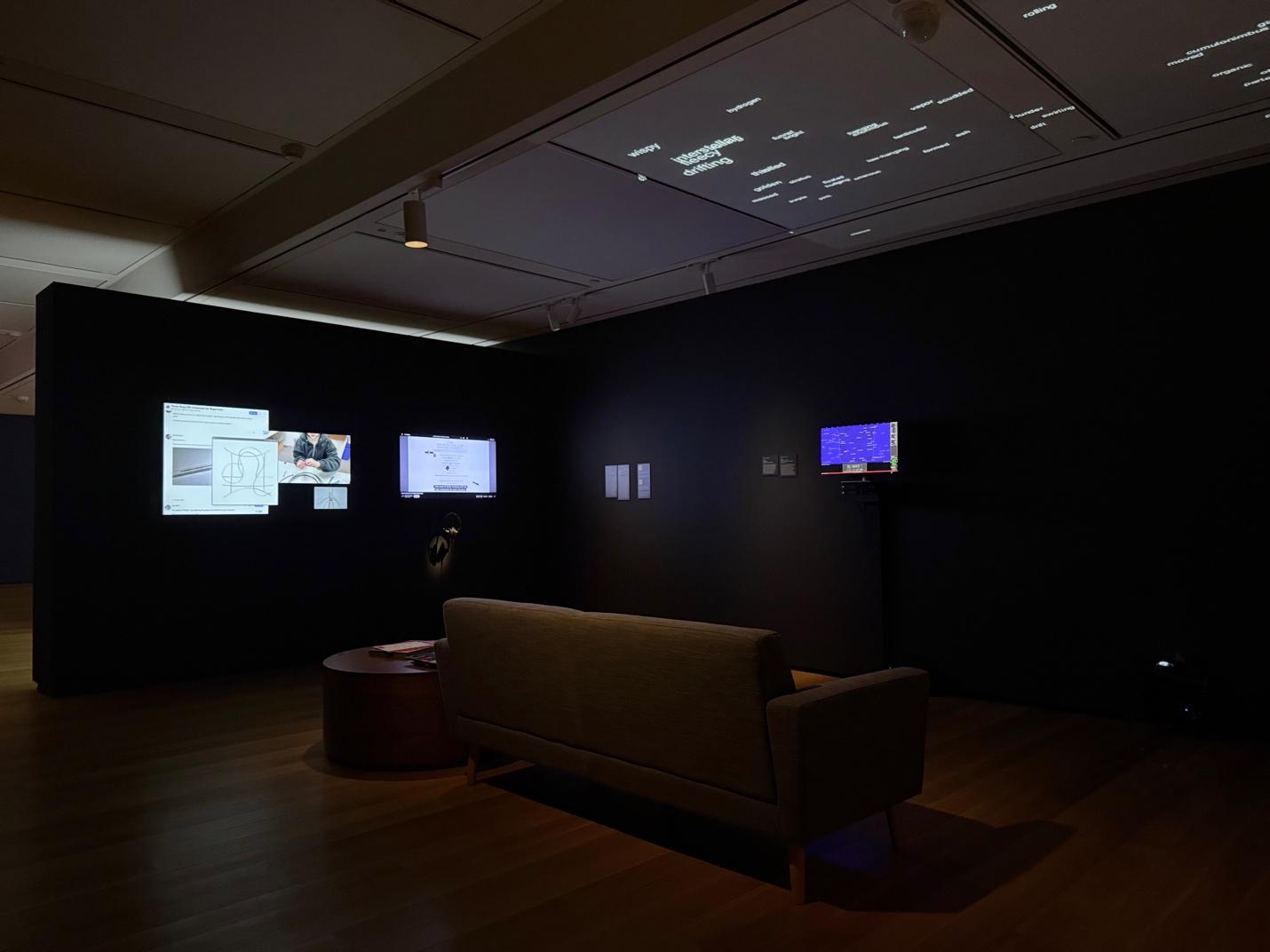
Installation view of Artificial Satellite Astrology (2025) and Astrological Concrete Poetry to Clouds Written by Weather Satellites(2020) in Random-Access Memory: Internet Art at the Santa Barbara Museum of Art.
These questions come into focus in Artificial Satellite Astrology (2025). The piece takes the form of online tutorial videos, but it invents a new system of astrology based on satellite orbits. The artist moves away from the traditional universe centered on stars and planets. Instead, she gives cold infrastructure like satellites a sense of mystery. By imitating the visual language of internet tutorials, she shows the subtle and complex relationship between knowledge production and belief in the digital age. As algorithms increasingly shape human choices and perception, satellites orbiting the Earth also begin to feel like new symbols of fate.
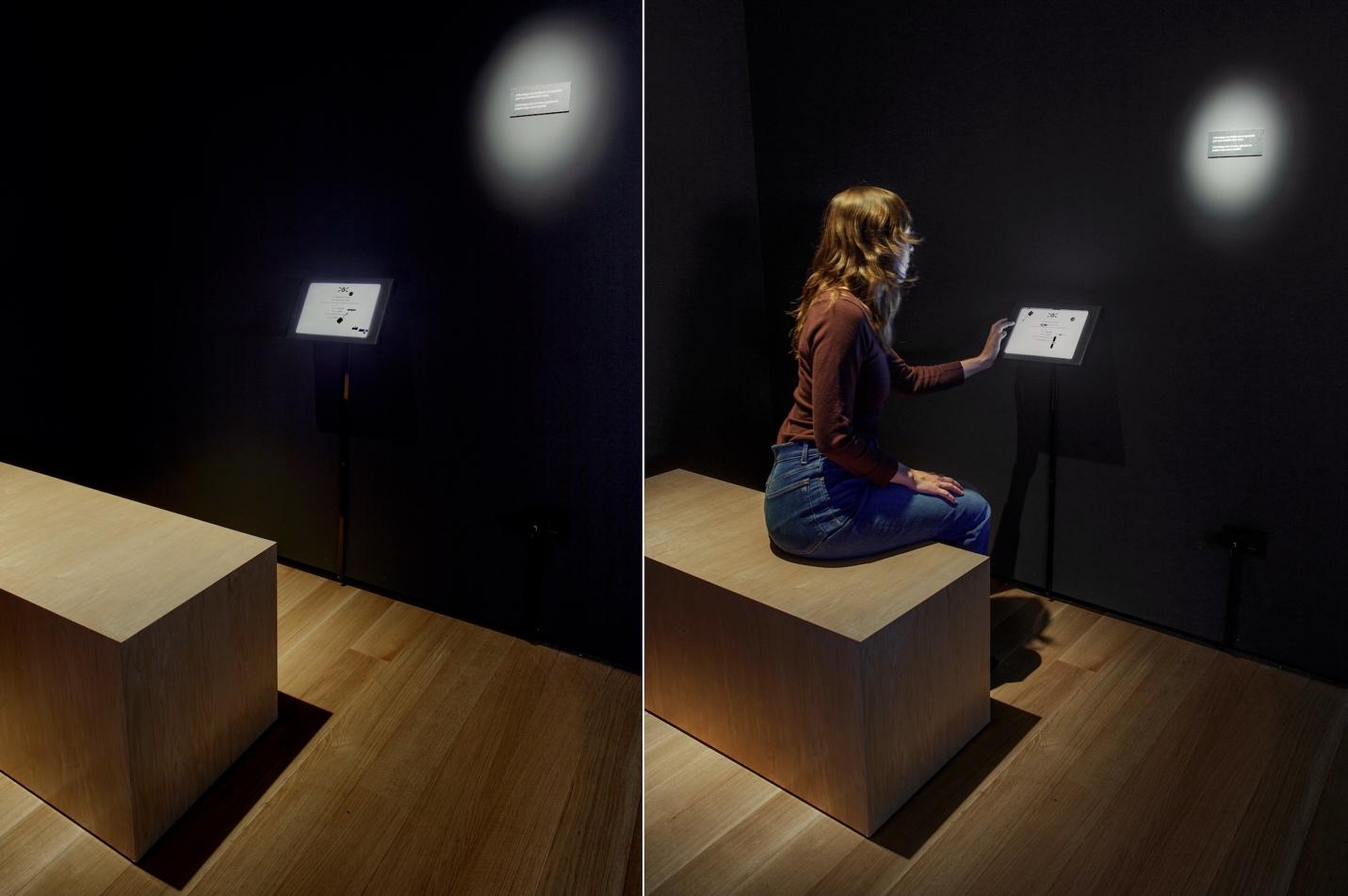
Installation view of Artificial Satellite Astrology (2025) in Random-Access Memory: Internet Art at the Santa Barbara Museum of Art. Photograph: Brian Forrest.
Another work, Astrological Concrete Poetry to Clouds Written by Weather Satellites (2020), continues this poetic transformation. It turns real-time satellite data into slowly drifting word constellations above the exhibition space. Data originally used for weather and environmental monitoring becomes a lyrical form of expression. Between scientific measurement and literary imagination, the artist creates a space between reality and fiction. It allows viewers to notice the invisible flows of information that are always above us.
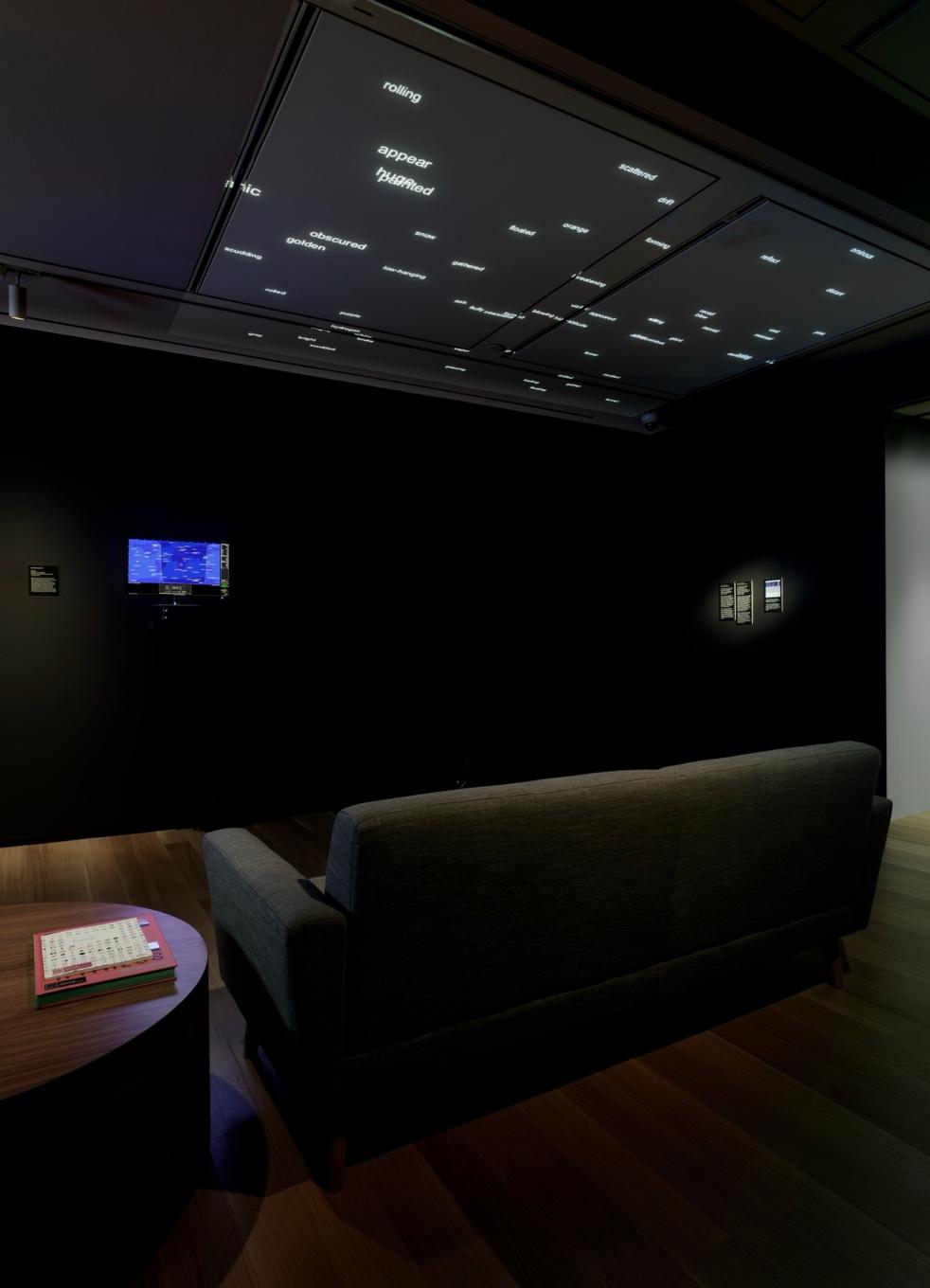
Installation view of Astrological Concrete Poetry to Clouds Written by Weather Satellites (2020) in Random-Access Memory: Internet Art at the Santa Barbara Museum of Art.
Chen’s work suggests that representation is not only a matter of visibility, but also of infrastructure—of the technological systems, networks, and forms of knowledge that shape everyday life.
While Chen examines these questions through satellites, infrastructure, and speculative narratives, other works in the exhibition explore different dimensions of digital culture. Claire Hentschker’s Ghost Coaster: The Star Jet Coaster, 2002–2012 (2019) reconstructs a demolished roller coaster from fragments of online video, reflecting on how digital media preserves and reshapes memory. Andrew Norman Wilson’s Global Countdown(2011), meanwhile, reassembles stock footage into a continuous stream of pseudo-news, revealing how online images participate in the production of authority, attention, and reality itself. Together, the three artists reveal the internet not as a stable system, but as a space shaped by absence, repetition, belief, and uncertainty.
In this sense, Random Access Memory: Internet Art is not only an exhibition about the internet. It is also a reflection on memory, imagination, and connection. Whether through forgotten online videos, weather satellite data, or endlessly circulating media images, the exhibition suggests that technological systems are never neutral. They are shaped by human desires, misunderstandings, projections, and acts of remembering. The digital network may have transformed how people relate to the world, but the desire to find meaning, belonging, and connection remains remarkably persistent.