
 Will Jones
Photo credit: Marine Franck
For years, Amy Scott Rooker did what many high achievers learn to do after trauma: she kept moving.
She earned a law degree and an MBA, then built a successful career in corporate law and technology. From the outside, her life looked disciplined, accomplished, and firmly under control.
What few people saw was the strategy beneath that success.
As she recounts in her memoir, My Mother Is a Dragonfly, childhood sexual abuse and the silence that followed had split her life in two. One part of her kept achieving. Another remained frozen in the moment everything changed.
For decades, achievement was enough to keep those two selves apart. Until her mother died.
When Grief Reached What Achievement Couldn’t
Her mother’s death dismantled the structure Rooker had relied upon for years. Grief resurfaced alongside memories and questions that had never fully resolved.
Through conversations with her therapist and after reading the work of trauma expert Dr. Gabor Maté, Rooker began exploring the therapeutic potential of psilocybin, the psychoactive compound found in “magic mushrooms.” Eventually, her therapist recommended a facilitator experienced in psychedelic work.
Rooker did not approach the experience looking for an escape. She was looking for a way through.
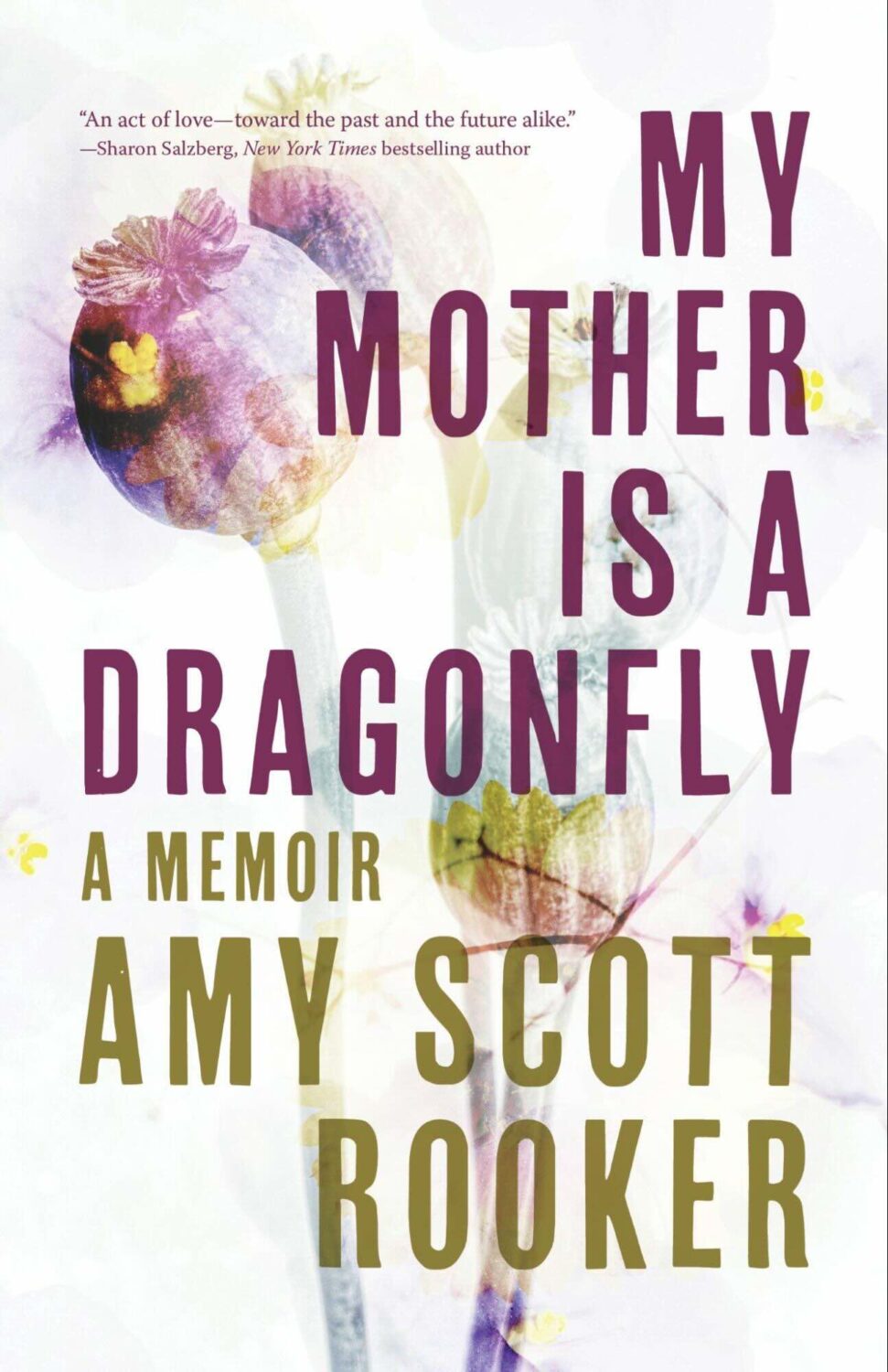
Cover image courtesy of GFB
The Door Opens
During her first guided psilocybin journey, Rooker describes moving through terror, grief, and emotional pain she had carried for decades. She encountered her mother—not as she had known her in life, but beyond the defensiveness and silence that had defined much of their relationship. In that state, she experienced the apology she had never received while her mother was alive.
She also revisited the trauma she had carried since adolescence and heard the words she had needed all her life: This is not your fault.
By the end of the experience, Rooker describes arriving at something even more unexpected—not an explanation for the past, but an embodied sense that beneath everything she had survived, she had never stopped being whole.
The experience did not erase what had happened. It interrupted the story she had been living inside for decades.
Why the Journey Was Only the Beginning
For Rooker, the psychedelic experience was not the healing. It was the invitation.
“Real healing isn’t a six-hour trip that rewrites your life,” she says. “It’s the quiet, repetitive labor of going to the source of the pain and not turning away. Of integration. Of learning to hold pain in one hand and love in the other.”
That work unfolded over months and years.
She continued therapy. She developed a meditation practice. She stopped drinking after recognizing alcohol no longer belonged in the life she was trying to build. She stepped away from the constant noise of social media and news. She also began paying attention to longstanding patterns of self-criticism, gradually replacing them with ways of relating to herself rooted in compassion rather than survival.
Looking back, Rooker says much of what she had long called depression was grief, rage, and fear that had never been fully processed.
Integration became the slow practice of allowing those emotions to move instead of continuing to organize her life around avoiding them.

Photo credit: Josh Wiseman
Catalyst, Not Cure
Public conversations about psychedelics often focus on the extraordinary moments: visions, breakthroughs, mystical experiences, and dramatic transformation.
Rooker’s story points somewhere quieter. The medicine opened a door. Walking through it required daily choices.
In My Mother Is a Dragonfly, she presents psychedelics not as a miracle cure, but as one part of a much larger process of healing—one that included therapy, self-inquiry, spiritual practice, and the willingness to rebuild a life around truth rather than survival.
The journey did not make her someone new. It helped her remember the person trauma had taught her to forget.