Kara Markley
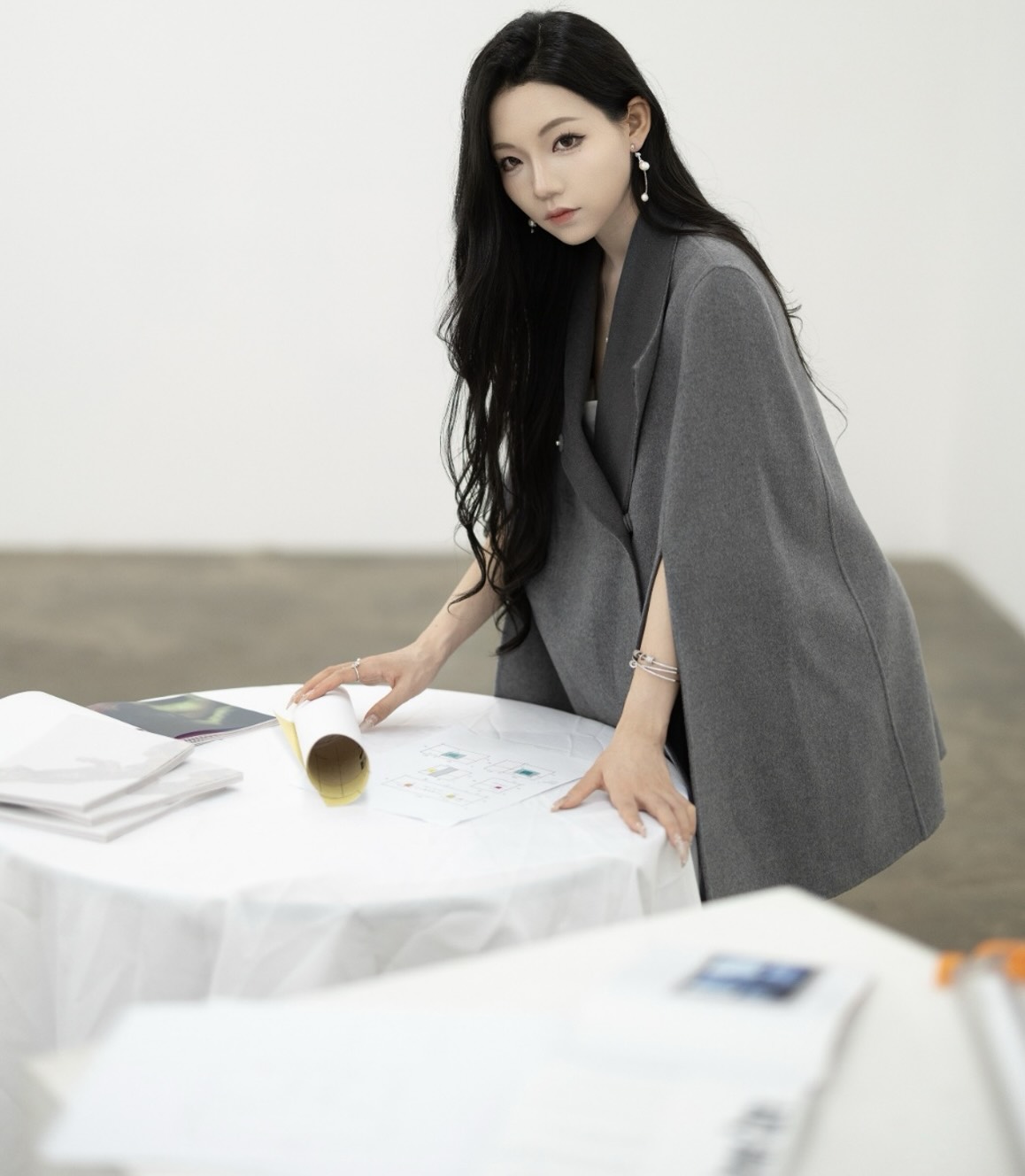
In a contemporary art landscape where, established institutions often limit access to global conversations, curator Chenyang Nie has distinguished herself through an atypical trajectory, with a clear focus on promoting emerging artists. Her diverse journey—spanning Shanghai, New York, and Los Angeles, and expanding her experience from fashion design at Parsons to contemporary art theory at USC—informs a unique curatorial style. This approach resists a singular narrative in favor of what she considers “a constellation of local logics, social histories, and aesthetic traditions,” creating vital new platforms for a fresh generation of artistic talent.
This mixing of different viewpoints didn’t simply broaden Nie’s worldview. Still, it fundamentally shaped her understanding that contemporary art operates not as a unified conversation, but as multiple, simultaneous dialogues inflected by place, history, and cultural context. At Parsons, she learned to think critically about design and tried out ideas from many different fields. Tank Shanghai immersed her in the rapidly changing institutional landscape in Asia, where ambitious growth meets up with global discourse. USC gave her strong theories and practical research skills. The result is a curator who moves fluidly between contexts, notices minor differences, and creates structures that respect variety rather than trying to make everything the same. Nie’s experience in fashion design most distinctly influences her curatorial methodology. Fashion taught her to construct narratives sequentially, to think about how emotions build, to use materials to share a more profound message, and to understand how individual elements contribute to a larger conceptual arc. “I approach exhibitions as spatial narratives in which artworks converse with one another, forming a coherent yet evolving experience,” she explains. This design sensibility translates into exhibitions that don’t merely display work but create moments where people feel like they’re on a journey through the art, not just looking at it.

Los Angeles became the natural setting for Nie to establish her practice. Unlike New York’s historically entrenched density or Shanghai, which is full of big, ambitious art projects, LA offered something different, which she calls “expansiveness”. It had artist-friendly communities, creative spaces, and a flexible cultural environment. Most importantly, it provided a spirit of generosity toward new artists. After seeing how established art scenes often favor artists who are already well-known and successful, Nie felt compelled to focus on early-career practitioners still defining their voice. The supportive environment in LA fit perfectly with her goal. Yet, being an international curator in Los Angeles also held peculiar obstacles. Nie confronted assumptions that her work was somehow bound to Chinese or Asian art, a restrictive sphere that minimized both her identity and curatorial voice. There was hesitation around investing in emerging artists who had not gained market credibility. But these challenges actually made it clearer than ever why her work is essential. She found support from professionals, founders, and gallery owners who believed in the need to create spaces for early-career artists, understanding that Los Angeles could nurture new institutional models.
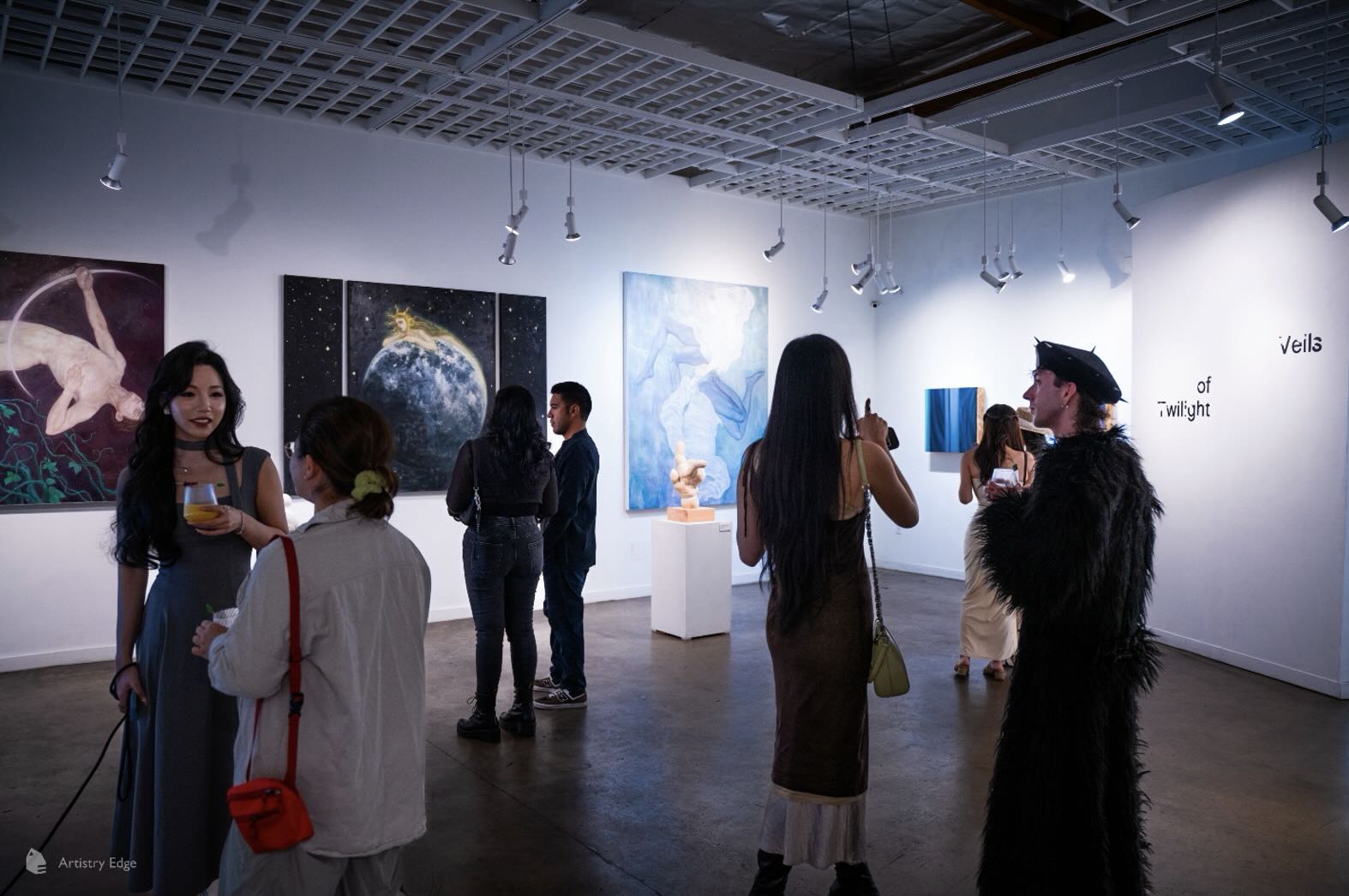
From these experiences, the project, Artistry Edge, came to life. Nie identified a core systemic barrier that early-career artists often go unnoticed because of significant system issues. Many talented people don’t have proper records, don’t have access to institutions, don’t have mentors, or don’t know how to navigate the art world. Markets reward those who already possess networks and validation, creating a landscape with few entry points for new artists. Nie saw many artists whose work wasn’t seen, not because they weren’t good, but because they didn’t have the proper support or help. Some abandoned their practice entirely, casualties of the silence between graduation and recognition. She established Artistry Edge as a nonprofit, a structure that prioritizes long-term artistic development over commercial outcomes. A business model that focuses on profits would push artists to create work ready for the market, potentially limiting opportunities for artists still experimenting. As a nonprofit, Artistry Edge can focus on teaching, studying, getting artists noticed, and ensuring everyone has fair access. Thereby, creating what Nie refers to as a “sustainable ecosystem that centers care, advocacy, and professional growth” is used.
Nie’s curatorial approach embodies cultural sensitivity, recognizing that every art form has a deep history and is connected to the people who create it. Her exhibition, called “Her Nonverbal Notes,” shows this well. It highlights young women artists whose art expresses feelings in quiet, subtle ways. These artists weren’t getting much attention because their work was softer than louder or stronger styles. By focusing on quiet expressions and inner thoughts as essential ways of communicating, the exhibition changed how people see vulnerability, earning the press’s validation as it worked to bring these unsung voices into view. Going forward, Artistry Edge aims to become a comprehensive international ecosystem that supports emerging artists through exhibitions, research, community programs, and residencies. Other plans include launching the Artistry Edge Journal, working with artists in different cities, and setting up an Artist Fund by 2028. For Nie, being successful isn’t about how much money or fame an artist gets. Instead, it’s about whether artists can keep making art honestly and steadily. It’s about making sure their voices are heard before they become well-known.