
 Will Jones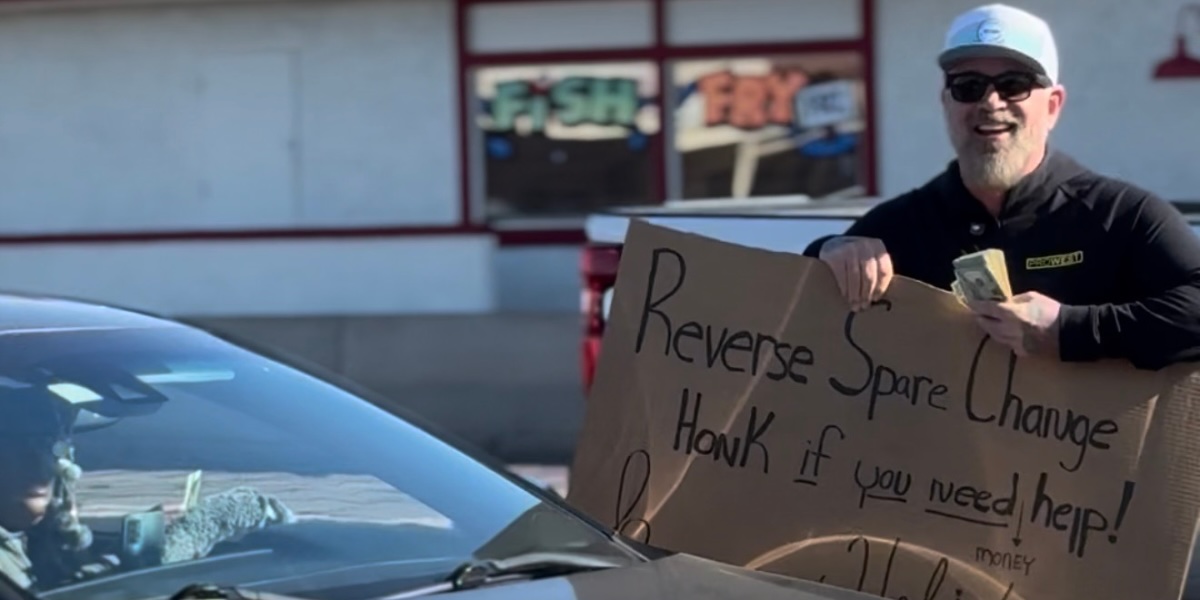
Bob Schober does not tell his story like a man polishing the edges of a legend. He tells it like someone who has stood on both sides of mercy, once asking strangers for spare change and now standing on the roadside with a cardboard sign that flips the script. Reverse spare change. Honk if you need help. The idea is simple, almost playful, but beneath it sits hard-won sobriety and a clear sense of what a hundred dollars can mean when the world is closing in.
Schober grew up with stability, yet by his teenage years, drugs and alcohol had started rearranging his priorities for him. He ran away from home at 15, went through rehab young, and spent years drifting across the country, following the Grateful Dead and living out of a Volkswagen bus. He remembers the contradiction clearly: a young man in a fog, showering at public parks and selling food stamps, yet still reading Think and Grow Rich. As he puts it, “The only thing I never really let go of was hope.”
That hope did not arrive cleanly. It was dragged through rehabs, false starts, and a moment in Los Angeles when an old friend threw his towel in the trash after he showered and told him he was disgusting. Schober did not get sober that day, but the mirror had been held up. By May 31, 1997, he had taken his last drink. Sobriety did not simply save his life. It became the foundation for how he would build, lead, hire, and give.
The scale of that life can be measured in numbers, but the numbers never fully explain it. Schober helped grow ProWest Roofing from a modest acquisition into a company that sold for $51 million in 2022. Last year, the business did $189 million in sales. It now operates across 20 states with roughly 600 salespeople. Yet the most revealing part of the story is not the exit or the revenue. It is who Schober chose to bet on once he had power.
Many of Schober’s sales reps are in recovery, and many have served time in prison. Adam Tronnier was the brainchild behind the idea of bringing roofing sales training directly inside prison walls through apps available to inmates. That vision helped lead to From the Yard to 100K, a program that allows people who are still incarcerated to learn from former inmates who have successfully rebuilt their lives and created real careers in roofing sales. Some even practice and sharpen their sales pitches while still serving their sentences, preparing themselves for an opportunity the moment they step back into the world. Schober and Tronnier share a belief that talent and potential are often buried beneath a criminal record, addiction, or circumstances that cause most employers to look the other way.
Schober has watched men who were once incarcerated transform into some of the industry’s top performers, with some earning hundreds of thousands of dollars a year. His top sales rep earned $1.5 million last year, while several others surpassed $600,000. What began with Tronnier’s idea to reach people before they ever leave prison has become something much bigger: a pathway from incarceration to opportunity, purpose, and financial independence. For Schober, it is proof that when people are given the right training, community, and a genuine second chance, their past does not have to determine their future.
The same philosophy fuels the giving that reshaped his public identity. After winning $10,000 playing baccarat, Schober decided to give the money away rather than keep it. He made the sign, stood on the roadside, and handed out cash to strangers who honked. What began as a personal amends to the universe quickly became something larger. He saw faces change. He saw shoulders drop. He saw the emotional weight of $60, $100, or $300 land in real time.
Still, Schober resisted making the videos about himself. “I wanted the focus and the spotlight to be on the act of kindness itself,” he says. His clips are not polished charity theater. They often carry a mischievous warmth, the kind that disarms people before they can refuse the help. He might joke about being from a yard sale federation committee or invent a playful reason to hand someone cash, but the tenderness underneath is unmistakable.
One story changed the direction of everything. Schober gave money to a mother facing eviction, then posted the moment online. A friend saw the video, recognized his own childhood in the little boy beside her, and sent $50,000 to help. Schober used it to cover rent, buy the family a car, and give them cash for stability. He remembers breaking down afterward, not as a businessman calculating impact, but as a man realizing he had found his next assignment.
That is the thread running through Schober’s life: replication. In business, he learned to train one strong sales rep, then another. In giving, he sees kindness move the same way. One person receives, then gives. One video reaches a stranger, who then helps someone else. The act multiplies because it feels possible, immediate, and human.
Schober has no interest in slowing the current. He does not frame generosity as an accessory to success, but as one of its responsibilities. “The more I make, the more I can give away,” he says. It is a clean philosophy, stripped of performance. The man who once feared mediocrity has built a life that refuses to be small, not because of the money alone, but because of what he keeps choosing to do with it.
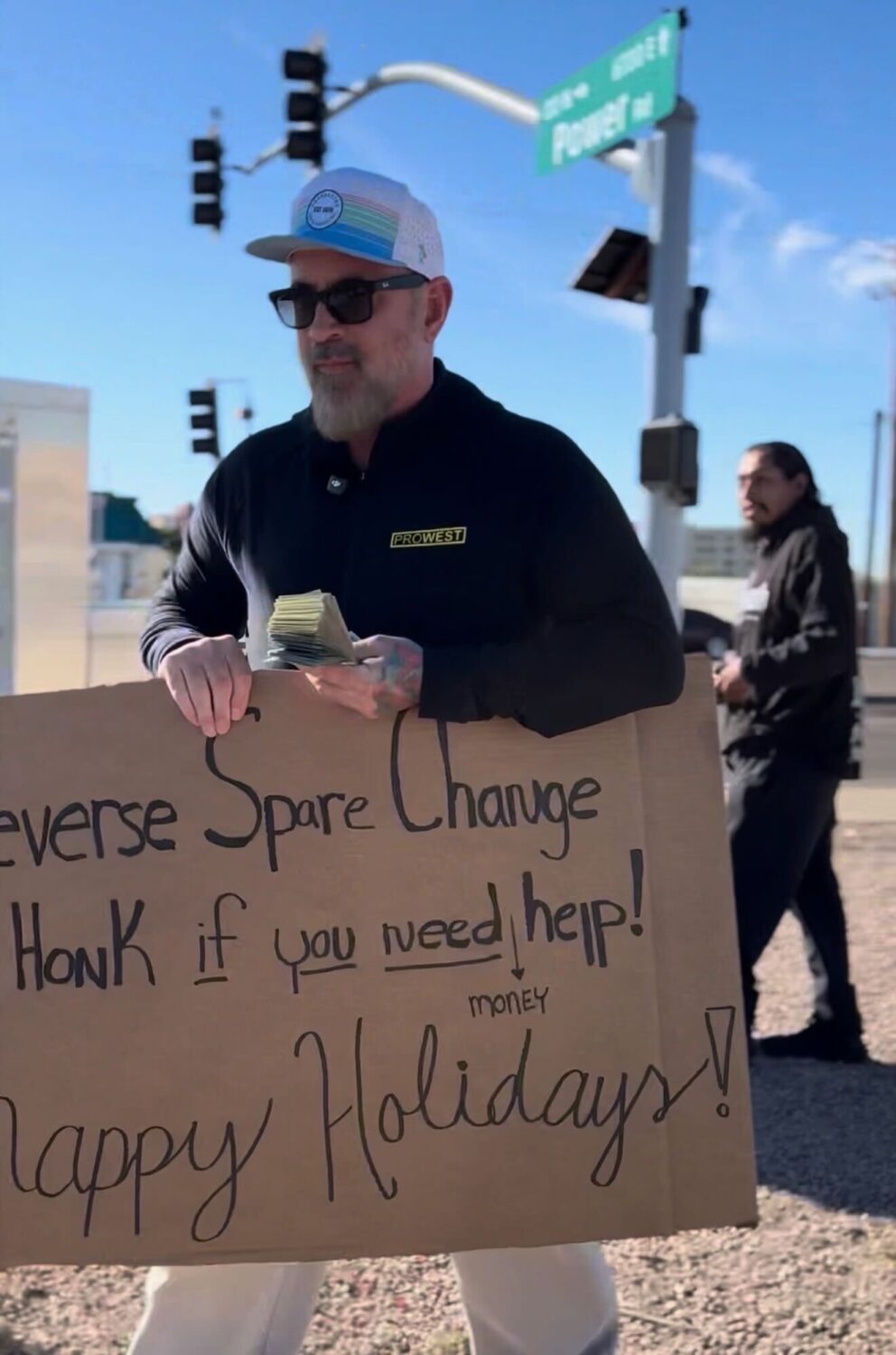
His story is not a redemption arc tied neatly with a bow. It is rougher, more alive, and still unfolding. It belongs to the former kid in the van, the sober leader in the boardroom, the entrepreneur buying back belief in people others overlook, and the man on the roadside turning spare change into a spark. That, more than anything, is the story Bob Schober is still writing.