
 Will Jones
Atelier Modern was created by sisters Ana Zampino O’Neill and Sarah Bauer with the visceral belief that art should feel accessible to the people encountering it. Their gallery in Larchmont, New York reconsiders the conventional white-box model by placing contemporary artwork in conversation with home décor, creating an environment where collectors, families and first-time visitors can engage with art without feeling they need an art-world education first.
The idea has personal roots for O’Neill, whose experience at auction houses shaped her thinking about how people encounter important works. “I loved the idea at the auction houses that you could also walk in and see fine art up close, as opposed to being at a museum,” she says.
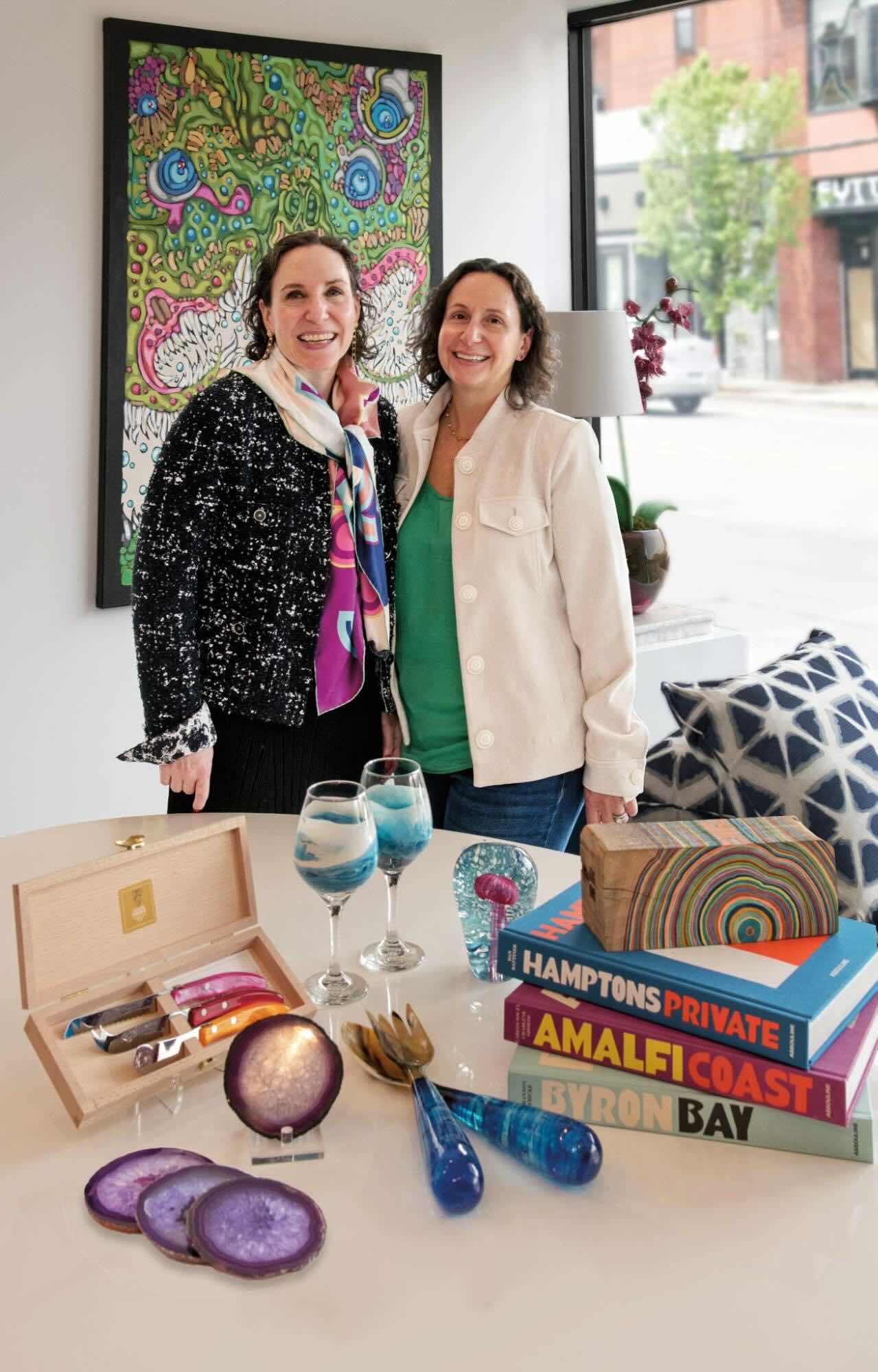
(Source: Ana and Sarah. Photographer John O’Donnell)
O’Neill wanted Atelier Modern to feel less like a place where visitors are expected to understand the rules and more like a place where they can develop their own relationship with the work. She says, “Traditionally, a gallery is four white walls, and we’re showing art in conversation with home décor because that’s how art actually lives in your home.”
Atelier Modern has developed into a gallery where families can encounter fine art, emerging artists, and local work without the physical distance often associated with formal exhibition spaces. Children can approach the pieces closely, ask questions, and become familiar with the experience of looking at art. O’Neill says, “There are no velvet ropes. People can walk in and peruse without feeling intimidated.”
Her understanding of interiors also informs how the gallery presents its work. Artwork appears alongside objects intended for domestic life, including limited-edition pillows, hand-blown glassware, and one-of-a-kind serveware. She curates to give visitors a way to imagine art within the environments they already know.
O’Neill sees art as something people should be able to live with. “Art isn’t just on the wall,” she says. “As intimidating as it might be to walk into a white box gallery, you’re less intimidated to walk into a store with home décor items.” The approach allows Atelier Modern to introduce contemporary art through objects that already have a place within everyday life.
Her relationship with collectors follows the same principle. Someone who arrives without knowing what they want is not expected to possess an established taste or vocabulary. O’Neill explains that she shows them different works, then, if they remain uncertain, takes pieces to their home, sometimes leaving it overnight so the person can experience the piece in its intended environment.
O’Neill says. “How else will you know if you like it? You have to see it in your space. That perspective changes everything.” She has seen clients discover that a work they loved in the gallery does not suit a particular room, while another piece suddenly feels right once it is viewed under the light and proportions of their own home.
“We don’t want to be a gatekeeper with the art. Helping people make those connections and discover what it is they like, resonate with, and can pass on in the future is what matters,” she says. Her priority, in that sense, is helping people discover their own response to a work.
The gallery applies the same thinking to its artists. O’Neill points to internationally exhibited artists, like Antoinette Wysocki, Adam Handler, and Jenny Flexner Reinhardt, artists whose careers have taken their work around the world while their studios remain connected to the region. Wysocki, she notes, lives in Westchester, New York; Adam lives in Connecticut; Reinhardt lives in New Jersey, yet their proximity to Larchmont remains significant to O’Neill.
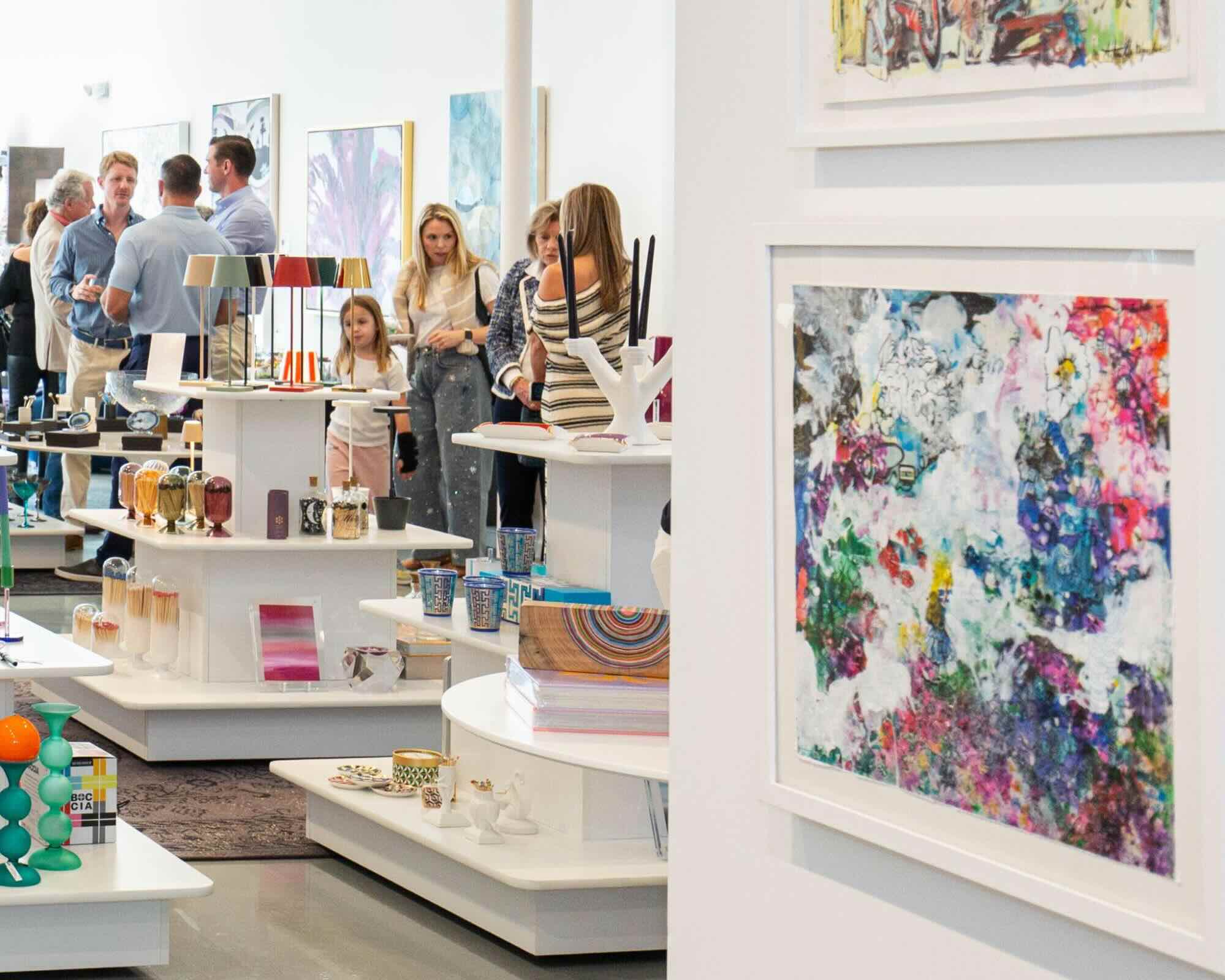
(Source: (art by Antoinette Wysocki) Photographer: Jane Sikorski. @janesikorski)
“You don’t have to go to places like New York City to see amazing art,” she says. The point is particularly relevant to a community whose residents may have left Manhattan without leaving behind their interest in culture. O’Neill sees Atelier Modern as a way of keeping that connection close to home.“Just because you leave Manhattan doesn’t mean you want to leave the culture and the taste behind,” she adds.
O’Neill’s relationships with artists are deeply rooted in trust. Shaped by the sobering stories she heard of artists struggling with traditional gallerists, she envisioned a different path for Atelier Modern. For O’Neill, representation shouldn’t equal control. She shares, “We want our artists to sell their art, no matter what. We champion their success as fiercely as our own.”
Community programs give the philosophy a physical presence. She recalls a holiday event where a balloon artist created sculptures for children alongside Jeff Koons’ Balloon Animals, giving young visitors an immediate and playful way to engage with contemporary art. O’Neill’s own children were part of the inspiration for creating a space where young visitors could develop familiarity with art.
Ultimately, Atelier Modern exemplifies the practical form of the saying, “Art is for everyone.” O’Neill is not asking the art world to abandon its institutions; she is asking what happens when a gallery removes some of the distance between the work and the person looking at it. A visitor can walk in without knowing what they like, discover something unexpected, take it home, spend time with it, and realize that it may have a permanent place in their home.