
 Will Jones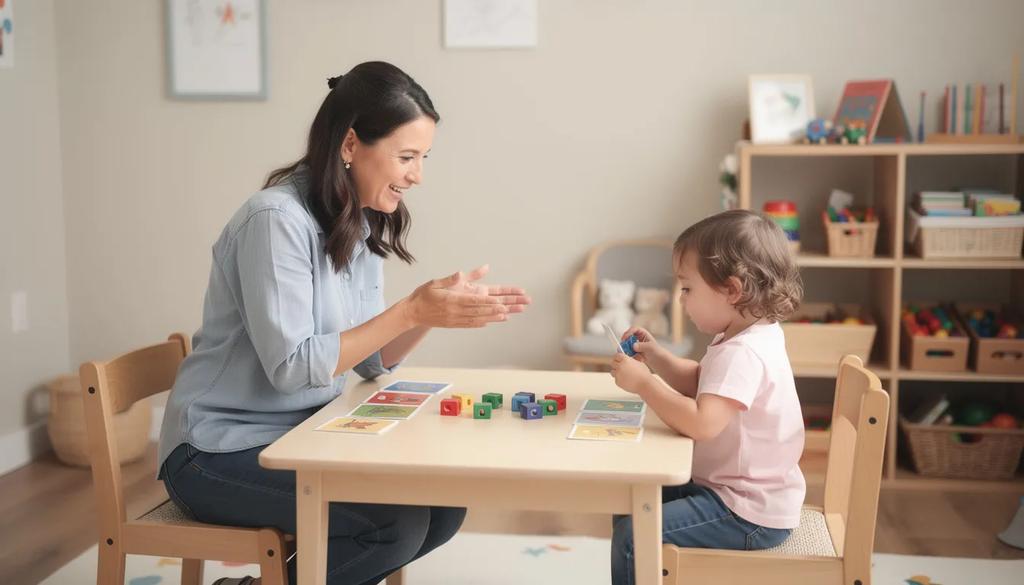
Tianyue Sun is an applied behavior analysis researcher with specialized expertise in early language intervention for children with autism spectrum disorder and developmental delays. Trained at Columbia University’s Teachers College, where she earned her Master of Arts and Ph.D. in Applied Behavior Analysis, Sun’s current work focuses on developing and validating intervention protocols that help preverbal children build the foundational communication skills necessary for functional language development.
Drawing on training in behavior analysis, special education, and quantitative research methods, Sun’s research examines practical, evidence-based approaches to increasing vocalizations, building auditory discrimination, emitting accurate echoic responses, and eventually making functional speech in young children with disabilities. Her work explores how interventions can be designed to produce faster mastery, broader generalization, and more efficient use of clinician time—considerations that have become increasingly urgent as autism prevalence rises and the behavior analyst workforce shortage deepens.
Research in Early Language Intervention
Sun has authored or co-authored seven peer-reviewed publications, including three first-author papers in behavior analysis journals, and two chapters in a Springer volume on science education. Meanwhile, several of her recent works are currently under review for publication. Her work has been cited more than 100 times by other researchers. Key publications include:
“Repeat after you: Contingent vocal imitation increases children’s vocalizations and orienting responses” published in the flagship journal of applied behavior analysis Journal of Applied Behavior Analysis in 2025—this study introduces the Contingent Vocal Imitation (CVI) protocol, in which therapists immediately imitate children’s vocalizations to teach them that sounds have social consequences. Using an alternating-treatments design across five conditions, the study found that CVI produced large increases in vocalizations across all three child participants, outperforming noncontingent imitation, physical contact, and no-interaction and control conditions. As a follow-up to this study, Sun et al. conducted two additional studies to further support the development of language skills in children with developmental delays or disabilities. These studies examined the effects of CVI combined with echoic training and an echoic-to-mand intervention, respectively. The manuscripts of these two studies are currently under review for publication.
“The Effects of an Accelerated Auditory Matching Protocol for Early Intervention Students” published in Behavior Analysis in Practice in 2023—This study presents an iPad-based protocol that trains auditory discrimination—the ability to distinguish between different speech sounds, a perceptual prerequisite for accurate vocal imitation (i.e., echoics). In a multiple-probe design with five toddlers, four participants showed meaningful gains in echoic responses, and the accelerated format required significantly fewer learning units than the standard protocol, demonstrating that interventions can be redesigned to produce mastery in less clinician time.
“Effects of a Contingent Imitation Intervention on Generalized Imitation in Young Children with Developmental Delays” published in Behavior Analysis in Practice in 2026) — Sun’s most recent publication extends her line of work by demonstrating that contingent imitation can produce generalized imitation skills—not just imitation of trained responses, but the emergence of novel imitation across untrained stimuli. Generalized imitation is a critical developmental milestone because it enables children to learn from observation in natural environments, reducing their dependence on structured, one-on-one teaching trials.
Additional peer-reviewed publications address personality traits and navigational behavior in online learning (Frontiers in Psychology, 2023), game-based learning for learners with disabilities (Frontiers in Psychology, 2022), a comprehensive framework for comparing textbooks (Sustainability, 2022), and the influence of class approaches and student personality on online learning (ICHESS 2020).
Sun has also contributed two chapters to the Springer volume Science Education in Countries Along the Belt & Road(2022). These chapters have been cited by researchers in science education and educational technology, including a 2025 study on scientific literacy in Malaysian primary schools and a 2022 study on metaverse-based education, indicating that her work reaches across disciplinary boundaries.
Collectively, these publications trace a coherent developmental sequence—from auditory discrimination to vocal imitation to generalized imitation to functional language—addressing successive bottlenecks in early language development and providing an empirically grounded framework that other researchers and practitioners can build upon.
Academic Recognition and Professional Credentials
Sun’s research has been recognized by the behavior analysis community through competitive selection for presentation at international conferences. At the 51st Annual Convention of the Association for Behavior Analysis International (ABAI), held in Washington, D.C. in May 2025, her work on contingent vocal imitation was selected for both an oral presentation and a poster presentation—a dual distinction at the field’s largest and most competitive conference. In addition, she has presented at the 50th and 52nd ABAI on topics related to developing interventions to promote echoic responding and two-dimensional (2D) identical matching skills. She has also presented her research at the New York State Association for Behavior Analysis (NYSABA) annual conference and at multiple ABAI regional events. As a Student Member of ABAI and a member of the Verbal Behavior Special Interest Group (VBSIG), Sun is embedded in the intellectual community focused on the behavioral analysis of language—the precise domain of her research.
Sun holds three professional credentials that, taken together, place her in a rare category of behavior analysts capable of operating across research, clinical practice, and special education. She is a Board Certified Behavior Analyst (BCBA), the field’s primary professional certification, which authorizes her to independently design and supervise applied behavior analysis interventions and sign insurance-related clinical documentation. As she has earned her PhD, she will soon be eligible to obtain the BCBA-D. She also holds a New York State teaching certificate in Students with Disabilities (Birth-Grade 2), qualifying her to teach in public school special education settings from early childhood through second grade. And she holds a Global SAS Data Analysis Certification, with proficiency in SPSS and STATA, enabling her to conduct sophisticated quantitative analyses of behavioral data. Most BCBA practitioners do not hold state teaching certifications, and few in either role possess advanced statistical programming skills.
Clinical and Educational Experience
Sun’s research is grounded in direct clinical and educational experience. She served as a full-time Early Intervention and Preschool teacher at the Fred S. Keller School, a publicly funded private special education school serving the Yonkers and White Plains school districts in New York, where she works directly with children ages 1 to 5 with disabilities and typically developing peers. She previously served as a Teaching Assistant at the same school. This frontline experience informs her research by ensuring that the protocols she develops are practical, implementable in real classroom settings, and responsive to the actual challenges clinicians face.
During her doctoral studies at Columbia University, Sun served as a teaching assistant for six core courses, contributing to the education and training of the next generation of behavior analysts. This experience gave her a firsthand understanding of how behavioral science is transmitted to new practitioners and reinforced her commitment to developing interventions that are both scientifically rigorous and practically accessible.
Current and Future Directions
Sun has been offered a postdoctoral research and clinical position at the Marcus Autism Center at Emory University School of Medicine, one of the nation’s preeminent autism research and treatment institutions, During the postdoctoral fellowship, she will continue refining her intervention protocols and expanding her expertise by working with older children with developmental delays in a clinical setting. Longer term, she plans to become a clinical supervisor or director , where she can contribute to the training and professional development of practitioners who deliver effective and efficient evidence-based interventions. At the same time, she plans to pursue a faculty position that will allow her to mentor and educate future generations of behavior analysts while continuing to advance research and clinical practice in the field.
With a foundation in behavior analysis, special education, and quantitative research, and a body of work that addresses specific, unresolved problems in early language development, Sun is positioned to continue advancing evidence-based, efficient interventions that improve outcomes for children with autism and developmental delays in the United States.