
 Will Jones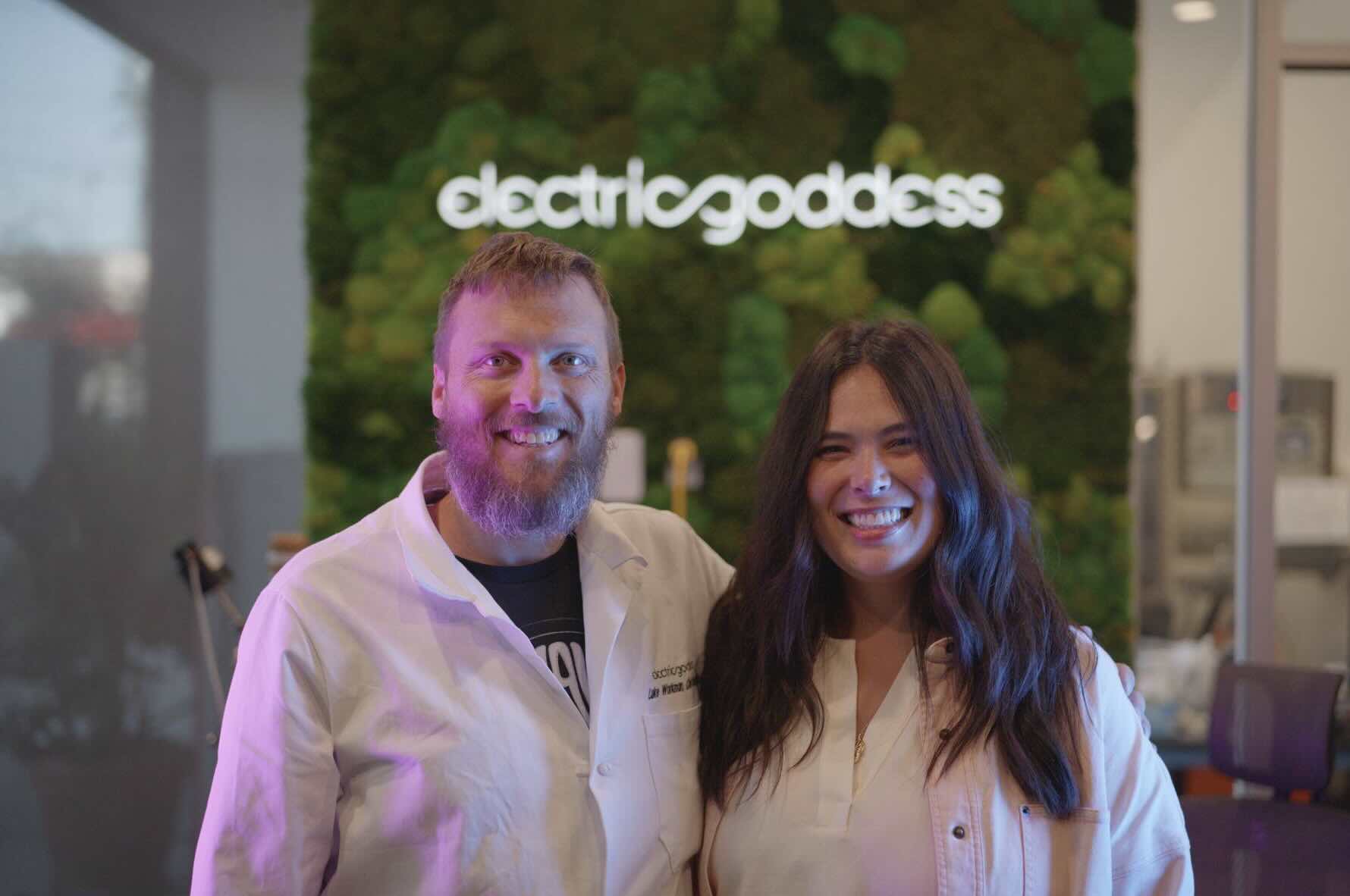
(Source: ElectricGoddess)
In a world increasingly powered by batteries, from smartphones and e-bikes to utility energy storage, the margin for error is vanishingly small. A battery pack that fails is not just a catalyst for customer inconvenience, but something much dire. It can cause devastating fires, property destruction, or even loss of life.
Even a one-in-100,000 chance of failure is an issue when the stakes are so high. Yet much of the global testing framework remains rooted in general, standardized protocols that often are unable to account for a variety of real-world applications.
A utility battery stored in a stable, air-conditioned data center can face entirely different stresses than one installed in a mobile container placed in the desert, but both may be certified under the same blanket test.
According to Erika Guerrero, co-founder of Electric Goddess, “Standards often check a box, but they don’t always truly validate safety margins for the unique environments batteries actually live in.”
This is where Electric Goddess has carved out its role as a technical pioneer. Co-founded by Erika Guerrero and Luke Workman, the company has built a reputation for pushing batteries to their absolute limits, running them through tests designed not simply to meet regulatory standards, but to uncover the worst-case scenarios that could compromise safety.
Their mission is deceptively simple: to make batteries rugged and safe enough that end-users never have to think about them. Achieving that, however, requires a far more rigorous approach than conventional testing entails.
At the core of Electric Goddess’s safety test methodology are three critical categories: Accelerating Rate Calorimetry (ARC), Passive Propagation Resistance (PPR), and accelerated corrosion susceptibility testing. Each is designed to probe different channels of achieving failure.
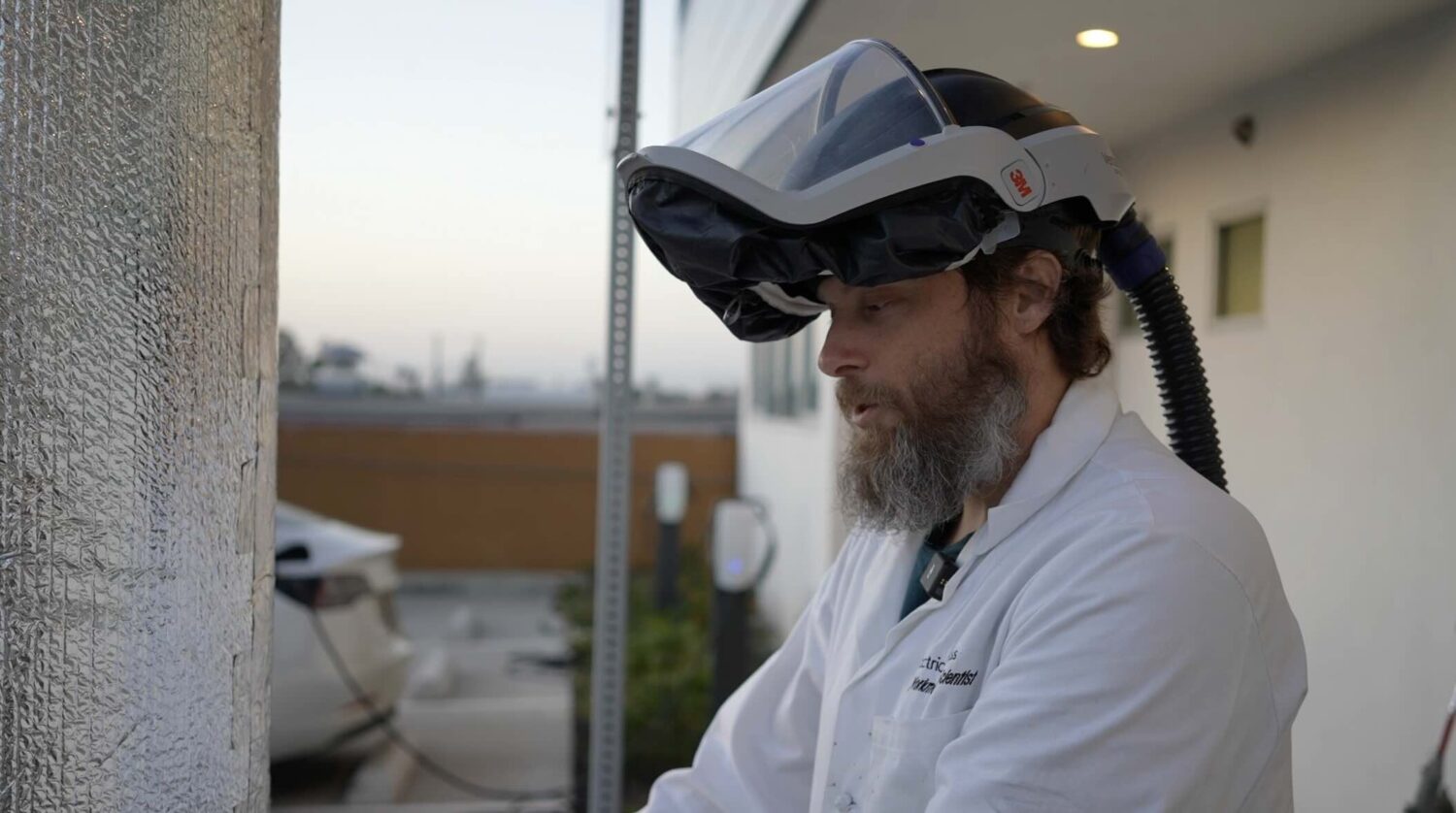
ARC is often the starting point. In this test, cells are deliberately driven into thermal runaway, a catastrophic failure mode in which stored chemical energy is sometimes violently released as heat, gas, and plasma.
(Source: ElectricGoddess)
“We purposely fail cells,” Workman explains. “We heat them, overcharge them, short them, whatever it takes, to provoke runaway. We then measure how much energy is released, the rate of gas evolution, and even the chemical composition of gases.” The data allows engineers to understand both the conditions that trigger runaway, the byproduct gases, and the magnitude of the event, which is essential for designing optimal containment for battery systems.
Once individual cells are characterized, the next question is how failure propagates. This is where PPR testing comes in. In a battery pack, hundreds of cells may sit side by side. If one cell fails, does it ignite its neighbors? Or can the design contain the damage? Electric Goddess simulates cell defects, battery pack resilience, or accidental damage, sometimes with hot nails and sometimes with lasers, to see if one cell’s thermal runaway cascades.
“If your pack passes PPR, one cell can fail without threatening the rest of the system,” Workman says. “It becomes a non-event.” That distinction can mean the difference between a nuisance and a billion-dollar recall of products.
The third safety pillar is corrosion testing, an equally important failure pathway. Corrosion can arise from the road salts, humidity, or simply atmospheric exposure to carbon dioxide. Left unchecked, corrosion can create conductive bridges within cells, leading to shorts and fires.
Electric Goddess accelerates these environmental conditions in chambers that produce relatively quick, actionable feedback. “A lot of batteries fail because of corrosion,” Guerrero notes. “But it’s one of the most common real-world causes of failure that goes unnoticed.”
Taken together, these safety tests are far more efficient than regulatory checklists, designed to validate compliance and to uncover vulnerabilities before investing in tooling or certifications. Guerrero emphasizes that their true value lies in experience: “We’ve been doing this since 2006. Every battery chemistry is a little different, there’s no one-size-fits-all test plan. What we do is create tailored strategies that reflect the actual environments and risks of our clients’ products to save time and money at the forefront before scaling in battery manufacturing.”
This tailored approach is why Electric Goddess is placing itself at the forefront of innovative battery solutions. They help R&D teams with a plethora of services such as refining test plans, embedding temperature sensors inside cells, and developing custom fixturing for running tests. Working alongside clients’ existing test facilities, contract manufacturers, recommending components for battery design, and even supporting cell development of new chemistries, Electric Goddess supports clients through a wide range of opportunities. They also work upstream with material suppliers, running empirical validation of polymers and potting compounds to tune formulas for better resistance to runaway and corrosion.
Ultimately, the question every battery maker must answer is not whether their product can pass a standard, but whether it can withstand the unpredictable ways customers will use, or misuse, it. And that is why efficient, application-specific testing isn’t just a technical exercise; it is the backbone of trust in the electrified future.
As Guerrero puts it: “Customers expect batteries that never pose a safety risk, no matter what they do. Our job is to support teams to make sure their products meet that expectation.”