
 Matthew Kayser
Image credit: Egor Folley
Egor Folley is a 27-year-old robotics and AI entrepreneur whose career has taken him across four continents and two startups, driven by a relentless drive to tackle complex real-world issues with technology.
His resolve was put to the test when his first startup, ARTIAL (an AI autonomous software system for drones), struggled to attract sales after a year in development. Down to his last $15, Egor submitted ARTIAL to the prestigious Techstars Berlin and AUDI Mobility Accelerator. After being accepted, he rebuilt the entire product solo in just eight weeks, landing the company’s first paying customer and proving his ability to push through near-total failure.
“There was no other way, so I had to prove to myself — and to naysayers — that when everything seems to be falling apart, relentless focus and execution can rebuild something even stronger,” he explains.
Read on to learn more about Egor’s work and how he’s bringing that same drive and resourcefulness to transform crummy data into actionable insights with his latest venture, Modalina AI.
An Unconventional Path to Building
Egor initially studied law before switching to mechatronics, robotics, and automation engineering. Despite having little background in math or engineering, he stuck to it, eventually graduating in the top 5 of his class.
While still a student, Egor held a variety of roles where he had to learn quickly and contribute to systems with real-world applications: first as a software engineer in an R&D robotics lab, then as a machine learning engineer, and later as a remote tech lead for a San Francisco-based AI startup. By 2021, his salary placed him in the highest-earning 10% of engineers in Russia.
Looking to deepen his knowledge, Egor moved to Barcelona to pursue a PhD in Smart-Nano-Bio Devices at the Institute for Bioengineering of Catalonia (IBEC) on a full scholarship, where his research focused on applying AI to analyze the motion of smart nanobots. But while the work was intellectually rewarding, Egor felt it lacked the real-world application he wanted.
“The academic field was interesting, but the work itself wasn’t yielding the results I was looking for,” he recalls. “I realized my calling is about building real-world, practical solutions.”
This led him to leave his studies and accept a challenge from a venture capitalist to develop a vision-based AI software system that could increase the capabilities of drone autonomy. Within two months, he’d built a working prototype, which became the foundation for his first startup.
ARTIAL: A Drone Startup Tested by Challenges
In 2022, Egor founded ARTIAL, a visual AI system that enables drones to navigate autonomously without GPS or remote control — giving companies real-time visibility into hard-to-access areas like indoor tunnels, outdoor construction job sites, and disaster zones.
Backed by $80,000 in venture capital and with a two-person team, ARTIAL powered through its first year. However, early adoption proved difficult, as many companies across the European ecosystem at the time were slow to adopt AI in field operations (or simply lacked the technical infrastructure to support it). By early 2023, the startup was nearly out of money. “After over a year of work, we had no sales,” explains Egor. “It felt like everything was falling apart.”
Determined to keep the vision alive, Egor pitched ARTIAL to the Techstars Berlin and AUDI Mobility Accelerator, which came through with $120,000 in funding as well as critical mentorship to rethink the product. After laying off team members unaligned with the necessary founder mentality, Egor worked solo and rebuilt ARTIAL’s MVP from scratch in just eight weeks, adding a new autonomy stack and a working software-hardware system.
That rebuild marked what Egor calls “the turning point” for the startup. Shortly after, the company gained its first paying customer with a $10,000 ARR pilot with UAVOS Inc., received media coverage across Europe, and reached the finals at the Smart City Expo World Congress pitch competition — key milestones that validated both the product pivot and Egor’s perseverance.
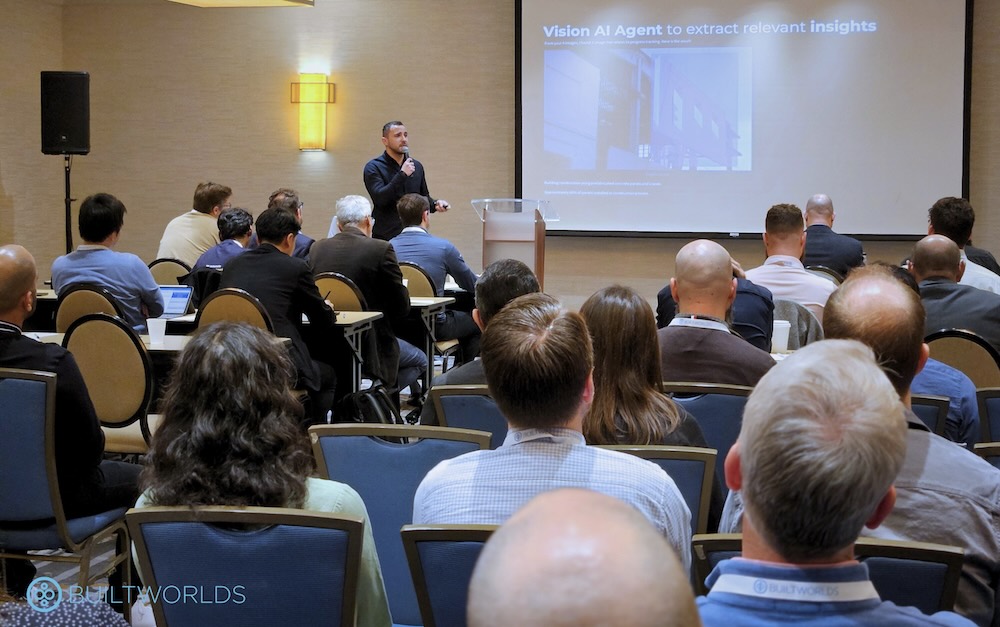
Image credit: Egor Folley
Navigating Change: Mentorship and Building Through Uncertainty
Despite ARTIAL’s initial second wind, Egor remained frustrated with the slow adoption pace in the European market. As an immigrant founder with ambitions to move fast and scale across borders, he found the environment too risk-averse and limiting for the kind of impact he wanted to make.
Setting his sights on the U.S., Egor applied to join Global Detroit, an American nonprofit that supports immigrant founders in launching startups and creating jobs in Southeast Michigan, in the hopes of building a new venture in a fast-moving and dynamic market.
During this time, Egor shut down ARTIAL’s drone operations to explore other AI-related opportunities. He then spent the next year adopting a digital nomad lifestyle, living in 13 apartments across Europe, Central America, and South America. Despite the constant travel, he remained deeply engaged with different AI communities across the globe, consulting on multiple AI projects while refining his own ideas.
While this stretch in Egor’s life came with uncertainty, it gave him the insight, resilience, and real-world experience to hit the ground running when he officially joined Global Detroit as a Global Entrepreneur-in-Residence in late 2024. There, he gained the support and network needed to develop a project that could contribute to the region’s growing tech ecosystem, laying the groundwork for his next and most ambitious venture yet.
Cleaning “Bad Data” for the Construction Industry with Modalina AI
While at Global Detroit, Egor began looking into overlooked industry challenges where AI could make a tangible difference. He quickly zeroed in on industries like construction and infrastructure, where job site tracking was often manual and based on fragmented or inconsistent data, making it prone to errors and leading to the loss of billions of dollars every year.
That insight led to Modalina AI, a platform that uses agentic AI for computer vision to convert unprocessed visual data (like photos and video footage) into structured, actionable insights. By cleaning and analyzing this data, Modalina AI gives companies a clearer picture of on-site progress in real-time, helping them catch delays early and make faster, more informed decisions on the ground.
Although many industries can benefit from cleaning unprocessed data, Egor chose to focus Modalina AI’s first use case on construction, helping project managers to use accurate, real-time field data to make smarter decisions around tasks like site monitoring or safety compliance.
Just two months after launch, Modalina AI landed two paying customers, secured two letters of intent, and earned an invite to present this solution at the 2025 BuiltWorlds AI/ML Conference — one of the industry’s leading events.
This early success validated Egor’s commitment to continuous building and learning, and further solidified his belief in AI’s potential to solve pressing real-world problems.
Egor’s Vision for the Future
As Modalina AI continues to gain traction, Egor Folley’s vision is to build a global tech company that brings AI into a broader range of industries — setting the foundation for a large ecosystem of AI tools that automate manual processes.
He also has plans to back founders in the fields that shaped him by investing in R&D and startups across nanotech, biotech, and healthcare, with a particular focus on immigrant technologists: “I believe the next generation of industry-defining companies will come from unconventional places and underestimated people. I plan to build one — and help many more rise.”