
 Will Jones
FaithTime uses visual feedback and a rewards system to help users of their app turn abstract goals into long-term daily routines.
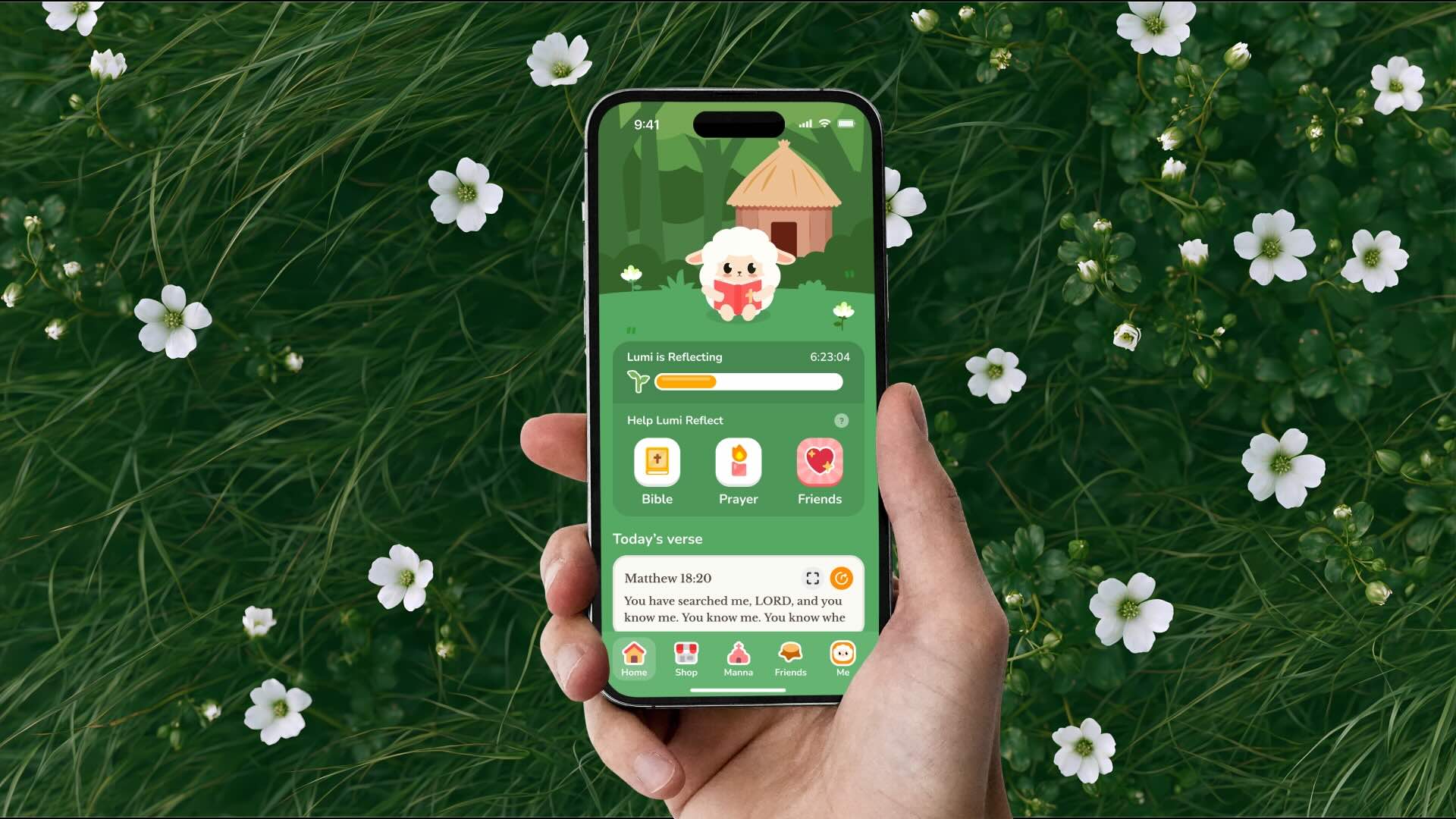
Image credit: FaithTime
A young user opens the FaithTime app, finds their companion lamb waiting, reads the day’s verse, and sees the lamb begin to mature. In the user’s mind, an immediate connection can be made between the work and the reward. For many, especially younger people, new habits can fail when progress is hard to see, though it’s often not due to a lack of effort on their part. Rather, it’s a lack of measurable results.
Intangible goals can often suffer from a lack of feedback, where the individual can’t easily follow or feel motivated by what progress they have made. The FaithTime app is addressing this issue by helping faith-based individuals develop daily habits through the use of a character-based system that turns consistency into visible milestones the user can actually follow.
Making Progress through the Use of Feedback
Keeping up with a daily habit of reflection can be a challenge, especially in a world where many face the pressure of fast-moving schedules and constant digital distractions. Unlike physical exercise or academic pursuits, there are few mechanisms to track religious progress, and growth can seem like a moving target. In response to this, FaithTime has constructed a companion lamb that reflects the user’s consistency. Their “faith friend” is directly tied to the user’s activities, such as reading and quiet reflection. As the user sticks to their daily routine, the virtual lamb grows, levels up, and moves into new environments.
This setup takes the abstract idea of “staying on track” and gives it a more concrete visual concept. On a psychological level, it can tap into the brain’s affinity for a reward system, with the lamb making the process feel less like a lonely checklist of duties and more like an interactive journey where every action has real consequences or benefits.
The Use of Structured Gamification
While FaithTime uses a virtual pet to encourage continued growth, the aesthetics and the way the app functions were designed to appeal to both adults and young people. The game-like elements, such as rewards and changing backgrounds, are intended to support the underlying practice, but not distract from it, preventing the gamification from becoming the primary focus.
Rather, the app uses technology to help modernize a process rather than replacing it with a gaming mode that a user can find in other apps. By keeping real-world habits at the center, the app operates in such a way that the virtual companion’s growth matches the person’s actual progress.
Making it All Sustainable
The virtual lamb makes the app user’s daily effort easier to track over time, connecting their short-term efforts with long-term discipline. As the lamb develops based on a user’s specific history, it also becomes increasingly personalized, acting as the growing mascot of their personal faith journey.
Future updates are in the works, including ways for users to connect so they can be supported across a larger community. It can offer further accountability while also turning the user’s personal growth into a collective experience. For young adults today, FaithTime offers a steady, straightforward way to turn their daily devotionals into a long-term habit.