

 Mark Stefanos
Wallie the Sensei plans to walk into California prisons this year with a microphone and a brand-new mixtape. He hopes to perform on the yard for his older cousin — a man he grew up with, like a brother — seeing him for the first time in 16 years. His cousin, now serving 98 years, has never seen him perform his music live. The artist says performing for his cousin will be one of his life’s biggest accomplishments.
The mixtape fueling the tour is MAD DOGG: THE MIXTAPE, VOL. 1, which came out this Tuesday, April 21. The title is an acronym Wallie spells out: Managing Angry Demons, Deprived of God’s Grace. “That’s just a good explanation of how a lot of people have to maintain and get through where I’m from,” he told LA Weekly when we talked just before the tape dropped. “It’s how you might feel most of your life if you’re trying to do something and you’re just in turmoil.”
The project arrived at the perfect moment. Fresh off a Cactus Jack signing and a Kendrick Lamar feature on GNX, Wallie is no longer the underground Compton voice hoping for a shot. He is the artist who can now take the music back to the places that shaped it, and to the people who rarely get front-row seats.
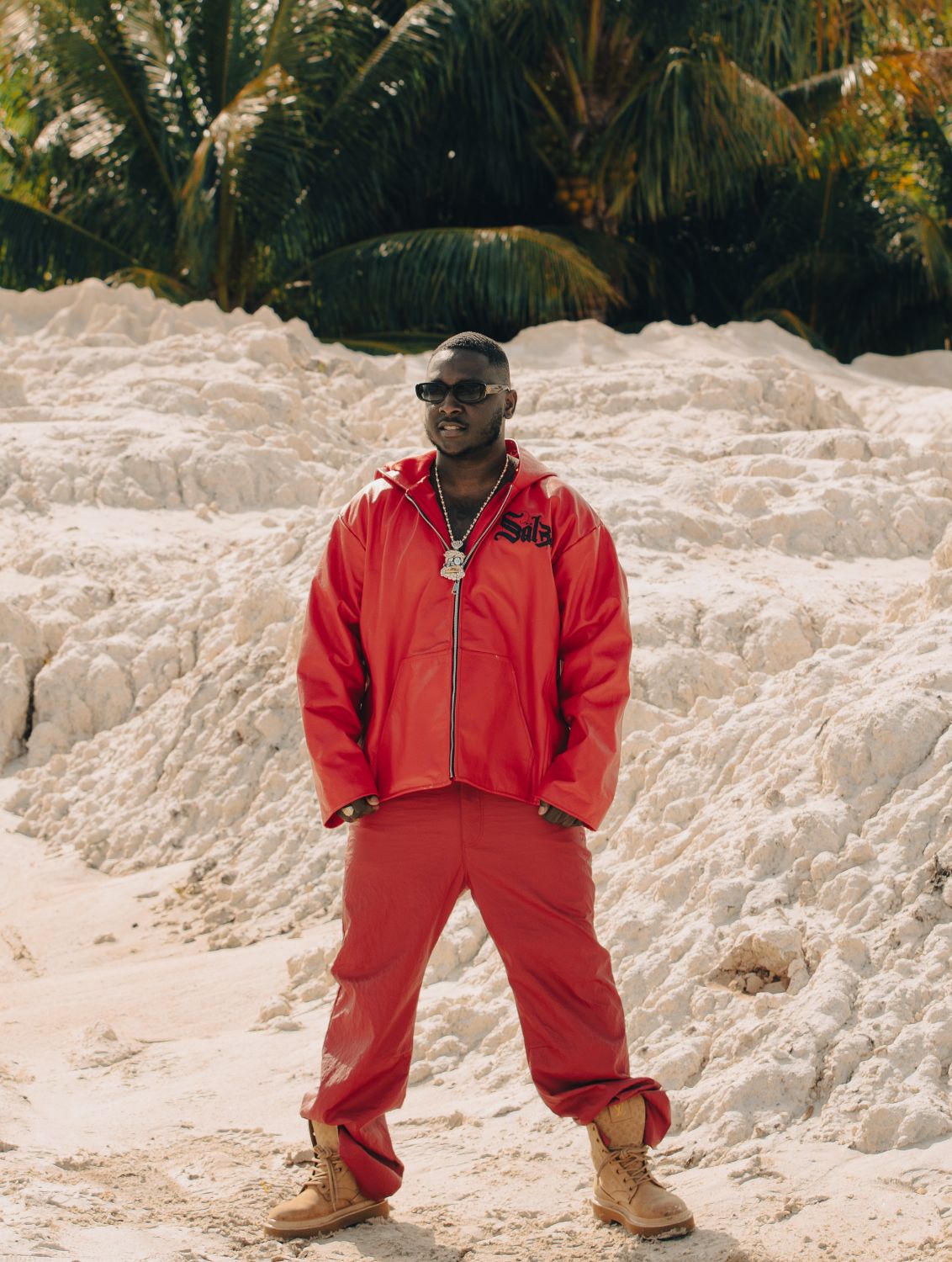
Wallie the Sensei (Salty State @saltystate)
In the studio, Wallie’s process is simple and instinctive. He hears a beat and rides the first impression. “If it made me feel something, then I can do it,” he explains. Most songs fully form in that initial vibe. He still works the same way he did when he booked his very first two-day studio session years ago.
The result on MAD DOGG Vol. 1 is a wide, restless sound that draws from his many, growing capabilities. West Coast bounce sits comfortably next to atmospheric, psychedelic textures that carry Houston rapper Travis Scott’s Cactus Jack imprint. Tracks like “4Lines / Self Destruct,” split the difference between rapping and singing in a continuous emotional arc. “No Shirt” leans into a paced, melodic pocket that Wallie has been exploring privately for a long time but hasn’t released — “It’s something that I do often and just never put out,” he says. True to its name, the title track “MAD DOGG” has an aggressive growl to it, but speaks to the complicated Compton life the acronym dissects.
The tape is shaped by a slate of producers who understood the assignment. “They challenge me when they give me beats,” he says, “and it always turns out good. It’s always something refreshing.” The goal was never to abandon his core audience but to show the elevation that comes from the daily grind of expanding his craft. “I feel like it’s barely the beginning of trying to understand the sounds that I got,” he adds.
Wallie grew up on the west side of Compton, a first-generation Californian born to parents from the Midwest. His mother, from Chicago, came to California before he was born to be close to his grandmother. His dad is from St. Louis and joined them in California for a little bit, but left around the time he was born. “I took the bus to St. Louis to see him when I was about 11 years old. Maybe spent about a week out there, still only seen him maybe once,” he says. “In my life, I probably haven’t spent more than an hour with my pops.”
His grandmother kept the family anchored in LA churches True Everfaithful and Greater True Light. As a boy, Wallie sang soprano in the choir — everyone loved his high-pitched voice and his elders paid him $50 as an incentive. The church choir, he says, “just gave me a base. It gave me an identity. I didn’t know that I was going to do music. I never knew. It’s kind of weird, right?”

Wallie the Sensei (Oneshot)
But his spiritual path went sideways when, at age nine or ten, he found a gun inside a bag of donated toys at another church. After that, he stayed away from services for years. The vocal foundation remained but music wouldn’t come back into his life until he was about 15.
At home, his mom was raising multiple children, and Wallie spent much of his youth outside. “I ran the streets most of my younger days,” he says. “From about eight years old until I was grown, I was just out.”
Sports filled a lot of that, with Gonzales Park in Compton becoming a second home. He stayed active: baseball, football, basketball, soccer. “Baseball was my first love, but I played everything.” It sounds like he was no slouch either, racking up points, trophies, MVPs and MIPs.
But the neighborhood was rough. “The west side of Compton is an interesting place, bro. A very interesting spot. You got a lot of talent over there,” but he adds, with some lament, “growing up, talent was probably the last thing that people focused on in my area. It’s a heavily gang, territorial place. But it’s a real community. We’re like a big family.”
That duality of faith and fracture, territory versus community, resurfaces years later in the storytelling on MAD DOGG.
At 18, Wallie already had a 16-month-old daughter and needed money. He spent a lot of those years, “just cooking up the idea of trying to find a legal and positive way out of a city like the one that I’m from,” he says.
On a long bus ride, he eavesdropped on two men talking about seasonal work in Alaska. He asked for their newspaper, and two weeks later boarded his first plane to Dutch Harbor on the island of Unalaska — 14 hours of travel, including on a tiny, shaky aircraft that felt like it was heading halfway to Russia (because it was). It was his first time flying.
The plant employed almost no English speakers. Wallie was one of three Americans and the only black guy among Filipinos, Africans, and Hispanics. He helped process a million pounds of fish on the giant vessel Seafreeze America, pulling 20-hour shifts for months.
Music was his lifeline. His phone held only one album: U2’s Songs of Innocence, the record Apple had forced onto every iPhone that year. He listened to it on repeat for three straight months. “It actually helps me still to this day,” he says. “I still reference that album all the time. It was some dope songs on there, just some sounds that I never heard before.”
He came home on break and ended up in a challenge with a friend, part of a group that had all been rapping since elementary school. “He bet me if I didn’t have $40,000 in the bank on my birthday that I would have to make a mixtape and put it out. I lost the bet.”
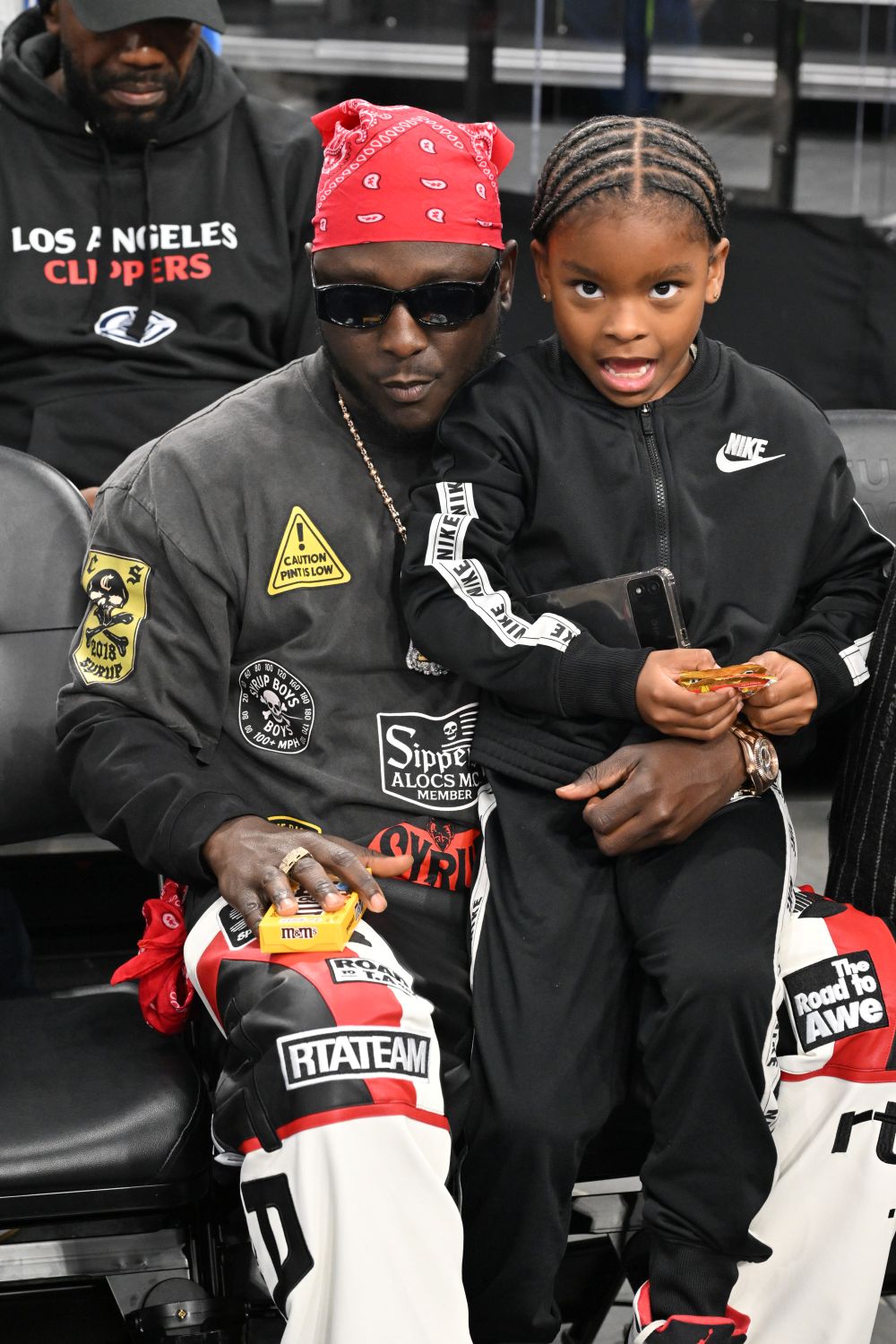
Wallie the Sensei with daughter at a Clippers game at Intuit Dome on December 23, 2025. (Allen Berezovsky/Getty Images)
Fast forward to two days in a modest home studio where Wallie produced three songs per day. Rapping over YouTube beats, he created seven-minute-long tracks with no idea about hooks or structure. He released them anyway and they went viral. “I fell in love with it at the same time,” he recalls. “I was so surprised that people actually fucked with the music.” He has been locked in the studio pretty much nonstop since.
Today, Wallie has three daughters, aged 12, eight, and three. It’s a job he’s always wanted. “Being a dad probably was my career choice growing up,” he says. “I always wanted to be a dad and be a better example, since I didn’t like not having one so much growing up.”
His daughters’ lives light up every conversation: the eldest is a Level 6 gymnast, the middle daughter loves shopping and fashion, and the youngest is “the big bully in the family.” In the car they demand one song on endless repeat: “MAD DOGG, MAD DOGG, MAD DOGG.” Wallie laughs, “That’s all they want to hear.”
He credits them with maturing him in ways nothing else could, “I felt like I grew as they grew and they matured me.”
“It’s a big form of love that I feel like you don’t get unless you have kids,” he adds. “Being an adult, we all just kind of figuring it out and fending for ourselves. But when you got somebody that love you so much, no matter what — it do something to you.”
Success has not pulled him away from the community that raised him. Once or twice a year he throws “Wallie and Friends” events (sometimes under a different name) right in Compton. He brings in fellow artists, hands out free haircuts, clothes, shoes, and food. Volunteers help expunge records, open bank accounts for people who never had one, and line up job opportunities. On holidays, the goal is to simply make sure no one gets left out.
“It was always on my conscience to remember what I come from and the type of people that raised me, and never forgetting the daily struggles, and the inspiration being needed,” Wallie says.
The prison tour follows that impulse. Wallie has had the idea for years, but his cousin’s situation especially makes it hit home. “He never seen me perform,” Wallie says. “He never got to see me in the studio. I didn’t make music when he got locked up.” The stops planned for a few prisons carry the same message: the music is for the people who feel forgotten. “There’s a lot of people that I got love for in the correctional system.”

Wallie the Sensei (Salty State @saltystate)
His outreach efforts carry on the legacy of the giants he stands on the shoulders of. “I’m just glad to be doing something that gives people where I’m from some type of hope,” Wallie says. “Just like the guys before me — seeing The Game and Kendrick and Dr. Dre and all these other dudes perform so well and leave their impression on the world — it just made me feel like it was possible. If it wasn’t for that, I wouldn’t be here.
“I always try to give that same hope to the kids coming up around there, just letting them shake my hand sometimes or ask me questions — to see the dedication that I have and hope that it rub off on them and whatever they’re doing.”
That hope has been reinforced by the mentors in his orbit. Travis Scott’s relentless work ethic left the deepest imprint. “He’s like a train just booming through the music and fashion world and constantly raising the bar,” Wallie says. “The things that he does is so impactful to everybody … He just got that effect. If you watch him enough and you pay attention, you got no choice but to be inspired, you know?”
Travis Scott’s influence has made Wallie stay extra busy: no breaks, no cutting corners, and to get in tune with himself and add his own sauce to everything.
Kendrick’s impact resonates considering their shared roots. They had crossed paths before the GNX feature. “Coming from the same area, he inspired me on a scale where I can’t really think of another.” In the studio, Kendrick offered pointers that both men seem to live by, says Wallie, “Never giving up and always going the extra mile to make sure you’re happy with your work.”
Wallie plans to release two projects this year. A June tour begins in New York and then sweeps the West Coast. He wants to stay close to the supporters who have been there from the beginning while reaching everyone who is just now hearing his name. The music keeps evolving, but the subject matter stays rooted in the realities he has always known, the same ones experienced by the great rappers that came from Compton before him. “I talk about the same shit,” he says, “I just find different ways to make it sound.”
Between car rides with his daughters, the prison-yard performances, and the next studio session, the MAD DOGG ethos is the bridge that carries Wallie back to the people and places that made him, and will push him to whatever’s next. It’s a framework that balances the divergent threads of his life — his struggles, his creative process, his responsibilities, and the blocks he came from.
“Being from a place like that, there’s a lot of pain and loss,” he says. “But there’s also love.”
Follow Wallie the Sensei on Instagram @walliethesensei.

Wallie the Sensei on the April 24, 2026 cover of LA Weekly. (Photo: Sunlit Media; cover design: Mark Stefanos)