
 Jon Stojan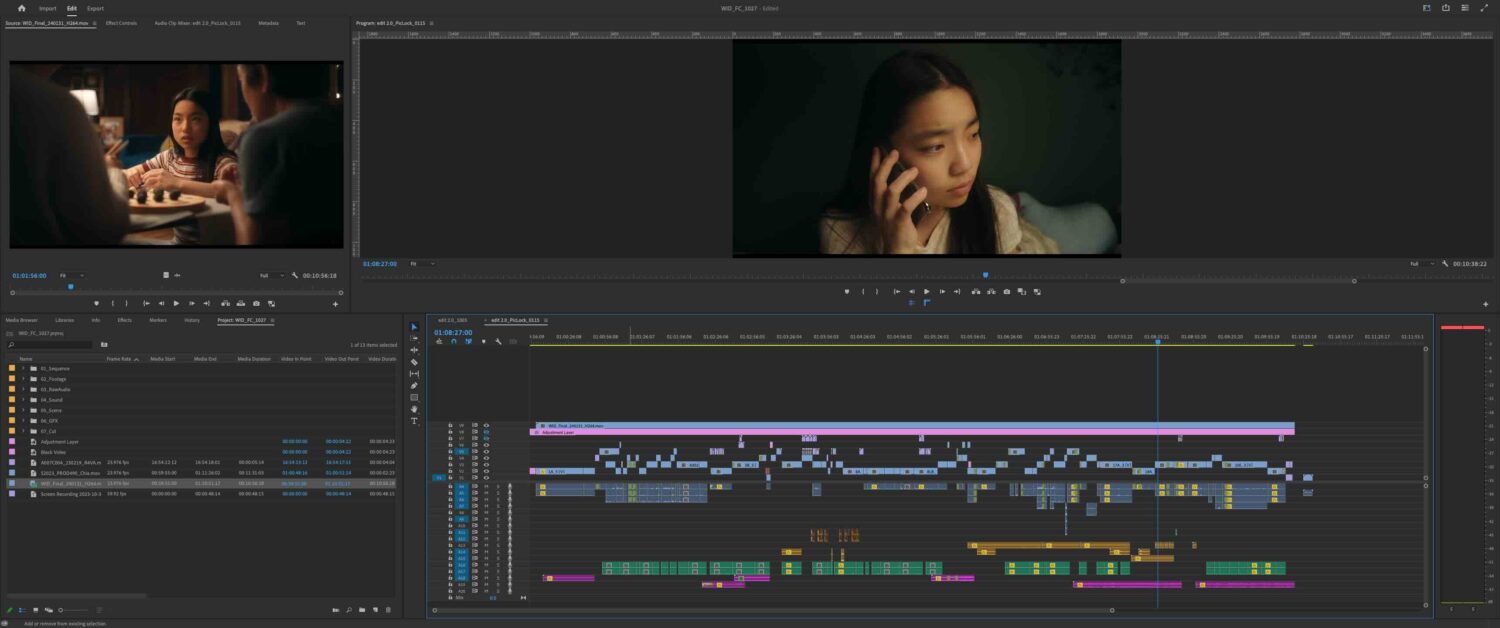
Image credit: Byron Chang
Filmmaking is an intricate blend of artistry and technical mastery, requiring a deep understanding of both storytelling and the tools that bring it to life. At its core, it is an invitation to step into another person’s world—to see through their eyes, feel their emotions, and experience their journey. This process depends not only on compelling narratives but also on the seamless execution of technical elements that shape the final product. Few individuals embody this duality as effectively as Byron Chang, whose work as an editor and Digital Imaging Technician (DIT) bridges creative storytelling with precision-driven technical execution.
What sets Byron apart is his ability to craft emotionally resonant stories while ensuring technical accuracy at every stage of production. “As someone who works as both a DIT and an editor, I’ve found that the two roles are closely connected,” he explains. By anticipating the needs of post-production early on, he refines workflows and strengthens collaboration, making the transition between filming and editing effortless. His understanding of both realms allows him to enhance a film’s visual and narrative cohesion, ensuring that creative decisions made on set translate seamlessly into the final edit.
His work has been recognized at prestigious festivals such as LA Shorts, NFFTY, and the Boston Asian American Film Festival, and his collaborations with brands like T-Mobile, Laifen, and Face First Natural have further demonstrated his versatility. He has also edited vertical web series that have captivated millions of viewers, including The Billionaire’s Rescue, The Devil Wears Desire, and Vampire’s Remedy. However, it is his ability to balance the creative with the technical that defines his approach. Projects like When I Die and The Musicverse highlight this synthesis—whether through carefully crafted edits that reflect a character’s internal transformation or the meticulous management of media workflows that preserve visual continuity.
For Byron, filmmaking extends beyond simply piecing together footage. It is an evolving process of collaboration, experimentation, and storytelling refinement. His passion for authenticity and his fluid ability to navigate both creative and technical roles make him an indispensable force in the industry. By breaking down the elements of his work, we gain insight into how he seamlessly integrates narrative depth with technical precision, shaping stories that leave a lasting impact.
Building the backbone of storytelling
As advancements in camera technology lead to increasingly large and complex data files, the role of a Digital Imaging Technician (DIT) has become more essential than ever. Byron explains that when shooting in ARRIRAW on the Alexa 35, storage limitations can become a critical issue. “A 1TB Codex Compact Drive only records about 28 minutes of footage,” he notes, adding that with limited camera cards, productions can run out of recording space in just 90 minutes. His role as a DIT ensures that all footage is securely backed up using checksum verification software, preventing data loss or corruption that could put an entire production at risk.
Beyond data management, Byron also plays a key role in shaping the visual look of a project. On larger productions, he applies real-time color and exposure adjustments using Pomfort Livegrade, allowing the cinematographer and director to see an accurate representation of the final image while still on set. This process not only helps them make informed creative decisions but also streamlines post-production.
“The DIT lays the foundation for post-production, ensuring that the footage is properly backed up, organized, and color-managed from the start,” Byron explains. His deep understanding of both technical and creative workflows allows him to anticipate editing needs while on set, reducing potential roadblocks in post and making the transition from production to editing seamless.
Bringing imagination to life in When I Die
Byron’s approach to editing When I Die was deeply tied to the emotional arc of its protagonist, Lianne. He used animation as a visual extension of her childlike perspective, allowing her to process the concept of death in a more abstract and playful way. “The animation, especially in the first two acts, reflects her childlike imagination,” he explains. By seamlessly weaving these animated elements into the live-action, he ensured they felt like a natural part of her inner world rather than a separate stylistic choice.
The shift in visual style played a crucial role in the film’s emotional impact. After Lianne’s argument with her mother, the animation disappears entirely, marking a pivotal moment where fantasy gives way to reality. From that point on, Byron adjusted the editing to a slower, more grounded pace, letting the weight of Lianne’s emotions take center stage. “This contrast helped highlight the shift from imagination to reality, reinforcing the film’s emotional core,” he says. By carefully balancing different mediums, he deepened the audience’s connection to Lianne’s evolving understanding of life, loss, and acceptance.

Image credit: Byron Chang
Crafting the look of The Musicverse
As the DIT on The Musicverse, Byron played a crucial role in ensuring that the visual aesthetic envisioned by the cinematographer and director was achieved from the start. He worked closely with DP Sam Boyar, testing the on-set color grading workflow before filming began and selecting the Kodak 2383 LUT as the project’s base look. “During production, I used Pomfort Livegrade Studio to connect my DIT cart to the camera feed, applying the LUT in real-time and making adjustments to color and exposure as needed,” he explains. This meticulous approach allowed the team to make informed decisions about lighting, contrast, and overall tone while still on set.
Beyond color grading, Byron also monitored exposure using a false color monitor, providing valuable input to ensure consistency across scenes. His real-time adjustments helped the crew catch and correct potential issues before they became post-production challenges. “This workflow was crucial to the project because it ensured that we were capturing images that aligned with the DP’s and director’s creative vision from the start,” he says. Additionally, by generating polished dailies, he allowed the director and key crew to confidently review footage and plan ahead, streamlining both the shoot and the editing process.
Balancing precision with creativity
Striking a balance between technical precision and creative freedom begins with understanding the unique demands of each stage in the filmmaking process. As a DIT, his primary focus is on organization—ensuring that footage is securely backed up, color-matched, and prepped for a seamless transition into post-production. “This foundation is crucial because any technical mishap early on can disrupt the creative process later,” he explains. By meticulously handling media management and color correction, he eliminates potential roadblocks, allowing the creative aspects of editing to unfold without unnecessary technical setbacks.
Once he transitions into the editing phase, Byron shifts his approach entirely. Here, it’s all about storytelling—shaping the pacing, rhythm, and emotional depth of each scene. “With a well-prepared project from production, I can spend less time troubleshooting and more time experimenting—fine-tuning performances, crafting moments, and letting the story unfold naturally,” he says. By maintaining a strong technical foundation early on, he creates the space to focus on the artistry of editing, ensuring that each cut resonates with the intended emotion and impact.
Shaping the rhythm of comedy vs. drama
Byron approaches editing with an acute awareness of how pacing shapes a film’s emotional impact, especially when working across genres. In Todd Harris’s Guide, he leaned into the precision that comedy demands, ensuring that each beat landed with the right timing. “Comedy relies on precision—holding a shot just long enough for the awkwardness to land or cutting away quickly for a punchline to hit,” he explains.
By treating comedic editing like building a rollercoaster, he focused on maintaining energy, letting the momentum build, and making sure the audience stayed engaged. To refine the comedic rhythm, he frequently tested different cuts with others, adjusting based on real-time reactions. “That collaboration was key to shaping the final comedic timing,” he adds.
In contrast, When I Die required a more introspective approach, where pacing reflected the protagonist’s evolving emotional state. Lianne’s lighthearted moments were edited with quick cuts and fluid transitions, emphasizing her youthful optimism. “These moments felt bright and hopeful, reflecting how a child might interpret something as profound as death with innocence and imagination,” Byron shares.
However, as the story deepened, so did his editing choices. Slowing down the pacing and allowing silence to linger in emotional scenes, such as Lianne’s argument with her mother, helped convey the weight of her journey. By adapting his editing techniques to fit the emotional tone of each project, Byron ensured that both films resonated with their audiences in distinctly different ways.

Image credit: Byron Chang
Refining Todd Harris’s Guide
Editing Todd Harris’s Guide on How to Prepare for the Apocalypse was both an exciting and intricate process for Byron, especially since he also directed the film. His background in editing gave him a clear understanding of the coverage he needed while planning shots, but he remained mindful of the potential to become too attached to certain scenes. To maintain objectivity, he collaborated with co-editor You Wu, ensuring they focused on what best served the comedic rhythm. “Having a second set of eyes was crucial—it helped us stay focused on what best served the comedy and kept the story sharp,” he explains. Their process revolved around refining the timing of each joke, making sure every moment landed with maximum impact.
One of the biggest breakthroughs came during the opening scene, where Todd argues with his landlord over rent. Originally, the exchange felt drawn out, slowing the comedic flow. Byron and his team decided to replace the landlord’s dialogue with exaggerated gibberish, instantly tightening the pacing while emphasizing Todd’s increasingly frantic mindset. “It not only cut down the runtime but also added a hilarious layer, highlighting Todd’s unhinged perspective,” he says. Testing the scene with an audience confirmed they had made the right choice, as the unexpected twist elevated the humor and kept the energy sharp.
Collaboration in visually complex films
When working on films that incorporate experimental visuals and intricate transitions, Byron emphasizes the importance of strong collaboration and open communication. His approach begins with aligning with the director’s vision, ensuring that creative choices enhance the story rather than overpower it. “Understanding the director’s goals helps me find the balance between pushing creative boundaries and ensuring the transitions serve the narrative rather than distract from it,” he explains. By maintaining this dialogue throughout the process, he ensures that technical execution and storytelling remain in sync.
Byron also values flexibility, seeing feedback as an essential part of refining a film’s visual language. Rather than resisting notes from directors, he focuses on interpreting their vision and finding solutions that strengthen the final cut. “It’s a collaborative process—experimenting, refining, and sometimes stepping back to make sure the technical elements enhance the story’s emotional impact,” he says. For him, editing is more than just assembling footage—it’s about creating visuals that feel intentional and emotionally resonant.
Lessons for aspiring editors and DITs
Byron believes that success in the film industry isn’t just about technical skill—it’s about how well you collaborate with others. Throughout his career, he has had the opportunity to learn from accomplished professionals, including those who have worked on Oscar-winning and Emmy-nominated projects. Their advice consistently emphasized one key lesson: “Being a skilled technician is crucial, but equally essential is the ability to work effectively with people.” Communication, teamwork, and the ability to navigate different personalities are just as important as mastering the technical aspects of editing or digital imaging.
For those looking to develop both creative and technical expertise, Byron stresses the importance of hands-on experience. “Storytelling is like a muscle—you get better with practice,” he says. Whether it’s working on a short film, a passion project, or a corporate video, every opportunity refines an editor’s instincts and strengthens their craft. Aspiring DITs should also focus on mastering data management, checksum software, and color workflows to build confidence in handling high-stakes production environments. With consistent practice and a collaborative mindset, emerging filmmakers can sharpen both their technical precision and storytelling abilities.
Byron’s work is a testament to the seamless fusion of artistic vision and technical expertise, proving that storytelling is as much about precision as it is about creativity. As filmmaking continues to evolve with advancements in technology, the roles of editors and DITs will become even more intertwined, requiring adaptability and a deep understanding of both disciplines.
His ability to navigate these shifts ensures smooth transitions between production stages, preserving both the creative intent and technical integrity of a project. Committed to continuous learning, he encourages aspiring filmmakers to take on diverse projects, refine their instincts, and embrace the collaborative nature of the craft. In the end, filmmaking is a team effort, and when all elements align, it creates an experience that resonates far beyond the frame.