
 Kalyn Corrigan
No serious fan of the MCU’s Black Panther movies or the later Creed additions to the Rocky franchise will be surprised to learn that the renowned filmmaker Ryan Coogler teaming up with his favorite leading man Michael B. Jordan has once again resulted in massive success. In their latest flick Sinners, Coogler’s masterful storytelling pairs with Jordan’s powerful presence onscreen to create what might just be one of the best movies of the year — especially given that this time around, the director’s go-to muse is playing not one, but two completely separate starring roles: identical twin brothers Smoke and Stack.
“I have a fear of doppelgangers,” director Coogler tells me on a particularly warm day in Los Angeles. “It’s a paralyzing fear I have. I’m really sympathetic towards identical twins, but doppelgangers are like my worst fucking nightmare. It’s the only phobia that I have.”
In the film, the brothers return to their hometown in Clarksdale, Mississippi, during the 1930s Jim Crow era, to escape their troubled past. Unfortunately, they soon discover that an even greater evil is waiting to welcome them back. After serving in World War I and notoriously spending time rubbing elbows with the likes of Al Capone in Chicago, the duo is back with a bag full of cash and their sights set on the same big dream. They’re going to run their very own juke joint (“by us, for us” as they advertise to the patrons waiting at the local train station), and tonight is their grand opening.
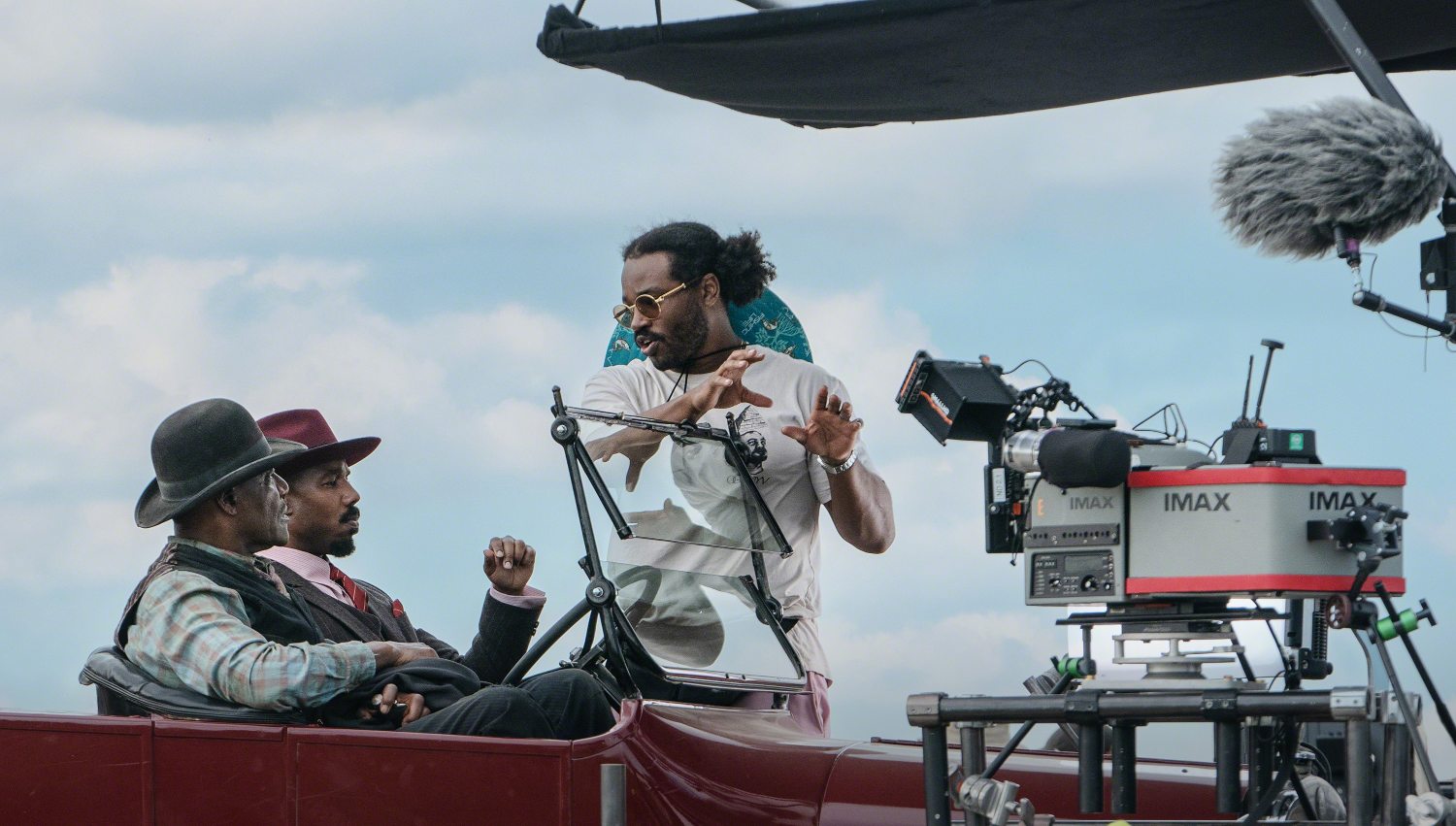
Ryan Coogler (R) in a behind the scenes photo from “Sinners” (Eli Adé/Warner Bros. Pictures)
After purchasing a disabused sawmill from a local white man (who smiles at them with one face while hiding another — one of the film’s first showcases of dichotomy), the brothers pick up their little cousin, the guitar-strumming sensation Sammie (in a powerful acting debut by Miles Caton), along with a few old friends and lovers, break out their bootlegged booze, hire shopkeepers Grace (Li Jun Li) and Bow Chow (Yao) to make them a storefront sign, and paint the town red.
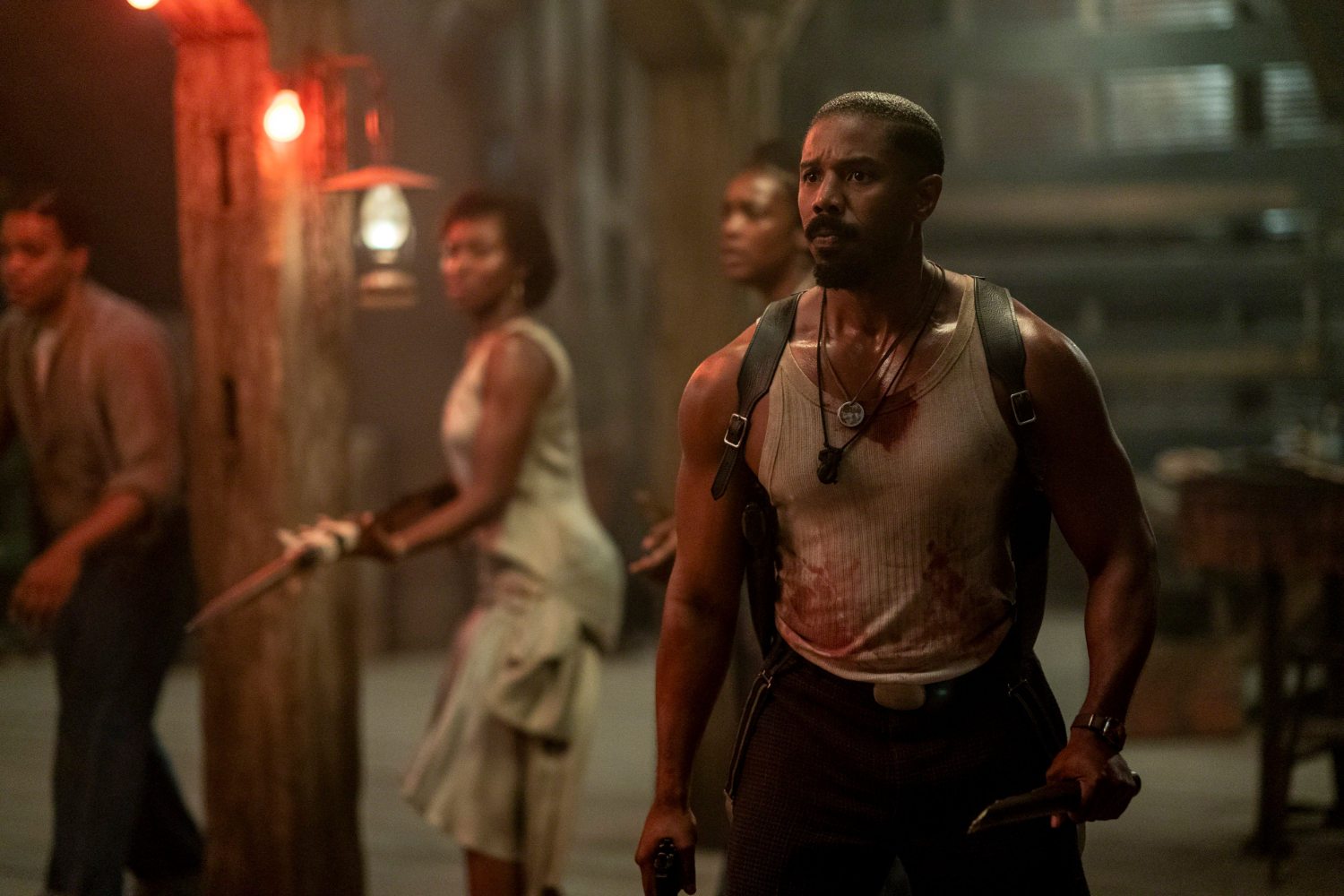
For the first full hour or so, Sinners is mostly the story of a pair of gangster, bank-robbing, prohibition-breaking brothers, riding high on borrowed time and slick talk. While celebrating community, the movie also paints a broad, beautifully complicated picture of the history of religion, and the uncomfortable truths about the Deep South. Then, after a rogue Irish vampire named Remmick (Jack O’Connell) crashes the twins’ opening night party with his newly turned band of loyal followers, it becomes a chaotic, bloody, nonstop battle against a siege of soulless creatures trying their best to maneuver their way inside the newly established juke joint.
Although Coogler has always infused his projects with his own unique personality (it’s really what makes his various takes on popular media feel so special), Sinners marks the first time that the box office titan has made something entirely original — a bold move for someone who’s already proven to be a shoo-in for pre-existing IPs.
“That last Black Panther took so many detours that we never would have imagined it taking, and it ended up taking four years, in between all those movies,” says Coogler, citing the untimely death of his star Chadwick Boseman who lost his battle with colon cancer in 2020.

A still from “Sinners” (Eli Adé/Warner Bros. Pictures)
“I went into the Black Panther universe in 2015, so by the time we were putting Creed out, I was on board that first movie. So from 2015 to 2022, I was in that world. I wanted to do something outside of that. I realized that even though I had made all these movies — and I produced some incredible movies, man, like the Creed sequels, and Judas and the Black Messiah for Shaka King, and Space Jam: A New Legacy — I realized the audience didn’t really know me. Like, I hadn’t really put myself out there in a way that didn’t have a shield of a story that was outside of myself. A true story like Oscar Grant’s murder, or the Rocky franchise, or the Marvel Cinematic Universe. I realized that each time I put something out, it was in a casing that maybe deflected attention, scrutiny, criticism of me, directly.”
Creed’s box office sales quadrupled its budget. Coogler’s Black Panther became the first superhero movie to ever be nominated for Best Picture at the Academy Awards. His films certainly haven’t resembled anything remotely like failure, but if they had, critics could always blame the myriad producers, or the limitations of working within the confines of the House of Mouse, or even just shrug and say the source material was too brittle to breathe new life into for a modern filmmaker. With Sinners, the director finally gets to experience working without a safety net, figuratively speaking, for the very first time. “I wanted to be brave,” says Coogler. “I thought it would be cool to use the capital that I had earned, the goodwill of the industry that comes with making movies that make over $2 billion at the box office, to make something strange. And to get the support to put it out in the multiplex.”
Coogler is also acutely aware that his friends are on the rise, and their time is becoming increasingly valuable. “It was now or never,” he says. “Another decade of franchise filmmaking, people might not be interested in what fifty-year-old me has to say — and my friends might be too busy to come with me and spend six months in a swamp.”
Luckily, everyone was on board for Sinners. Shot in Thibodaux, New Orleans, and the surrounding parishes, the director’s fifth time up at bat marks his most personal project to date. “I had this story, kind of inspired by my relationship with my uncle,” Coogler recalls. “Like a story that’s as weird as I am.” Made in loving memory of his late Uncle James, a man whose spirit Coogler feels he can conjure when he listens to the Delta Mississippi blues, the picture is imbued with both familial love and the director’s adoration of genre film.
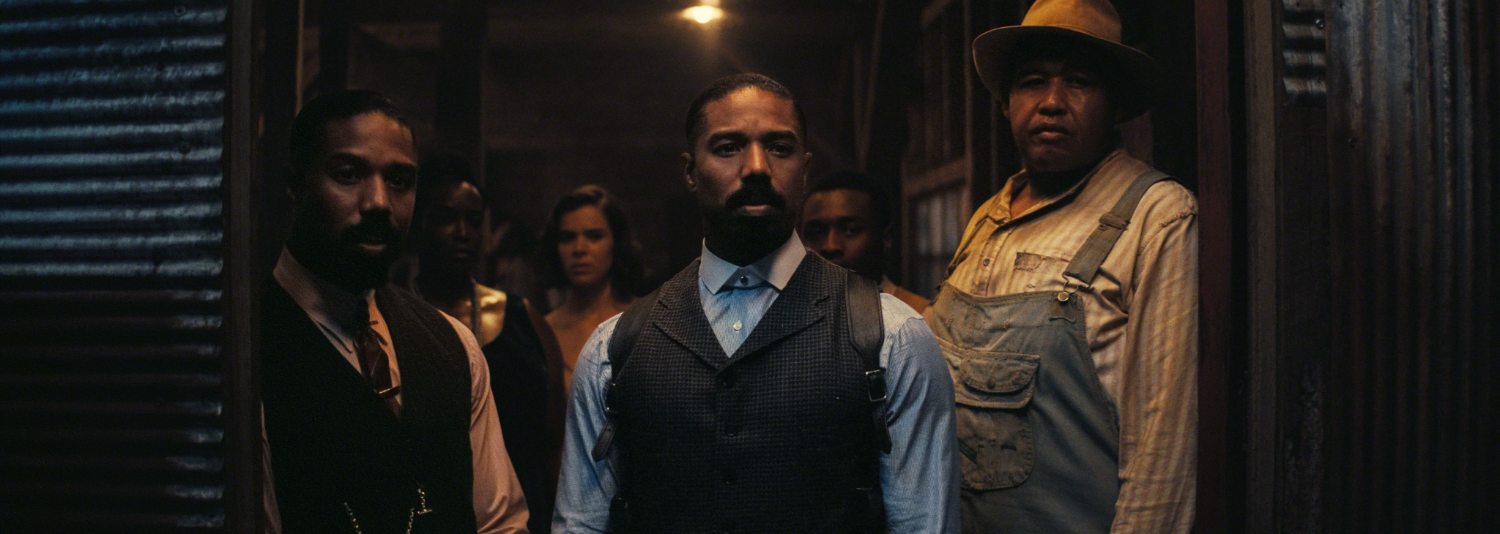
(Eli Adé/Warner Bros. Pictures)
“Obviously, I wasn’t alive in 1932, but I had cousins that were really cool that I would get limited access to, and I remember seeing them do crazy shit,” smiles Coogler. “But I think that’s like a human experience. I got a filmmaker friend of mine named Sheldon Candis, and he made a film called Luv back in 2012, which is essentially like Training Day, but it’s a kid with his gangster uncle played by Common. And I remember talking to him about that, I was like, ‘Yo, bro, I had days like that with my cousin,’ and learning that that was a thing. People all had these experiences. So, to have those family members that live on the edge, and you spend fleeting time with them, and it makes memories that you’ll never forget.” He adds with a laugh, “Should you survive the encounters, you know what I mean?”
Much akin to the protagonists in his stories, Coogler’s platform comes with a cost. New levels bring new devils, and as someone who is fiercely loyal to his loved ones, it’s understandable that the director might fear letting the right one in.
“One of my worst nightmares I ever had — it transcended nightmare to night terror — was I imagined Zinzi, as like a shadow creature that was trying to kill me,” Coogler visibly shudders as he recounts the horrific dream about his wife and business partner. ”The idea of the fact that characters in this movie turn, and they show back up presenting as themselves, but they also are different now — it gives me the willies. Getting a chance to play all my nightmares in cinema and have fun doing it, was really cathartic.”
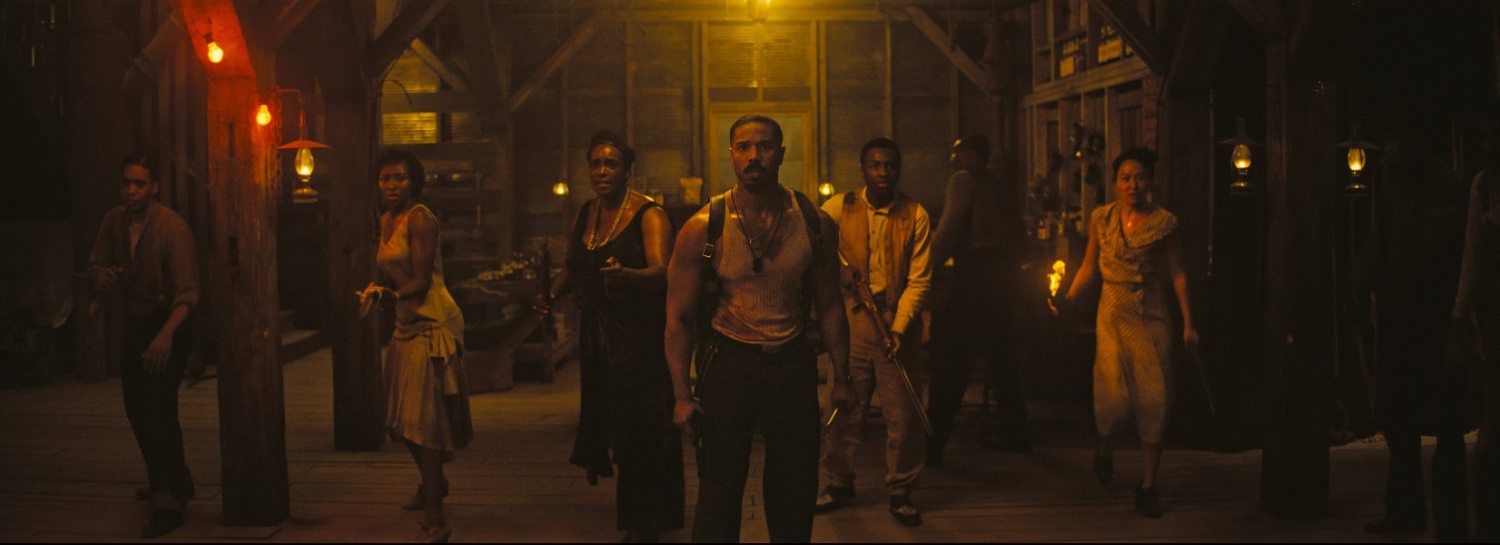
(Eli Adé/Warner Bros. Pictures)
During one of the earlier scenes in Black Panther, Letitia Wright’s Shuri shows her older brother some of the scientific improvements that she’s made to his costume in Wakanda. When T’Challa (Boseman) enters the room, there are two Panther suits stationed on separate mannequins, signaling an homage to the superhero that fans have always known and loved from the comics, as well as the new and improved version of the masked Avenger in Coogler’s updated interpretation.
Similarly, Coogler’s take on the classic Rocky Balboa story involves Adonis Creed (Jordan), the next in line for the Light Heavyweight Title, and an aging Rocky (played by the man himself, Sylvester Stallone), who takes the young boxer under his wing and trains him, thereby handing over the torch, both literally and figuratively.
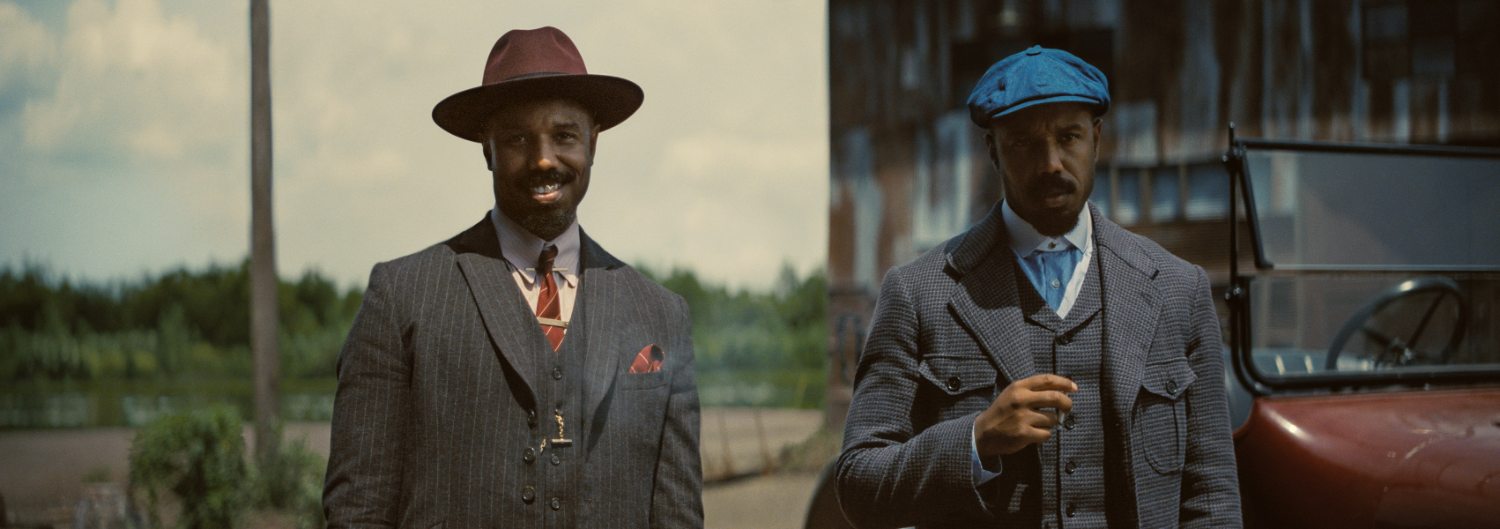
If anything, the concept of having a literal set of doubles as the leads in Coogler’s latest project (who Coogler always knew would both be played by Jordan, because he “knew the twins would be identical, and that would be a defining characteristic of these guys, and I was always going to go to Mike for that,”) at this point, just feels par for the course.
“I grew up with identical twin aunts,” Coogler points out, “And they’re kinda like local celebrities. They live next door to each other, and I could always tell them apart. One’s my godmother and one’s just my aunt. And just like how they hold their face and their energy, I can tell which one walked into the room. But they’re also crazy similar, and they are obsessed with each other, for good and for bad.”
(Eli Adé/Warner Bros. Pictures)
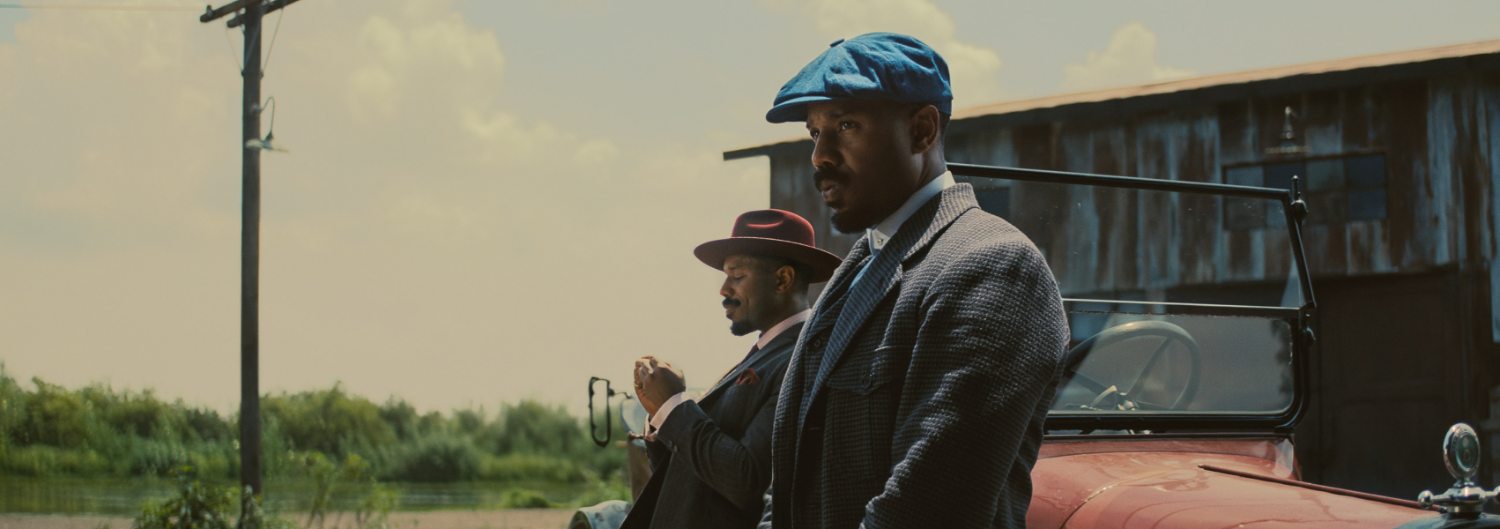
Jordan provides a similar distinction in his depiction of the twins Smoke and Stack. When he carries himself as the blue-clad Smoke, he’s a little quieter, a little more grounded. When he’s Stack, he’s sizzling hot in red, highlighting his more charismatic and talkative nature. “I had hired twin consultants for the movie, two identical twin brothers, Noah and Logan Miller, who are filmmakers, that worked with me and worked with Mike on the psychology that comes with having an identical twin in your life,” remembers Coogler.
The filmmaker also called up his pal Christopher Nolan for some advice on directing one actor to play two roles, and how the symbiotic relationship between twins shapes “how they see and interact with the world, and the natural things that come with the territory of being born with that condition.”
Although the motif of patriarchal pressure that permeates much of Coogler’s repertoire is still very much present here, this time, it’s not so straightforward. In his previous projects, his protagonists’ arcs typically involved the fight to live up to their father’s impeccable legacy, like T’Challa in Black Panther, or Adonis in Creed. Following this pattern, one would assume that Sammie, the son of a Preacher, would be front and center in Sinners. But Coogler, finally flying free without the restraints of a franchise weighing him down, is done playing by the rules. This time, he’s concerned with more complicated characters, like Smoke and Stack.
“Smoke and Stack are more of that idea turned on its head, and these guys were more cursed by their father,” says the director. “Their father was a directly tormenting figure for them, and somebody who’s a part of their legend. I imagine these guys as Cain and Abel, if Cain and Abel killed Adam, instead of each other.” Eventually, their real names are revealed as Elijah and Elias, both meaning “My God is near.”
(Eli Adé/Warner Bros. Pictures)
“I wanted the film to come to work as an African fable, too. In West African culture, like all continental African culture, there’s an obsession with lineage, and the task of the son to do what the father does. If your father wasn’t a griot, you can’t be a griot. If your father was a tailor, then that’s what you are. You can’t be a doctor. Like this idea of, the twins’ father was evil. And them knowing that, in some way, it’s sealing their fate. I was very obsessed with it. And the dynamic that happens in neighborhoods that deny resources and options, that happens when elders realize that a young person might have the gifts and the tools to get that way out of it. How a neighborhood can rally around a person like that, and advise them and protect them. I was obsessed with all of these things while working on the film.”
Inspired by the likes of Rod Serling’s The Twilight Zone, John Carpenter’s The Thing and Assault on Precinct 13, and Robert Rodriguez’s The Faculty, Coogler’s actually been wanting to make his own horror movie for a very long time. But out of all of the mythological beings that go bump in the night, why would the filmmaker choose vampires for his first foray into the genre? “I think it’s the humanity aspect of it, and how sophisticated of a supernatural monster they are,” says Coogler. “There’s a line in the movie where it’s like, ‘Vampires are the worst kind,’ and that was my own personal feeling. I think anybody who’s a horror fan, they know, the vampire is the scariest thing.”
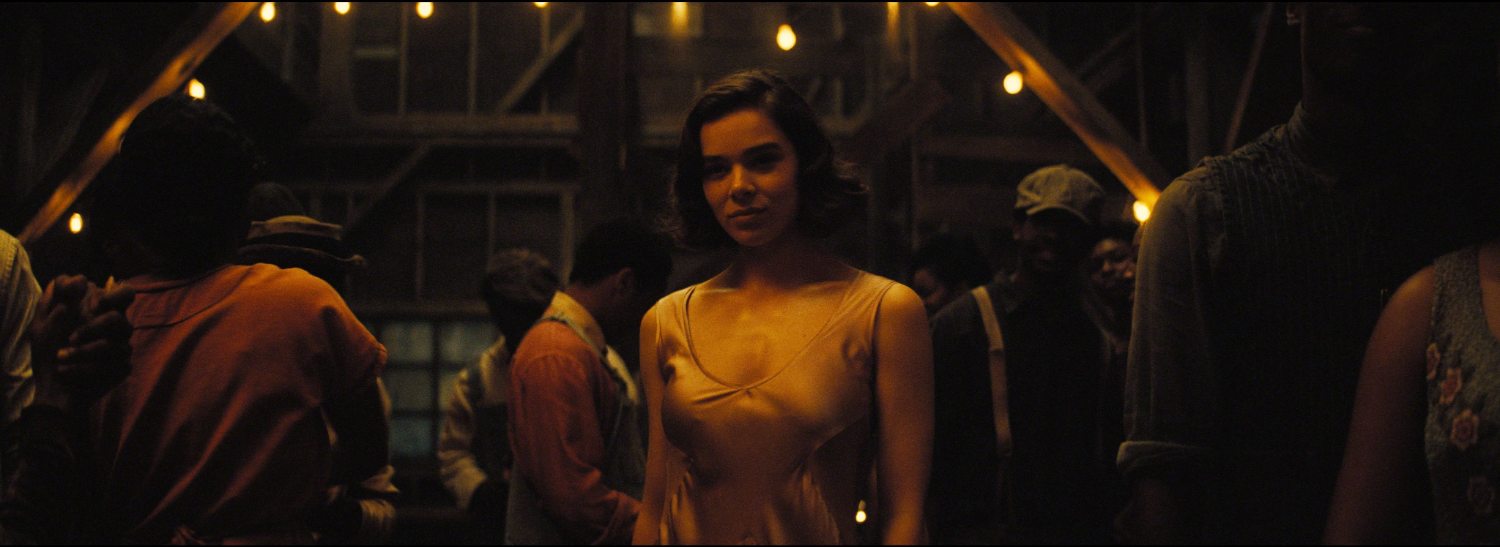
Themes of being pulled in two different directions, and searching for a sense of belonging are ever present in Coogler’s work, but the notion of a dual nature is especially realized in his take on vampire lore. “To imagine someone becoming something else, but still looking like themselves, and still having their cunning and their memories. It would be impossible to conquer that, I think. And for me, it was like pitting these people up against the fucking impossible. Having them stare at the impossible right in the fucking face. And having an ability to seduce. No other supernatural creature is associated with the art of seduction like the vampire. It is a prerequisite for them to be sexy. A prerequisite for them to be cool and fashionable.”
(Eli Adé/Warner Bros. Pictures)
He adds, “I didn’t get the chance to talk about this a lot, but while I was writing the script, he has his song, you know, ‘I want you, but I want you to want me too.’ There’s something about that that was like, oh, that’s Remmick. That’s these vampires. They want to be wanted. Like, it’s not enough for them to hold you down and bite your neck. They want you to offer your neck to them in free will. And it made me think about, once again, the Robert Johnson legend [the bluesman who sold his soul to the devil in exchange for musical genius]. The devil at the crossroads, who’s offering this deal that you have to, of clear mind, accept. It made me really excited about them as an adversary.”
The power of these creatures is revealed slowly at first, in little displays of power. A vampire levitates above the ground for a few seconds before the camera cuts away. Nocturnal eyes glow in the moonlight like gators in a misty swamp, locking onto their prey.
“What was crazy was there were gators watching us film all those scenes,” says Coogler. “Man, it was a river right there, and the gators would come out and watch us shoot. It was really, really cool, but also really fucking unnerving. To have actors in the water, and have the wranglers. We had a barrier where they couldn’t come across, but because we had so many lights, and there was so much activity, they would come by and watch. It was madness.”
To achieve the desired look, Coogler hired special makeup and effects artist Mike Fontane, whose work he admired in Jeremy Saulnier’s Green Room, along with makeup designer Sian Richards, who became friends with the director after working with the crew on Black Panther.
“We went at their eyes to feel it,” Coogler says about nailing down the look of his vampires. “The effect is called tapetum lucidum. And we had incredible makeup artists on this film. Sian worked with Chadwick, rest in peace, that’s how we met. But she’s brilliant, and Ken Diaz, who was our makeup department head, hired a woman who developed the tapetum lucidum contacts that we put into the actors’ eyes. They completely blinded them, but it got the effect that we were looking for: that apex predator feel, but also, with a supernatural element.”
(Eli Adé/Warner Bros. Pictures)
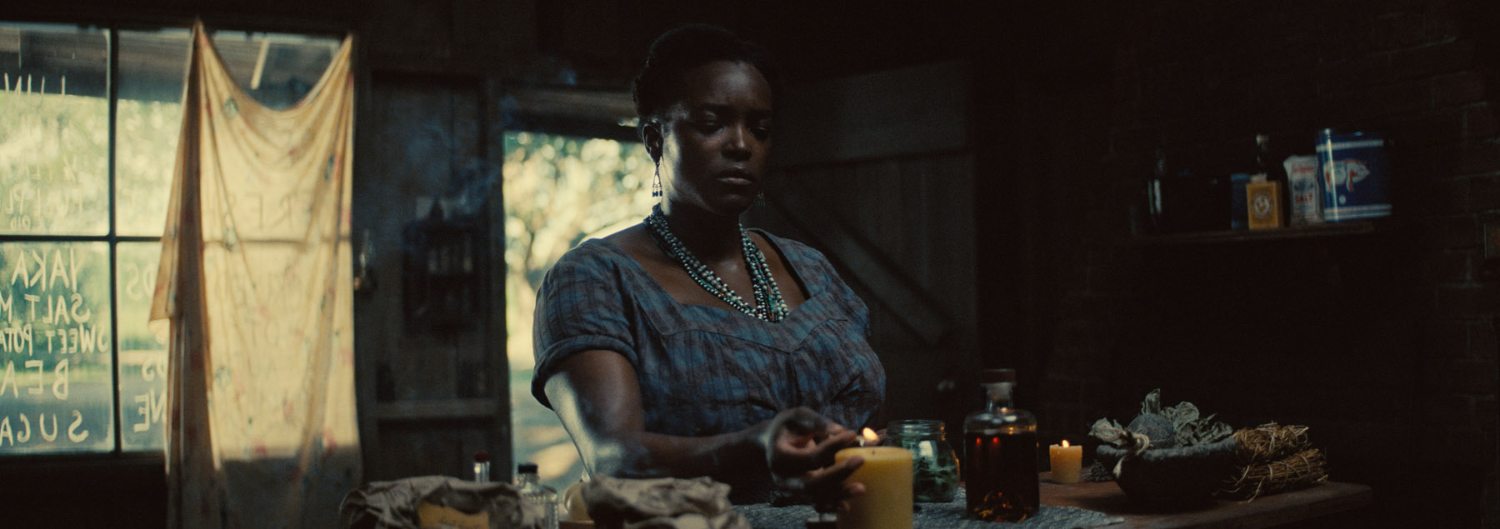
Funnily enough, one of his star Jordan’s biggest takeaways from working on his very first horror movie was how much he loathes being covered in fake blood. “He hates the feeling of being sticky,” Coogler says with a grin. “My wife, my producer, actually pulled me to the side. We had to have a big meeting about it because he didn’t want to tell me. But he completely despised the sensation of having that fake blood, and obviously, he’s covered it in the movie. So he was constantly having to navigate it.”
After working together on various projects for over a decade, there’s little that the duo doesn’t know about each other. Gaining this new insight into his friend and collaborator, and seeing another side of him, after all these years, was certainly a surprise. Admittedly, it was also an amusing one to boot. “It got to the point for some of those scenes, man, like I had to have a spray bottle, and hold it in my hand, so that as soon as I cut the camera, I’d come in and spray him down, so he didn’t have that sticky sensation.”
Jokes aside, the filmmaker believes in establishing a certain level of respect for everyone on his film sets, and he does everything in his power to make every single person involved feel comfortable and at ease. “I learned that I don’t like that sensation either,” defends Coogler. “Like, I don’t eat oranges because I don’t like feeling sticky after I peel an orange. And what Mike was describing to me is that it’s like the feeling of having the orange residue all over your whole body. So, I didn’t know he was a sensation guy, but he really struggled with that. He would be like, totally freaking out.”
(Eli Adé/Warner Bros. Pictures)
Music is a massive part of Sinners. This movie doesn’t just play, it pulsates. Watching the film is a visceral experience, like a wave washing over you. It’s so physical, and tangible and powerful and epic. Ludwig Göransson’s score quite literally knocks you back in your seat.
“Ludwig has become one of the most important friends in my life, and this score is like an incredible gift,” reflects Coogler. “I think it’s the most incredible score he’s ever done for me. I hear his love for his family, you know, his love for me, his love for his kids, his wife. I hear all that in his score, clear as day. I would have sessions where I would have conversations with musicians, and I’ll tell them what the characters are going through, what the story is, and they’ll say, ’I got it.’ And then go into the booth and then lay down something far deeper than anything I could imagine. I mean, it’s the most instantly timeless score I’ve ever been involved with. But it is overwhelming. It is one of those things, when it’s done, you feel like it happened to you.”
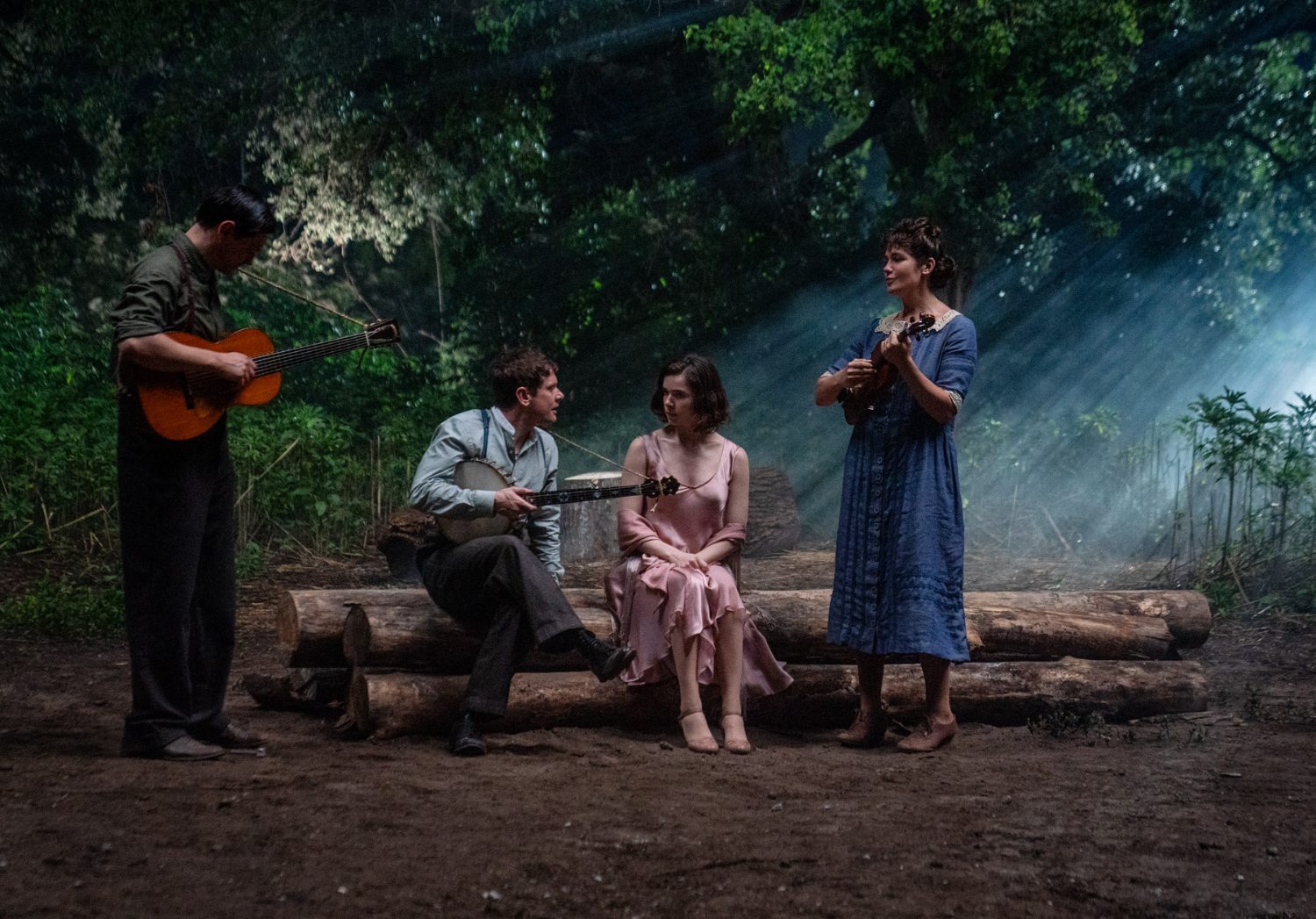
When Remmick, the main antagonist of the film, turns people into vampires, he doesn’t just steal their souls. “I want your music and I want your stories,” he tells Smoke at one point, grinning with a mouth full of blood, and it’s simultaneously fascinating to read Sinners as Coogler reflecting on the culture of music, and the ways in which privileged parties have benefitted throughout time from sampling highly talented but extremely marginalized artists.
“Somewhere along this journey, man, I realized that grunge music was just blues played by white dudes from Seattle in the nineties,” laughs Coogler. “The muscle memory of racism demands that we categorize everything anybody ever creates in that lens, in this country. It’s just because of what the people looked like. I was fascinated by the fact that Elvis could play a blues song. The Rolling Stones can play blues music, and tell everybody, ‘Hey, man, we named ourselves after this blues artist. This is what we’re doing.’ And the industry says, ‘No, it’s actually this.’
(Eli Adé/Warner Bros. Pictures)
“So for me, it’s characters that look different but are singing the same things. When Remmick’s musical scene happens, it’s him and two other white vampires. It’s sixty black people singing that. You know what I mean? What is that? What is that music now? And it was very important to me that the vampires didn’t just take. They also gave what they had too, which is beautiful. It’s beautiful music. Me, as a Black man from the United States, I hear Irish folk music, bro, and I cry. I recognize the irony in it, and I recognize the sadness in it, but also, the unbreakable desire to affirm humanity in that, in the face of vast indignities. Is that not blues music? That’s a question mark. Because it comes from different parts of the world, is that not still what it is? I ask myself these things. And the film was from that vantage point, I would say.”
Aside from sparking an important and much needed discussion, Sinners, at its core, is also just a real banger of a horror movie. Once again, Coogler’s brilliance lies in his duality. His ability to deliver crucial commentary on culture in America, and at the same time, also just give us a piece of cinema that’s cool as hell. Thanks to filmmakers like Coogler, a Black man directing a Black lead in a horror movie is far less radical now than it was a decade ago, but it’s still nice to see him blowing up box offices across the globe. This idea rings especially true once you consider the fact that the director negotiated his contract so that in 25 years, the rights to the film will completely revert back to Coogler, giving him full ownership over his own movie. Coogler’s characters point out what’s been stolen from his culture, and as the director, he’s making a point to take it back.
“I saw One of Them Days, and I thought a lot about how much I missed films like Friday,” he says, “But how different and potent it felt. One of my favorite films I’ve seen in recent years was a film called Decision to Leave by Director Park Chan-wook. I just loved how that movie played with all of my expectations, and I didn’t know where it was going, ever.” Still, at the end of the day, director Coogler simply hopes that more fans will flock to the cinema. “I just want to see more movies in the theaters, you know I mean? I love that feeling of movie scores happening to me. Something happening to me. Just being blown back in my seat by the audacity of filmmaking. I love that experience. I’m addicted to it.”

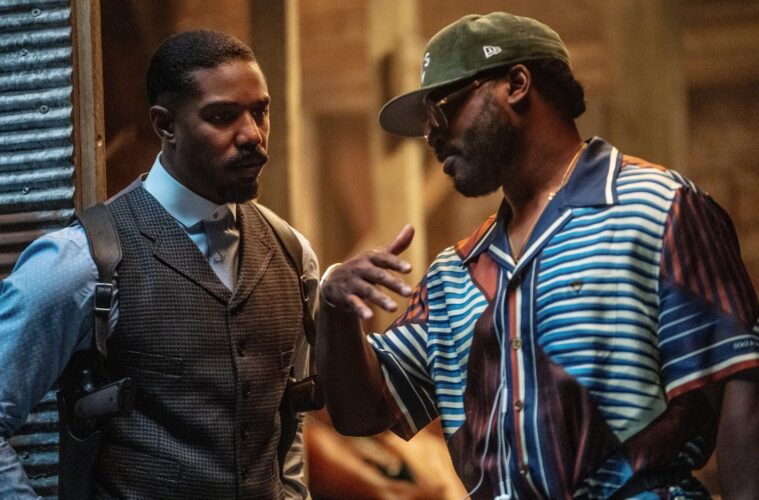
Ryan Coogler (R) directing Michael B. Jordan (L) in a behind the scenes photo from “Sinners,” on the April 25, 2025 cover of LA Weekly (Photo: Eli Adé/Warner Bros. Pictures; Cover design: Jewel Baek)